- 234 Balaclava Road, Caulfield North VIC 3161
- contactus@guests.com.au
- (03) 9509 7033
Client – November 2025
Newsletter

NEWSLETTER
We are pleased to supply you with the latest edition of Client Alert, which contains information on a number of important developments up to and including 24 October 2025.
What’s the difference between the Medicare levy and the Medicare levy surcharge? – Many people getting their tax notice of assessment wonder why they see amounts for the Medicare levy and Medicare levy surcharge.
Family Tax Benefit and your tax return: common misunderstandings – Despite its name, Family Tax Benefit isn’t a tax refund or tax deduction, but a social security benefit to help with everyday costs like food, education, clothing and other child-rearing expenses.
Start your year-end payroll, tax and employee leave planning now – Whether you’re gearing up for a rush or planning a shutdown, early planning for the upcoming end-of-year holiday period is key.
The truth about FBT and your business’s work ute – You may have heard that providing a dual cab ute for employees to use in their work duties is automatically exempt from FBT, but believing this myth could leave you with an unexpected tax bill.
Next step for payday super: legislation introduced to Parliament – The new laws still need to pass through the House of Representatives and the Senate, but you shouldn’t wait to start planning for payday super.
R & D Grants – Clients undertaking Research & Development projects should contact the office as there may be government grants available.
Confused about Aged Care? – Please contact Guests as we are able to advise and liaise with Aged Care Specialists.
Single Touch Payroll, it’s time to get ready – From 1 July 2018, if you have 20 or more employees, you need to use Single Touch Payroll enabled software to report your tax and super information to the ATO. Please contact us if you need help.
Audit Insurance – Whilst historically, Tax Audits were targeted at big business and the wealthy, this has changed. Increasingly the ATO are turning their attention to both small to medium businesses and individuals.
Audit Insurance protects you to a degree from the unexpected costs incurred in responding to an audit, reimbursing you for related professional fees and associated with these costs.
Should you wish to discuss Audit Insurance further please contact our office or your Insurance Broker.
Acquisition of property in trusts – If you are contemplating purchasing a property in a trust, please contact your Partner at Guests for advice prior to acquisition.
Feel free to contact our office anytime by phone or email – to discuss any of the points raised in this Client Alert that may affect you.
Guests Pty Ltd – 234 Balaclava Road, Caulfield North, Vic, 3161
(03) 9509 7033
What’s the difference between the Medicare levy and the Medicare levy surcharge?
Many people getting their tax notice of assessment wonder why they see amounts for the Medicare levy and Medicare levy surcharge. Here’s how it works.
Medicare levy
The Medicare levy’s a compulsory charge that helps fund Australia’s public healthcare system. Almost all Australians pay this levy, which is 2% of your taxable income. The levy’s generally withheld from your pay by your employer throughout the year, so you may not notice it until tax time.
It’s important to note that having private health insurance doesn’t exempt you from paying the Medicare levy; it only affects your liability for the Medicare levy surcharge.
In certain limited cases, such as if you’re a low-income earner, a foreign resident or have a medical exemption, you may qualify for a reduced rate or full exemption.
Medicare levy surcharge
The Medicare levy surcharge (MLS) is an additional charge designed to encourage higher-income earners to take out private hospital insurance, reducing the strain on the public healthcare system. The MLS isn’t automatically withheld from your income but is calculated when you lodge your tax return.
You may be liable for the MLS if your income exceeds the MLS threshold and you, your spouse and your dependent children don’t all have an appropriate level of private patient hospital cover for the entire income year. The surcharge rates vary based on your income tier, beginning at 1% for singles with 2025–2026 income over $101,000 and families with income over $202,000.
Your income for MLS purposes includes several components beyond your taxable income, like reportable fringe benefits, total net investment losses and reportable super contributions. If you have a spouse, their income’s also considered.
Private health insurance
To avoid the MLS when your income’s over the threshold, you need an appropriate level of private patient hospital cover. Singles need a policy with an excess of $750 or less, and couples or families need a policy with an excess of $1,500 or less. Your policy must cover you, your spouse and all dependents for the full income year to avoid the surcharge.
Keep in mind that extras-only cover (such as for dental or optical) and travel insurance don’t qualify as private patient hospital cover for MLS purposes.
Family Tax Benefit and your tax return: common misunderstandings
Family Tax Benefit (FTB) is a government payment to help families with the cost of raising children. Despite its name, it’s not a tax refund or tax deduction – it’s a social security benefit to help with everyday costs like food, education, clothing and other child-rearing expenses.
FTB has two parts. Part A is the main payment available to most eligible families, and Part B is an extra payment for single parents or certain single-income families (usually where one parent stays home or works part-time). Importantly, FTB is paid by Services Australia (through Centrelink), not the ATO.
To be eligible, you must have at least one dependent child in your care aged 0–15 years, or a full-time secondary student aged 16–19. Your child must be an Australian resident, and you must meet certain residency rules.
FTB is means-tested, and there are income tests for both Part A and Part B payments.
FTB isn’t a tax refund
A tax refund is money the ATO gives back if you’ve overpaid tax during the year, but FTB is a government benefit, separate from the tax system. You don’t automatically receive FTB by lodging a tax return, and it’s not calculated in your tax assessment. Think of FTB as a family assistance payment like the Parenting Payment or Child Care Subsidy, rather than a tax refund or rebate.
How do you claim FTB?
To get FTB, you need to claim it through Services Australia. You can do this online via your myGov account, phone the Centrelink Families line or visit a service centre.
You’ll have a choice in how you receive FTB:
- Fortnightly payments: Most families opt to get FTB every two weeks along with any other Centrelink payments. You estimate your family’s income and get payments, and Centrelink balances the payments against your actual income at year-end.
- Annual lump sum: Alternatively, you can get FTB as an end-of-financial-year lump sum by waiting until after 30 June and submitting a claim for the year. This way you use the actual income from your tax return and avoid any overpayment. You must claim within one year after the financial year ends – so for 2024–2025 you have until 30 June 2026.
All communication about FTB will come from Services Australia (in your Centrelink online account or mailed letters), not in your tax return paperwork. For instance, if you get a lump-sum FTB payment, it will be deposited to your bank account by Centrelink after processing, entirely separate from any refund the ATO might send for your income tax.
If your circumstances change (like your income or care arrangements), remember to inform Centrelink, as it could affect your FTB rate. This will help avoid surprises after the end-of-year balancing calculations.
Start your year-end payroll, tax and employee leave planning now
The end-of-year holiday period can be make or break for your business. Whether you’re gearing up for a rush or planning a shutdown, the key is early planning for payroll, tax and super, alongside careful compliance with workplace laws.
Start by checking whether any year-end payday will fall on public holidays or during your closure. If so, you’ll need to bring the pay run forward so staff are paid before bank cut offs and tell employees about any temporary date changes in writing. While the ATO generally allows lodgment and payment on the next business day when a due date falls on a weekend or public holiday, that doesn’t extend to paying wages late. Report each pay run through Single Touch Payroll (STP) on or before payday, including any brought forward payments you’re processing before year-end closure.
Keep your PAYG withholding and BAS lodgments on track. If you have difficulty meeting due dates, contact your tax adviser and the ATO early to discuss options.
Don’t overlook super guarantee (SG) contributions on wages and paid leave taken over the break; annual leave and public holiday pay are part of ordinary time earnings for SG purposes. October to December quarter super must be received by employees’ funds by 28 January, so pay early to allow for bank processing times and so you don’t trigger the SG charge, interest, penalties and loss of deductibility.
If you provide year-end bonuses or staff gifts, process bonuses through payroll and withhold tax, and consider whether FBT applies to functions or presents. The minor benefits exemption may cover low cost, infrequent items, but good records are essential.
Remember that full-time and part-time employees who would normally work on a public holiday are entitled to their base rate for ordinary hours if they don’t work. You can ask employees to work public holidays, but requests must be reasonable, and employees can refuse on reasonable grounds. If they do work, apply the correct penalty rates or time off in lieu under their award or agreement. Where a public holiday happens during an employee’s annual leave, it counts as a public holiday, not a leave day.
For holiday shutdowns, you can only direct employees to take annual leave if an applicable award or registered agreement allows it, usually with advance written notice. Where staff don’t have enough leave, many awards allow leave in advance or unpaid leave by agreement; make sure to document any agreement in writing. Check whether leave loading applies to annual leave taken over this period and ensure your payroll system calculates it correctly.
The truth about FBT and your business’s work ute
If your business provides vehicles for employees to use in their work duties, you may have heard that providing a dual cab ute is automatically exempt from fringe benefits tax (FBT). Unfortunately, that’s not quite right, and believing the myth could leave you with an unexpected tax bill.
While dual cab utes can be exempt from FBT, they need to meet specific conditions, and employees’ personal use of work vehicles is an important factor.
Fringe benefits tax is what you pay as an employer when you provide benefits to your employees or their families, like allowing them to use a work vehicle for personal trips. It’s separate from income tax and is your responsibility, not your employees’. For a ute to be exempt from FBT, it must satisfy two conditions.
Exemption condition one: must be an eligible vehicle
Your dual cab ute needs to be designed to carry a load of one tonne or more; or more than eight passengers (including the driver); or a load under one tonne but not primarily designed for carrying passengers.
Most dual cab utes on Australian roads do meet this first condition, but this alone doesn’t guarantee an exemption.
Exemption condition two: private use must be limited
This is where many businesses trip up. Even if your dual cab ute qualifies as an eligible vehicle, any personal use must be minor, infrequent and irregular (according to ATO definitions of these terms).
What does this mean in practice? Think occasional trips to the tip or helping a mate move house once in a blue moon. Travel between home and work is allowed, as is incidental travel while undertaking work duties.
If your employee uses the work ute as the family car for weekend getaways, school runs or regular shopping trips, FBT applies even where the vehicle is a dual cab ute.
When FBT kicks in
If your employees’ personal use exceeds the limited private use threshold, you’ll need to calculate the taxable value of the fringe benefit, work out your FBT liability, lodge an FBT return and pay what you owe, and report the reportable fringe benefits on your employee’s income statement or payment summary.
The taxable value calculation depends on the type of vehicle and how it’s used. You might use the operating cost method or the cents per kilometer method, depending on your circumstances.
Record keeping
Even if you believe your dual cab ute qualifies for the FBT exemption, you need to keep records that demonstrate the limited private use condition is met. You don’t need to maintain a formal logbook for exempt vehicles, but you should have some way to show that private use remains minor, infrequent and irregular. This could mean regularly checking odometer readings and comparing them with expected work-related travel.
Next step for payday super: legislation introduced to Parliament
The government’s payday super reforms have taken another step towards implementation with the introduction of legislation to Parliament. Requiring employers to pay employee super contributions on payday, the reforms are designed to ensure that employees benefit from more frequent and earlier super contributions that grow and compound over their working life and reduce instances of unpaid super.
The newly introduced legislation includes some changes from the earlier drafts released for consultation in March. Contribution timeframes are now measured in “business days” rather than “calendar days”, and employers will have 20 business days (previously 21 calendar days) to make contributions for new employees. The additional time will also apply to contributions for existing employees who’ve changed to a new fund.
The legislation still needs to pass through both the House of Representatives and the Senate before it becomes law, but you shouldn’t wait to start planning.
Recognising that employers need time to deploy, test and embed changes in their payroll systems and business processes, the ATO has released a new draft Practical Compliance Guideline that outlines its proposed compliance approach for the first year of payday super (starting 1 July 2026). It plans to use a risk-based framework where employers will be categorised as at low risk, medium risk or high risk of not meeting their payday super obligations.
What’s next?
Start preparing now. Review your payroll systems and processes to ensure they’re ready for payday super by 1 July 2026; consider whether more frequent super payments could have cash flow implications for your business that you need to act on; and look for alternatives if you use the SBSCH, as it will be closed from 1 July 2026. Planning ahead will help you be compliant with the law and make a smooth transition.
Keep an eye on developments as the legislation progresses through Parliament and as the ATO finalises its compliance guideline. Changes could still be made before the reforms take effect.
Latest Industry News

How Do I Write Legally Compliant Terms and Conditions for My Business?
Terms and conditions bind your customers only where they actively accept them, so a tick box at checkout holds...

Paid parental leave super contributions have started
From July 2026, the new Paid Parental Leave Superannuation Contribution (PPLSC) has started. From...

If the business is no longer profitable, and is unlikely to be profitable in the future, your best option may...
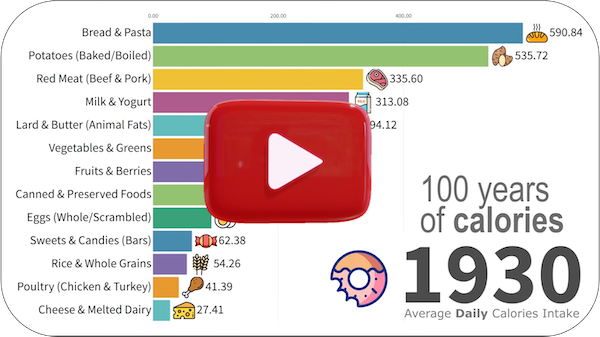
Check out the this visualization, which tracks the evolution of dietary calorie intake from 1930 to...

Taxpayer given 35% penalty for BAS recklessness
Following an application for a refund of nearly $94,000, the Administrative Review Tribunal has set aside an...

SMEs warned as ATO ramps up tax debt collection
One insolvency specialist has emphasised the importance of small businesses engaging their accountants to stay...

Does Your Small Business Need to Follow AML Privacy Rules?
Compliance with new anti-money laundering (AML) laws may subject your small business to additional privacy...

Don’t get caught out at tax time with your multiples jobs
Picking up a second job, holding multiple part-time roles, or doing gig work is now part of everyday life. But...

Global companies turn to cost-cutting amid ongoing inflation
Rising operating costs and persistent inflation are placing renewed pressure on businesses worldwide, despite...

Warning for early lodger this tax time!
The ATO has a clear message this year: slow down and get it right. Early lodgers are far more likely to make...

ATO no longer treating debt the same as during COVID
One expert has stressed the importance of tax agents reminding their clients that the ATO is no longer as...
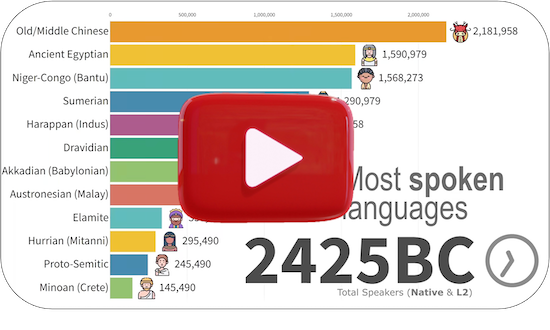
The evolution of the world’s languages
Check out the evolution of the world's most spoken languages from 2500 BC to...
Latest Guests News
Newsletter Newslettter We are pleased to supply you with the latest edition of Client Alert, which...