- 234 Balaclava Road, Caulfield North VIC 3161
- contactus@guests.com.au
- (03) 9509 7033
Client – August 2025
Newsletter

Newsletter
We are pleased to supply you with the latest edition of Client Alert, which contains information on a number of important developments up to and including 28 July 2025.
HECS/HELP debt reduction Bill introduced – The government has now introduced legislation aimed at enacting its election promise to reduce student debt by 20%.
Small and medium businesses now have more time to get tax returns right – For 2024–2025 and later income years, businesses with an annual aggregated turnover of less than $50 million have up to four years to request amendments.
ATO interest charges no longer tax-deductible for businesses – Any GIC or SIC incurred from 1 July 2025 cannot be claimed as a tax deduction, regardless of when the underlying tax debt arose.
Protect your super from pushy sales tactics: consider the risks and don’t rush to switch – At this time of year, you’re more likely to be targeted by high-pressure campaigns to get you to switch super funds or make investments that may be unsuitable for you.
Will your super be affected when the $3 million balance tax hits? – Before the new policy’s set in stone, if you think you may be affected it would be wise to seek advice
R & D Grants – Clients undertaking Research & Development projects should contact the office as there may be government grants available.
Confused about Aged Care? – Please contact Guests as we are able to advise and liaise with Aged Care Specialists.
Single Touch Payroll, it’s time to get ready – From 1 July 2018, if you have 20 or more employees, you need to use Single Touch Payroll enabled software to report your tax and super information to the ATO. Please contact us if you need help.
Audit Insurance – Whilst historically, Tax Audits were targeted at big business and the wealthy, this has changed. Increasingly the ATO are turning their attention to both small to medium businesses and individuals.
Audit Insurance protects you to a degree from the unexpected costs incurred in responding to an audit, reimbursing you for related professional fees and associated with these costs.
Should you wish to discuss Audit Insurance further please contact our office or your Insurance Broker.
Acquisition of property in trusts – If you are contemplating purchasing a property in a trust, please contact your Partner at Guests for advice prior to acquisition.
Feel free to contact our office anytime by phone or email – to discuss any of the points raised in this Client Alert that may affect you.
Guests Pty Ltd – 234 Balaclava Road, Caulfield North, Vic., 3161
(03) 9509 7033
KEYLINKS
GUESTS ACCOUNTING
Tax & Accounting Focused on your future
client alert
HECS/HELP debt reduction Bill introduced
On 23 July, the Labor government introduced legislation aimed at enacting its election promise to reduce student debt by 20%. The Billproposes to:
- provide a one-off 20% reduction to Higher Education Loan Program (HELP) debts and certain other student loans that are incurred on or before 1 June 2025;
- increase the minimum repayment threshold from $54,435 in 2024–2025 to $67,000 in 2025–2026; and
- introduce a marginal repayment system where compulsory student loan repayments are calculated only on income above the new $67,000 threshold rather than having it based on a percentage of the repayment income.
This complements measures enacted in the last Parliament which cap the level of indexation of student loans to the lower amount of either the consumer price index (CPI) or the wage price index (WPI). This is designed to ensure that loans will never be indexed by more than wages growth. Accordingly, the new threshold of $67,000 will be indexed for 2026–2027 and following years, but will never be increased by a rate exceeding wages growth.
Small and medium businesses now have more time to get tax returns right
If you run a small or medium business, you know that financial accuracy’s important but sometimes mistakes can happen or information can change. Starting this year, though, you have more time to amend your return and get things right.
Before this change, small and medium businesses generally had a two-year period from the date of their tax assessment to request an amendment. If you discovered an error or omission after this two-year window, correcting it could become a more complex process.
Now, for the 2024–2025 and later income years, small and medium businesses with an annual aggregated turnover of less than $50 million will have up to four years to request amendments to their income tax returns. This gives more time to review records, reconcile figures and address any oversights – but remember, it’s not an excuse to rush your first lodgement.
For earlier income years, the two-year amendment period still applies.
Your review period starts the day after the ATO issues your notice of assessment for the relevant income year. If no notice is issued, it starts from the date you lodged your return.
Here are some common scenarios where you might need to request an amendment:
- you made a simple error when entering figures;
- you forgot to report some income or capital gains, or claim legitimate deductions;
- you incorrectly claimed deductions or credits, or failed to claim ones you were entitled to; or
- circumstances changed after lodging and affected something you’d already reported, like a revised invoice or a business event you hadn’t factored in.
Whatever the reason, it’s important to correct any errors as soon as you identify them. For example, if an amendment leads to an increased tax liability, time-based interest and penalties might apply, so prompt action’s still beneficial.
There are no ATO fees for amendment requests, but processing can take a substantial amount of time.
If you discover an error that increases the tax you owe, you may face interest charges and penalties. However, voluntary disclosure of mistakes is generally viewed more favourably than errors discovered during an audit.
If the ATO’s already notified you of an audit or review, you must tell the assigned tax officer about any errors rather than lodging an amendment request.
Remember, the extended amendment period offers greater peace of mind, but good record-keeping and a proactive approach remain your best tools for managing your tax affairs effectively.
ATO interest charges no longer tax-deductible for businesses
Effective 1 July 2025, businesses can no longer claim income tax deductions for interest charges imposed by the ATO on unpaid or underpaid tax liabilities. This change applies to general interest charge (GIC) and shortfall interest charge (SIC) amounts incurred in income years starting on or after 1 July 2025.
Previously, businesses could deduct ATO-imposed interest charges on overdue tax debts, reducing the net cost of these charges. From 1 July 2025, this deduction is no longer available, meaning any GIC or SIC incurred from this date cannot be claimed as a tax deduction, regardless of when the underlying tax debt arose.
For example, if a business incurs GIC on an unpaid income tax liability after 1 July 2025, this interest expense is not deductible in its tax return for the 2025–2026 income year or subsequent years.
This legislative change is significant for businesses that manage cash flow by deferring tax payments, as the cost of carrying tax debt will effectively increase. Without the tax deduction, the real cost of ATO interest charges rises, making it more expensive to delay tax payments.
The ATO applies GIC on unpaid tax liabilities at a rate that is reviewed quarterly and compounds daily. As of the latest update, the GIC rate is 11.17%.
The removal of tax deductibility for ATO interest charges underscores the importance of timely tax compliance. Businesses should act promptly to adjust their financial strategies, ensuring that they are not adversely affected by increased costs associated with overdue tax payments.
Protect your super from pushy sales tactics: consider the risks and don’t rush to switch
Each new financial year, many of us take a closer look at our super funds’ performance, and you’re more likely to be targeted by salespeople, cold callers or social media ads offering “free super health checks” or to “find your lost super”. These offers can be the start of a high-pressure campaign to get you to switch super funds or make investments that may be unsuitable for you.
These calls and ads don’t always look like typical scams. Callers may sound genuine, claiming they want to help you find a better deal or locate lost super for free. Sometimes they’ll even refer you to a financial adviser to make the pitch sound more legitimate. But behind the scenes, there may be commission arrangements or other incentives that put their interests ahead of yours.
Here are some warning signs that a caller or an advertiser might not have your best interests at heart:
- Cold calls and unsolicited contact: If someone you don’t know contacts you about your super, they may have bought your contact information or obtained it by more questionable means.
- Pressure to act quickly: Remember super decisions are significant and should never be rushed.
- “Free” super health checks or lost super services: These offers are often a hook to draw you in. You can find your own lost super for free directly through the ATO.
- Promises of high or unrealistic returns: If an offer sounds too good to be true, it almost always is.
- Claims your fund is underperforming: Sales agents may exaggerate issues with your current fund to make you want to switch. Always verify negative claims directly with your super fund if you have concerns.
- Limited direct contact with a financial adviser: The caller might act as an intermediary, transferring you to an adviser only briefly. If you’re not having direct, in-depth conversations, they may not be acting in your best interests.
- Involvement of unlicensed people: Ensure anyone discussing your super is properly licensed and qualified to provide advice.
Remember, if a deal sounds too good to be true, it probably is. Promoters often play on your fears, hopes and your politeness to rush you into a decision.
How to protect yourself
- If someone you don’t know contacts you about your super, just hang up – don’t feel guilty or pressured to engage or explain.
- Don’t share personal or financial information with callers or on online forms unless you initiated the contact and are sure who you’re dealing with.
- Report suspicious calls to your super fund and ASIC. If you think your information has been compromised, let your current super fund know so they can help protect your account.
- Contact your super fund directly or seek guidance from a licensed, independent financial adviser before making any changes.
- You can always find lost super for free through the ATO; there’s no need to pay anyone to do it for you.
Your super is too important to risk. Take your time, ask questions and don’t rush into any decisions.
Will your super be affected when the $3 million balance tax hits?
Since February 2023, the Australian government has been planning to introduce a new tax of 15% on a portion of “earnings” relating to total superannuation balances over $3 million. The idea was to inject some equity in a system with generous tax concessions weighted in favour of the wealthy. The tax change was proposed to kick in on 1 July 2025.
Debate over issues concerning the non-indexed $3 million threshold and the taxation of unrealised capital gains then put the proposal on ice. The Bill containing the change is expected to be reintroduced now that Parliament has resumed. The Bill proposes to insert a new Division 296 into the Income Tax Assessment Act 1997, which is why you might hear the change called the “Division 296 tax”.
What will apply and when?
Currently, your entire super balance earnings in accumulation are taxed at 15%.
If your “total superannuation balance” (TSB – meaning all of your super, in all accounts, in accumulation and in pension phase) is under $3 million, the new additional tax would not apply.
The Division 296 measure would apply another 15% tax on a portion of estimated “earnings” relating to your TSB that’s over $3 million. This tax would be charged to you personally, rather than to the super fund. The “earnings” calculation is quite complicated, and doesn’t reflect the actual earnings in your fund (which is why we’re using quotation marks for “earnings”).
For example, if you start the year with a $3 million property in your super fund, and it’s worth $3.5 million by the end of the year, a portion of the $500,000 unrealised capital gain would be taxed to you personally. If this was the only asset in all of your super, and you made no contributions or withdrawals during the year, and received no actual investment earnings, the Division 296 tax calculation could look something like this:
TSB minus $3 million threshold: $3,500,000 – $3,000,000 = $500,000
Percentage of TSB that the excess represents: $500,000 / $3,500,000 = 14.29%
Proportional calculation to get Division 296 taxable earnings: $500,000 × 14.29% = $71,450
Latest Industry News

How Do I Write Legally Compliant Terms and Conditions for My Business?
Terms and conditions bind your customers only where they actively accept them, so a tick box at checkout holds...

Paid parental leave super contributions have started
From July 2026, the new Paid Parental Leave Superannuation Contribution (PPLSC) has started. From...

If the business is no longer profitable, and is unlikely to be profitable in the future, your best option may...
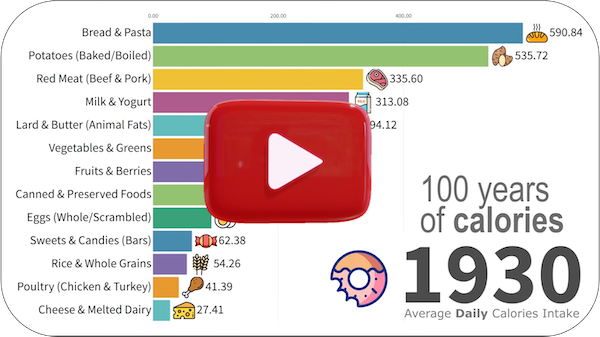
Check out the this visualization, which tracks the evolution of dietary calorie intake from 1930 to...

Taxpayer given 35% penalty for BAS recklessness
Following an application for a refund of nearly $94,000, the Administrative Review Tribunal has set aside an...

SMEs warned as ATO ramps up tax debt collection
One insolvency specialist has emphasised the importance of small businesses engaging their accountants to stay...

Does Your Small Business Need to Follow AML Privacy Rules?
Compliance with new anti-money laundering (AML) laws may subject your small business to additional privacy...

Don’t get caught out at tax time with your multiples jobs
Picking up a second job, holding multiple part-time roles, or doing gig work is now part of everyday life. But...

Global companies turn to cost-cutting amid ongoing inflation
Rising operating costs and persistent inflation are placing renewed pressure on businesses worldwide, despite...

Warning for early lodger this tax time!
The ATO has a clear message this year: slow down and get it right. Early lodgers are far more likely to make...

ATO no longer treating debt the same as during COVID
One expert has stressed the importance of tax agents reminding their clients that the ATO is no longer as...

The evolution of the world’s languages
Check out the evolution of the world's most spoken languages from 2500 BC to...
Latest Guests News
Newsletter Newslettter We are pleased to supply you with the latest edition of Client Alert, which...