- 234 Balaclava Road, Caulfield North VIC 3161
- contactus@guests.com.au
- (03) 9509 7033
Client – MAY 2025
Newsletter

We are pleased to supply you with the latest edition of Client Alert, which contains information on a number of important developments up to and including 21 February 2025.
Upskilling? You may be able to claim your self-education expenses – If you’ve thought about undertaking professional development this year, you may be able to claim some of your expenses in your 2024–2025 tax return.
Beyond the booking: tax implications for short-term rentals of your home – Platforms like Airbnb have made it easier to earn extra income from your home, but many Australians are unaware of the tax implications.
Sole trader or company: what are the tax differences? – Tax considerations are vital in deciding which business structure is most suitable for you.
Keeping your super account secure – In the wake of recent cyber-attacks on several large Australian super funds, you might be wondering how to protect your retirement savings.
What payday super could mean for you – The way superannuation is paid may be about to undergo a significant transformation.
R & D Grants – Clients undertaking Research & Development projects should contact the office as there may be government grants available.
Confused about Aged Care? – Please contact Guests as we are able to advise and liaise with Aged Care Specialists.
Single Touch Payroll, it’s time to get ready – From 1 July 2018, if you have 20 or more employees, you need to use Single Touch Payroll enabled software to report your tax and super information to the ATO. Please contact us if you need help.
Audit Insurance – Whilst historically, Tax Audits were targeted at big business and the wealthy, this has changed. Increasingly the ATO are turning their attention to both small to medium businesses and individuals.
Audit Insurance protects you to a degree from the unexpected costs incurred in responding to an audit, reimbursing you for related professional fees and associated with these costs.
Should you wish to discuss Audit Insurance further please contact our office or your Insurance Broker.
Acquisition of property in trusts – If you are contemplating purchasing a property in a trust, please contact your Partner at Guests for advice prior to acquisition.
Tax Return Checklists – to assist you in compiling the necessary information before seeing us about your tax returns.
Holidays
The office will be closed on the following days:
Monday 2nd June – Jewish Holiday
Tuesday 3rd June – Jewish Holiday
Feel free to contact our office anytime by phone or email – to discuss any of the points raised in this Client Alert that may affect you.
Guests Pty Ltd – 234 Balaclava Road, Caulfield North, Vic., 3161
(03) 9509 7033
Feel free to contact our office anytime by phone or email – to discuss any of the points raised in this Client Alert that may affect you.
Guests Pty Ltd – 234 Balaclava Road, Caulfield North, Vic., 3161
(03) 9509 7033
Upskilling? You may be able to claim your self-education expenses
If you’ve thought about upskilling or undertaking professional development this year, you may be able to claim some of your self-education expenses in your 2024–2025 income tax return.
You incur self-education expenses when you:
- take courses at an educational institution (even if you don’t gain a formal qualification);
- undertake training provided by an industry or professional organisation;
- attend work-related conferences or seminars; or
- do self-paced learning and study tours in Australia or overseas.
Your self-education expenses need to have a sufficient connection to your current employment income in order to make a claim. This means that your study must eithermaintain or improve the specific skills or knowledge you use in your current role, or be likely to result in increased income in your current role.
Keep in mind that sometimes only certain subjects or components of your study are sufficiently connected to your work – in these cases, you’ll need to apportion your expenses.
If you meet the eligibility criteria you may be able to claim a deduction for:
- tuition, course or seminar fees incurred in enrolling in a full fee paying place;
- general course expenses (eg stationery, internet usage);
- depreciation on assets like laptops;
- transport costs between home or work and your place of study;
- accommodation and meals when your course requires you be away from home for one or more nights; or
- interest on loans where you use the funds to pay for deductible self-education expenses.
Beyond the booking: tax implications for short-term rentals of your home
In today’s sharing economy, platforms like Airbnb have made it easier than ever to earn extra income by renting out a spare room or your entire home – but many Australians are unaware of the tax implications that come with these arrangements.
When you rent out all or part of your residential property through digital platforms, the ATO requires you to declare this income on your tax return. Keeping meticulous records of all rental income earned is essential, as is maintaining documentation of expenses you intend to claim as deductions. Most property rental arrangements don’t constitute a business in the eyes of the ATO, even if you provide additional services like breakfast or cleaning.
One area where many property owners get caught out is capital gains tax (CGT). While your main residence is typically exempt from CGT, this exemption can be partially lost when you rent out portions of your home. The reduction in your exemption is calculated based on the floor area rented and the duration of the rental arrangement. This is a crucial consideration if you’re thinking of selling your property in the future, as it could significantly impact your tax position.
When it comes to deductions, you can claim a portion of expenses related to the rented space, including council rates, loan interest, utilities, property insurance and cleaning costs. The deductible amount depends on both the percentage of the property being rented and the duration of the rental period throughout the financial year. Platform fees or commissions charged by services like Airbnb are often 100% deductible, providing some relief against your rental income.
You’ll need to maintain statements from rental platforms showing your income, along with receipts for any expenses you plan to claim. Without proper documentation, you risk having legitimate deductions disallowed during an ATO review or audit, potentially leading to additional tax liabilities.
The ATO has intensified its focus on all aspects of the sharing economy, particularly short-term rental arrangements, and has sophisticated data-matching capabilities with third-party platforms like Airbnb. This means they can identify discrepancies between what’s reported on your tax return and what the platforms’ records show.
Sole trader or company: what are the tax differences?
You may be starting out in business and trying to decide whether to become a sole trader or to set up a company. Alternatively, you may already be an established sole trader and considering switching to become a company. Tax considerations are vital in deciding which of the two business structures is most suitable for you.
The first practical difference is in relation to your tax return. As a sole trader, you simply add your business income and expenses to a separate Business and professional items schedule in your individual tax return that you lodge each year.
For a company, there’s a separate annual tax return, and tax to pay on the company’s income. Companies are subject to annual reviews by the Australian Securities and Investments Commission (ASIC), so financial records must clearly show transactions and the company’s financial position, and allow clear statements to be created and audited if necessary. A number of strict legal and other obligations need to be met.
Tax returns for a company must clearly list the income, deductions and the liable income tax of the company. Also, directors and any employees of a company must lodge their own individual tax returns.
There’s no tax-free threshold for companies – they simply pay tax on the amount they earn. However, for sole traders, whose tax is assessed as part of the individual’s personal income, $18,200 is the tax-free threshold.
For all companies that are not eligible for the lower company tax rate, the full company tax rate of 30% will apply.
To be eligible for the lower company tax rate of 25%, the company needs to meet strict requirements to be a base rate entity. One of the tests is that your company’s aggregated turnover for the relevant income year must be less than the aggregated threshold for that year – which since 1 July 2018 has been $50 million a year.
Both sole traders and companies can:
- register for goods and services tax (GST) if your GST turnover is $75,000 or more, or you’d like to claim fuel tax credits; and regardless of your turnover, you must register for GST if you provide taxi, limousine or ride-sourcing services; and
- employ people, and if the business’s gross wages exceed the threshold set by your state or territory, then you will have to pay payroll tax.
Both types of business also need to pay capital gains tax (CGT) if a capital gain has been made, but sole traders may be able to reduce this gain by what are known as the discount and indexation methods. The latter may also be used by some companies.
If your employees in either business structure receive a fringe benefit then you may also need to pay fringe benefits tax (FBT).
Keeping your super account secure
In the wake of recent cyber-attacks on several large Australian super funds, you might be wondering how to protect your retirement savings.
The past few years have seen significant data breaches from well-known Australian companies outside of the superannuation sector, exposing a huge amount of consumer personal identity information. The cyber-attacks on superannuation funds reportedly used a technique called “credential stuffing” where cybercriminals used personal information stolen in previous data breaches (like email addresses and passwords) to attempt to access member accounts.
The attacks were timed for the early hours of the morning when most account holders would be asleep and unlikely to notice suspicious login attempts or account changes, and targeted members in the pension drawdown phase who are able to request lump sum withdrawals.
Most funds indicated that their member accounts and retirement savings were secure and that members had not lost any money following the attacks. One super fund revealed a small number of members had lost a combined $500,000 during the cyber-attack, but said it would make remediations out of fund reserves.
Here are some practical steps you can take to help keep your super safe:
- Keep track of your super account: The best defence is regular monitoring. Check your balance periodically, verify employer contributions are coming through, review your insurance cover, examine your annual statement, and ensure your contact details are current.
- Upgrade your passwords to passphrases: Never reuse passwords across different accounts. Instead, create a passphrase, which is a sentence or mix of four or more words that’s easy for you to remember but difficult for others to guess. Include a combination of upper and lowercase letters, symbols and numbers, and aim for at least 14 characters.
- Enable Multi-Factor Authentication (MFA): MFA adds an extra layer of protection by requiring two or more verification methods to access your account. This typically combines something you know (password/PIN), something you have (mobile device/security token), or something you are (fingerprint/facial recognition). Check if your super fund offers MFA and enable it if available.
- Protect your devices: Secure all devices you use to access your super account. Use strong passwords or passcodes, set up biometrics where possible, enable auto-lock when not in use, and activate “find your device” services so you can lock or wipe your device if it’s stolen.
- Be wary of unsolicited communications: Take your time to verify the identity of anyone contacting you unexpectedly. Don’t click links in suspicious emails or texts. Contact your fund directly using the official contact details from their website.
- Report suspicious activity: Alert your super fund immediately if something doesn’t seem right with your account or if you receive suspicious communications.
What payday super could mean for you
The way superannuation is paid may be about to undergo a significant transformation. The Labor government’s proposed “payday super” reforms would require employers to pay employees’ superannuation contributions within seven calendar days of every payday. Draft laws have been released for comment, and payday super is intended to apply from 1 July 2026, it’s important to understand what this could mean for you.
According to the ATO, while most employers do the right thing by their employees, an estimated $5.2 billion in super went unpaid in 2021–2022. The change to payday super is designed to improve the management of super payments and simplify payroll arrangements, reduce unpaid super incidents, and ultimately enhance retirement savings for Australians.
For employers, transitioning to payday super represents a shift in administrative processes. Some key considerations:
- From 1 July 2026, you’d need to ensure super contributions reach your employees’ funds within seven calendar days of their payday, regardless of whether you pay weekly, fortnightly or monthly.
- The draft legislation introduces “qualifying earnings” (QE) which equates to the current “ordinary time earnings base”. QE will be used to calculate both super contributions and any shortfall charges. Any shortfall charges are currently calculated using the larger salary and wages figure.
- The ATO’s Small Business Superannuation Clearing House (SBSCH) would close from 1 July 2026, so employers who use it would need to transition to suitable payroll software.

Please use our 2025 tax return checklist link below.
For your convenience, read the memorandum below
Latest Industry News

How Do I Write Legally Compliant Terms and Conditions for My Business?
Terms and conditions bind your customers only where they actively accept them, so a tick box at checkout holds...

Paid parental leave super contributions have started
From July 2026, the new Paid Parental Leave Superannuation Contribution (PPLSC) has started. From...

If the business is no longer profitable, and is unlikely to be profitable in the future, your best option may...
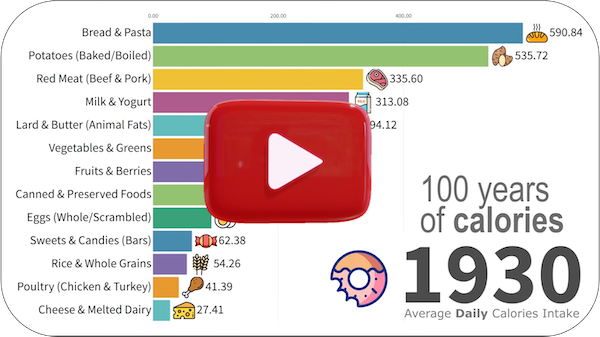
Check out the this visualization, which tracks the evolution of dietary calorie intake from 1930 to...

Taxpayer given 35% penalty for BAS recklessness
Following an application for a refund of nearly $94,000, the Administrative Review Tribunal has set aside an...

SMEs warned as ATO ramps up tax debt collection
One insolvency specialist has emphasised the importance of small businesses engaging their accountants to stay...

Does Your Small Business Need to Follow AML Privacy Rules?
Compliance with new anti-money laundering (AML) laws may subject your small business to additional privacy...

Don’t get caught out at tax time with your multiples jobs
Picking up a second job, holding multiple part-time roles, or doing gig work is now part of everyday life. But...

Global companies turn to cost-cutting amid ongoing inflation
Rising operating costs and persistent inflation are placing renewed pressure on businesses worldwide, despite...

Warning for early lodger this tax time!
The ATO has a clear message this year: slow down and get it right. Early lodgers are far more likely to make...

ATO no longer treating debt the same as during COVID
One expert has stressed the importance of tax agents reminding their clients that the ATO is no longer as...

The evolution of the world’s languages
Check out the evolution of the world's most spoken languages from 2500 BC to...
Latest Guests News
Newsletter Newslettter We are pleased to supply you with the latest edition of Client Alert, which...