- 234 Balaclava Road, Caulfield North VIC 3161
- contactus@guests.com.au
- (03) 9509 7033
Client Alert – December 2017
 Consultation paper: combating phoenix activities
The Federal Government has released a consultation paper proposing company and tax law reforms to combat phoenix activities.
Phoenix activities involve stripping assets from a company that’s in debt and transferring them to another company to avoid paying the first company’s liabilities – that is, the new company “rises from the ashes” of the old one.
The government is considering a range of ways to combat this type of activity, including setting up a hotline for phoenix reporting, adding phoenixing to the offences specifically prohibited under the Corporations Act 2001, making directors personally liable for companies’ unpaid GST, and limiting the ability for sole directors to resign unless there is a replacement director or the company is wound up.
New passive income test for lower corporate tax rate
The Federal Government has recently introduced a Bill into Parliament to ensure that companies with more than 80% passive income will not qualify for the reduced company tax rate.
Under the Bill’s changes to the Income Tax Rates Act 1986, calculations of a business’s “passive income” would include:
- distributions by corporate tax entities (other than non-portfolio dividends);
- franking credits attached to such distributions;
- non-share dividends;
- interest;
- royalties;
- rent;
- gain on qualifying securities;
- net capital gains; and
- amounts included in the assessable income of partners in a partnership or beneficiaries of a trust estate that are referable to another base rate entity passive income amount.
At the time of writing, the Bill is still before the Parliament. When passed, it will apply from the 2017–2018 income year.
The lower company tax rate of 27.5% is available in 2017–2018 for small businesses and corporate base rate entities with turnover of less than $25 million.
ATO guidance: what is “carrying on a business”?
The ATO has issued a draft taxation ruling to explain the factors it will consider when deciding whether a company (incorporated under the Corporations Act 2001) is “carrying on a business”. This is one of the tests companies and small businesses must pass to be eligible for the lower corporate tax rate.
It’s not possible to definitively state whether a company carries on a business, but the draft ruling says that ATO will consider a range of indicating factors. Specifically, a company is likely to be carrying on a business if it:
- is established and maintained to make a profit for its shareholders; and
- invests its assets in gainful activities that have both a purpose and prospect of profit.
Tip: Wondering whether you can access the reduced corporate tax rate? Talk to us today to find out more about how the passive income and carrying on a business tests apply to your situation.
Total superannuation balances and pension transfer balance account reports
The concept of a person’s “total superannuation balance” is now being used to determine whether you are eligible for various super concessions, including the $1.6 million balance limit for non-concessional contributions, Federal Government co-contributions, the spouse contributions tax offset, carrying forward unused concessional contributions and self-managed superannuation fund (SMSF) segregation.
The ATO has recently agreed to modify the reporting obligation for total superannuation balances, recognising that some funds are not in a position to correctly report their correct accumulation phase value for 30 June 2017.
The ATO has also set out when superannuation providers and life insurance companies must lodge transfer balance account reports. The ATO will use the reports to determine if individuals have exceeded their pension transfer balance cap.
An administrative concession will be provided for self-managed superannuation funds (SMSFs), allowing later reporting to help the funds transition to event-based transfer balance cap reporting.
TIP: Super shouldn’t be a “set and forget” arrangement. It’s important to revisit your strategy and consider it carefully, especially in light of the wide range of super changes announced in this year’s Federal Budget.
Fringe benefits tax: should an Uber be treated as a taxi?
Earlier in 2017, the Federal Court ruled that UberX drivers must be registered for GST, because they supply “taxi travel”. There has been much discussion of this finding since, and the ATO is now examining whether Uber trips should be eligible for the “taxi travel” FBT exemption.
The FBT exemption, introduced in 1995, currently only applies to travel in a vehicle that is state or territory licensed to operate as a taxi. However, with the Federal Court’s decision on GST for Uber, and some recent state and territory moves towards licensing changes, the ATO has decided to review its interpretation of the definition of “taxi” in the FBT law.
TIP: Any benefit arising from taxi travel by an employee is exempt from FBT if the travel is a single trip that begins or ends at the employee’s workplace.
In a discussion paper open for comment until late October, the ATO has asked questions such as, “Should the FBT definition of ‘taxi’ be interpreted to include not just vehicles licensed to provide taxi services … [but also] ride-sourcing vehicles and other vehicles for hire?”
TIP: Any benefit arising from an employee’s taxi travel is also exempt from FBT if the travel is a result of the employee’s sickness or injury and the journey is between the employee’s workplace, residence and/or another place appropriate because of the sickness or injury.
Tax treatment of long-term construction contracts
In new Draft Taxation Ruling TR 2017/D8, the ATO explains the methods that taxpayers can use to return income derived and recognise expenses incurred in long-term construction projects. A construction project is considered long-term if it straddles two or more income years.
Two methods of accounting are available: the basic approach (essentially the accruals method) and the estimated profits approach.
Once a particular method is chosen, the ATO expects the taxpayer to apply it consistently for the entire contract. The same method should also be applied to all of the taxpayer’s similar contracts.
The draft ruling also deals with several accounting methods that the ATO does not consider acceptable for long-term construction contracts, including the completed contracts method (bringing profits and losses to account when the contract is completed).
Foreign equity distributions to corporate entities
Two recent taxation determinations from the ATO deal with how the foreign equity distribution rules in the Income Tax Assessment Act 1997 apply where the distribution recipient is a corporate partner in a partnership or a corporate beneficiary of a trust.
Under the rules, a foreign equity distribution is treated as non-assessable, non-exempt income if the recipient is an Australian corporate tax entity that holds a participation interest of at least 10% in the foreign company making the distribution.
The ATO’s view is that a partnership or trust can hold a direct control interest in a foreign company for the purposes of the rules, so that an Australian corporate tax entity can have an indirect participation interest in the foreign company via the partnership or trust.
Client Alert – November 2017
Compensation for ATO systems outages
After the ATO’s unplanned systems outages, it provided lodgment deferrals, and remitted interest and penalties where the outages affected practitioners and their clients’ lodgments.
The ATO has also advised that it assesses claims for compensation in two ways:
- compensation for legal liability (eg negligence); and
- compensation under the Compensation for Detriment caused by Defective Administration (CDDA) scheme, which allows the ATO to consider claims and pay compensation for disadvantage or loss because of defective administration.
The ATO considers claims in accordance with guidelines issued by the Department of Finance.
TIP: If your tax affairs were affected by the ATO systems outages, contact us to find out if you’re eligible to seek compensation.
Small business restructure rollover: changes
The ATO is proposing to modify how the small business restructure rollover (SBRR) operates.
The SBRR means that small businesses can restructure from one legal entity to another – for example, from a company to a trust – and transfer the business’s assets to the new structure without immediately causing a capital gains tax liability.
The ATO’s latest proposed changes address the fact that the transferred business assets in this type of restructure could still give rise to a dividend for the transferee.
TIP: Are you thinking about changing how your small business operates? Talk to us for more information about the options and tax implications.
Tax cut closed off for passive investment companies
The Government has released exposure draft legislation to deny access to the lower corporate tax rate of 27.5% (down from 30%) for companies with predominantly passive income. Under the changes, companies will qualify for the lower tax rate only if:
- their passive income is less than 80% of their assessable income for the year;
- they “carry on a business” in that year; and
- they come below the aggregated turnover threshold for the year ($25 million for 2017–2018).
Identification numbers for directors: an Icarus moment for phoenix activities?
The Government has announced a package of reforms to combat phoenix activities, including the introduction of a Director Identification Number (DIN).
Phoenixing involves deliberately transferring assets from a failed or insolvent company to a new company, with the intention to avoid paying the original company’s creditors, tax and employee entitlements (that is, the new company illegally “rises from the ashes” of the indebted company).
The DIN would identify each director with a unique number, allowing regulators to map the relationships directors have with entities and other people.
Tax measures for affordable housing
The Government has released draft tax legislation to implement elements of its housing affordability plan. The proposed measures include an increased capital gains tax discount for people who hold affordable rental housing investments for at least three years.
Under the draft legislation, managed investment trusts would be allowed to hold affordable housing investments with the main aim of deriving long-term rental income, but purchasing residential property that is not affordable housing would no longer be permitted for these trusts.
TIP: If this legislation is passed, there will be a transitional period for managed investment trusts that already hold non-affordable housing residential property to change their investments to comply with the changes.
Legislation for First Home Super Saver scheme and downsizer super contributions
A Bill has been introduced into Parliament to establish the First Home Super Saver (FHSS) scheme and allow people aged 65 or over to make “downsizer contributions” to their super.
The FHSS scheme will allow people to make voluntary contributions into super, take advantage of the associated tax concessions, and later withdraw the contributions and associated earnings to buy their first home.
The downsizer contribution changes will allow older Australians who sell their main residence from 1 July 2018 to make non-deductible contributions of up to $300,000 to their superannuation from the sale proceeds.
No GST on digital currency: Bill
The GST Act (A New Tax System (Goods and Services Tax) Act 1999) is being amended to ensure that digital currency, such as Bitcoin, is disregarded for GST purposes unless the supply is made in exchange for a payment of money or digital currency.
To achieve this, a definition of “digital currency” will be inserted into the GST Act. Under the new definition, a digital currency has broadly the same features as state fiat currencies (legal tender). In particular, the value of a digital currency must derive from the market’s assessment of its value. A digital currency’s value cannot be based on the value of anything else, so it must not have, for example, a value pegged to Australian or United States dollars.
The currency units must be useable as consideration for any type of supply, and must be generally available to the public.
Units will not be considered digital currency if they give the holder benefits (such as memberships or vouchers), other than entitlements incidental to holding the unit or using it as consideration.
TIP: When the new definition passes into law, no GST will apply for supplies of digital currency made on or after 1 July 2017.
New financial and superannuation complaints authority
Legislation has now been introduced to establish a new external dispute resolution framework and an enhanced internal dispute resolution framework for the Australian financial system.
Consumers will have easy access to a single external dispute resolution scheme, the Australian Financial Complaints Authority (AFCA). Certain firms that provide financial and credit services will need to be members of AFCA, including Australian financial services licensees, unlicensed product issuers, unlicensed secondary sellers, Australian credit licensees and credit representatives, regulated superannuation funds (other than SMSFs), approved deposit funds, retirement savings account providers, annuity providers, and life policy funds and insurers.
Before AFCA will consider a dispute, it will refer the complaint back to the financial firm so it can attempt to resolve the dispute within a defined timeframe. AFCA will also have an independent assessor to investigate any complaints about how disputes are handled.
Superannuation guarantee
Crackdown on employer non-compliance
The Government has announced a package of reforms to give the ATO near-real-time visibility over employers’ superannuation guarantee (SG) compliance. The package includes measures to:
- require super funds to report contributions at least monthly to the ATO;
- roll out Single Touch Payroll (STP); and
- give the ATO the ability to seek court-ordered penalties in severe cases of non-payment.
Salary sacrifice integrity
Legislation has also been introduced to prevent employers from using an employee’s salary sacrifice contributions to reduce the employer’s own minimum SG contributions. This change would apply to working out employers’ SG shortfalls for quarters beginning on or after 1 July 2018
Single Touch Payroll
Single Touch Payroll refers to the way many businesses will have to manage their PAYG obligations from April 2018. In all probability all business will have to do so from July 1 2019 if the necessary legislation passes through government.
The following two resources will further explain this change and what it means to you. The first is a PDF we have prepared and the second is an ATO video.
Single Touch Payroll
Addendum to use with client engagement letters from 8 October 2017.

Dear client
This addendum to (my/our) engagement terms, as outlined in the engagement document, is to advise that effective from today the limited liability scheme which (I was/we were) a participant in has ended. It is envisaged that a new scheme will commence in the near future which (I/we) will communicate to you at the appropriate time.
Please rest assured that this does not impact (my/our) ability to continue to perform the services, as agreed in the engagement documentation, to the highest standards. (I/We) will continue to adhere to all the professional standards, legislative and regulatory requirements (as applicable) which includes compliance with APES 110 Code of Ethics for Professional Accountants as required by being a member of CPA Australia. As a reminder, (I am/we are) subject to review as part of the quality control review program of CPA Australia which monitors compliance with professional standards by its members. Finally, (I/we) continue to be covered by appropriate levels of Professional Indemnity Insurance.
Should you have any questions please contact us.
Client Alert – October 2017
Bill to increase Medicare levy
The Medicare Levy Amendment (National Disability Insurance Scheme Funding) Bill 2017 has been introduced to implement the Government’s 2017–2018 Budget announcement to increase the Medicare levy by 0.5% to 2.5% from 1 July 2019 in order to help finance the National Disability Insurance Scheme (NDIS). Nine other Bills have been introduced to increase the following rates that are linked to the top personal tax rate.
TIP: Think you may be affected by personal tax rate changes? Contact us to find out more.
Budget changes to foreign resident CGT: draft legislation
Draft legislation has been released to implement 2017–2018 Federal Budget measures relating to the CGT liability of foreign residents. The measures, which applied from 9 May 2017:
- remove the entitlement to the CGT main residence exemption (MRE) for foreign residents that have dwellings that qualify as their main residence; and
- ensure that, for the purpose of determining whether an entity’s underlying value is principally derived from taxable Australian real property (TARP), the principal asset test is applied on an associate inclusive basis.
Foreign resident CGT withholding: early recognition of tax credit
The Commissioner has made a determination to modify the time at which the vendor is entitled to a tax credit in respect of an amount withheld under the foreign resident CGT withholding rules.
The modification, applicable for transactions entered into on or after 1 July 2016, ensures that, where a settlement period for a transaction covers more than one income year for the vendor, the credit entitlement will be available in the same year as that in which the transaction giving rise to the payment to the ATO is recognised for tax purposes for the vendor.
Further guidance for tax losses via
a new “similar business” test
The ATO has released a draft guideline on how they will apply the new “similar business test” to supplement the existing “same business test” used for testing whether a company can utilise an earlier year tax loss.
The draft guideline says the similar business test will operate in a way that is comparable to the same business test, and that the overall business of a company must satisfy the similar business test to access losses. The focus remains on the identity of a business, as well as continuity of business activities to generate assessable income.
ATO increases its scrutiny on work-related expenses
Despite wide publicity on the issue, the ATO has reminded taxpayers that it is increasing its scrutiny on work-related expenses. Last year over 6.3 million people made a work-related expense claim for clothing and laundry expenses, totalling almost $1.8 billion. Common mistakes the ATO has seen include people claiming ineligible clothing, claiming for something without having spent the money, and not being able to explain the basis for how the claim was calculated.
Tip: Unsure about what you can claim as work-related expenses? Talk to us to avoid making a mistake.
Activity statements can now be lodged in advance
The ATO says nil activity statements can be generated early in some cases. Under normal bulk processes, activity statements generally issue from the ATO by the end of the month.
However, the ATO says there may be a specific reason for a business to access its activity statements early, such as: if you are a short-term visitor (for example, you are an entertainer or sports person and will be leaving during the relevant period); or know that you will be travelling when an activity statement is due.
Tip: Activity statements can be generated for up to six months in advance.
New downsizing cap available
If you are aged 65 or over, your home is your main residence for CGT purposes and you have owned it for a minimum of ten years, you could benefit from new draft legislation. You will be able to make additional non-concessional contributions, up to $300,000, from the proceeds of selling your home from 1 July 2018.
The downsizer contribution cap of $300,000 will be in addition to existing caps; the capital must come from the proceeds of the sale price and application must be made within 90 days after the home changes ownership. There will also be exemption from the contribution rules for people aged 65 and above, and the restrictions on non-concessional contributions for people with total super balances above $1.6 million.
Tip: Thinking of downsizing? Speak to us about what this could mean for you in terms of tax concessions.
GST: simplified accounting for
food retailers
The ATO has released a draft determination on the choice available to you, if you are a food retailer, to use a simplified accounting method (SAM) to help you to work out your net amount by estimating your GST-free sales and GST-free acquisitions of trading stock.
The Draft SAM is substantially the same as the previous determination it replaces. If you were eligible to use a particular SAM specified in the previous determination, you will continue to be eligible to use that SAM under the draft determination.
Tip: Are you a food retailer? We can help you to use the simplified accounting method for your business.
Super system reforms
Australian Prudential Registration Authority (APRA) has written to RSE licensees setting out its approach to the Government’s super system reforms aimed at enhancing APRA’s prudential powers to improve member outcomes. Under the proposed reforms, the current “scale test” will be replaced with an “outcomes test” requiring MySuper trustees to attest to outcomes promoting the financial interests of members on a broader range of indicators.
Segregated current pension assets
A warning has been issued from the Actuaries Institute that tens of thousands of self-managed super funds (SMSFs) could be at risk of incorrectly claiming exempt current pension income (ECPI) under the ATO’s approach to segregated current pension assets.
First Home Super Saver Scheme – draft legislation
Treasury has released draft legislation to implement the 2017–2018 Federal Budget superannuation measures aimed at improving housing affordability by the establishment of the First Home Super Saver Scheme (FHSSS).
The FHSSS will allow voluntary superannuation contributions made from 1 July 2017 to be withdrawn for a first home deposit starting from 1 July 2018. The scheme provides for up to $15,000 per year (and $30,000 in total) to be withdrawn from superannuation.
Tip: To be eligible to use the FHSSS, a person must be 18 years or over, have not used the scheme before and never have owned property before in Australia.
Super assets total $2.3 trillion at June 2017
APRA has released its Quarterly Superannuation Performance publication and the Quarterly MySuper Statistics report for the June quarter 2017. As at
30 June 2017, superannuation assets totalled $2.324 trillion (up 10% from $2.113 trillion in June 2016).
Total assets in MySuper products amounted to $595 billion (up 25.5% from $474 billion in June 2016).
Self-managed super fund (SMSF) assets totalled $697 billion (up 9.8% from $635 billion in June 2016) held in over 596,000 SMSFs, representing 30% of all super assets.
Due Diligence Checklist: Purchasing a Business
Client Alert – September 2017
Work-related expense claims
under scrutiny
Will you claim work-related expenses on your tax return this year? The ATO now uses real-time data to compare people’s tax returns with others in similar occupations and income brackets. This year it’s focused on identifying higher-than-expected claims for expenses related to work vehicles, travel, internet and mobile phones, and self-education, and may even check people’s work deduction claims with their employers.
TIP: Ever heard that you can make a standard claim of $300 for work-related expenses even if you don’t have evidence? This isn’t true! The ATO doesn’t ask for receipts up front for claims up to $300, but you must have actually spent what you claim, and be able to show how you worked out your deductions if the ATO asks.
The ATO’s also concerned about people’s many incorrect claims for work-related clothing and laundry expenses. In 2014–2015, around 6.3 million people made claims against clothing expenses, but work-related deductions are in fact only available for specific uniforms and protective clothing items, not for everyday clothes you buy, launder and wear for work.
Employee travel expense deductions
The ATO has also released new guidance on work-related travel deductions. To claim for transport or other employee travel expenses (like accommodation and meals) in your tax return, you must have incurred the expenses as part of gaining or producing your taxable income. Private and domestic travel expenses, including the costs of your ordinary home-to-work travel, aren’t claimable.
Transport costs for work-related travel may be deductible, but the ATO will consider factors such as:
- whether the travel is a necessary part of performing your work (you can’t pretend your family holiday’s a work trip);
- whether your employer pays you to undertake the travel; and
- whether you have to follow your employer’s instructions during the travel period.
Accommodation, meal and other incidental expenses are deductible as work-related only if your work has “special demands” or “co-existing work locations” that mean you have to sleep away from home.
TIP: We’re here to help – contact us to find out more about getting your work-related tax deductions right.
Working holidaymakers and
tax returns for 2017
If your business employs working holidaymakers – or you’ve been one yourself this year! – you need to know about the “backpacker tax” changes that came into effect from 1 January 2017.
Employers needs to issue two payment summaries to each working holidaymaker for the 2016–2017 financial year:
- one for income earned up until 31 December 2016; and
- one for income earned after 1 January 2017 (using payments code H).
All employers need to include code H on payment summaries of backpacking workers’ post-1 January income, even if the employer isn’t registered with the ATO as employing working holidaymakers.
tip: If only one payment summary is issued, the income needs to be apportioned so the before and after 1 January amounts appear separately on the working holidaymaker’s tax return.
Small businesses
Asset write-offs
Small businesses with a turnover of less than $10 million can get an immediate deduction for assets that cost up to $20,000 each in their 2016–2017 return. The $20,000 threshold now applies until 30 June 2018.
Assets that cost $20,000 or more can’t be immediately deducted. They need to be deducted over time using a small business asset pool.
Tip: It’s important to apply all of the simplified depreciation rules correctly so your business doesn’t under-claim for its eligible assets. Talk to us today for more information.
Tax debts: setting up a payment plan
Does your small business have a tax debt? The ATO encourages you to get in touch to set up a payment plan. If the debt is $100,000 or less, you can use the ATO’s self-help service to easily arrange paying by instalments.
If a business pays its tax debt late or by instalments, interest accrues on the unpaid debt. However, some businesses with activity statement debts may be eligible for interest-free payment plans.
To deal with a business tax debt of more than $100,000, you can phone the ATO on 13 11 42.
Tip: Your business still needs to lodge all of its ongoing activity statements and tax returns on time, even if you have a payment plan or can’t pay by the due date.
Federal Court rules on
PAYG avoidance
The Federal Court and Administrative Appeals Tribunal have agreed with the ATO that a business, Sunraysia Harvesting Contractors Pty Ltd, was making use of a “sham” arrangement with three other companies to avoid pay as you go (PAYG) and payroll accounting responsibilities. Sunraysia’s operators argued, unsuccessfully, that the three other companies employed Sunraysia’s workers, and those companies were responsible for PAYG deductions and payroll tax. The Federal Court said the arrangement was a “crude” structure with “no worth”, and ruled to deny Sunraysia’s input tax credits and impose penalties for GST shortfall and the business’s failure to meet its PAYG, payroll and other income tax obligations.
Tax assessments confirmed for undisclosed business income
The Administrative Appeals Tribunal has ruled that the ATO was correct to issue tax assessments of $3.7 million and penalties of $3.3 million to a business taxpayer that had underreported its income and failed to lodge several years worth of tax returns. The taxpayer, PSI Pty Ltd, argued that it owned and rented out several Sydney properties, but did not engage in other business activities or receive the significant amounts of income that the ATO had assessed to it.
In fact, evidence before the Tribunal showed that PSI made a range of expensive capital purchases, including fitness equipment, more than 30 motor vehicles, firearms and a “bomb dog”. Its bank statements included references to “consultation fees”, “gun licenses” and a “security industry register”, a loan application suggested income 20 times what the taxpayer admitted to earning, and PSI had apparently made significant loans to related parties with no returns.
The Tribunal upheld the assessments and penalties issued, and allowed the ATO to impose an extra 20% penalty for two of the taxpayer’s income years.
ASIC takes action on super fund disclosures
Under Australia’s superannuation law, super funds must disclose transparency information on a website and keep it up to date at all times.
The Australian Securities and Investments Commission (ASIC) recently investigated and contacted 21 superannuation trustees about their failures to meet the disclosure requirements.
In response, seven trustees acted to disclose the required information, five made it easier to find the information online, trustees of two small funds sought relief from the obligations, seven trustees wound up their funds, and two improved their procedures for ensuring they kept disclosed information up to date.
Tip: Transparency information needs to include details about the fund’s governance, executive officer remuneration, fund trust deeds and product disclosure statements, a summary of significant event notices and a summary of how the trustee voted in the last financial year regarding its listed shares.
Companies should consider reporting tax liabilities: AASB
Sometimes it’s unclear how tax law applies to a company transaction or circumstance and how the ATO will treat it. New guidance from the International Financial Reporting Standards Interpretations Committee (IFRIC) explains how companies should reflect this uncertainty in their accounting for income taxes.
Although the new guidance isn’t in effect until January 2019, the Australian Accounting Standards Board (AASB) recommends that all Australian companies reassess whether to record a tax liability in their 2017 reporting.
Client Alert – August 2017
Tax cut for small business: ATO will amend returns
For the 2016–2017 income year, the company tax rate for small businesses decreases to 27.5%. Companies with turnover of less than $10 million are eligible for this rate. The maximum franking credit that can be allocated to a frankable distribution has also been reduced to 27.5% for these companies.
The reduced company tax rate of 27.5% will progressively apply to companies with turnover of less than $50 million by the 2018–2019 income year. The ATO says if a company lodged its 2016-17 company tax return early, and its turnover is less than $2 million, it will amend the return and apply the lower tax rate.
If the company’s turnover is from $2 million to less than $10 million, the company will need to review its return and lodge an amendment if required.
Instant asset write-off extended for small business entities
The Treasury Laws Amendment (Accelerated Depreciation For Small Business Entities) Act 2017 extends the period during which small business entities (SBEs) can access accelerated depreciation. The extension is for 12 months, ending on 30 June 2018.
SBEs will be able to can claim an immediate deduction for depreciating assets that cost less than $20,000, provided the asset is first acquired at or after 12 May 2015, and first used or installed ready for use on or before 30 June 2018. Depreciating assets that do not meet these timing requirements will continue to be subject to the $1,000 threshold.
SBEs will be able to claim an immediate deduction for depreciating assets that cost less than $1,000 if the asset is first used or installed ready for use on or after 1 July 2018.
ATO update on Manage ABN Connections
The ATO says feedback from tax professionals on the Manage ABN Connections identified that further work is required to meet their needs. The ATO advised that the myGov login is therefore not currently available to access the Tax or BAS Agent Portals. If a tax agent’s client already has a myGov account linked to the ATO, Centrelink or Medicare, they can now use Manage ABN Connections to access government online business services.
Work-related deductions denied: lack of documenting evidence
A pipe fitter has been denied deductions by the Administrative Appeals Tribunal (AAT) for work-related expenses. The AAT disallowed the claims because the taxpayer was unable to produce adequate documentary evidence.
Super reforms: changes to TRIS, CGT relief, pension cap and LRBA integrity rules
The Treasury Laws Amendment (2017 Measures No 2) Act 2017 makes a range of technical amendments to the super reform legislation.
TRIS rules for becoming retirement phase pension
The amendments deem a transition-to-retirement income stream (TRIS) to be in retirement phase where the recipient of the income stream has satisfied a condition of release with a nil cashing restriction (eg retirement or attaining age 65). This means that a TRIS will stop being a pension (subject to 15% tax on fund earnings from 1 July 2017) and become a retirement phase superannuation income stream that qualifies for the earnings tax exemption once the recipient notifies the fund that a nil condition of release under the Superannuation Industry (Supervision) Regulations 1994 (SIS Regs) has been satisfied.
CGT relief for TRIS assets
The period in which an asset supporting a TRIS can cease to be a segregated current pension asset of a fund and still qualify for CGT relief will be extended to include the start of 1 July 2017.
Pension balance credit for LRBA repayments
The Act provides that an additional pension transfer balance credit will arise for certain repayments of a limited recourse borrowing arrangement (LRBA) by a self-managed superannuation fund (SMSF) that shifts value between an accumulation phase interest to a retirement phase superannuation income stream interest in the fund: new s 294-55 of ITAA 1997.
Pension transfer balance cap
The Act also makes the following changes to the $1.6 million pension transfer balance cap provisions.
SMSF annual return: key changes for 2016–2017
The ATO has released the 2017 self-managed superannuation fund (SMSF) annual return and instructions. Key changes for 2017 include the transitional CGT relief for super funds as part of the 1 July 2017 reforms, reporting on limited recourse borrowing arrangements (LRBAs) and early stage investor tax incentives.
Single Touch Payroll operative for early adopters
Single Touch Payroll (STP) is here. It had a “soft” or voluntary start on 1 July 2017. From that date, employers may choose to report under STP. For those who qualify (ie employers with 20 or more employees), STP will be mandatory from 1 July 2018.
For employers with 19 or fewer employees on 1 April 2018, their reporting obligations will not change. They will not need to start reporting through STP from 1 July 2018, but may choose to start using a payroll solution to take advantage of the benefits of STP reporting.
“Netflix” tax: who is an Australian consumer?
From 1 July 2017, the supply of services, digital products or rights are connected with Australia (and so potentially liable to GST) if made to an Australian consumer by an overseas-based supplier. This is referred to as the digital import or “Netflix tax” rules.
GST Ruling GSTR 2017/1 explains how overseas suppliers can decide whether a recipient of a supply is an Australian consumer. It explains what evidence suppliers should have, or what steps they should take to collect evidence, in establishing whether or not the supply is made to an Australian consumer.
New draft GST guidelines issued
Supplies through electronic distribution platforms
Draft Law Companion Guideline LCG 2017/D4 (the Draft) deals with how the ATO intends to apply the Netflix and low-value imported goods measures to supplies made through electronic distribution platforms (EDPs).
The draft guidance sets out a four-step approach for determining whether an EDP operator is responsible for GST.
Redeliverers and supplies of low-value imported goods
Draft Law Companion Guideline LCG 2017/D5 explains the measures in the Treasury Laws Amendment (GST Low Value Goods) Bill 2017 (awaiting assent) that will make redeliverers responsible for GST on offshore supplies of low-value goods from 1 July 2018.
The Bill imposes GST on supplies of imported low-value goods, ie those worth less than A$1,000. Under the reforms, a redeliverer will be treated as the supplier if low-value goods are delivered outside Australia as part of the supply and the redeliverer assists with their delivery into Australia as part of, broadly, a shopping or mailbox service that it provides under an arrangement with the consumer.
Client Alert – July 2017
In this issue:
- Tax cut for small businesses – Legislation has now passed to apply a 27.5% corporate tax rate from 1 July 2016 for small business entities (SBEs) with aggregated turnover of under $10 million.
- Instant asset write-off extended for small business entities – The Treasury Laws Amendment (Accelerated Depreciation For Small Business Entities) Act 2017 extends the period during which SBEs can access accelerated depreciation. The extension is for 12 months, ending on 30 June 2018.
- ATO update on Manage ABN Connections – The ATO says feedback from tax professionals identified that further work is required to meet their needs. The ATO advised that the myGov login is therefore not currently available to access the Tax or BAS Agent Portals.
- Work-related deductions denied – A pipe fitter has been denied deductions by the AAT for work-related expenses because the taxpayer was unable to produce adequate documentary evidence.
- Super reforms – The Treasury Laws Amendment (2017 Measures No 2) Act 2017 sees changes to TRIS, CGT relief, pension cap and LRBA integrity rules come into effect from 1 July 2017.
- Self-managed super funds – The 2017 SMSF annual return and instructions have been released. The key changes include the transitional CGT relief for super funds as part of the 1 July 2017 reforms, reporting on limited recourse borrowing arrangements (LRBAs) and early stage investor tax incentives.
- Single Touch Payroll operative for early adopters – Single Touch Payroll (STP) is here. It had a “soft” or voluntary start on 1 July 2017. From that date, employers may choose to report under STP.
- “Netflix” tax – From 1 July 2017, the supply of services, digital products or rights are connected with Australia (and so potentially liable to GST) if made to an Australian consumer by an overseas-based supplier. GST Ruling GSTR 2017/1 explains how overseas suppliers can decide whether a recipient of a supply is an Australian consumer.
- GST draft guidelines – New draft guidelines have been issued explaining the low-value imported goods measures and how they apply to supplies made through electronic distribution platforms (EDPs) and redeliverers of offshore supplies.
- R & D Grants – Clients undertaking Research & Development projects should contact the office as there may be government grants available.
- Confused about Aged Care? – Please contact Guests as we are able to advise and liaise with Aged Care Specialists.
- AFSL – Our associated company, Guests Superannuation Services Pty Ltd, has been granted a limited Australian Financial Services Licence to advise on the establishment or winding up of Self-Managed Superannuation Funds, contributions, contribution strategies and the payment of pensions.
Guests Accounting appoints new director: Ha Nguyen
The Directors of Guests Accounting are pleased to announce the appointment of Ha Nguyen (BBus MBA CPA) as a Director.
Ha has been with Guests for 15 years and has acted in a number of senior roles. She is a highly qualified professional who possesses extensive analytical skills in management accounting and is a technical expert in cloud accounting technologies.
Coupled with in depth knowledge as a tax and business advisor, Ha acts on a number of professional board committees and has regularly lectured at various Universities.

Client Alert – June 2017
In this issue:
- Tax assistance for people affected by Cyclone Debbie
- ATO adds value to developing financial literacy
- Does your business import or export goods and services?
- Senate Committee holds corporate tax avoidance hearing
- Higher education HELP changes: faster repayments and threshold changes
- Super guarantee non-compliance: Senate Committee report
- Illegal SMSF early access scheme leads to $6,000 fine
Latest Industry News

How Do I Write Legally Compliant Terms and Conditions for My Business?
Terms and conditions bind your customers only where they actively accept them, so a tick box at checkout holds...

Paid parental leave super contributions have started
From July 2026, the new Paid Parental Leave Superannuation Contribution (PPLSC) has started. From...

If the business is no longer profitable, and is unlikely to be profitable in the future, your best option may...
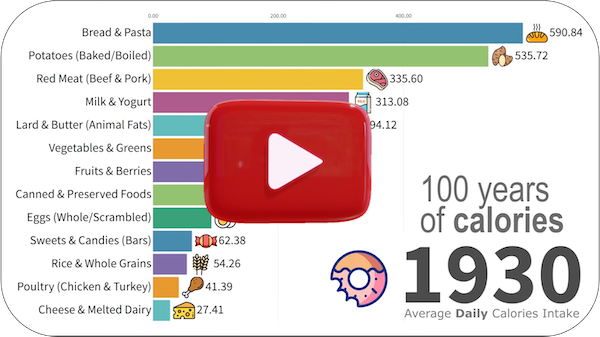
Check out the this visualization, which tracks the evolution of dietary calorie intake from 1930 to...

Taxpayer given 35% penalty for BAS recklessness
Following an application for a refund of nearly $94,000, the Administrative Review Tribunal has set aside an...

SMEs warned as ATO ramps up tax debt collection
One insolvency specialist has emphasised the importance of small businesses engaging their accountants to stay...

Does Your Small Business Need to Follow AML Privacy Rules?
Compliance with new anti-money laundering (AML) laws may subject your small business to additional privacy...

Don’t get caught out at tax time with your multiples jobs
Picking up a second job, holding multiple part-time roles, or doing gig work is now part of everyday life. But...

Global companies turn to cost-cutting amid ongoing inflation
Rising operating costs and persistent inflation are placing renewed pressure on businesses worldwide, despite...

Warning for early lodger this tax time!
The ATO has a clear message this year: slow down and get it right. Early lodgers are far more likely to make...

ATO no longer treating debt the same as during COVID
One expert has stressed the importance of tax agents reminding their clients that the ATO is no longer as...

The evolution of the world’s languages
Check out the evolution of the world's most spoken languages from 2500 BC to...
Latest Guests News
Newsletter Newslettter We are pleased to supply you with the latest edition of Client Alert, which...