- 234 Balaclava Road, Caulfield North VIC 3161
- contactus@guests.com.au
- (03) 9509 7033
Super for housing measures enter Senate
The bills for the First Home Super Saver Scheme and the downsizing measures for Australians over the age of 65 have now passed the House of Representatives.
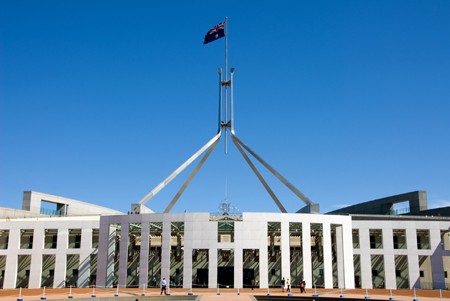
The bills for the First Home Super Saver Scheme and the downsizing measures for Australians over the age of 65 have now passed the House of Representatives.
The First Home Super Saver Tax Bill 2017 and Treasury Laws Amendment (Reducing Pressure on Housing Affordability Measures No. 1) Bill 2017 were introduced into Parliament last month, and are now before the Senate.
The First Home Super Saver Tax Scheme, first announced in the federal budget in May this year, will enable prospective first home buyers to save for a deposit inside their superannuation account, if passed.
Individuals will be able to contribute up to a total of $30,000 or up to $15,000 annually to superannuation, and later withdraw these contributions from 1 July 2018, said Treasurer Scott Morrison.
“These contributions, along with deemed earnings, can be withdrawn for a deposit with withdrawals taxed at a marginal tax rate less a 30 per cent offset,” he said.
Dixon Advisory managing director — head of advice Nerida Cole previously urged both sides of governments to pass the legislation so that first home buyers have certainty that the proposal will be available for use in 2017.
“The proposed First Home Super Saver Scheme offers tax concessions for first home buyers, to help them get to their savings target more quickly,” said Ms Cole.
The downsizing measures will enable older Australians to contribute proceeds from the sale of their family home into their superannuation accounts.
“From 1 July 2018, people aged over 65 will be able to make an additional non-concessional contribution of up to $300,000 into superannuation when they sell their home which they’ve held for at least 10 years,” said Mr Morrison.
“Both members of a couple can take advantage of this measure, meaning up to $600,000 of contributions may be made by a couple from the proceeds of selling their home.”
By: Staff Reporter
19 OCTOBER 2017
smsfadviser.com
300,000 SMEs utilising $20K write-off, says ATO
The average amount claimed through the instant asset write-off more than doubled in the 2015-16 financial year, according to the ATO’s latest data.

The average amount claimed through the instant asset write-off more than doubled in the 2015-16 financial year, according to the ATO’s latest data.
Minister for Small Business Michael McCormack said that up to 300,000 small businesses took advantage of the $20,000 instant asset write-off in 2015-16, helping to improve cash flow for business owners.
“In 2015-16, the number of claims increased by 50,550 and the average amount claimed increased by $4,065 to $9,000,” Mr McCormack said.
“This means more money in the pockets of small businesses so they can grow their businesses, employ workers and pay them more.
“The instant asset write-off is directly helping small business' bottom lines and improving cash flow for small business which means more investment in local communities, higher wages and more local job opportunities.”
The instant asset write-off threshold was increased to $20,000 in 2015, and was extended to 30 June 2018 earlier this year.
Small businesses with an annual turnover of less than $10 million can access the concession, up from $2 million in previous years.
“Small business is a major contributor to our economy and employs almost half of our workforce. Creating the right conditions for the sector to thrive will create local jobs, build communities and continue to grow the economy,” said Mr McCormack.
“Cash flow is so important for small business operators and the instant asset write-off means that tradies can invest in better tools, cafes and restaurants can upgrade their equipment and all small businesses can reinvest to grow their business.
“These great results are set to continue with tens of thousands more small businesses able to access the instant asset write-off thanks to the government’s increase in the small business turnover threshold to $10 million per year.”
Mr McCormack has yet to indicate if the instant asset write-off will be further extended despite calls from small business owners to make the concession permanent.
MYOB chief executive Tim Reed said their latest Business Monitor Survey of over 1,000 SME owners found that keeping the instant asset tax write-off was top of mind for them.
“SMEs have consistently called for the government’s $20,000 instant asset tax write-off to be made permanent, and support for this measure continues to grow in our latest survey,” Mr Reed said.
“As such a vital contributor to our economy, it’s important that the government listens to the concerns of small businesses owners and provides policies which enable them to be successful.”
By: Jotham Lian
16 OCTOBER 2017
accountantsdaily.com.au
Four housing tax measures progress to Parliament
Legislation for a number of housing affordability tax measures announced in the federal budget 2017 are being introduced to Parliament today.

Four key tax measures from the government’s housing affordability package will be introduced to parliament today according to a media release from Treasurer Scott Morrison.
One measure is the First Home Super Saver Scheme (FHSSS) which will enable prospective first home buyers to save for a deposit inside superannuation.
PwC private clients director, Liz Westover, and Deloitte superannuation head, Russell Mason, have both previously voiced their support of this measure.
“What this does is give them the capacity to save in a tax effective environment without compromising those retirement savings,” Ms Westover said.
A more controversial measure that will prevent property investors from claiming travel expenses to inspect residential investment properties and limit the depreciation deduction claims investors will be able to make on properties purchased after 9 May 2017 was also introduced.
The Institute of Public Accountants’ senior tax adviser, Tony Greco, recently told Accountants Daily that he believes these measures go against the basis of Australia’s tax system.
“The premise behind our tax system is the ability to claim an expense against the revenues, so what they’re doing is they’re altering that fundamental right,” Mr Greco said.
The government’s foreign resident vacancy levy, which will place an annual vacancy charge on foreign residential real estate owners if their property is not occupied or available on the rental market for at least six months in a 12-month period, will also be introduced.
Finally, a downsizing measure will be introduced, which will allow older Australians to contribute proceeds from the sale of their family home into their superannuation accounts.
LARA BULLOCK
7 Sep 2017
accountantsdaily.com.au
AirBnb – wrong tax outcome?
We are seeing an evolution of income earning opportunities and waiting for regulators to keep up.

Uber, Bitcoin and AirBnb are examples of new ideas that have generated new ways of creating income and doing business. Legislation can lag behind.
Whilst legislation and Australian Taxation Office Rulings have addressed ride sharing and cryptocurrency, there are gaps in house sharing treatment.
Where a home is made available through a home sharing site such as Airbnb, it may provide a significant benefit for the home owner to move out and obtain temporary accommodation (e.g. a hotel). Current legislation would decree that the hotel costs would be private or domestic and therefore not deductible against the home rent received.
Whilst there is no doubt that the only reason for the incurring of the costs is to derive rent, most tax advisers opinion is that the expenditure is private and not deductible.
The rules need to change – maybe a dominant purpose rule.
AcctWeb
Are young investors wasting their youth?
It was George Bernard Shaw who coined the phrase ‘youth is wasted on the young’. In Australia today, it seems the young may be wasting their investing youth.

The great advantage the young – and here we are referring to 18-25 year olds – have over those of us closer to retirement is time.
Time is a powerful investment tool because it gives you the ability to take a long-term view and ride through the inevitable market ups and downs.
Serious market downturns like the 2008 global financial crisis look completely different if viewed through the eyes of a 25-year old versus a 65-year old.
Investment experience suggests the GFC was a buying opportunity for the young and – depending on their asset allocation – a distressing lifestyle changing event for the recently retired.
Which makes the results of the 2017 ASX Australian Investor Study noteworthy. The survey of 4000 investors by Deloitte found that younger Australian investors were highly conservative in their attitude to investment risk.
The ASX survey found that around 31 percent of younger people wanted guaranteed returns and only 19 per cent would accept variability in returns. In contrast only 8 per cent of those surveyed aged over 75 look for guaranteed returns and 35 percent would accept variability in returns.
Interestingly, Australians are more conservative than investors in other countries according a global study of investor risk tolerance done by fund manager Legg Mason in 2015 that found only 29 percent of Australian investors would be prepared to increase their risk profile for the opportunity to gain extra income. Globally 66 percent of investors said they would be prepared to increase risk for the chance of higher yield.
Investing is essentially about getting the risk and return balance right and a key determinant is an investor’s age.
For younger investors their relative youth is an asset that it seems many – paradoxically perhaps given risk-taking behavior more typical of 18-25 year olds – are undervaluing. Although a younger investor might feel more comfortable investing more conservatively, what they may not be considering is the opportunities for growth they are passing up in favour of short-term stability.
Another interesting stat from the survey was that only 37 per cent of young investors used financial advice to help them make investment decisions, compared to 45 per cent for all investors.
Although many investors perceived that going to an adviser was too expensive or perhaps weren’t sure of their value proposition, a good financial adviser who can help an investor determine an appropriate level of risk based on their goals and time horizon, and then help them maintain the discipline and focus to stick to their plan through market ups and downs, could be one of the most valuable investments of all.
Written by Robin Bowerman
Head of Market Strategy and Communications at Vanguard.
05 September 2017
vanguardinvestments.com.au
ATO sending ‘more letters than ever’ on income tax errors
One firm believes the ATO is distributing more letters than ever to taxpayers whose tax returns’ have been flagged as failing their data matching processes.

The ATO’s new data matching technology is catching out more taxpayers than ever this year according to online tax agents Etax.
This approach was no secret ahead of tax time, with ATO assistant commissioner Kath Anderson reminding accountants and SMEs in June that the ATO would be using real-time data to compare taxpayers with others in similar occupations and income brackets to identify higher-than-expected claims.
Etax senior tax agent, Liz Russell, said that thousands of Australians have received data matching letters, and is urging accountants to work with affected clients to take action.
“If you bury your head in the sand and do nothing, the ATO will make an adjustment based on what it thinks. They can adjust details and remove deductions they’re suspicious about. This could end up costing you hundreds, if not thousands of dollars,” Ms Russell said.
Ms Russell said that while the number of data matching letters being issued has increased this year, it is difficult to ascertain how many findings are from deliberate mis-reporting.
“Taxpayers tend to receive these letters off the back of common mistakes, for example they forgot to include one PAYG summary after switching jobs during the year, or they didn’t realise that bank interest, allowances and Centrelink payments like Newstart and Youth Allowance, are classified as income and must be declared on your tax return,” Ms Russell said.
“This year, we are seeing more data matching letters being issued, but that doesn’t mean more people are doing the wrong thing. The ATO’s latest technology helps it cast a wider net and catch more errors or unusual deductions claims.”
LARA BULLOCK
15 Sep 2017
accountantsdaily.com.au
Property, unit trusts in ATO’s sights
One big four accounting firm says the ATO has started to zoom in on property development in unit trusts being held in SMSFs and the calculation of valuations for these assets.

Speaking at the National SMSF Conference 2017, EY executive director Matina Moffitt says the ATO will soon be issuing guidelines around particular trusts due to the growing concern around the valuations and relationship aspect.
Ms Moffitt also said that professionals need to engage with members early on to inform them on their obligations in needing to value their unit trust assets after noticing how members have been caught out.
“That’s great that they have those unit trusts but you know that you have to value those assets at market value to support what the SMSF needs and they are absolutely surprised,” said Ms Moffitt.
“Nobody has warned them that if their SMSF invests in that unit trust there could be a demand or a request from the super fund to say, ‘I need those assets valued at market value’ and they do get caught out.
“It’s such an important thing for accountants, financial planners and auditors to be involved with members early enough to be able to give them that advice and more information they need.”
In explaining the ATO’s increased scrutiny, Ms Moffitt gave an example of a possible property developer scheme coming into play.
“A SMSF has $50 invested in a property trust because the units were valued at $1 because there was nothing in the fund and the next year development was done, completed and sold and they made $20 million,” she said
“Nothing illegal about it because it was all there in black and white but you have to wonder would that be something the tax office would then focus on.
Watch out, there will be a lot more coming out from the ATO around this particular area, they certainly do believe it is a concern and I think they do believe there is a property developer scheme coming into play here.”
JOTHAM LIAN
26 Sep 2017
smsfadviser.com
Australian Dietary Guidelines and healthy eating chart (PDF)
The Australian Dietary Guidelines give advice on eating for health and wellbeing. They’re called dietary guidelines because it’s your usual diet that influences your health. Based on the latest scientific evidence, they describe the best approach to eating for a long and healthy life.

—————————————————–
What are the Australian Dietary Guidelines?
The Australian Dietary Guidelines have information about the types and amounts of foods, food groups and dietary patterns that aim to:
- promote health and wellbeing;
- reduce the risk of diet-related conditions, such as high cholesterol, high blood pressure and obesity; and
- reduce the risk of chronic diseases such as type 2 diabetes, cardiovascular disease and some types of cancers.
The Australian Dietary Guidelines are for use by health professionals, policy makers, educators, food manufacturers, food retailers and researchers, so they can find ways to help Australians eat healthy diets.
The Australian Dietary Guidelines apply to all healthy Australians, as well as those with common health conditions such as being overweight. They do not apply to people who need special dietary advice for a medical condition, or to the frail elderly.
View the Australian Dietary Guidelines and Companion Resources.
What is the Australian Guide to Healthy Eating?
The Australian Guide to Healthy Eating is a food selection guide which visually represents the proportion of the five food groups recommended for consumption each day.
Why do we need Dietary Guidelines?
A healthy diet improves quality of life and wellbeing, and protects against chronic diseases. For infants and children, good nutrition is essential for normal growth.
Unfortunately, diet-related chronic diseases are currently a major cause of death and disability among Australians.
To ensure that Australians can make healthy food choices, we need dietary advice that is based on the best scientific evidence on food and health. The Australian Dietary Guidelines and the Australian Guide to Healthy Eating have been developed using the latest evidence and expert opinion. These guidelines will therefore help in the prevention of diet-related chronic diseases, and will improve the health and wellbeing of the Australian community.
How do I make healthy food choices?
There are many things that affect food choices, for example, personal preferences, cultural backgrounds or philosophical choices such as vegetarian dietary patterns. NHMRC has taken this into consideration in developing practical and realistic advice. Keeping the Australian Dietary Guidelines in mind will help your choice of healthy foods.
There are many ways for you to have a diet that promotes health and the Australian Dietary Guidelines provide many options in their recommendations. The advice focuses on dietary patterns that promote health and wellbeing rather than recommending that you eat – or completely avoid – specific foods.
Many of the health problems due to poor diet in Australia stem from excessive intake of foods that are high in energy, saturated fat, added sugars and/or added salt but relatively low in nutrients. These include fried and fatty take-away foods, baked products like pastries, cakes and biscuits, savoury snacks like chips, and sugar-sweetened drinks. If these foods are consumed regularly they can increase the risk of excessive weight gain and other diet-related conditions and diseases.
Many diet-related health problems in Australia are also associated with inadequate intake of nutrient-dense foods, including vegetables, legumes/beans, fruit and wholegrain cereals. A wide variety of these nutritious foods should be consumed every day to promote health and wellbeing and help protect against chronic disease.
Do the Australian Dietary Guidelines recommend that I only eat certain foods?
No. The Australian Dietary Guidelines, Australian Guide to Healthy Eating and consumer resources assist by helping you to choose foods for a healthy diet. They also provide advice on how many serves of these food groups you need to consume everyday depending upon your age, gender, body size and physical activity levels.
Evidence suggests Australians need to eat more:
- vegetables and legumes/beans
- fruits
- wholegrain cereals
- reduced fat milk, yoghurt, cheese
- fish, seafood, poultry, eggs, legumes/beans (including soy), and nuts and seeds.
- red meat (young females only)
Evidence suggests Australians need to eat less:
- starchy vegetables (i.e. there is a need to include a wider variety of different types and colours of vegetables)
- refined cereals
- high and medium fat dairy foods
- red meats (adult males only)
- food and drinks high in saturated fat, added sugar, added salt, or alcohol (e.g. fried foods, most take-away foods from quick service restaurants, cakes and biscuits, chocolate and confectionery, sweetened drinks).
How have the Australian Dietary Guidelines changed since the last edition?
Key messages in the Guidelines are similar to the 2003 version, but the revised Australian Dietary Guidelines have been updated with recent scientific evidence about health outcomes. To make the information easier to understand and use, the revised Guidelines are based on foods and food groups, rather than nutrients as in the 2003 edition.
The evidence base has strengthened for:
- The association between the consumption of sugar sweetened drinks and the risk of excessive weight gain in both children and adults
- The health benefits of breastfeeding
- The association between the consumption of milk and decreased risk of heart disease and some cancers
- The association between the consumption of fruit and decreased risk of heart disease
- The association between the consumption of non-starchy vegetables and decreased risk of some cancers
- The association between the consumption of wholegrain cereals and decreased risk of heart disease and excessive weight gain.
www.eatforhealth.gov.au/guidelines/about-australian-dietary-guidelines
Major Bank Levy Passed
Whilst there has been little publicity in the weeks after the May Federal Budget, the Bank Levy has passed through Parliament and receive Royal Assent, without amendment.

This was a major new initiative to make significant contributions to future Federal Budget shortfalls. South Australia has a similar levy.
The major banks will pay a levy payable at the rate 0.015% on the total liabilities of the authorised deposit taking institutions liabilities, greater than $100 billion, subject to many subtle adjustments.
The levy is payable quarterly, commencing September 2017. Taxpayers are yet to see any obvious impact.
As most Australians have superannuation benefits and most superannuation funds include the big banks in their portfolio, will this levy impact on reduced dividends and superannuation fund earnings?
AcctWeb
NSW tops list as ATO reveals billions in lost super
The ATO has revealed its latest figures on lost and unclaimed superannuation accounts, with NSW topping the state list.

According to the ATO, as at 30 June 2017 there were over 6.3 million lost and ATO-held super accounts across Australia, totalling almost $18 billion in value.
The figures show that super funds are holding $14.12 billion of lost super, with a further $3.75 billion of unclaimed super held by the ATO.
While NSW tops the list for the highest value of lost and unclaimed super on a state basis, the top two postcodes are in Queensland; Mackay and surrounding areas with 13,338 accounts totalling $62.2 million followed by Cairns and surrounding areas with 18,288 accounts totalling $61.4 million.
Taking out third place is Liverpool and surrounding areas in NSW with 13,994 accounts totalling $59.1 million in lost and unclaimed super.
Interestingly, over half the amount of lost super held by super funds belongs to people aged 40-55.
ATO assistant commissioner Debbie Rawlings said that people should ensure that they are keeping track of their super and combine their accounts if they have any lost or unclaimed super.
“Over the past four financial years we’ve reunited 1.68 million accounts worth $8.12 billion with the account owner, and there’s plenty more to be found,” Ms Rawlings said.
“These figures show there are many people who still may not realise how quickly and easily they can check their super accounts.”
LARA BULLOCK
21 Sep 2017
accountantsdaily.com.au
Latest Industry News

How Do I Write Legally Compliant Terms and Conditions for My Business?
Terms and conditions bind your customers only where they actively accept them, so a tick box at checkout holds...

Paid parental leave super contributions have started
From July 2026, the new Paid Parental Leave Superannuation Contribution (PPLSC) has started. From...

If the business is no longer profitable, and is unlikely to be profitable in the future, your best option may...

Check out the this visualization, which tracks the evolution of dietary calorie intake from 1930 to...

Taxpayer given 35% penalty for BAS recklessness
Following an application for a refund of nearly $94,000, the Administrative Review Tribunal has set aside an...

SMEs warned as ATO ramps up tax debt collection
One insolvency specialist has emphasised the importance of small businesses engaging their accountants to stay...

Does Your Small Business Need to Follow AML Privacy Rules?
Compliance with new anti-money laundering (AML) laws may subject your small business to additional privacy...

Don’t get caught out at tax time with your multiples jobs
Picking up a second job, holding multiple part-time roles, or doing gig work is now part of everyday life. But...

Global companies turn to cost-cutting amid ongoing inflation
Rising operating costs and persistent inflation are placing renewed pressure on businesses worldwide, despite...

Warning for early lodger this tax time!
The ATO has a clear message this year: slow down and get it right. Early lodgers are far more likely to make...

ATO no longer treating debt the same as during COVID
One expert has stressed the importance of tax agents reminding their clients that the ATO is no longer as...

The evolution of the world’s languages
Check out the evolution of the world's most spoken languages from 2500 BC to...
Latest Guests News

Newsletter Newslettter We are pleased to supply you with the latest edition of Client Alert, which...