- 234 Balaclava Road, Caulfield North VIC 3161
- contactus@guests.com.au
- (03) 9509 7033
Tax Office reveals adventurous, dubious claims ahead of tax time
The ATO has released several case studies of adventurous and misguided expenses claims from taxpayers, but some fear they’re being made an example of because the Tax Office cannot “audit their way out” of a large-scale expenses crackdown.

The Tax Office has embarked on a large-scale education campaign in the build up to tax time 2018, and has specifically placed work-related clothing and laundry claims on notice after a 20 per cent rise in claims over the last five years, with 6 million people claiming nearly $1.8 billion in laundry expenses last year.
In a bid to showcase examples of incorrect claims, the ATO has released several case studies, including one advertising manager who claimed $1,854 for clothing purchased at popular fashion retail stores to wear at company work functions and awards nights. Her claim was disallowed in full and a penalty issued for failing to take reasonable care.
Further, a car detailer claimed over $20,000 of work related laundry expenses over two years on the basis of calculating the expenses at the rate of $226 per hour, as he “valued his personal time”.
He then made a voluntary disclosure that saw his deductions disallowed, with no penalties applied because of the disclosure before the ATO’s audits progressed.
Conversely, a lab technician claimed $2,500 for the cost of purchasing protective boots and laundering his work uniform but failed to keep any receipts to verify his claim, resulting in a reduction to $144, using the ATO’s reasonable basis.
Speaking to Accountants Daily, the Institute of Public Accountants general manager of technical policy, Tony Greco, said the examples given show that the ATO is trying to influence taxpayers’ behaviour ahead of tax time.
“The dilemma that the Tax Office has is that they can't audit their way out of this problem, all they can do is look at the outliers and hope that by reporting that, that they change community behaviours,” said Mr Greco.
“They are well and truly above what most people would consider reasonable.
“We don't know if these are agent prepared returns or whether they are self-preparers and the question that needs to be asked is do these types of claims go through agents? If the answer is yes then I would find that unusual that an agent would find this acceptable.”
ATO commissioner Chris Jordan had earlier claimed that incorrect claims were more rampant in agent-prepared returns compared with self-prepared returns.
However, H&R Block director of tax communications Mark Chapman believes tax agents would not possibly allow such bold claims to pass.
“As tax agents, it’s our job to make sure that clients claim everything they’re entitled to but equally that they don’t claim what they’re not entitled to,” said Mr Chapman.
“As such, the claims we see are all legitimate and I’d expect that any reputable tax agent would report the same. The bigger risk is probably through self-lodged returns where there is a bigger danger in taxpayers misinterpreting the law and making an inaccurate claim.”
By: Jotham Lian
18 JUNE 2018
www.accountantsdaily.com.au
ATO reveals top tax time mistakes, set to contact 1 million taxpayers
The ATO will be contacting over one million taxpayers either directly or through their tax agent in the coming months as part of its compliance activity, and have revealed the most common trouble spots for taxpayers at tax time.
With tax time 2018 beginning this weekend, the ATO has continued its ongoing education campaign by publishing the five most common mistakes seen from its audits and reviews from previous years.
According to the tax office, the top five mistakes include taxpayers who are leaving out some of their income, those who claim deductions for personal expenses, those who fail to keep receipts or records, those who claim for something they never paid for, and those who claimed personal expenses for rental properties.
ATO assistant commissioner Kath Anderson said the tax office would be taking a more proactive approach this year in a bid to clamp down on agents and taxpayers who “push the boundaries”.
“We are increasing our investment in education and assistance, as well as reviews and audits. This year we are expecting to make contact with more than 1 million taxpayers either directly or through their agents,” Ms Anderson said.
“This tax time we will be paying close attention to claims for private expenses like home to work travel, plain clothes, and private phone calls. We will also be paying attention to people who are claiming standard deductions for expenses they never paid for.
“Around half of the adjustments we make are because the taxpayer had no records, or they were poor quality. Yet it’s so easy to keep your records, using the myDeductions tool in the ATO app. Just take a photo, record a few details and then at the end of the year upload the information to your agent or to myTax.”
Further, Ms Anderson said the ATO would be taking a close look at income, including capital gains on cryptocurrency.
“A temp job, cash jobs, capital gains on cryptocurrency, or money earned from the sharing economy is all income that must be declared. We are constantly improving our data matching tools and even a one-off payment may be enough to raise a red flag,” she said.
The ATO’s latest warning comes off the back of several public notices, including a case study of incorrect claims in relation to work-related clothing and laundry claims.
Work-related car expenses have also been put on notice, with the ATO’s focus coming as part of a large-scale education campaign in the build up to tax time 2018.
By: Jotham Lian
28 JUNE 2018
www.accountantsdaily.com.au
Watch out for charges with incoming GST laws.
Accountants and their clients have been advised to pay close attention to the commencement of GST on low value imported goods that could see Australian retailers incorrectly charged by overseas suppliers.

From 1 July 2018, GST will apply to sales of low value imported goods, valued at $1,000 or less, to consumers in Australia, in a bid to ensure that such imported goods receive the same treatment as goods purchased domestically.
Speaking to Accountants Daily, Crowe Horwath partner, Mark Reynolds, said the implications for Australian businesses would be mainly two-fold, namely for retailers who use drop shipping, and registered retailers who may be incorrectly charged GST by their overseas suppliers.
As the changes are meant to target consumers, Australian retailers registered for GST should not be charged GST on low value goods imported for use in their business, and will need to provide their ABN and state they are registered for GST to their supplier.
“As an Australian business, one of the issues will be making sure you don't get charged GST incorrectly and the reason for that is the overseas suppliers, if they have to register for GST, can get what is called a simplified GST registration and that means they don't have to get an ABN and they can't claim input tax credits but they don't have to issue a tax invoice,” said Mr Reynolds.
“So if I’m dealing with an overseas supplier who is charging GST but they don't have an ABN and they don't give you a tax invoice, I can't claim any input tax credits. As an Australian business, I need to be advising the offshore supplier that I'm registered and have an ABN — don't charge me GST because there is a risk there if I don't get a tax invoice, I can't claim a credit.
“If they charge GST by mistake, our clients in Australia can't get it back and they can't claim a refund in their BAS, they have to go to the guys overseas and say, ‘you made a mistake, can you please adjust the price’, and if you are not dealing with them on a regular basis, it is going to be very difficult.”
According to the ATO, drop shipping refers to goods sold to Australian consumers by Australian retailers who house these goods overseas at the time of sale, and these transactions are currently not subject to GST.
“It's not uncommon to warehouse stock in China, Singapore, or somewhere in Asia, and then sell it to a client but because it is mailed to a client through the post, it was not subject to GST but now of course that will be so you've got an issue with Australia suppliers who might be delivering goods from overseas into Australia and they will have a GST implication,” said Mr Reynolds.
“From an Australian advisers perspective we have to make sure our clients here know what the law is and making sure they are not registering when they don't have to, and registering when you need to and obviously making sure they are not getting charged GST when they shouldn't be.”
By: Jotham Lian
18 JUNE 2018
www.accountantsdaily.com.au
Tax Time Checklists- Individual, Company, Trust, Partnership and Super Funds
It's that time of the year again! Use the following Checklists to speed up your tax return and to help ensure all deductions are made.

Please click on the following links to access the checklists most appropriate to your needs.
Individuals
Company Trust Partnership
Superannuation Funds
SMSFs – Our ‘hardest’ jobs
What are the hardest aspects of running your self-managed super fund (SMSF)?

Do they include keeping track of the seemingly-constant regulatory changes, handling the impact of those changes, choosing investments or handling your fund's paperwork and administration?
If you name dealing with the changing regulations and choosing investments as your two hardest jobs, you are among hundreds of thousands of other SMSF trustees.
Alternatively, you may find yourself in the fortunate position of considering there are no hard aspects of running your SMSF.
The 2018 Vanguard/Investment Trends SMSF Report survey, released during the past week, asked SMSF trustees to list the hardest aspects of running an SMSF. (Multiple responses were permitted.) Their responses included:
- Keeping track of changes in rules and regulations (27 per cent).
- Choosing investments (26 per cent).
- Dealing with the impact of regulatory changes (21 per cent). (A number of survey responses overlap, particularly concerning regulatory change and investment selection.)
- Handling paperwork and administration (18 per cent).
- Understanding regulatory changes (17 per cent).
- Paying for accounting fees and charges (16 per cent).
- Finding time to research investments (13 per cent).
- Having concerns that other fund members cannot manage my SMSF if I'm unable to do so (10 per cent).
- Completing / submitting my EOFY regulatory/tax returns (10 per cent)
- Finding time to plan and review for my SMSF (9 per cent).
Interestingly, more than quarter of SMSF trustees do not find any aspect of running their fund hard.
The findings that many SMSF trustees have difficulty choosing investments and in dealing with regulatory change partly explain another finding from the survey that a large proportion of SMSFs recognise that they have unmet needs for professional advice.
Investment Trends estimates that 276,000 SMSFs – out of 593,000 funds in existence at the time of the survey – have unmet needs for advice.
By placing responses into clusters of similar types of advice, the researchers estimate that 136,000 SMSFs have broad unmet needs for advice on tax and super,128,000 for advice on investment selection and 110,000 for advice on post-retirement planning.
An estimated 77,000 funds have an unmet need for advice specifically on inheritance and estate planning, which falls under the broader category of post-retirement planning.
The survey responses may prompt SMSF trustees to think more about what aspects of running their funds are the toughest, given their circumstances. And then to logically plan what they are going to do about it.
Next week: Why SMSF trustees want estate-planning advice.
Written by Robin Bowerman, Head of Corporate Affairs at Vanguard.
18 June 2018
www.vanguardinvestments.com.au
Cryptocurrency audits tipped to increase this EOFY
Audit activities around cryptocurrency are set to spike this tax time as part of the ATO’s broader risk analysis in its black economy crackdown, says one mid-tier.

Speaking to Accountants Daily, HLB Mann Judd partner Peter Bembrick said the injection of $318.5 million to the ATO to tackle the black economy, as announced in the budget papers, would likely see a flow on effect to audits around cryptocurrency due to its surge in popularity over the past 12 months.
“It's a bit like the black economy or the cash economy – this could be another aspect of that and there may be certain taxpayers who are being targeted,” said Mr Bembrick.
“It has a reputation of being a black mark and a criminal element to it but it is now more mainstream and you're going to see people do legitimate transactions … and this could be part of a broader risk analysis by the ATO.”
New register requirements for digital currency exchange providers introduced last month are also a clear direction of the government’s broader plan to close out any tax loopholes related to cryptocurrency.
CPA Australia’s head of policy, Paul Drum, earlier predicted that accountants would have to watch out for an increase in audit activity as they start to deal with clients with cryptocurrency profits for the first time.
“There could be more money and more activity for audits of cryptocurrency traders and many accountants might be facing clients with cryptocurrency profits for the first time, so watch out for any activity because more money going into cryptocurrency audits translates into business advisory work,” said Mr Drum.
“[Many accountants] are not across cryptocurrency trading and the tax implications of that and many of them might have clients that are doing that but they are not even aware of it yet because it's only the last 12 months that cryptocurrency trading profits really came to the fore.”
However, Mr Bembrick believes the ATO needs to update its guidance to help give practitioners greater certainty as they head into tax time.
“I expect we'll hear a lot more from the ATO as we go on but it is interesting that at this stage all that's been talked about are guidelines that are a couple of years old,” he said.
“They've got people consulting and looking at it but they haven't come out with anything too detailed at this stage.
“These guidelines have been around for a while now but most people are only thinking and hearing about this now in the last six to 12 months.”
By: Jotham Lian
16 MAY 2018
www.accountantsdaily.com.au
$2.4m lost to tax scams, ACCC reports
Almost $2.4 million worth of scams was reported to the Tax Office in 2017, according to new statistics from the Australian Competition and Consumer Commission.

In its Targeting scams 2017 report, the ACCC reported that the ATO received 81,250 scam reports with $2,396,178 of reported losses, down from the 155,035 reported last year.
Of those, 58,054 of those reports were for threat-based impersonation scams for which $2.3 million was reported lost.
Combined with the $4.7 million reported to Scamwatch, threat-based impersonation scams totalled $7 million in 2017.
ACCC deputy chair Delia Rickard said that victims are losing an average of $6,500, with some cases involving people losing more than $1 million.
“Some scams are becoming very sophisticated and hard to spot. Scammers use modern technology like social media to contact and deceive their victims,” Ms Rickard said.
“In the past few years, reports indicate scammers are using aggressive techniques both over the phone and online.”
Last year, the ATO reported instances of scammers requesting payment via iTunes cards, a trend that peaked in 2016.
The ACCC noted this trend continued in 2017 with 55 per cent of victims paying in this manner.
Earlier this year, the ATO highlighted scammers impersonating the Tax Office and contacting Australians attempting to gather personal information or threaten them with fines or jail time for tax evasion.
Most recently, it identified fraudsters demanding bitcoin or other cryptocurrencies as a form of payment for fake tax debts.
By: Adrian Flores
21 MAY 2018
www.accounantsdaily.com.au
No GST on digital currency
The GST Act is being amended to ensure that digital currency, such as Bitcoin, is disregarded for GST purposes unless the supply is made in exchange for a payment of money or digital currency.

To achieve this, a definition of “digital currency” will be inserted into the GST Act. Under the new definition, a digital currency has broadly the same features as legal tender. In particular, the value of a digital currency must derive from the market’s assessment of its value. A digital currency’s value cannot be based on the value of anything else, so it must not have, for example, a value pegged to Australian or United States dollars.
The currency units must be useable as consideration for any type of supply, and must be generally available to the public.
Units will not be considered digital currency if they give the holder benefits (such as memberships or vouchers), other than entitlements incidental to holding the unit or using it as consideration.
When the new definition passes into law, no GST will apply for supplies of digital currency made on or after 1 July 2017.
Until now, GST could be imposed several times on a digital currency.
AcctWeb
Government intensifies cash payments crackdown – Kelly O’Dwyer
The government has started its consultation process on plans to introduce an economy-wide cash payment limit of $10,000 as part of a wider effort to eliminate the black economy.
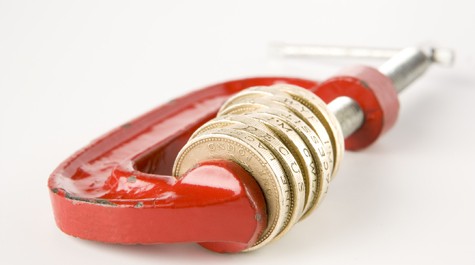
The government has started its consultation process on plans to introduce an economy-wide cash payment limit of $10,000 as part of a wider effort to eliminate the black economy.
The proposed measure was announced in the budget to ensure Australians receive a fair go and that illegal black economy behaviour is stopped in its tracks, said Minister for Revenue and Financial Services, Kelly O’Dwyer.
The cash payment limit is proposed to apply to payments made to businesses for goods and services from 1 July 2019.
In addition, transactions in excess of $10,000 will need to be made using electronic payments systems or by cheque.
Ms O’Dwyer said the consultation is about striking the right balance between cracking down on black economy participants and ensuring that businesses doing the right thing are not unduly burdened by increased red tape.
“The Black Economy Taskforce found significant risks to legitimate commercial behaviour can result from large, undocumented cash payments being made for cars, yachts and other luxury goods, agricultural crops, houses, building renovations and commodities,” Ms O’Dwyer said.
“We also know that businesses that insist on cash payment may be doing so to avoid their tax, retain welfare payments, or avoid child support and other obligations, and may therefore receive an unfair competitive advantage over those businesses that do the right thing.”
The consultation paper is available on the Treasury website. Submissions close on 24 June 2018.
By: Adrian Flores
28 MAY 2018
www.accountantsdaily.com.au
Passive investment companies tax rate still 30%

The reduce company tax rate of 27.5% in 2018 will be denied for companies with predominantly passive income. Under the changes, companies will qualify for the lower tax rate only if:
- their passive income is less than 80% of their assessable income for the year
- they “carry on a business” in that year; and
- they come below the aggregated turnover threshold for the year ($25 million for 2017–2018).
AcctWeb
Latest Industry News

How Do I Write Legally Compliant Terms and Conditions for My Business?
Terms and conditions bind your customers only where they actively accept them, so a tick box at checkout holds...

Paid parental leave super contributions have started
From July 2026, the new Paid Parental Leave Superannuation Contribution (PPLSC) has started. From...

If the business is no longer profitable, and is unlikely to be profitable in the future, your best option may...

Check out the this visualization, which tracks the evolution of dietary calorie intake from 1930 to...

Taxpayer given 35% penalty for BAS recklessness
Following an application for a refund of nearly $94,000, the Administrative Review Tribunal has set aside an...

SMEs warned as ATO ramps up tax debt collection
One insolvency specialist has emphasised the importance of small businesses engaging their accountants to stay...

Does Your Small Business Need to Follow AML Privacy Rules?
Compliance with new anti-money laundering (AML) laws may subject your small business to additional privacy...

Don’t get caught out at tax time with your multiples jobs
Picking up a second job, holding multiple part-time roles, or doing gig work is now part of everyday life. But...

Global companies turn to cost-cutting amid ongoing inflation
Rising operating costs and persistent inflation are placing renewed pressure on businesses worldwide, despite...

Warning for early lodger this tax time!
The ATO has a clear message this year: slow down and get it right. Early lodgers are far more likely to make...

ATO no longer treating debt the same as during COVID
One expert has stressed the importance of tax agents reminding their clients that the ATO is no longer as...

The evolution of the world’s languages
Check out the evolution of the world's most spoken languages from 2500 BC to...
Latest Guests News

Newsletter Newslettter We are pleased to supply you with the latest edition of Client Alert, which...