- 234 Balaclava Road, Caulfield North VIC 3161
- contactus@guests.com.au
- (03) 9509 7033
Strategies to handle scam phone calls and problem e-mails.

Many people have received telephone calls, recorded messages and e-mails from scammers claiming to be from organisations such as the ATO, Australia Post and Telstra saying money is owed, asking for personal information or access to their computer. One recorded message supposedly from the ATO informs you ‘you have committed tax fraud and a warrant is out for your arrest’! Another very popular scam is to say that there is a problem with your internet or a security flaw in your computer’s firewall or similar.
Why do scammers succeed?
Unfortunately, the main reason is the person receiving the call or e-mail. Scammers are trained in looking for signs of hesitancy or weakness and when they sense this they are merciless. The real problem is that the scammers know well the topics that will attract or scare people into action: monies owed, a big win, a technical issue, or to help someone.
Scammers are paid based on their success and they are highly trained in keeping people engaged and on the line.
Phone calls.
You need to be strong if you’re to avoid being caught out and the simplest way to do this is ask who they work for, what is their phone number, say you’re not interested and hang up. Or, call them out and say they are ‘a scam call’, then they often hang up on you. Phone scammers are inventive and some are ‘Phone spoofing’, this is when someone disguises the number they are calling or texting from by changing their caller ID. They hijack or imitate phone numbers, either to imitate a person, business or department to get money or information. They often choose interstate numbers so you do not immediately know you are answering an overseas call centre or potential scam call.
The best strategy though, is not to let them talk for more than a few seconds, and hang up. Hang up too soon or and they will keep ringing you back!
Major organisations will never ring up and ask for access to your computer or threaten that a warrant is out for your arrest. If a demand is made that relates to the ATO then call your accountant to make sure if ATO debts are owed and when.
E-mail scams & viruses
Common scam emails currently doing the rounds are invoices from companies that either do not exist or scam emails from organisations like ‘Australia Post’ (you have a package being delivered) or ‘ASIC’ (you have a tax debt). We may suspect they are fraudulent but too many of us still respond.
The compulsion to open that invoice or attachment is strong. Remember, everyone's e-mail address may be on scammers' lists so you will be exposed.
A second, and dangerous risk, from such e-mails is that they can have infected attachments and links that can do real damage to you, your computer, your business’s computer network and your files. Ransom ware is still out there.
Three things that help with scam, spam and malicious e-mails.
- Simply delete them but some businesses and corporations use e-mail to save costs for statements and invoices and other information, so you have to be vigilant not to delete these by mistake.
- This is your best defence and relates to the sender’s e-mail address. It is NOT possible for a scammer to use the exact same domain name as, say, the ATO or AFP. HOWEVER, they are getting very close. When you receive an e-mail, ALWAYS check the URL address it came from before reading or clicking – specifically the part after the @ sign. You will notice that many after the @ sign are simply ridiculous, but you will also receive some that have the supposed sender in the address, for example @ato.zzz.net.au. Always remember that the ATO bit is part of the zzz.net.au domain (the spammer) and NOT the ATO's domain. If in doubt contact the business or organisation by phone or a known email address to confirm email content.
- The Subject line. There is a field of marketing that focuses on how to get people to react to a Subject line. So, reacting quickly to a subject line about a fine from the ATO is exactly what the scammer is hoping for. A subject line like this can make you click on part of the content or attachment before you think of reading or checking the sender’s address.
Peter Graham
AcctWeb, an ISP and domain hosting company for over 20 years.
Cap lifted on popular financing option for clients
APRA will remove its cap on interest-only loans from next year, a move which is set to open more financing options for clients in 2019.

From 1 January 2019, APRA will remove its 30 per cent limit on interest-only residential mortgage lending for banks and other lenders.
This cap was originally put in place in March 2017 in a bid to reinforce sound lending practices, and has resulted in a cooling down of the interest-only lending market.
According to APRA, the introduction of the benchmark has led to a marked reduction in the proportion of new interest-only lending, which is now significantly below the 30 per cent threshold.
What does this mean for property investors?
In short, this move opens up opportunity and competition in the lending market for investors in 2019.
“This enables us to have more conversations with clients about the choices that they’ve got, and the options for them with their properties,” mortgage broker and owner of Pink Finance Nicole Cannon told sister publication Smart Property Investment.
“The cap restricted how many lenders we could use, and some priced investment lending so that it’s not competitive. In some cases it’s almost just as cheap to do principal and interest as it is to do interest only, she added.
Ms Cannon believes the caps have “done their job” of educating investors about the pros and cons of interest-only loans.
“I don’t think lifting the cap will mean investors flock back to interest-only arrangements, but it does open up the conversation and options. I think the awareness is now out there to be mindful of product and structure, and ensure it meets your long term goals,” Ms Cannon said.
Approach with caution
APRA warned lenders that lifting the caps will not mean its supervision of interest-only lending practices is relaxed.
“In APRA’s view, interest-only mortgages, and in particular owner-occupied interest-only lending, remain a higher risk form of lending,” APRA said in a letter to authorised deposit taking institutions (ADIs).
“As a result, APRA expects that ADIs will maintain prudent internal risk limits on interest-only lending,” APRA said.
“These internal limits should cover both the level of new interest-only lending and the type, including lending on an interest-only basis to owner-occupiers and lending on an interest-only basis at high LVRs.”
Access to finance has proven difficult for accountants and clients alike in recent months, in the wake of the royal commission and tougher regulatory conditions from APRA.
In September, interest-only loans represented 16.2 per cent, or $61.2 billion, of new home loan approvals, according to the latest data from APRA. This represents a 54.9 per cent pe in the last quarter
Katarina Taurian
19 December 2018
accountantsdaily.com.au
Expiry of 900,000 interest-only loans set for January
If you feel a bit aggrieved by having to move away from a workable interest only loan then you won't be alone. Apparently there are 900,000 loans in the same boat!

New market research indicates about 900,000 interest-only loans will revert to principal and interest payments this month, following a tougher year on the mortgage market for property investor clients.
Comparison site finder.com.au drew this estimate from an analysis of housing finance data from the Australian Bureau of Statistics (ABS).
The expirations follow restrictions from the banking regulator, APRA, on interest-only lending. APRA’s cap saw interest-only loan approvals fall by about 55 per cent in the 12 months to June 2018.
APRA’s restrictions and the revelations of the royal commission also formed part of the reason individuals and businesses alike struggled to secure or extend financing arrangements in 2018.
While IO approvals are dropping, the demand remains strong, according to finder.com.au’s data, which shows that despite house values continuing on its downward slide and the RBA trying to discourage Australians from taking on riskier debt, nearly a quarter of investors and one in five owner-occupiers are seeking IO loans.
For those already in interest-only contracts, the switch to principal and interest could add an additional $400 a month to borrowers’ repayments – or about $5,000 per year – based on current interest rates.
APRA announced plans to ditch its cap on interest-only lending in December last year, taking effect this month.
Business Reporter
04 January 2019
accountantsdaily.com.au
Australian Taxation Office (ATO) Scam Alert: Fake Demands for Tax Payments
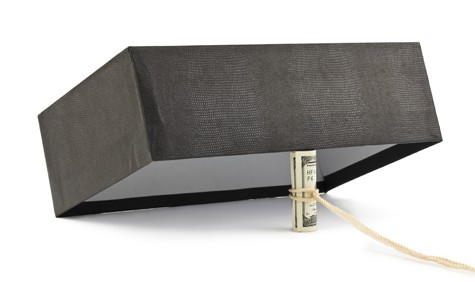
The ATO has noticed an increasing trend of scammers demanding tax payments through Bitcoin and ATMs.
The ATO’s advice is simple; it will never ask a person to make a payment into an ATM or via gift or pre-paid cards such as iTunes and Visa cards or ask for direct credit to be paid to a personal bank account.
Taxpayers who lodge through a registered tax agent generally have longer to pay their bill and will be advised by their tax agent if and when any tax payment is due. However, the ATO warned that scammers have been known to attempt to impersonate tax agents too.
The golden rule – hang up if you don’t already know the person and ring us.
If you want to report the call, the ATO toll free scan line is 1800 888 540.
AcctWeb
Golden Rules for Deductions

The Australian Taxation Office now uses sophisticated data analytics to assess a range of deductions and claims.
Taxpayers must follow three golden rules when making a deduction:
- the taxpayer must have spent the money (and not been reimbursed);
- the claim must be directly related to earning the taxpayer’s income;
- they must keep records to prove it; and
- taxpayers may receive a “please explain” or have a claim disallowed.
AcctWeb
How’s Australia going – vital statistics?

Please click on the following link to see all this interesting information. The areas covered are:
- Overview
- Markets
- GDP
- Labour
- Prices
- Money
- Trade
- Government
- Business
- Consumer
- Housing
- Taxes
- Climate
Access all this data here.
tradingeconomics.com
Tax, SMEs set to be ‘political football’ in 2019 as election nears
Small and medium businesses are set for a busy year of tax promises as political parties look to sway voters ahead of a Federal Election, says one mid-tier.

With the Federal Budget due to be delivered a month early on 2 April 2019, Australians will likely be headed to the polls in May.
Speaking to Accountants Daily, RSM principal, Jarrad Turnbull believes SMEs will be thrust into the spotlight as political parties look to claim last minute votes
“The SME space will be a political football in the lead up to the election, predicted to be in May 2019, as all sides of politics attempt to gain voter support,” said Mr Turnbull.
“After the election, the challenge will be the make-up of the Senate cross bench and their views on business taxation as compared to the government.
“This will result in some uncertainty for SME’s as the government may need to negotiate with the crossbench to allow its legislative reforms to proceed.”
Over the last 12 months, SMEs saw an acceleration of already legislated tax cuts for business under $50 million, as well as changes to the definition of a base rate entity.
The accelerated tax cut plan will see those companies facing a tax rate of 26 per cent by 2020–21 before finally dropping down to 25 per cent in 2021–22.
From the 2017-18 income year, a 'bright line' test will determine eligibility for the lower company tax rate. Under the bright line test, companies that receive more than 80 per cent of their income in passive forms will not be eligible for the lower company tax rate of 27.5 per cent.
“Overall 2018 was a quiet year for tax in the SME space. There was a lot of talk about the small business space, but little in the way of change,” said Mr Turnbull.
“Many businesses are enjoying the increase in the threshold for small business concessions to $10 million, up from the previous $2 million. As well as companies with a turnover of up to $25 million appreciating the lower 27.5 per cent tax rate, which will increase to $50 million in the 2019 year.”
By Jotham Lian
28 December 2018
accountantsdaily.com.au
Global outlook summary: Down but not out
Down but not out As the global economy enters its tenth year of expansion following the global financial crisis, concerns are growing that a recession may be imminent.

Although several factors will raise the risk of recession in 2019, a slowdown in growth – led by the United States and China – is the most likely outcome. In short, economic growth should shift down but not out.
We expect the global economy to continue to grow, albeit at a slightly slower pace, over the next two years, leading at times to so-called growth scares. In 2019, US economic growth should drop back towards a more sustainable 2% as the benefits of expansionary fiscal and monetary policy abate. Europe is at an earlier stage of the business cycle, though we expect growth there to remain modest.
In emerging markets, China's growth will remain near 6%, with increasing policy stimulus applied to help maintain that trajectory. Unresolved US-China trade tensions remain the largest risk factor to our view, followed by stronger-than-expected tightening by the US Federal Reserve should the US unemployment rate drop closer to 3%.
Global inflation: Unlikely to shoot past 2%
Previous Vanguard outlooks have rightly anticipated that the secular forces of globalisation and technological disruption would make achieving 2% inflation in the United States, Europe, Japan and elsewhere more difficult. In 2018, we accurately projected a cyclical firming in core inflation across various economies. In 2019, we do not see a material risk of further strong rises in core inflation despite lower unemployment rates and higher wages. This is because higher wages are not likely to funnel through to higher consumer prices, as inflation expectations are likely to remain well-anchored.
In the US, we expect core inflation to remain near 2% and even weaken by the end of 2019; an escalation in either tariffs or oil prices would probably affect US core inflation only temporarily. In Europe and Japan, price pressures are likely to increase gradually as labour market slack erodes, though core inflation is likely to stay well below 2%. Higher wages are likely, yes, but higher inflation is not.
Monetary policy: Convergence commences, with the Fed stopping near 3%
As inflation moves towards central banks' target, financial-stability risks rise and unemployment rates continue to approach or drop below estimates of full employment, global central banks will stay on their gradual normalisation paths.
In the United States, we still expect the Fed to reach the terminal rate for this cycle in the summer of 2019, bringing the policy rate range to 2.75%–3% before halting further increases in the face of nonaccelerating inflation and decelerating top-line growth. Other developed markets central banks, though, will only begin to lift interest rates from post-crisis lows. We expect the first rate increase from the European Central Bank in September 2019, followed by a very gradual hiking path thereafter. Japan is late to the party and we do not expect any rate increases in 2019, though some fine-tuning of its policy framework is likely to ease the financial-stability risk. Emerging markets countries don't control their own destiny and will be proactively forced to tighten along with the Fed, while China is able to buck the trend with the help of tightened capital control and further modest currency depreciation.
Investment outlook: No pain, no gain
With slowing growth, disparate rates of inflation and continued policy normalisation, periodic bouts of volatility in equity and fixed income markets are likely to persist and perhaps accelerate. Our near-term outlook for global equity markets remains guarded, but a bear market would not appear imminent given that we do not anticipate a global recession in 2019. Risk-adjusted returns over the next several years are anticipated to be modest at best, given the backdrop of modest growth and less accommodative policy.
But all hope is not lost. Longer-term, our ten-year outlook for investment returns is beginning to slightly improve when we factor in higher short-term interest rates across major developed markets. This is the first (modest) upgrade in our global market outlook in more than ten years.
US fixed income returns are most likely to be in the 2.5%–4.5% range, driven by rising policy rates and higher yields across the maturity curve as policy normalises. This results in a global fixed income return outlook of 2.2%–4.2% for US-dollar-based investors compared with last year's outlook of 1.5%–3.5% – albeit still more muted than the historical precedent of 4.7%.
Returns in global equity markets are likely to be about 5%–7% for US-dollar-based investors. This remains significantly lower than the experience of previous decades and of the post-crisis years, when global equities have risen 12.6% a year since the trough of the market downturn. We do, however, foresee improving return prospects building on slightly more attractive valuations (a key driver of the equity risk premiums) combined with higher expected risk-free rates.
As was the case last year, the risk of a correction for equities and other high-beta assets is projected to be considerably higher than for high-quality fixed income portfolios, whose expected returns over the next five years are positive only in nominal terms.
In our upcoming annual economic and market outlook, we'll further define our expectations for the global markets in 2019 and beyond.
Supplied by Robin Bowerman
Head of Corporate Affairs at Vanguard.
06 December 2018
vanguardinvestments.com.au
Bookkeepers remind on incoming TPRS obligations
With the taxable payments reporting system now set to cover five different industries, in-house and external bookkeepers have been urged to start ensuring business clients start keeping records of contractor payments.

In October, the taxable payments reporting system (TPRS) was extended to the courier and cleaning industries, with a retrospective start date of 1 July 2018.
This was closely followed by an extension to the road freight, security, investigation, surveillance and information technology (IT) industries, with a start date of 1 July 2019.
The TPRS is a transparency measure that was first applied to the building and construction industry, recouping an extra $2.3 billion in its first year of operation in 2012.
In the latest ATO BAS Agent Association Group meeting, the key message was to ensure businesses started keeping records of their contractor payments now.
“If your clients provide cleaning or courier services, even if it’s only part of the services provided, they now need to lodge a taxable payments annual report each year to tell us about their payments to contractors and subcontractors that provide cleaning or courier services on their behalf,” the group minutes stated.
The group also noted that the new online taxable payments annual report form will provide further functionality expanding the service offering, for example the ability for tax and BAS agents to see client taxable payments annual report lodgment history.
“This form will be made available to inpiduals in business via MyTax initially, then progressively being made available in the Business Portal, Online Services for agents, and third party software,” it said.
Staff Reporter
19 December 2018
accountantsdaily.com.au
Tax consequences of trust vesting
The Australian Taxation Office (ATO) has issued a long-awaited ruling on trust vesting, including changing a trust’s vesting date and the CGT and income tax consequences of vesting

A trust’s “vesting date” is the day when the beneficiaries’ interests in the trust property become fixed. The trust deed will specify the vesting date and the consequences of that date being reached. Vesting does not, of itself, ordinarily cause the trust to come to an end or cause a new trust to arise. In particular, the underlying trust relationship continues after vesting while the trustee still holds property for the takers.
The key points in the draft ruling are that:
- before vesting, it may be possible to extend the vesting date (by applying to a court or by the trustee exercising a power to nominate a new vesting date);
- it is too late to change the vesting date once it has passed (and the ATO says it is unlikely that a court would agree to do so); and
- continuing to administer a trust in a way that is inconsistent with the vesting terms can have significant CGT and income tax consequences.
Does your tax have a vesting date within 5 years? Failure to start planning now could have dire consequences.
Source: AcctWeb
Latest Industry News

How Do I Write Legally Compliant Terms and Conditions for My Business?
Terms and conditions bind your customers only where they actively accept them, so a tick box at checkout holds...

Paid parental leave super contributions have started
From July 2026, the new Paid Parental Leave Superannuation Contribution (PPLSC) has started. From...

If the business is no longer profitable, and is unlikely to be profitable in the future, your best option may...

Check out the this visualization, which tracks the evolution of dietary calorie intake from 1930 to...

Taxpayer given 35% penalty for BAS recklessness
Following an application for a refund of nearly $94,000, the Administrative Review Tribunal has set aside an...

SMEs warned as ATO ramps up tax debt collection
One insolvency specialist has emphasised the importance of small businesses engaging their accountants to stay...

Does Your Small Business Need to Follow AML Privacy Rules?
Compliance with new anti-money laundering (AML) laws may subject your small business to additional privacy...

Don’t get caught out at tax time with your multiples jobs
Picking up a second job, holding multiple part-time roles, or doing gig work is now part of everyday life. But...

Global companies turn to cost-cutting amid ongoing inflation
Rising operating costs and persistent inflation are placing renewed pressure on businesses worldwide, despite...

Warning for early lodger this tax time!
The ATO has a clear message this year: slow down and get it right. Early lodgers are far more likely to make...

ATO no longer treating debt the same as during COVID
One expert has stressed the importance of tax agents reminding their clients that the ATO is no longer as...

The evolution of the world’s languages
Check out the evolution of the world's most spoken languages from 2500 BC to...
Latest Guests News

Newsletter Newslettter We are pleased to supply you with the latest edition of Client Alert, which...