- 234 Balaclava Road, Caulfield North VIC 3161
- contactus@guests.com.au
- (03) 9509 7033
Lost Beneficiaries
How does an executor trace a missing beneficiary?

Under the Administration of Estates Act, the law says there is a legal obligation to find and distribute estates of people who die without making wills.
But Centrelink insists that identifying anyone, even to a lawful estate trustee, is an invasion of privacy. So, one government department will not report to another.
Apparently, it is easier than the alternative of helping people get what is rightfully theirs.
Do you have an up to date will or might your executor face extra costs and beneficiaries miss out?
AcctWeb
New quarterly STP reporting method for closely held payees revealed
The ATO has shed light on how employers will be able to report quarterly for closely held employees under the new single touch payroll regime, including the ability to make amendments before an extended finalisation due date.

The Tax Office previously announced that the closely held group will be granted a one-year exemption from STP reporting, with employers due to start quarterly reporting from 1 July 2020.
The ATO’s definition of a closely held employee is one who is a non-arm’s length employee, directly related to the entity from which they receive payments, including family members of a family business, directors of a company and shareholders or beneficiaries.
Recognising that closely held payees are not always paid on a regular basis or a regular amount, ATO director Michael Karavas said the agency will adopt several methods for employers to make reasonable estimates to report on a quarterly basis.
The ATO will allow employers to calculate the amounts through actual withdrawals, not including payments of dividends or which reduces the liabilities owed by the business entity to the closely held employee; 25 per cent of the salary or director fees from the previous year per quarter; or by varying the previous years’ amount within 15 per cent of the total salary for the current financial year.
“If you lodge quarterly using one of the methods, then the ATO will accept that you made a genuine effort to meet your STP obligations and that will allow you to do that finalisation and make any adjustments at the time you do your tax return at the end of the year,” said Mr Karavas.
While other businesses will have to provide a finalisation declaration by 14 July each year, the ATO has granted an extension to closely held payees to the due date of their income tax return.
“We are not saying that you need to know your final position by 14 July but we are saying you have made a reasonable estimate, each quarter reported throughout the year and by doing that you are able to make reasonable adjustments at the end of the financial year,” said Mr Karavas.
“You'll be able by the due date of your tax return, make that finalisation of what your actual final salary and wages or directors fees are. That finalisation will then make information available through pre-fill for that person's tax return”
Legislation to introduce STP across businesses of all sizes was passed last month, with the ATO granting a three-month buffer to 30 September 2019 for small businesses to transition to the new regime.
The ATO has also released a detailed register of STP products for micro-businesses, with several options currently available.
Jotham Lian
19 March 2019
accountantsdaily.com.au
19 March 2019
accountantsdaily.com.au
Some Australian figures to help on Budget night.

One great source of data about Australia. Become better acquainted with the country we love.
An up-to-date snapshot of Australia's vital statistics.
Please click on the following link to see all this interesting information. The areas covered are:
- Overview
- Markets
- GDP
- Labour
- Prices
- Money
- Trade
- Government
- Business
- Consumer
- Housing
- Taxes
- Climate
Access all this data here.
‘Big awareness push’ underway as STP deadline approaches
Hundreds of thousands of businesses have been prompted by the ATO to get started with their Single Touch Payroll provisions, and its project lead at the tax office believes the business community is better prepared than it was for last year’s deadline.

Through email and national advertising campaigns, the ATO is drilling in the 1 July deadline for STP, which applies to businesses with 19 or fewer employees.
Assistant commissioner at the ATO John Shepherd thinks accountants, bookkeepers and their small business clients are better prepared for this deadline than they were for the first one in 2018, which applied to businesses with 20 or more employees.
“The knowledge levels have come up… bookkeepers are helping with that message and that preparation,” Mr Shepherd told Accountants Daily at the Accounting Business Expo on Wednesday.
Many software providers weren’t ready for last year’s deadline, which had a knock-on impact on the business community.
“Last year, a lot of the products were only just ready. This time, a lot more are ready, and they are ready with options for smaller employers,” Mr Shepherd said.
However, at this stage, there are more STP products in development and slated for release than there are products that are ready for implementation.
At the beginning of April, information for and access to deferrals for STP will be published on the ATO’s website. There are quarterly reporting options for micro-businesses as part of the transitional arrangements.
Katarina Taurian
21 March 2019
accountantsdaily.com.au
GST collection on overseas goods at 300% of forecasts
GST collection for low value imported goods is tracking at 300 per cent of forecasts, as overall GST collection continues to grow.

Since new laws kicked in on 1 July last year, GST will apply to sales of low-value, imported goods valued at $1,000 or less, to consumers in Australia, in a bid to ensure that such imported goods receive the same treatment as goods purchased domestically.
Deputy Commissioner Tim Dyce said latest revenue figures show that digital marketplaces and lower value international online sales were not an impossible nut to crack.
“The digital services measure has already achieved $272 million GST in the first year or 180 per cent ahead of forecast. We’ve collected $81 million from the low value imported goods measure in the first three months of operation, already above our full year revenue estimate of $70 million. We’re tracking at over 300 per cent of forecast,” said Mr Dyce.
“There was a lot of discussion prior to their introduction about whether these kinds of measures could possibly work, and in many ways it is the most significant change in the way we have collected GST since its inception almost exactly 20 years ago.
“Not only have we had high levels of registration for these measures and well above forecast revenue, we’ve even had feedback from some online sellers that the registration has improved their business processes and given them greater insight into their sales performance.”
The measure, first announced in the 2016–17 federal budget, was expected to raise $300 million over three years.
The ATO’s GST administration annual performance report for 2017–18 showed that the agency raised $63.1 billion in GST cash, 5.5 per cent higher than in 2016-17.
A further $3 billion in GST liabilities was raised through the ATO’s direct compliance activities – a 5.6 per cent increase on last year’s outcome. The Department of Home Affairs raised a further $31.1 million through its compliance activities.
Tax&Compliance Reporter
28 March 2019
accountantsdaily.com.au
Australia – facts & figures March 2019
One great source of data about Australia. Become better acquainted with the country we love.
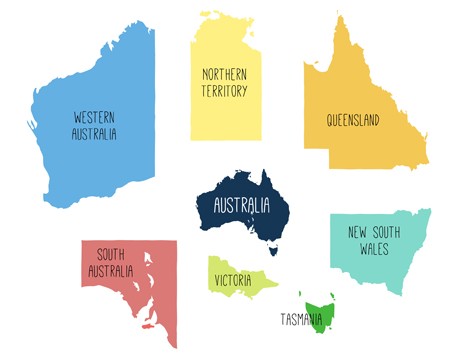
An up-to-date snapshot of Australia's vital statistics.
Please click on the following link to see all this interesting information. The areas covered are:
- Overview
- Markets
- GDP
- Labour
- Prices
- Money
- Trade
- Government
- Business
- Consumer
- Housing
- Taxes
- Climate
Access all this data here.
tradingeconomics.com
ATO identifies SMSF contravention red flags
The ATO has identified certain red flags and problem areas with SMSFs that will attract its attention, ahead of tax time 2019.

ATO assistant commissioner Dana Fleming said that the ATO received a total of 16,909 regulatory contraventions for 8,215 SMSFs in the 2018 financial year.
This financial year so far, there have been 8,412 regulatory contraventions for 3,549 SMSFs.
“The most common contraventions are related-party loans, loans to members, in-house assets, investing in related-party assets and separation of assets where members are not keeping their personal assets separate from the assets of the SMSF,” Ms Fleming said.
“Together, these top three account for more than 50 per cent of the contraventions reported to us and are the common repeated contraventions that we see.”
Contraventions relating to loans accounted for 21.1 per cent, in-house assets accounted for 18.7 per cent and failure to keep assets separate represented 12.8 per cent.
While the highest number of contraventions were for related-party loans, the contraventions relating to in-house assets and separation of assets represented the greatest value, she said.
“Contraventions also revolved around growing wealth in the SMSF environment and trying to access the low tax rate. Poor record-keeping is often a culprit here,” she said.
Some of the other contravention categories listed by the ATO related to administrative errors, sole purpose breaches, borrowings, operating standards and acquisitions of assets from related parties.
The main drivers of these contraventions, she said, tend to be financial stress and the ease of accessibility with SMSFs in terms of accessing assets and dollars and poor record-keeping to substantiate transactions.
In the 2017–18 financial year, there were a total of 257 trustees disqualified, Ms Fleming said. Enforcement actions including direction to rectify, enforceable undertakings and notice of non-compliance were taken for 180 trustees.
In this financial year so far, 75 trustees have been disqualified, she said.
Miranda Brownlee
01 March 2019
accountantsdaily.com.au
01 March 2019
accountantsdaily.com.au
Who wins dispute about taxable income?
The Administrative Appeals Tribunal (AAT) has affirmed the ATO’s decision, based on the taxpayers modest income when compared with a high volume of money passing through various accounts.

The taxpayer was employed as a beauty technician.
Her pay varied every week to reflect her working hours and she was always paid in cash without receiving pay slips.
While the Commissioners’ analysis of bank accounts, records of international money transfers and casino data suggested the applicant spent 44% in one year and 73% in another year more than the declared income.
In cases like this, the Commissioner is effectively making an informed guess as to the taxpayers income.
Provided there is a rational basis for the estate, the Commissioners assessment will stand, unless the taxpayer is able to:
- demonstrate the assessment was excessive; and
- establish what the correct (or more nearly) correct figure is.
In examples like this, the Commissioner nearly always wins.
AcctWeb
Extra website resources and tools is one way we offer you and your family more.
The following are available via our website and are not often available in the one place. All can save you time and effort. *

24/7 access to website-based tools and resources you, your family, your friends, colleagues and associates can all benefit from.
- Latest News. 6-8 new articles every month and chosen from over 25 for their relevance. This means our website is a great place to stay informed.
- Videos that are relevant, interesting, educational and interesting to watch. Videos that are regularly changed for another collection to ensure you’re able to lean about a significant number of related issues throughout the year.
- Ask a question at any time. If you have a question on any related topic then don’t hesitate to use a form on our site to ask.
- Comprehensive financial tools and calculators to help you better understand your personal or family Cash Flow position or simply complete a Budget or work on some Superannuation scenarios.
- Research your questions. Use eWombat for doing this research by simply typing in keywords or phrases. Great and quick for searching sites like the ATO, Centrelink and ASIC.
- Your information is private and confidential and should be treated that way. Using Secure File transfer or a Secure Client Portal means your information and plans are encrypted when sent in either direction over the Internet.
- ASX Prices and Charts. Many sites will have these resources to allow you to quickly see how the market is going and check any stocks you’d like a price on. All such information is, though, delayed by 10 minutes.
- Many sites also have a message window feature that displays messages of interest or that cover topics and deadlines you should be aware of.
* Not all are on every site.
Your Financial Planner
FBT Exemption for Various Work Vehicles
If an employer allows an employee private use of a vehicle, FBT generally applies.

There is an exemption from FBT for panel vans, utilities and other commercial vehicles, but only if the employees private use of these vehicles is limited to:
- Travel between home and work
- Travel that is incidental to travel in the course of duties of employment
- Non-work-related use that is minor, infrequent and irregular
- The employee uses the vehicle to travel between their home and their place of work and any diversion adds no more than two kilometres to the ordinary lengthy of that trip
- For journeys undertaken for a wholly private purpose, the employee does not use the vehicle to travel more than 1,000 kilometres in total per year and no return journey exceeds 200 kilometres.
You may be familiar with the exemption for “minor, in frequent and irregular”, but these guidelines quantify what the Commissioner of Taxation expects – quite limiting!
AcctWeb
Latest Industry News

How Do I Write Legally Compliant Terms and Conditions for My Business?
Terms and conditions bind your customers only where they actively accept them, so a tick box at checkout holds...

Paid parental leave super contributions have started
From July 2026, the new Paid Parental Leave Superannuation Contribution (PPLSC) has started. From...

If the business is no longer profitable, and is unlikely to be profitable in the future, your best option may...

Check out the this visualization, which tracks the evolution of dietary calorie intake from 1930 to...

Taxpayer given 35% penalty for BAS recklessness
Following an application for a refund of nearly $94,000, the Administrative Review Tribunal has set aside an...

SMEs warned as ATO ramps up tax debt collection
One insolvency specialist has emphasised the importance of small businesses engaging their accountants to stay...

Does Your Small Business Need to Follow AML Privacy Rules?
Compliance with new anti-money laundering (AML) laws may subject your small business to additional privacy...

Don’t get caught out at tax time with your multiples jobs
Picking up a second job, holding multiple part-time roles, or doing gig work is now part of everyday life. But...

Global companies turn to cost-cutting amid ongoing inflation
Rising operating costs and persistent inflation are placing renewed pressure on businesses worldwide, despite...

Warning for early lodger this tax time!
The ATO has a clear message this year: slow down and get it right. Early lodgers are far more likely to make...

ATO no longer treating debt the same as during COVID
One expert has stressed the importance of tax agents reminding their clients that the ATO is no longer as...
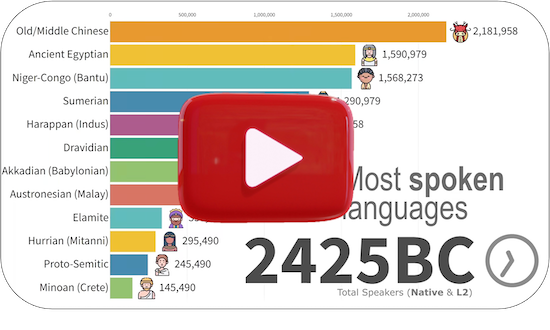
The evolution of the world’s languages
Check out the evolution of the world's most spoken languages from 2500 BC to...
Latest Guests News

Newsletter Newslettter We are pleased to supply you with the latest edition of Client Alert, which...