- 234 Balaclava Road, Caulfield North VIC 3161
- contactus@guests.com.au
- (03) 9509 7033
Biggest personal tax cuts in a decade a priority for Government
Prime Minister Scott Morrison has signalled that getting his tax changes through parliament will be a top priority for his re-elected government.

As per Treasurer Josh Frydenberg’s announcement in the April federal budget, the Liberal Party plans on introducing the biggest round of income tax cuts since the era of John Howard and Peter Costello.
Headline tax measures from the Liberal Party include:
- From 1 July 2018, the federal government increased the top threshold of the 32.5 per cent tax bracket from $87,000 to $90,000.
- From 1 July 2022, the top threshold of the 32.5 per cent tax bracket will be increased from $90,000 to $120,000.
- From 1 July 2024, the government will increase the top threshold of the 32.5 per cent tax bracket from $120,000 to $200,000, removing the 37 per cent tax bracket completely.
- From this tax time, those earning up to $126,000 per year would get $1,080 back at tax time. That plan also promised to flatten tax brackets by 2024 so all taxpayers earning between $45,000 and $200,000 would have their tax rate reduced to 30 per cent.
However, as per the continual calls of the tax profession, firms like BDO are calling on the Prime Minister to not confuse tax cuts with tax reform.
“Changes to tax rates should not, on their own, be seen as tax reform,” said BDO tax partner Mark Molesworth.
“The government needs to look at reigniting the debate on holistic tax reform for all taxes in both the federal and state tax systems.”
Katarina Taurian
20 May 2019
accountantsdaily.com.au
Government rules out GST changes following ATO report
The government has turned down suggestions that it is considering broadening the GST base, following reports that the ATO had called for GST to be revisited on certain exempt food items.

Reports by The Sydney Morning Herald and The Age have suggested that the ATO was calling for the government to reconsider the GST treatment of certain food items to deal with the different interpretations depending on how they are packaged and marketed.
One example cited from the ATO’s brief includes confusion around brioche burger buns, which are taxed because they are brioche even though hamburger buns are tax-free.
Finance Minister Mathias Cormann has since declared that the government would not consider changes to the GST base.
“We have no plans at all to broaden the base of the GST,” Senator Cormann told reporters in Perth on Saturday.
“If we had such a plan we would have taken it to the Australian people before the election.”
The ATO said the report was based off an internal working brief that never got progressed to Treasury or the government.
“The ATO’s role is to administer the tax and super systems, and not to advise on policy. In this case an internal working brief was initiated within the ATO to consider options for an alternative way to identify foods that are exempt from GST,” said an ATO spokesperson.
“The ATO routinely prepares a range of internal working briefs to consider administrative options, many of which do not progress to Treasury or to government.”
Jotham Lian
27 May 2019
accountantsdaily.com.au
27 May 2019
accountantsdaily.com.au
Victorian Property Valuation Cycle
Valuations of Victorian properties are now undertaken annually instead of every two years.

When you review the council rate notices for Victorian properties, the valuation is likely to be higher for Melbourne properties. No so, in the country.
Thereafter a benefit to the revenue of each Melbourne based council.
Since this change seems to be driven by State budget efforts to increase revenue from land tax (and council rates) earlier, will this work in reverse when properties are falling in value?
If the valuation appears too high, owners can appeal the valuation, but it must be done promptly or wait another year.
AcctWeb
Australia – toward EOFY 2019

One great source of data about Australia. Become better acquainted with the country we love.
An up-to-date snapshot of Australia's vital statistics.
Please click on the following link to see all this interesting information. The areas covered are:
- Overview
- Markets
- GDP
- Labour
- Prices
- Money
- Trade
- Government
- Business
- Consumer
- Housing
- Taxes
- Climate
Access all this data here.
tradingeconomics.com/australia
ATO expects 200,000 to miss out on refunds by failing to lodge

The ATO expects that 200,000 people could miss out on a tax refund this year because they haven’t lodged a tax return.
Many salary and wage earners end up with a tax refund, but some are missing out because they fail to lodge on time.
Taxpayers had until 31 October to either lodge their own return, or ensure they are on an agent’s books. Failing to lodge by the deadline can attract a penalty of $210 for every 28 days that the return is overdue, up to a maximum of $1,050.
Have you run out of time to sort out your tax return this year? We’re here to help – get in touch to talk about your options.
AcctWeb
GST reporting: common errors and how to correct them

Some businesses are making simple mistakes reporting their GST.
Common GST reporting errors are:
- transposition and calculation errors – these mistakes often happen when manually entering amounts, so it’s important to double-check all figures and calculations before submitting your BAS;
- no tax invoice – you must keep tax invoices to be able to claim GST credits on business-related purchases;
- transaction classifications – it’s important to check what GST applies for each transaction; for example, transactions involving food;
- errors in accounting systems – a system with one coding error can classify several transactions incorrectly; and
- rents and outgoings entitlements depend on the landlords status
AcctWeb
LRBAs, guarantees in need of review after property market falls
With property markets taking a tumble in recent times, some SMSF clients may need to review the loan arrangements and guarantees they have, particularly where the loan-to-value ratio has significantly dropped, says an industry lawyer.

Speaking in a seminar in Sydney, DBA Lawyers director Daniel Butler said the property market has been under some stress recently, and while it may see a bit of a rebound with Labor’s property tax changes off the table, some SMSFs may be impacted by the recent fall in property values.
Mr Butler said the ATO has previously raised concerns about the amount of property loans held by SMSFs and guaranteed by assets outside of super such as the family home.
“If the market collapses, this is going to affect retirement savings and personal assets,” Mr Butler said.
Mr Butler explained that there were two types of guarantees: unsecured guarantees and secured guarantees.
“We have noticed a movement out there, typically with non-bank institutions, that they want that guarantee to be supported by a security or a charge or mortgage over the home or property owned by that guarantor,” he said.
While the fact that it is a limited recourse loan means that the security including any related guarantees should be limited to the value of the acquirable asset, but often they are not.
“You have to read and check it. I read one the other day that said that any asset you hold on trust is also up for grabs. Some of them also say, well, if it’s interest and cost and damages, we can also claim that back, even default interest,” he said.
SMSF professionals and their clients need to be very mindful of the extent of these guarantees, he cautioned, particularly if the client is entering negative equity.
The documents that deal with the guarantee for the loan arrangements may need to be reviewed for those clients who are in that risk category, he advised.
“That would be those that bought an apartment and it’s now close to negativity equity and the they’re getting light on the loan-to-value ratio (LVR) because the property value has sunk but the loan is still there and they’re no longer over their 70 per cent threshold,” he said.
This also needs to be looked at with related-party loans, because if the LVR is no longer under the 70 per cent, then they may need to restructure.
SMSF practitioners should offset their liability by encouraging their clients to get these documents reviewed.
Miranda Brownlee
22 May 2019
smsfadviser.com
ATO clears up FAQs about Single Touch Payroll
Ahead of the 1 July deadline for small business to be compliant with the new Single Touch Payroll (STP) regime, the ATO and professionals alike have cleared up some common points of confusion about associated AUSkey and myGov requirements.

The ATO’s project lead for STP, John Shepherd, joined a panel of professionals to discuss the practical implications of STP earlier this week. You can access the webcast here.
AUSkey requirements
A common point of confusion for small business is whether an AUSkey is required as part of STP regime.
Mr Shepherd clarified that whether a business will need its own AUSkey will depend on the type of software they use.
“Some products don’t require the employer to get their own AUSkey,” he explained.
The ATO’s website states the following around the use of an AUSkey for STP:
“Your software can connect directly to the ATO using a device AUSkey (more common for larger employers).
“Alternatively, your software may connect to the ATO using a software service ID (SSID) which is usually displayed by your software during the STP setup.
“You or your registered agent will need to provide the ATO with your SSID. To do this phone 1300 852 232, or complete a one-off notification through Access Manager (you need an AUSkey to use Access Manager).
“We will not be able to receive your STP report without the correct SSID.
“Another option is your software may connect to the ATO through a sending service provider (SSP). If this is how your software connects to the ATO, you do not need to contact the ATO to set up a connection. Your SSP will do this for you.”
myGov accounts
Small business owners will not need to open a myGov account to be STP compliant.
“myGov is a whole-of-government access to services, through one sign-in. What that allows you to do is to see that superannuation information that had been reported, as well as your STP information that’s been reported, so each inpidual can see that through there,” Mr Shepherd explained.
“But it won’t be mandated.”
He did, however, recommend that anyone who does not have such an account set one up, because of the availability of customised information through the portal.
“It is the way, if you want to get access to your income statement, that you will get that at the end of the year rather than from your employer anymore.
“We suggest it’s a good thing to do, because it gives you access to better services, better information about your inpidual circumstances … and you also get access to all your super accounts and you can roll them over.”
Mr Shepherd also recommended that employers notify their staff ahead of the transition to STP that personal income summaries will no longer be issued, and that this information will be made available to them through their own myGov account.
New milestone
Mr Shepherd also revealed the ATO has hit a new milestone with STP, with over 100,000 employers now reporting through the new system.
He also talked through the ATO’s future plans with this and similar technology, which you can access here.
Adam Zuchetti
16 May 2019
accountantsdaily.com.au
Single Touch Payroll (STP) is compulsory for all small businesses.
STP is mandatory for all small Australian businesses with 19 or less employees and it starts on the 1st July 2019. Are you ready? Your Accountant can help with any questions you have.
Some basic questions that are being asked and the answers.
What is STP?
Single Touch Payroll (STP) is a new way of reporting tax and super information to the ATO. … There will also be a number of options available for employers who do not use payroll software, such as No-cost and low-cost Single Touch Payroll solutions.
Is STP compulsory?
Single Touch Payroll is already compulsory for businesses with 20 or more employees. Those businesses already report their employees' payroll and super information to the ATO each time they pay their employees.
From the 1st July 2019 STP becomes compulsory for all businesses, not matter how few employees they have.
What is STP Australia?
Single touch payroll is a new regulation that changes when and how small businesses report payroll activity to the Australian Tax Office (ATO). Now, they need to send a report after each pay day.
What are the benefits of STP?
Single Touch Payroll is the government trying to align reporting obligations to payroll processes. With STP, business owners can submit payroll information, such as salaries, allowances, deductions, PAYG and super, immediately after a 'payroll event' – avoiding the need for action at a later date.
Click here to for more information and resources on the ATO website.
Australian Taxation Office – ATO
Small business corporate tax rates Bill is now law

The company tax rate for base rate entities will now reduce from 27.5% to 26% in 2020–2021, and then to 25% for 2021–2022 and later income years. This means eligible corporate taxpayers will pay 25% in 2021–2022, rather than from 2026–2027.
The new law also increases the small business income tax offset rate to 13% of the basic income tax liability that relates to small business income for 2020–2021. The offset rate will then increase to 16% for 2021–2022 and later income years.
The maximum available amount of the small business tax offset does not change – it will stay capped at $1,000 per person, per year.
Bringing forward small business tax cuts by five years
The Prime Minister has announced that the Government will bring forward its planned tax cuts for small business by five years. The Labor Party has also indicated it supports bringing forward the tax cuts.
This means businesses with a turnover below $50 million will pay a tax rate of 25% in 2021–2022, rather than from 2026–2027 as currently legislated.
It would seem that regardless of the Federal election outcome, business income taxes are reducing in percentage terms.
AcctWeb
Latest Industry News

How Do I Write Legally Compliant Terms and Conditions for My Business?
Terms and conditions bind your customers only where they actively accept them, so a tick box at checkout holds...

Paid parental leave super contributions have started
From July 2026, the new Paid Parental Leave Superannuation Contribution (PPLSC) has started. From...

If the business is no longer profitable, and is unlikely to be profitable in the future, your best option may...
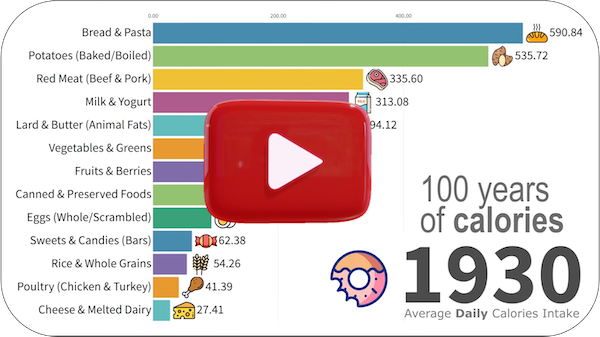
Check out the this visualization, which tracks the evolution of dietary calorie intake from 1930 to...

Taxpayer given 35% penalty for BAS recklessness
Following an application for a refund of nearly $94,000, the Administrative Review Tribunal has set aside an...

SMEs warned as ATO ramps up tax debt collection
One insolvency specialist has emphasised the importance of small businesses engaging their accountants to stay...

Does Your Small Business Need to Follow AML Privacy Rules?
Compliance with new anti-money laundering (AML) laws may subject your small business to additional privacy...

Don’t get caught out at tax time with your multiples jobs
Picking up a second job, holding multiple part-time roles, or doing gig work is now part of everyday life. But...

Global companies turn to cost-cutting amid ongoing inflation
Rising operating costs and persistent inflation are placing renewed pressure on businesses worldwide, despite...

Warning for early lodger this tax time!
The ATO has a clear message this year: slow down and get it right. Early lodgers are far more likely to make...

ATO no longer treating debt the same as during COVID
One expert has stressed the importance of tax agents reminding their clients that the ATO is no longer as...

The evolution of the world’s languages
Check out the evolution of the world's most spoken languages from 2500 BC to...
Latest Guests News

Newsletter Newslettter We are pleased to supply you with the latest edition of Client Alert, which...