- 234 Balaclava Road, Caulfield North VIC 3161
- contactus@guests.com.au
- (03) 9509 7033
How’s Australia really doing – the real figures?
One great source of data about Australia. Become better acquainted with the country we love.

An up-to-date snapshot of Australia's vital statistics.
Please click on the following link to see all this interesting information. The areas covered are:
- Overview
- Markets
- GDP
- Labour
- Prices
- Money
- Trade
- Government
- Business
- Consumer
- Housing
- Taxes
- Climate
Access all this data here.
tradingeconomics.com/australia
Audit warning sounded as ATO clamps down on dodgy claims
The Tax Office says it will be scrutinising every tax return lodged this year as it continues its crackdown on illegitimate claims.

ATO assistant commissioner Karen Foat said the Tax Office contacts around 2 million taxpayers each year to clarify information on their tax return, but said there was nothing to fear if they had claimed what they were entitled to.
“If we do decide to look a little closer through an audit, you can expect that we will contact you or your tax agent to make further inquiries,” Ms Foat said.
“The sort of information we may need from you or your agent will vary depending on the circumstances. Often, we are just looking for an explanation and documentation on a deduction.
“Other times, we may need to have a more detailed review. Though, again, this generally involves us asking you or your agent for more information or evidence to support your claims.”
With an estimated tax gap of $8.7 billion, Ms Foat said the ATO could not afford to turn a blind eye to those who were overclaiming even by a little.
“Our biggest tip is to ensure you work with us from the beginning and provide the information required to help us resolve any concerns and finalise the audit,” Ms Foat said.
“We understand it can be frustrating to dig up old receipts and information, but it is necessary. A small amount of overclaiming by a large number of people adds up to $8.7 billion less each year for essential services; we can’t turn a blind eye to that.
“If you think you’ve made a mistake or an error in your tax return, the best thing you can do is to ‘fess up’ as soon as possible.”
Avoiding penalties
The ATO’s latest warning comes after taxpayers rushed to lodge early this year to claim the increased low and middle-income tax offset, with the agency warning that early lodgers could be susceptible to making errors because of the lack of prefill data.
Ms Foat said the best way to avoid a potential audit and subsequent penalties was to come clean sooner rather than later.
“Whether we apply penalties will depend on your behaviour. We see behaviours ranging from genuine mistakes through to deliberate overclaiming. In the most extreme cases of intentional fraud, we may seek to prosecute through the courts,” Ms Foat said.
Jotham Lian
27 September 2019
accountantsdaily.com.au
“If the ATO has been in contact to review your claims and you know you’ve overclaimed, it is important to be honest and get the matter resolved quickly. Taxpayers are more likely to face penalties if they aren’t honest with us once we come knocking.
“The best way to ensure a smooth audit process is engage with us early and to keep accurate records.”
ATO black economy strike force heads to Brisbane
Up to 400 businesses in inner north Brisbane are set for a visit from ATO officers after a number of tip-offs on black economy activities.

The ATO’s own data and intelligence has suggested that Teneriffe, New Farm, Newstead and Fortitude Valley are “at-risk” suburbs for suspected black economy behaviour.
According to ATO assistant commissioner Peter Holt, businesses who are not declaring income, not complying with their tax and super obligations or underpaying workers are contributing to the black economy.
“Teneriffe has a long history of dealing with wool fleeces. It’s been a few decades since wool was traded here, but we’re aware that some dishonest businesses are still in the business of fleecing money from the community,” Mr Holt said.
“These dishonest businesses may think they can pull the wool over our eyes, but this couldn’t be further from the truth. We’re aware there is an issue and we want to protect the honest businesses in these suburbs.
“We’ve received tip-offs about businesses in these suburbs demanding cash from customers, unpaid or underpaid employee entitlements, underreporting of sales, and businesses paying their workers cash in hand.
“We don’t just rely on referrals from the community. Our intelligence suggests that some businesses in these suburbs have outstanding tax returns or BAS statements, appear to be operating in cash, or may not be complying with their employer obligations.”
Ahead of the visits, the Tax Office will notify businesses of a potential visit through phone, SMS, email or letter.
ATO officers will carry identification such as a hard plastic card with the coat of arms, the name of the officer and their photograph, and an expiry date. There is also an Australian government watermark on the card itself.
The ATO will also be visiting tax practitioners of small businesses in these areas as part of its early intervention strategy.
These visits will enable the ATO to better understand the drivers behind agent behaviour, and provide education and support to encourage willing participation of their clients in our tax and super systems.
Industries marked out as more likely to be visited include:
- Cafes, restaurants and takeaway food services
- Computer system design and related services
- Pharmaceutical and other store-based retailing
- Creative and performing arts activities
- Residential building construction
- Postal and courier pick-up and delivery services/other transport support services
- Building cleaning, pest control and gardening services
- Personal care services
Jotham Lian
26 September 2019
accountantsdaily.com.au
Employee or independent contractor: What happens when it goes wrong?
The perennial question has reared its head and it was just a matter of time given the burgeoning gig economy.

The new working arrangements provide flexibility for workers, arrangers and customers. But what are the tax and other economic implications for those involved?
The changing working arrangements have put a spotlight on the traditional dichotomy between an independent contractor and an employee. The new arrangements suggest a further category, as yet undefined, that has characteristics of both.
A recent decision by the Fair Work Commission in Joshua Klooger v Foodora Australia Pty Ltd [2018] FWC 6836 demonstrates what can go wrong when the critical concept of engagement is misinterpreted.
Foodora was involved in the delivery of restaurant meals, food and drink and other items to homes and offices. Joshua Klooger entered into an “Independent Contractor Agreement” with Foodora that stipulated he was an independent contractor and not an employee.
In considering the “totality of the relationship” (a common line in such cases), the commission found that Joshua was, in fact, an employee. He was found to have been unfairly dismissed and Foodora was ordered to pay him compensation. Given that arrangements were the same for all its workers, the logical application of this decision is that it would apply to all of Foodora’s workforce.
Significantly, tax authorities circled during the heading and moved in once the decision was handed down.
Not only would payroll tax obligations seem to exist, but other employment tax obligations such as pay-as-you-go withholding (PAYGW), superannuation and personal services income (PSI) as well.
Two tax investigations were conducted into the Foodora business; one by Revenue NSW in relation to potential payroll tax liability and a separate investigation by the ATO looking at millions of dollars in potentially unpaid withholding taxes and superannuation.
The cumulative impact of this decision was that the German-founded food delivery business had to leave Australia.
As if these impacts were not enough, the decision of the Fair Work Commission effectively changes the flow of income and expenses for both Foodora and the worker.
Instead of the independent contractor receiving all the income and paying an amount to the digital platform provider, the result is now that the digital platform provider receives all the income and pays some of that to its employees. While this may not change the bottom line for either, the implications across a range of stakeholders including banks, government departments and auditors are significant.
Tax authorities in Australia have been grappling with the murky line between employees and independent contractors for many years. While there have been some attempts to solve the problem, none have been effective.
The commission’s decision, and in turn the ATO’s view of employees/contractors, can also be considered using a medical practitioner example. A medical practitioner is often not an “employee” of the medical practice, but an independent contractor. This generally sees the medical contractor issue the practice an invoice for their services. Under this scenario, the medical practitioner is responsible for paying their own superannuation, income tax instalments and liability insurance.
This is a very common example of a work arrangement between a medical practitioner and practice, which has generally been accepted by the ATO. However, the abovementioned Klooger v Foodora decision may provide precedence for some further investigation by the ATO.
With the above case in mind, the ATO may seek to further focus on contractor relationships such as this. If the ATO was to take the view that these practitioner/practice relationships are in fact an employee relationship, there would be a large number of medical practitioners and medical practices that would need to reconsider their tax structures and affairs.
From the view of the medical practice, this may involve more out-of-pocket expenses as not only would the practice have to pay the practitioners wage as an employee, they would also need to pay superannuation guarantee charge (SCG), allow for leave entitlements and ensure their insurances cover the employee.
From the view of the medical practitioner, this would likely simplify their tax affairs; however, as they are no longer carrying on a contracting business, certain tax deductions may no longer be available and the possibility of splitting income through certain tax structures would also be unachievable.
Alternatively, the practitioner and practice may elect to continue with their current arrangement; however, the ATO seeks to review the arrangement with the following outcomes:
- Request the practice pay an applicable outstanding SGC to the practitioner’s superannuation fund. As this would be late paid superannuation, no tax deduction would be allowed for the payment.
- Charge a 10 per cent interest rate and quarterly administration fees on the unpaid SGC amounts.
- Amend the practitioner’s income tax return under the personal services income (PSI) provisions to disallow certain deductions and income splitting.
It is critical that any business, not just gig economy businesses engaging independent contractors, understand the issues and take all steps to ensure that their business model works; otherwise, the consequences can be catastrophic.
Tony Ince, senior analyst, RSM Australia
20 September 2019
accountantsdaily.com.au
Changes to the Private Health Insurance Statement
Most taxpayers know that if they do not have adequate private health insurance, that there can be a charge or a surcharge on the tax assessment.

The taxable income also impacts the government rebate received by the health insurer, which effects the net premium.
The law has recently changed in regards to the way health insurers give you information about your private health insurance premiums. Previously, your health insurer was required to send a private insurance statement to each adult covered by the policy by 15 July each year. It is now optional for them to send you this information. The health insurer may send the statement by email, email, or a link to an online version.
If you do not receive a statement and your tax agent does not, you will need to contact your health insurer. We have observed that most insurers have provided a statement this tax year, but no one can predict what will happen next tax year.
The Australian Taxation Office will income test your share of the policy, regardless of who paid the premiums and how many other people are covered on the policy.
A few taxpayers may be interested in the reason for two lines on the statement. Premium and rebate calculations are based on a year ending 31st March and one line is a code for premiums, before that date and the other code is after that date.
The most significant item is that your policy confirms an adequate level of private health hospital cover throughout the year. If not, you may be liable for Medicare Levy.
AcctWeb
Common STP set-up mistakes – ATO
Authorisation failures and software set-up issues are among some of the top mistakes accountants and their business clients are making with the new Single Touch Payroll regime, with one in 10 failing their first submission.

With the Single Touch Payroll regime now over a month old for employers with 19 or fewer employees, ATO assistant commissioner Jason Lucchese has shed light on some of the common mistakes he continues to see with the initial set-up of STP.
The first involves authorisations to allow the registered tax or BAS agents to act on behalf of the client for STP lodgement.
“One of the most common mistakes we’re seeing is that some employers and tax professionals don’t have internal authorisations in place before they commence or commence reporting,” Mr Lucchese told Accountants Daily.
“That’s where the person who will be sending the STP report may not be the business owner or the public officer, and they need to make sure they’ve made appropriate delegations or they’ve put appropriate delegation.
“For example, the payroll manager, they may need to be added as an authorised contact if they’re interacting with the ATO about STP matters.
“Similarly, if you are a registered tax or BAS agent, to lodge STP reports on a client’s behalf, they obviously must authorise that agent and they’ll need to make sure that they are linked to their business in ATO systems as part of that initial set-up.”
The other most common mistake involves connecting to the ATO using a software service ID (SSID).
Mr Lucchese noted that STP reports will not be received unless the correct SSID is provided — usually done by calling the ATO or through a one-off notification through access manager.
“For tax agents, with single clients or themselves, they can phone us to provide that SSID or they can also complete a one-off notification through access manager as well,” he said.
“For agents that have multiple clients, they can also do that through a bulk request form through the tax or BAS agent portals through the ATO website.”
These mistakes are still leading to a 10 per cent failure rate on first submission, an early learning first raised in June when about 65,000 small business employers were reporting through STP.
That number has now jumped to over 300,000 out of the total 750,000 small business population, with just over a month out before the 30 September transition deadline.
Jotham Lian
13 August 2019
accountantsdaily.com.au
13 August 2019
accountantsdaily.com.au
Proposal to hold directors liable for GST set to pierce corporate veil
The proposed extension of the director penalty regime to GST liabilities could spell the end of the corporate veil for small to medium enterprise directors, says an insolvency specialist.

With the reintroduction of Treasury Laws Amendment (Combating Illegal Phoenixing) Bill 2019 last month, the commissioner could soon be allowed to collect estimates of anticipated GST liabilities and make company directors personally liable for their company’s GST liabilities.
This follows on from the current director penalty regime which makes directors personally liable for PAYG withholding amounts and SGC obligations.
Speaking with Accountants Daily, Worrells Solvency and Forensic Accountants partner Stephen Hundy said that with many SME directors providing personal guarantees for a company’s obligations, the latest proposal to extend director penalty notices to GST could potentially see the end of the corporate veil.
“With a large number of SME companies we deal with, the directors have exposed themselves personally for their company’s debts due to the large number of personal guarantees provided,” Mr Hundy said.
“Together with the ATO’s power to issue DPNs in respect of unpaid PAYG withholding tax and superannuation guarantee charge (SGC), this can mean in some cases that an SME director may be personally exposed for a large majority of the debts of their company.
“In many cases, the directors have no choice but to provide personal guarantees in order to obtain credit from financiers and suppliers. In a lot of cases, however, we find that directors do not know what they have personally guaranteed and also they are unaware that they are personally liable for PAYG withholding tax and SGC,” he added.
“With tax debts, we see the majority of debt owed to the ATO comprising PAYG withholding tax and GST. At present, a DPN cannot be issued in respect of unpaid GST; however, if the director penalty regime is extended as proposed to include GST, this will increase the extent to which directors’ assets may be at risk in the event of an insolvency.”
While the bill has not yet passed, Mr Hundy believes accountants should remind their clients of their various obligations and the prospect of having GST added to that list of liabilities.
“Advisers and accountants should ensure that their director clients are aware of what they are guaranteeing and also that they are liable for PAYG withholding tax and SGC. In respect of taxation lodgements, it is advisable to lodge these with the ATO even if the associated debt cannot be paid, as this may offer some protection in the future if things go awry,” Mr Hundy said.
“New company directors should always conduct some due diligence in respect of a company’s unpaid statutory obligations before consenting to be appointed; otherwise, they may find themselves personally liable for past company debts. Conversely, exiting directors should ensure that they are released from any personal guarantees which they may have provided for a company’s obligations.
“As always, seeking advice early is the key when things get tough. This not only applies to directors but to advisers and accountants, who should seek out specialist advice at the earliest opportunity to enhance the prospects of their client avoiding insolvency.”
Jotham Lian
14 August 2019
accountantsdaily.com.au
14 August 2019
accountantsdaily.com.au
September 2019 – vital statistics for Australia

One great source of data about Australia. Become better acquainted with the country we love.
An up-to-date snapshot of Australia's vital statistics.
Please click on the following link to see all this interesting information. The areas covered are:
- Overview
- Markets
- GDP
- Labour
- Prices
- Money
- Trade
- Government
- Business
- Consumer
- Housing
- Taxes
- Climate
Access all this data here.
tradingeconomics.com/australia
Tax Commissioner wants to turn black economy to ‘lighter shade of grey’
ATO Commissioner Chris Jordan believes the agency’s local business visits are helping to change community behaviour, while reassuring small businesses that their tax performance fares well on an international scale.

Seeking to provide some context over the ATO’s recently released tax gap findings, Commissioner Chris Jordan said that despite small business taxes paid coming in 12.5 per cent below what was owed — a higher percentage than either large corporations or individual taxpayers — the sector is doing well in terms of tax compliance.
“Internationally, we are performing really well in terms of our small business tax performance,” he said while speaking at the National Small Business Summit in Melbourne.
According to Mr Jordan, “the small business economy is paying about 95 per cent of the tax that it should” when you take out the black economy. That figure drops just below 90 per cent when black economy activity is included.
In other countries, that figure is “substantially less”, he said.
“I think that is a solid achievement… the vast majority of the small businesses there are doing their best to comply.”
However, Mr Jordan noted that with the tax gap research showing an $11.1 billion shortfall in taxes actually paid versus what was owed, “there is still work to be done”.
“We will hold to account those who do try to cheat the system so that we can continue to protect the people who are doing the right thing,” he said.
“Our role as regulators of small business is really about fairness, about protecting against inequity… and making it as easy as possible for people to comply with the regulations.”
This, he suggested, is why the government and the ATO are so aggressively targeting the black economy.
“We’re hoping to see the black economy change from black to at least a lighter shade of grey over time.”
ATO visits ‘have an impact’
Mr Jordan also spoke about the ATO’s plans to visit up to 10,000 SMEs across the country each year.
The commissioner said that media coverage of where ATO inspectors will visit next attracts considerable attention.
“People do sort of pay attention to it, it does have an impact,” he said.
“I was only talking to someone last night who was saying that the local baker that they go to has gone from a cash-only sign to EFTPOS now.”
Adam Zuchetti
02 September 2019
accountantsdaily.com.au
02 September 2019
accountantsdaily.com.au
Access to more resources and tools than most websites.
We provide 24/7 access to all these extra tools and resources to help you build on what we offer concerning your tax and other financial affairs. *

Latest News. 7-9 individual articles every month and all chosen for their relevance. Our website is a great place to stay informed.
Videos. All are relevant, interesting, educational and interesting. Videos that are changed three times a year to ensure you and your family are able to lean about many issues related financial issues and topics.
Calculators. A good range of calculators to help you better understand and manage your personal and family financial issues. Four of the more popular are: Pay calculator, Budget Calculator, Loan Calculator, and Super Calculator
Client Portals. Portals are quite common on many sites and can be used to store your data, pay bills, log onto investment systems.
Ask us a question at any time. If you have a question on any related topic then don’t hesitate to use a form on our site to ask.
Your information is private and confidential and should be treated that way. Using Secure File transfer means your information is encrypted when sent in either direction over the Internet.
Many sites also have a message window feature that displays messages of interest or that cover topics and deadlines you should be aware of.
* Not all are on every website.
Your Accountant
Latest Industry News

How Do I Write Legally Compliant Terms and Conditions for My Business?
Terms and conditions bind your customers only where they actively accept them, so a tick box at checkout holds...

Paid parental leave super contributions have started
From July 2026, the new Paid Parental Leave Superannuation Contribution (PPLSC) has started. From...

If the business is no longer profitable, and is unlikely to be profitable in the future, your best option may...
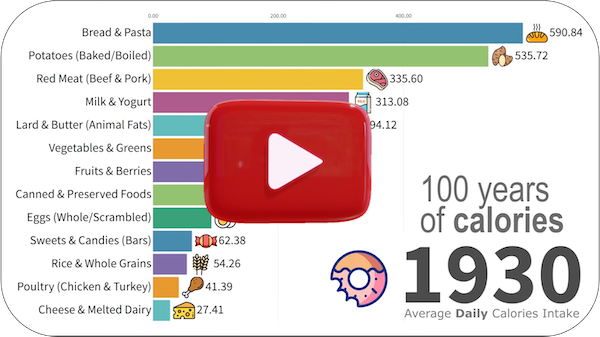
Check out the this visualization, which tracks the evolution of dietary calorie intake from 1930 to...

Taxpayer given 35% penalty for BAS recklessness
Following an application for a refund of nearly $94,000, the Administrative Review Tribunal has set aside an...

SMEs warned as ATO ramps up tax debt collection
One insolvency specialist has emphasised the importance of small businesses engaging their accountants to stay...

Does Your Small Business Need to Follow AML Privacy Rules?
Compliance with new anti-money laundering (AML) laws may subject your small business to additional privacy...

Don’t get caught out at tax time with your multiples jobs
Picking up a second job, holding multiple part-time roles, or doing gig work is now part of everyday life. But...

Global companies turn to cost-cutting amid ongoing inflation
Rising operating costs and persistent inflation are placing renewed pressure on businesses worldwide, despite...

Warning for early lodger this tax time!
The ATO has a clear message this year: slow down and get it right. Early lodgers are far more likely to make...

ATO no longer treating debt the same as during COVID
One expert has stressed the importance of tax agents reminding their clients that the ATO is no longer as...

The evolution of the world’s languages
Check out the evolution of the world's most spoken languages from 2500 BC to...
Latest Guests News

Newsletter Newslettter We are pleased to supply you with the latest edition of Client Alert, which...