- 234 Balaclava Road, Caulfield North VIC 3161
- contactus@guests.com.au
- (03) 9509 7033
Bushfires 2019–20 (ATO
Devastating bushfires have been burning across large parts of Australia since November 2019.

Important Information.
The bushfires have had a major impact on a large number of Australians and the trauma and devastation can't be overstated. The ATO has already released a website update that outlines how it is helping those effected. Accounting bodies and your accountant are also ready to help.
Also just released by the ATO is information about an automatic two-month deferral for lodgements and payments to those impacted by the ongoing bushfire crisis. Identified impacted postcodes across New South Wales, Victoria, Queensland, and South Australia will be granted an automatic two-month deferral for activity statement lodgments and payments due. Taxpayers or their agents do not need to apply for a deferral.
Read more …
ATO
Reverse Mortgage?
Some elderly Australians are trapped asset rich, income poor. Whilst downsizing might be the smartest solution, another option is a reverse mortgage.

No income is required to qualify, however, credit providers are required by law to lend money responsibly, so not everyone will be able to obtain a reverse mortgage.
A reverse mortgage is a type of loan that has been specifically designed for seniors over the age of 62 years to borrow money using the equity in their home as security. The loan can be taken as a lump sum (for a holiday, renovation, boat, accommodation bond for aged care, etc), a regular income stream, a line of credit, or a combination of all these options.
Interest is charged like any other loan, except the borrower is not required to make repayments while they live in their home – the interest compounds over time and is added to the loan balance. The borrower remains the owner of their house and can stay in it for as long as they wish.
The loan must be repaid in full (including interest and fees) when:-
- the borrower sells their home,
- they move into permanent aged care,
- the last surviving borrower passes away.
A reverse mortgage is not the same as a house reversion scheme, where a portion of the house is sold.
The family need to understand the impact on the reduced “inheritance”.
It will not be cheap, fees will apply, it will take time, legal advice should be obtained, and expect numerous conditions. Always seek help and involve the family.
AcctWeb
How the gig economy could create hidden tax issues for contractors and employers
Workers and employers are benefiting from the burgeoning gig economy in which people work part-time or on a project basis, often for a stable of employers.

However, this is creating some uncertainty around whether people are independent contractors or employees, or a hybrid of both.
Misinterpreting the arrangements can lead to inadvertent breaches of various legislation, as was demonstrated in the Fair Work Commission’s decision in Joshua Klooger v Foodora Australia Pty Ltd [2018] FWC 6836.
While Mr Klooger had entered into an independent contractor agreement with Foodora that stipulated he was a contractor and not an employee, the Fair Work Commission found that he was, in fact, an employee based on the “totality of the relationship”. This meant Mr Klooger had been unfairly dismissed and was entitled to compensation.
Furthermore, the tax authorities swooped after the decision, finding that payroll tax obligations existed, as well as other employment tax obligations such as pay-as-you-go withholding (PAYGW), superannuation and personal services income (PSI).
These decisions meant that Foodora was liable for millions of dollars of potentially unpaid withholding taxes and superannuation. Compounding the problem, the decision of the Fair Work Commission effectively changed the flow of income for both Foodora and its workers. The cumulative impact meant that the German-founded food delivery business had to leave Australia.
Instead of the independent receiving all the income and paying an amount to the digital platform provider, the result is now that the digital platform provider receives all the income and pays some of that to its employees. While this may not change the bottom line for either, the implications across a range of stakeholders including banks, government departments and auditors are significant.
Tax authorities in Australia have been grappling with this issue for many years and, to date, no attempts to solve the problem have been effective. The Foodora example illustrates the potential pitfalls for many businesses when it comes to embracing the gig economy. The line between independent contractors and employees remains murky, which could affect businesses in a range of different industries.
Contractors are not technically employees of the business, so they usually get paid by issuing the business an invoice for their services and then pay their own superannuation, tax instalments and liability insurance, as well as any other costs of doing business.
This common example of a relationship between a contractor and a business has generally been accepted by the Australian Taxation Office (ATO), but the Foodora case could lead to changes. If the ATO were to take the view that these relationships were, in fact, employee relationships, then there would be a large number of contractors and businesses that would need to reconsider their tax structures and affairs.
This could mean significant out-of-pocket expenses for businesses as they would need to pay wages to their employees, pay the superannuation guarantee charge (SCG), allow for leave entitlements and ensure their insurances covered their employees.
The contractors themselves would have their tax affairs simplified but would also be unable to continue claiming certain tax deductions or splitting income through certain tax structures.
If the contractor and business elected to continue with the current independent contractor arrangement, the ATO may seek to review the arrangement with the following outcomes:
- Request the business pay an applicable outstanding SGC to the contractor’s superannuation fund. As this would be late-paid superannuation, no tax deduction would be allowed for the payment.
- Charge a 10 per cent interest rate and quarterly administration fees on the unpaid SGC amounts.
- Amend the contractor’s income tax return under the personal services income (PSI) provisions to disallow certain deductions and income splitting.
These developments mean it’s critical for any business engaging independent contractors to seek expert advice to ensure they understand the issues and take all steps to ensure their business model works. Failing to do so could be catastrophic, as was illustrated by Foodora’s forced exit from the Australian market.
Tony Ince and Kane Zaknich, RSM Australia
22 November 2019
accountantsdaily.com.au
Don’t forget sharing economy income
Money that you earn from “gig” jobs through platforms like Uber, Airtasker and Airbnb, such as transporting passengers or renting out a room or house, counts as your assessable income.

This means you must declare it on your tax return. And, be aware the platform sends the income details direct to the Australian Taxation Office for their data matching surveillance.
Depending on your gig activities and expenses, you may also be able to claim deductions related to this type of income, but it’s important to keep evidence to support your claims. Smart taxpayers tell their tax agent well before year end.
AcctWeb
Impress your friends with your knowledge!!
Knowing this information is a 'must have' for this Christmas break.
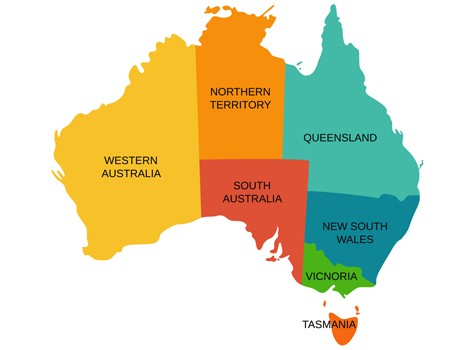
Please click on the following link to see all this interesting information. The areas covered are:
- Overview
- Markets
- GDP
- Labour
- Prices
- Money
- Trade
- Government
- Business
- Consumer
- Housing
- Taxes
- Climate
Access all this data here.
tradingeconomics.com/australia
Salary sacrificing and the superannuation guarantee
Employers should take note of the new rules that became law on 28 October 2019, regarding the application of compulsory superannuation guarantee to salary sacrificed superannuation amounts.

From 1 January 2020, where an employee salary sacrifices part of their salary into superannuation contribution benefits, these superannuation contribution amounts will be subject to further 9.5 per cent superannuation contributions. Employers who currently contribute the 9.5 per cent superannuation guarantee based on the cash salary only will need to update their systems to comply with the new law by 1 January 2020.
We also note that where the arrangements between the employer and the employee is such that superannuation contributions (including salary sacrifice contributions) are quoted on top of a remuneration package (rather than within the package), and the employer doesn’t currently contribute based on the full cash plus salary sacrifice contributions package, then those employers will have additional costs from 1 January 2020. We recommend that employers review all salary sacrifice arrangements for impacts for compliance with the new law.
For example: Remuneration $100,000 per annum (excluding superannuation guarantee contributions). Employee salary sacrifices $10,000 into superannuation; therefore, $100,000 remuneration is made up of $90,000 cash salary and $10,000 benefits. Prior to 1 January 2020, the employer was only obligated to contribute superannuation guarantee on the cash salary of $90,000 (which at 9.5 per cent is $8,550). From 1 January 2020, the employer will be required to contribute superannuation guarantee based on the full remuneration of $100,000 p.a. (which at 9.5 per cent is $9,500 (being an increase of $950 p.a.) (in addition to the $10,000 salary sacrifice contributions).
Further, the new law also ensures that salary sacrificed superannuation does not count towards an employer’s compulsory superannuation contributions obligations.
For example: Remuneration $100,000 p.a. (excluding superannuation guarantee contributions). Employee salary sacrifices $10,000 into superannuation; therefore, $100,000 remuneration is made up of $90,000 cash salary and $10,000 benefits. Prior to 1 January 2020, the employer could effectively make no additional superannuation contributions, because the salary sacrificed contributions of $10,000 count as employer contributions. That is, the employer is treated as meeting its obligations, as 9.5 per cent of $100,000 = $9,500, and $10,000 in superannuation contributions have been made (due to the employee’s salary sacrificed amounts). From 1 January 2020, the employer will be required to contribute superannuation guarantee based on the full remuneration of $100,000 p.a. (which at 9.5 per cent is $9,500) (in this case, this is an increase of $9,500 on top of the $10,000 salary sacrifice contributions).
Please note that this new law only applies to salary sacrifice amounts that constitute superannuation contributions. It is our understanding that the new law does not apply to other salary sacrificed items.
Reference: Treasury Laws Amendment (2019 Tax Integrity and Other Measures No. 1) Bill 2019
Judy White, BDO Australia
08 November 2019
accountantsdaily.com.au
Why so much super “stuff” this year?
New rules mean that insurance coverage will be cancelled on “inactive” superannuation accounts from 1 July 2019, unless the fund member informs the fund in writing that they want to keep the insurance.

Also, where an inactive account has a low balance (under $6,000) the fund will have to send that super to the Australian Taxation Office for “consolidation and safekeeping”.
If you haven’t made contributions or rolled over your super in the past 16 months, no matter what your balance, it’s important to check in with your fund now to keep your account active and maintain the insurance you want.
The new law also bans super funds from charging exit fees when you want to leave the fund, which should make it easier to change and consolidate your super accounts when you need to.
Life insurance within superannuation can be cheaper. If you are in doubt whether you should have it, why not ask your dependents?
AcctWeb
Our Advent calendar for 2019
On behalf of all our staff we wish our clients a Merry Christmas, Happy New Year and a great holiday period.
Come back each day for an inspirational quote or poem about Christmas, summer and life in general from some of the great writers and poets.
(Please click on the image to open the Advent Calendar and then click on a date)

Tax Office sounds warning on 8 types of super schemes
The Australian Taxation Office has earmarked a number of superannuation and SMSF schemes it says are under additional scrutiny for their ability to enable taxpayers to evade laws around superannuation and tax rules.

There are a number of warning signs associated with illegal super schemes that Australians interested in SMSFs must be aware of.
Taking part in an illegal super scheme could see you penalised financially, disqualified from being a trustee and having to wind up your SMSF, or even spending time behind bars.
The Australian Taxation Office has now highlighted eight separate types of superannuation schemes that are attracting its attention for all the wrong reasons. These are:
Related-party property development ventures
While an SMSF can invest directly or indirectly in property development ventures, the Tax Office said “extreme care must be taken”.
Some arrangements can give rise to significant income tax and superannuation regulatory risks, such as the potential application of the non-arm’s length income provisions and breaches of regulatory rules about related-party transactions.
Non-concessional cap manipulation
Non-concessional cap manipulation sees individuals and some SMSF members “deliberately exceed their non-concessional contributions cap with a view to manipulating the taxable and non-taxable components of their superannuation account balances”.
Granting legal life interest over commercial property to SMSFs
This is done by SMSF members or other related entities to divert rental income so it can be taxed at a lower rate without full ownership of the property ever transferring to the SMSF.
Dividend stripping
In this scenario, shareholders in a private company transfer ownership of their shares to a related SMSF so that the company can pay franked dividends to the SMSF with the purpose of stripping profits from the company in tax-free form.
Some limited recourse borrowing arrangements (LRBAs)
Where these arrangements aren’t consistent with a genuine arm’s length dealing.
Personal services income
Where an individual — with an SMSF often in pension phase — diverts income earned from personal services to the SMSF so it is concessionally taxed or treated as exempt from tax.
The next two arrangements being monitored by the ATO relate to the new super caps and restrictions that apply as a result of the super changes that came into effect on 1 July 2017:
Improper use of multiple SMSFs
The ATO said having multiple SMSFs does not ordinarily raise compliance issues, but the establishment of additional SMSFs intended to manipulate tax outcomes would.
The example provided was a switching of each respective fund between accumulation and retirement phases.
Inappropriate use of reserves
In the past, many existing reserves “arose legitimately from legacy pensions that are no longer available”, the Tax Office has conceded.
However, there are now very limited appropriate circumstances where new reserves would be established and maintained in SMSFs.
Structures using reserves designed to bypass super balance and transfer balance cap measures will attract scrutiny.
To prevent falling prey to foul play and super schemes that are illegal, the ATO has asked taxpayers to make sure they are receiving ethical professional advice when undertaking retirement planning.
It emphasised the importance of seeking a second opinion from a trusted and reputable expert, especially where in doubt.
Grace Ormsby
25 November 2019
accountantsdaily.com.au
Synchronised global economic slowdown
The International Monetary Fund (IMF) grabbed headlines this month on releasing its latest World Economic Outlook report, downgrading its global growth forecasts to the lowest levels since the 2008-09 financial crisis.

Pointing to heightened economic and political uncertainty, particularly in China and the United States, the IMF cut its 2019 global growth forecast by 0.3 per cent to 3 per cent, and its 2020 estimate by 0.2 per cent to 3.4 per cent.
Vanguard also expects global growth to continue to soften over the next 12 months, and sees the likelihood of a shallow recession occurring in the US in 2020 as being above 50 per cent, with the risk of a more severe recession a 10 per cent probability.
The IMF's forecast also came with a stark warning: that the world is in a “synchronised economic slowdown”, with financial markets expecting interest rates to stay lower for longer than had been anticipated earlier in 2019.
Indeed, more cuts to official interest rates in the US, Australia and other countries are highly likely as central banks attempt to use monetary policy as a lever to kick start growth.
“Financial conditions have eased even more, helping contain downside risks and support the global economy in the near term,” said a joint commentary by the IMF's director of monetary and capital markets, Tobias Adrian, and deputy director Fabio Natalucci.
“But loose financial conditions come at a cost: they encourage investors to take more chances in a quest for higher returns, so risks to financial stability and growth remain high in the medium term.”
Risk and fixed income inflows
Macro-economic and policy events have been among the key drivers of markets instability for some time, although risk assets such as equities are continuing to trade at high valuation levels.
“These periods of time do come about and they tend to be a more difficult time to invest, because you need to stay engaged in the market to earn respectable returns,” says Christopher Alwine, principal, head of credit, of Vanguard's global Fixed Income Group.
“But, in staying engaged in the market, it's also important to make sure the risk levels that you're positioning your portfolios in are consistent with the risks of an economic downturn, because those risks are elevated.
“To a retail investor, that really comes down to how much you have in stocks versus fixed income and cash.”
Ongoing large inflows into listed and unlisted bonds funds, where investment returns over the past year have been very strong, are a strong indicator of the de-risking phenomenon that's been occurring, and continues to occur, globally.
In a weak macro-economic environment, pointing to low inflation, higher unemployment and lower growth, broad fixed income strategies should perform relatively well as a risk diversifier to more volatile equities.
Most importantly, when you have your worst periods of equity performance, you want to see fixed income perform well. Yet, that's not always the case.
Understanding interest rate risk
Investors do need to be aware that the fixed income asset class is not homogenous. Indeed, depending on the investment strategy being used, investors in fixed income can be exposed to market risks they may not have appreciated at the time of making their investment.
For example, interest rate risk or sensitivity (duration) can enhance returns when share markets perform poorly.
But a fixed income fund may not necessarily perform this way if a fund manager has structured a portfolio in a way where the fixed income investments made materially change the underlying nature of the fund.
“One of the biggest decisions that you can make in a fixed income portfolio is to make significant duration bets,” says Vanguard senior manager, investment product management, Scott Cornfoot. “They are single decisions that can be quite volatile and surprise investors.
“What you don't want is to invest in a fixed income portfolio and, when equities go badly or markets get jittery … to find that your manager has taken a big duration position (that is, has effectively gone underweight fixed interest) and your portfolio doesn't perform as you would expect.”
This is why low-cost actively managed global credit funds that invest in high-quality investment grade bonds, and which have very tight duration constraints, are attracting investor demand.
In addition to the risk-free component generated from government bonds, these credit funds seek to generate additional performance by investing across investment grade bond markets and by seeking out opportunities to add value through specific security selection.
So, in a synchronised economic slowdown climate, if you're moving to de-risk your portfolio by shifting capital into fixed income, it's important to understand the nuances within the asset class and how they may impact returns.
This is where a licensed financial adviser should be able to provide guidance.
Tony Kaye
Personal Finance Writer,Vanguard Australia
29 October 2019
Vanguardinvestments.com.au
Latest Industry News

How Do I Write Legally Compliant Terms and Conditions for My Business?
Terms and conditions bind your customers only where they actively accept them, so a tick box at checkout holds...

Paid parental leave super contributions have started
From July 2026, the new Paid Parental Leave Superannuation Contribution (PPLSC) has started. From...

If the business is no longer profitable, and is unlikely to be profitable in the future, your best option may...

Check out the this visualization, which tracks the evolution of dietary calorie intake from 1930 to...

Taxpayer given 35% penalty for BAS recklessness
Following an application for a refund of nearly $94,000, the Administrative Review Tribunal has set aside an...

SMEs warned as ATO ramps up tax debt collection
One insolvency specialist has emphasised the importance of small businesses engaging their accountants to stay...

Does Your Small Business Need to Follow AML Privacy Rules?
Compliance with new anti-money laundering (AML) laws may subject your small business to additional privacy...

Don’t get caught out at tax time with your multiples jobs
Picking up a second job, holding multiple part-time roles, or doing gig work is now part of everyday life. But...

Global companies turn to cost-cutting amid ongoing inflation
Rising operating costs and persistent inflation are placing renewed pressure on businesses worldwide, despite...

Warning for early lodger this tax time!
The ATO has a clear message this year: slow down and get it right. Early lodgers are far more likely to make...

ATO no longer treating debt the same as during COVID
One expert has stressed the importance of tax agents reminding their clients that the ATO is no longer as...

The evolution of the world’s languages
Check out the evolution of the world's most spoken languages from 2500 BC to...
Latest Guests News

Newsletter Newslettter We are pleased to supply you with the latest edition of Client Alert, which...