- 234 Balaclava Road, Caulfield North VIC 3161
- contactus@guests.com.au
- (03) 9509 7033
ATO audits continue to target Lifestyle assets
Around 350,000 high-net-worth taxpayers with lifestyle assets are set to undergo scrutiny from the ATO after it revealed it would obtain five more years of policy details from insurers.

The ATO has today revealed its request to receive a further five years’ worth of policy information from over 30 insurance companies about taxpayers who own marine vessels, thoroughbred horses, fine art, high-value motor vehicles and aircraft.
The request will see the Tax Office’s lifestyle assets data-matching program extended up to 2019–20, with the agency already holding insurance policy information for the 2013–14 and 2014–15 financial years.
Marine vessels over the value of $100,000, motor vehicles worth over $65,000, thoroughbred horses worth over $65,000, fine art over $100,000 per item, and aircraft worth over $150,000 all fall within the ATO’s data-collection scope.
The Tax Office will use this information to form a more complete picture of a taxpayer’s financial situation to ensure they are fulfilling their tax and superannuation reporting obligations.
ATO deputy commissioner Deborah Jenkins said that while the Tax Office anticipates receiving information about assets owned by around 350,000 taxpayers, the data would not be used to initiate automated compliance activity.
“Taxpayers selected for compliance activities are identified through other methodologies. The data is made available to our compliance teams to support their risk profiling of the selected taxpayers. Existence of an insurance policy may or may not prompt the compliance officer to pursue a particular line of inquiry,” Ms Jenkins said.
“If a taxpayer is reporting a taxable income of $70,000 to us but we know they own a $3 million yacht, then this is likely to raise some red flags.
“Regardless of your level of wealth, we all need to pay the correct amount of tax, and this data will allow us to ensure those people who can afford these kinds of items are doing the right thing, along with everyone else.”
The ATO will retain each financial year’s data for five years from receipt of the final instalment of verified data files from the data providers.
Ms Jenkins also noted that aside from helping identify taxpayers who may be understating their income, the data from insurers may be used by the ATO to identify taxpayers who have made capital gains on the disposal of certain assets but who have not declared this to the ATO.
“With high-value assets like fine art, there can be some significant capital gains made when these assets are sold, and capital gains tax may need to be paid on the sale or disposal of these items,” Ms Jenkins said.
The data will also be used by the ATO to identify incorrect goods and services tax (GST) input tax credits where taxpayers are purchasing the assets for purely personal reasons and claiming GST credits as if the item was a business asset.
Self-managed superannuation funds that the ATO suspects may be acquiring lifestyle assets purely for personal enjoyment of the fund’s trustee or beneficiaries are also likely to be looked at by the ATO.
Insurers are required to provide the ATO with policy information where the value of assets is equal to or exceeds the following thresholds:
- Marine vessels $100,000
- Motor vehicles $65,000
- Thoroughbred horses $65,000
- Fine art $100,000 per item
- Aircraft $150,000
Jotham Lian
18 December 2019
accountantsdaily.com.au
Property deduction errors down to ‘lack of understanding’: ATO
A fundamental knowledge gap is continuing to trip property investors up, leading to simple mistakes and heaping pressure on tax agents, the ATO has revealed.

Last year, the ATO singled out rental property deductions as a “top priority” for the agency, with Commissioner of Taxation Chris Jordan claiming that errors were found in almost 90 per cent of returns.
For tax time 2019, the ATO doubled its number of in-depth audits for rental deductions to 4,500, with a specific focus on overclaimed interest, capital works claimed as repairs, incorrect apportionment of expenses for holiday homes let out to others, and omitted income from accommodation sharing.
Speaking on sister title Smart Property Investment’s podcast, ATO acting assistant commissioner of individuals and intermediaries, Adam O’Grady said a vast majority of these errors were down to “simple mistakes” from investors and failing to disclose information to their accountants at tax time.
“What we find when we do review returns and audit people is more often than not, it's a simple mistake or it's a lack of understanding of what they're allowed to do, what they're not allowed to do,” said Mr O’Grady.
“The vast majority of people don't deliberately go out to claim things they shouldn't or obtain refunds. Those that do, finish up in front of the courts and prison and those sorts of things.
“It's really that lack of education, that lack of understanding. So, what we hear stories of when we sort of audit, they walked up to their accountant and said, ‘Oh, here's my income from the real estate agent. Here are my line statements; I don't know about the rest of the expenses,” and just sort of scribble it down on a notepad and paper and say, ‘Oh, look, that's about what I think it is.’”
Mr O’Grady acknowledged that accountants are often at the mercy of their investor clients, noting that they are only as good as the information provided to them by their clients.
“Accountants out there are highly skilled, they understand the tax law, they can really help you, make sure you're structured in the right way and help you set up the proper recording requirements and all those sorts of things. But, they can only do that if you're open and honest with them,” said Mr O’Grady.
“You need to talk to your accountant, explain what you've done, why you've done it, how you've set it up, and then they can give you that right advice. But [if] you don't tell the accountant, they're not giving you the advice you need.”
Sharing economy focus
Mr O’Grady said investors receiving income from short-term rentals through sharing economy platforms such as Airbnb should be aware of the ATO’s new data-matching program that will identify taxpayers who have left out rental income and over-claimed deductions.
“Last calendar year for the first time, we actually collected data off a lot of these platforms, so we can see who rented their property out, for how long, what sort of income they earned from it, and we're working through that data and comparing that to tax returns to understand people that haven't reported that income or haven't reported the full amount, all those sort of things,” said Mr O’Grady.
“What we've been doing with the data we've acquired recently, is actually writing to people and giving them really an opportunity to self-correct their own return.
“It's more in that trying to educate people, that we can see you've got this income, you need to go and fix up your own affairs, and from this point forward, make sure you're reporting correctly,” he added.
“On top of that, we will use the data to audit people. So those, we do have some examples where people are on these platforms renting out 10, 20, 30 properties or rooms across various properties and not reporting on their tax obligations. So for those people, again, we'll take a pretty firm stance.”
Jotham Lian
31 January 2020
smsfadviser.com
Debate heats up around $10k cash ban bill
Concerns around a bill that will criminalise business cash payments above $10,000 continue to be raised as the industry waits on a parliamentary committee’s final report.

A total of 2,659 submissions were received by the Senate Economics Legislation Committee in the course of its inquiry into the Currency (Restrictions on the Use of Cash) Bill 2019, with the committee recently concluding its latest round of public hearings.
With the committee’s report due this Friday, the Australian Taxpayers’ Alliance has raised the temperature on the proposed measure, labelling it an “attack on economic freedom”.
“A $10,000 restriction on the use of cash would harm small businesses, give more power to corporate banks, and would fail to restrict any criminal activities,” said Australian Taxpayers’ Alliance policy director Emilie Dye.
“Many Australians still use cash and wish to continue using this legal tender for their privacy and security. Banks and electronic payment methods are not always reliable. Look at the bushfire crisis and the thousands of Australians forced to use cash during a natural disaster.”
The bill, which proposes to make it a criminal offence for businesses to make or accept a cash payment of $10,000 or more by introducing penalties of up to two years of imprisonment and a $25,200 fine for individuals, is currently before the Senate and was slated to come into effect from 1 January.
The Australian Small Business and Family Enterprise Ombudsman has also expressed its concerns with the bill, arguing that small businesses should not be disadvantaged in the marketplace where a customer chooses to pay with cash and the record keeping is compliant.
It also argues that regional and remote small businesses and pastoral family enterprises in rural Australia will be disadvantaged due to their lack of reliable access to internet and electronic banking facilities.
The major accounting bodies have been undecided on the measure, with some arguing that the law should not criminalise the use of legal tender, and others believing the cash ban should be extended to all payments.
In particular, CPA Australia has questioned the need to introduce criminal offences and penalties, noting that there are already a number of checks and balances in the system to address illegal activities where cash is involved.
“While we are aware that cash is an enabler of illegal activity, criminalising certain cash transactions in the manner proposed is an unnecessarily harsh response to the problem of avoiding scrutiny by the Commissioner of Taxation and other government agencies,” said CPA executive general manager Dr Gary Pflugrath in his submission to the committee.
“There has also been insufficient reasoning as to why criminal offences are seen as being the most appropriate solution or why the power to set exceptions should be delegated to the minister.
“We remain of the view the policy intent behind this bill would best be achieved by a mix of administrative penalties for breaches, but also incentives for business to move to electronic payment options.”
However, Chartered Accountants Australia and New Zealand (CA ANZ) believes there is merit in the measure, believing it will help level the playing field for small businesses, particularly in industries where cash transactions are common, including the building and construction industry, and motor vehicle sales and repairs.
“In a modern economy where the vast majority have access to, and regularly utilise, online payment arrangements, with cash usage in rapid decline, examples of situations where the cash payment limit will cause actual difficulty in day-to-day transactions are hard to find,” said CA ANZ tax leader Michael Croker.
“Yes, the measure is tough in terms of sanctions, but CA ANZ continues to agree with the simplicity and interoperability rationale for this measure — and the policy arguments more generally — which were articulated so well in the Final Report of the Black Economy Taskforce.”
Jotham Lian
04 February 2020
accountantsdaily.com.au
Australia by the Numbers
The following data is used to make decisions that effect every Australian's life.

Please click on the following link to see all this interesting information. The areas covered are:
- Overview
- Markets
- GDP
- Labour
- Prices
- Money
- Trade
- Government
- Business
- Consumer
- Housing
- Taxes
- Climate
Access all this data here.
tradingeconomics.com/australia
‘Visible, valued and owned’: ATO outlines super priorities for new year
The ATO has renewed its commitment to making sure super is “visible, valued and owned” in 2020, naming consolidation of member accounts and reducing the incidence of SG non-payment as some of its key priorities for the coming year.

In a recent statement published to the ATO website, ATO deputy commissioner James O’Halloran said the regulator would keep an eye on ensuring the implementation of any reforms in the super space were “fit for the future” in terms of the impact they would have on practitioners going forward.
“Just like many of our readers, we’re in the business of turning concepts into reality; the implementation of any major reform must not only be designed to be ‘fit for purpose’ but also ‘fit for the future’,” Mr O’Halloran said.
“Or to put it another way, super is about people and their future. So, we’ll keep the client experience front and centre of all we do, because we know our approach and actions impact your members’ plans for their investments and their retirement.”
Mr O’Halloran added that the ATO would continue to scrutinise employers around SG non-payment in the new year, a process that had been made easier by the rollout of the Single Touch Payroll system over the course of 2019.
“Aided by the introduction of Single Touch Payroll and fund event-based reporting, we now have an unprecedented level of ‘visibility’ of super information at the account and transaction level and we’re increasingly using this capability,” he said.
Mr O’Halloran also touched on the introduction of myGovID as a key achievement for the year that would continue to roll out in 2020.
“We’ve recently launched myGovID, the federal government’s digital identity solution which aims to transform how Australians interact with government,” he said.
“It will be faster and easier to prove who you are when accessing government online services.”
He added that while the ATO “can’t predict the next wave of reform”, it would focus on ensuring super was “visible, valued and owned” by Australians in the coming year.
Sarah Kendell
30 December 2019
accountantsdaily.com.au
Introductory Rates & Interest Free Periods
Consumers are enticed to transfer balances owing on credit cards, but need to be aware of all the costs, not just the benefits.

During the promotion period:-
- a lower interest rate may apply, and/or
- fees, and charges may be lower, or may be waived altogether
The credit provider must take care that consumers are not misled about the details of the offer – The Corporations Act, the ASIC Act and National Consumer Credit Protection Act, are in place to ensure a balanced message and consumers have a realist impression of the overall costs.
If an advertisement includes details of a discounted interest rate, or discounted/waived fees, the advertisement must also make clear with equal prominence, the period for which the discounted rate applies.
The advertisement must also state what the interest rate revers to after the promotional period.
Pose yourself questions such as:-
- can I pay off the debt during the promotional free period?
- will the rate after the promotional period be higher than the current rate?
- can I change my habits to avoid future credit cards interest?
There is no substitute for careful reading or asking for a second opinion from your accountant before you sign up.
AcctWeb
Accounting profession responds to bushfire crisis
The professional accounting bodies have begun launching initiatives to help support accountants and their clients affected by the ongoing bushfire crisis.
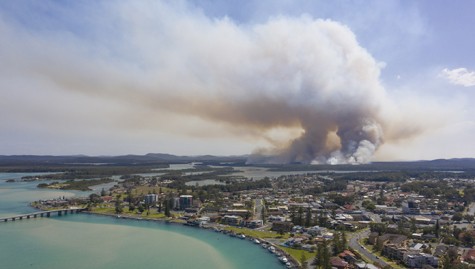
Chartered Accountants Australia and New Zealand (CA ANZ), CPA Australia and the Institute of Public Accountants (IPA) have now confirmed that they will be providing support to communities ravaged by the bushfire disaster.
CA ANZ has now partnered with Rural Aid to connect members wishing to assist drought and fire-affected businesses in rural and regional Australia with monetary donations as well as donations of their time and skill.
A range of CA ANZ resources has also been made available, including a checklist on practical issues for small businesses impacted by bushfires, and a mental health first-aid guide to help accountants engage in difficult conversations with their clients.
“As bushfires and extreme heatwave conditions persist across regions in Australia, my thoughts are with all our members in practice, your clients and the wider communities during this time, particularly those who have had losses or needed to evacuate to safety,” said CA ANZ president Peter Rupp.
“Accountants are often the backbone of their communities, playing a critical role to help Australians and businesses navigate the financial impact of bushfires and assist them through recovery.”
The IPA has also begun reaching out to its membership base to create a pro bono register for members to volunteer their services.
The accounting body had previously carried out a similar exercise in the 2009 Black Saturday bushfires and the 2010 Queensland floods.
The IPA has also reached out to members directly affected by the crisis and will offer support as required.
CPA Australia is currently in the midst of updating its online disaster recovery toolkit for businesses, with information to guide advisers on aspects to consider immediately following the disaster and steps to developing a recovery plan.
A CPA spokesperson said a number of other initiatives were currently being considered and would be announced shortly.
Not has the ongoing impact of the bushfires been lost on the profession itself, with firms and practitioners coming together to offer various forms of professional support.
Jotham Lian
07 January 2020
accountantsdaily.com.au
Helping your business survive a natural disaster – ATO
Australia has experienced more natural disasters in the last few months, and over a greater area of the country, than ever before in such a short period of time.

The ATO, to its credit, has responded quickly and their efforts have helped accountants and financial planners offer support and assistance to their clients through these very tough times.
In Australia, natural disasters such as floods, bushfires or storms can strike without warning. You can make sure your business is prepared by planning how your business might recover from a natural disaster.
If you are affected by a disaster or major incident, we, the ATO, understand that dealing with your tax affairs may not be a priority. We will give you time to deal with your more immediate problems first and can work with your accountant or help you directly to sort out your tax affairs later. Where your tax records have been damaged or destroyed, we, the ATO, can help you to reconstruct them.
We can also provide support by giving you more time to lodge, pay and respond.
If you or your business is affected by a disaster and you need further assistance, phone your accountant, or the ATO on 1800 806 218.
Find out about:
The Australian Taxation Office (ATO)
Single Touch Payroll (STP) – now ensure super is paid on time.
Single Touch Payroll (STP) will connect you to the Australian Taxation Office through your payroll software.

Each time you run your payroll and pay your staff, you will be sending your employee’s salaries and wages, Pay as You Go withholding and superannuation, to the ATO at the same time.
Superannuation funds will report to the ATO when they receive your employee’s superannuation contribution.
The ATO will know if you are now paying your workers their superannuation entitlements ON TIME, and strong compliance action will follow.
The payment deadlines cannot afford to be avoided.
AcctWeb
Beware of Australian Taxation Office (ATO) impersonation scams
The ATO warns taxpayers to be alert to malicious scammers who are using increasingly sophisticated methods and technology to impersonate the ATO.

A new tactic on the rise is “spoofing”, where scammers mimic a legitimate ATO phone number caller ID to call or send SMS messages, or mimic a legitimate email domain to send emails.
SMSs and emails may ask you to click on a link and provide your personal details to get a “refund” from the ATO. Scammers may also say you need to pay a (fake) tax debt. The ATO warns that these scammers may intend to steal not only your money, but also your identity by using your personal information.
If you’re not sure whether a communication is really from the ATO, don’t respond, don’t click any links and don’t open any attachments. Quickly hang up. You could call us. Alternatively, call the ATO’s scam hotline on 1800 008 540 to check its legitimacy.
On form of protection (if you remember) is that ANY communication with the ATO is via us – your tax agent.
AcctWeb
Latest Industry News

How Do I Write Legally Compliant Terms and Conditions for My Business?
Terms and conditions bind your customers only where they actively accept them, so a tick box at checkout holds...

Paid parental leave super contributions have started
From July 2026, the new Paid Parental Leave Superannuation Contribution (PPLSC) has started. From...

If the business is no longer profitable, and is unlikely to be profitable in the future, your best option may...

Check out the this visualization, which tracks the evolution of dietary calorie intake from 1930 to...

Taxpayer given 35% penalty for BAS recklessness
Following an application for a refund of nearly $94,000, the Administrative Review Tribunal has set aside an...

SMEs warned as ATO ramps up tax debt collection
One insolvency specialist has emphasised the importance of small businesses engaging their accountants to stay...

Does Your Small Business Need to Follow AML Privacy Rules?
Compliance with new anti-money laundering (AML) laws may subject your small business to additional privacy...

Don’t get caught out at tax time with your multiples jobs
Picking up a second job, holding multiple part-time roles, or doing gig work is now part of everyday life. But...

Global companies turn to cost-cutting amid ongoing inflation
Rising operating costs and persistent inflation are placing renewed pressure on businesses worldwide, despite...

Warning for early lodger this tax time!
The ATO has a clear message this year: slow down and get it right. Early lodgers are far more likely to make...

ATO no longer treating debt the same as during COVID
One expert has stressed the importance of tax agents reminding their clients that the ATO is no longer as...

The evolution of the world’s languages
Check out the evolution of the world's most spoken languages from 2500 BC to...
Latest Guests News

Newsletter Newslettter We are pleased to supply you with the latest edition of Client Alert, which...