- 234 Balaclava Road, Caulfield North VIC 3161
- contactus@guests.com.au
- (03) 9509 7033
ATO announces Div 7A COVID-19 assistance
Taxpayers affected by COVID-19 will now be able to request for an extension of time to meet the minimum yearly repayment on complying Division 7A loans.

The ATO will now allow an extension of the repayment period for those borrowers who are unable to make their minimum yearly repayment (MYR) by the end of the lender’s 2019–20 income year, following pressure from the joint bodies.
Taxpayers who are affected by COVID-19 will need to request the extension through an ATO form, with the Tax Office noting that a response will be provided within five business days of lodging.
Borrowers who are unable to make the 2019–20 MYR will be given until 30 June 2021 to make the payment, on top of the MYR for 2020–21.
Approval by the ATO will mean that taxpayers will not be considered to have received an unfranked dividend, if they pay the shortfall by 30 June 2021.
The Tax Institute’s senior advocate, Robyn Jacobson, said practitioners would now have certainty despite the ATO’s guidance coming just days before 30 June.
“While year-end is only five days away, there is no rush to act on this now. The discretion can be sought at any time until 30 June 2021, although you will need to wait until after 30 June 2020 for a decision if you apply immediately,” Ms Jacobson told Accountants Daily.
“Practitioners should firstly determine whether their client can make the required MYR by next Tuesday, 30 June. If not, they can apply for more time to make the 2019–20 payment using the approved form.”
Ms Jacobson also noted that if the extension is allowed by the ATO, 2019–20 interest will not be capitalised but will still be required to be paid.
“If the ATO’s discretion to allow more time to make the 2019–20 MYR is not exercised, the amount of the shortfall for 2019–20 will need to be included as a deemed dividend in the shareholder’s 2019–20 assessable income,” she added.
“While it is pleasing to see a resolution of this issue, it has caused unnecessary anxiety which has compounded the anxiety that has come from the economic stimulus measures.”
Application form
The ATO’s form will include three sections, including details about the terms of the loan and the MYR shortfall.
Taxpayers will also be required to provide details about how COVID-19 has affected their ability to make the MYR.
“For a business, an important question to ask is whether you can pay your way in carrying on your business. For example, a business is unable to pay if it needs to sell its trading stock outside the course of its business to obtain the funds,” the ATO said.
“An individual is unable to pay where they need to use the assets necessary to maintain an adequate living standard for themselves and their family to make a payment.
“Whether you are unable to pay is a question of fact you must determine in a practical business environment. It is a matter of commercial reality, taking into account all of the circumstances.
“When completing this form, the practical business environment includes the economic effects and degree of uncertainty that has resulted from the COVID-19 situation.”
The ATO notes that significant penalties apply for making false or misleading statements.
Additional details and the approved ATO form can be viewed here.
Jotham Lian
26 June 2020
accountantsdaily.com.au
JobKeeper documentation ‘absolutely critical’ in ATO audit
Practitioners have been advised to keep contemporaneous documentation of their calculations and advice around the JobKeeper payment scheme to avoid inevitable audit scrutiny in the near future.

While the ATO has declared that it will take an “understanding and sympathetic” compliance approach when reviewing JobKeeper turnover projections, practitioners have now been urged to document their work as much as possible to cover all the bases when the ATO comes knocking.
“[The payments are going to flow] without much testing going on; in other words, the Tax Office isn’t going to be able to sit there and scrutinise everybody’s JobKeeper application now,” the Tax Institute’s senior tax counsel, Professor Robert Deutsch, said on Accountants Daily Insider.
“What will happen is that some months from now, probably three to six months from now, they will start to look at a number of claims, particularly the larger ones, and start to investigate in a sort of audit way to try to understand if everyone has been doing the right thing, whether there have been people who have been claiming when they shouldn’t be.
“It is very important that taxpayers who are now claiming the JobKeeper payment document exactly what it is that they have worked out that enabled them to confidently say they are entitled to the JobKeeper payment.
“In particular, the turnover issue: How did you establish your turnover for a particular period in 2020? How did you show that the turnover was down 30 per cent on last year?”
The ATO’s recently published LCR 2020/1 has stated that the Tax Office will allow for some tolerance around turnover projection predictions.
Likewise, the Tax Practitioners Board has now confirmed that tax agents will not necessarily be in breach of the Code of Professional Conduct if there is a mistake in their client’s turnover projection.
“Where information provided by a client seems credible (and, for existing clients, is consistent with previous statements) and you have no basis on which to doubt the information supplied, you may discharge your responsibility under the code by accepting the statement provided by the client without further checking,” the TPB said.
“However, if the information does not seem credible or appears to be inconsistent with a previous statement, further enquiries would be required. In this case, taking reasonable care may mean asking questions of your client or examining the client’s records, or both.”
Professor Deutsch believes “coherent and cogent” documentation will be a practitioner’s best defence should the ATO start asking for information.
“Practitioners should be helping clients to do that documentation because that’s really the vital part in this whole jigsaw puzzle — it is being able to say to an auditor six months from now, ‘Here’s a piece of paper that explains the whole thing’,” Professor Deutsch said.
“If it is coherent and cogent, the auditors will probably say, ‘Thank you very much, I’ll take a copy of this’, go away and leave you alone.
“A mistake that a lot of taxpayers make is saying I’ll worry about that when I get there.
“The problem of worrying about it when you get there is that when you get there, you can’t remember much about this because so much has happened in the interim, so document it now.”
Jotham Lian
13 May 2020
accountantsdaily.com.au
Tax Time Checklists – Individuals; Company; Trust; Partnership; and Super Funds
Working from home because of COVID-19 means most will have more deductions than in a normal year. These checklists will help your tax agent ensure you don't miss any deductions. Simply print, complete and return.

Please click on the following links to access the checklists most appropriate to your needs.
Individuals
Company Trust Partnership
Superannuation Funds
‘HomeBuilder’ grants now available.
$25k grants for housing construction, renovations to bolster industry. The Federal Government will give eligible Australians $25,000 to build or substantially renovate their homes.

How it will work
- It will be restricted to substantial renovations and the construction of new homes, with recipients required to spend at least $150,000 before being eligible.
- The grants will be means-tested to exclude couples making more than $200,000 per year and individuals making more than $125,000 per year, while limits will also be placed on the value of the property the grants go towards.
- New builds will be capped at $750,000, while renovations can cost anywhere between $150,000 and $750,000, but will only be subsidised if the house being altered is valued at less than $1.5 million.
- The scheme will not apply to investment properties or owners who intend on building or renovating on their own without the help of builders.
- Renovation work will not include structures separate to the main property, such as swimming pools, tennis courts and sheds.
- To be eligible for the grants, homeowners will need to enlist a licensed builder to complete the works.
“This is about targeted taxpayer support for a limited time using existing systems to ensure the money gets used how it should by families looking for that bit of extra help to make significant investments themselves,” Mr Morrison said.
The grants are available from today, 4th June 2020, and will run until the end of the year.
Source: Federal Government
ATO updates JobKeeper compliance approach
The Tax Office has now updated its JobKeeper compliance guidelines with new examples of schemes where there will be a high risk of the commissioner devoting his compliance resources to.

Practical Compliance Guideline 2020/4, which sets out when the ATO will apply its compliance resources to schemes to obtain access or to increase the amount of the JobKeeper payment, has now been updated to clarify its application and to provide additional examples.
The clarification now notes that before the Tax Commissioner looks to apply his compliance resources, the ATO will first seek to ascertain whether the scheme was effective in obtaining access to the JobKeeper payment, or an increased amount of a JobKeeper payment, including by applying the principles set out in Law Companion Ruling LCR 2020/1.
LCR 2020/1 provides guidance on the JobKeeper basic decline in turnover test, and sets out the ATO’s view on how to calculate GST turnover for eligibility to the scheme.
The ATO has also now added two additional examples of schemes that will attract the commissioner’s attention.
The first extra example includes where a company enters into a scheme to defer or reduce the price paid to suppliers so that these suppliers will be eligible for a JobKeeper payment.
The second example also details when a company enters into a scheme where there is a deferral, reduction or waiver of revenue paid to a company so a company can obtain a JobKeeper payment.
Both the additional examples have been labelled as “high risk” for the commissioner to apply his compliance resources.
You can view the full list of examples in PCG 2020/4 here.
Jotham Lian
28 May 2020
accountantsdaily.com.au
COVID-19 hotspots – tax time 2020
Agents have been urged to be proactive as tax time 2020 approaches, with the ATO set to take a closer look at clients’ tax returns through a COVID-19 lens.

With six weeks to go to the end of the financial year, H&R Block director of tax communications Mark Chapman believes practitioners should begin communicating with their clients about their tax-time obligations this year, particularly around the impact of COVID-19 on their tax affairs.
“I think practitioners will need to adjust their mindset to accept that clients on the income side and the deduction side, their affairs are going to look a little bit different this year,” Mr Chapman told Accountants Daily.
“It is probably worthwhile for tax agents to be having that conversation with their clients before we get to the end of the financial year because, if there’s a requirement for clients to produce records, clearly once we get past 30 June, it is really too late to do that.”
With COVID-19 forcing many to work from home, Mr Chapman believes the area of work-related deductions will see significant changes this year and will likely continue to attract ATO scrutiny given its high-risk factor in the ATO’s $8.7 billion tax gap report.
In particular, Mr Chapman believes the ATO’s new flat rate of 80 cents per hour will need to be carefully explained to clients before they look to lodge their returns.
“A lot of the deductions that people commonly claim are likely to go down; work-related travel has been pretty much off the agenda since the beginning of March, so if you take out that four-month period, you’re likely to see those claims go down quite substantially,” Mr Chapman said.
“But counterbalancing that is that working-from-home claims are likely to go up.
“The ATO introduced the flat rate in an attempt to simplify things for taxpayers, but the problem is, there are now three different methods of calculating working-from-home expenses, so in a sense it is not really simplifying things, it is just adding more issues into the mix.
“When tax agents sit down with their clients, there needs to be real thought as to which is going to produce the best outcome for the client and that might be either of the flat rate allowances — it might not be the 80 cents rate or the 52 cents rate; very often, the best outcome for the client is to work out the actual costs they have incurred.
“The problem with that is there is a lot of record keeping required in order for people to claim actual costs, so it’s worthwhile having a conversation with clients now.”
Property hotspot
With property deduction claims a “top priority” for the ATO, Mr Chapman also believes agents will need to be extra careful in a COVID-19 environment this tax time.
“We’re likely to see bigger rental property losses for many clients, and that is something the ATO will be looking at very carefully,” he said.
“They always look closely at investment properties, and I think this year with bigger loss claims, they are likely to be focusing particularly there just to establish that the landlords had genuinely reduced the rent or given the tenants a rent holiday, that the landlords have not actually moved into the property as their quarantine bolthole, which has happened on some instances, and the ATO would not expect to be seeing any deductions in relation to those properties if that’s happened.
“All of those COVID-19 impacts on rental properties are likely to be tested by the ATO this year, and agents will need to ask the important questions to establish the facts before claiming deductions.”
Jotham Lian
20 May 2020
accountantsdaily.com.au
Tax reform to feature heavily in PM’s JobMaker plan
Tax reform to support jobs and encourage investment will be firmly on the government’s agenda as it looks to unveil its JobMaker economic recovery plan.

In an address to the National Press Club today, Prime Minister Scott Morrison revealed a broad overview of the JobMaker plan that would “secure Australia’s future” over the next three to five years.
The JobMaker plan, aimed at rebooting the economy from a pandemic-induced slump, will be revealed in its entirety by the October federal budget.
“Skills, industrial relations, energy and resources, higher education, research and science, open banking, the digital economy, trade, manufacturing, infrastructure and regional development, deregulation and federation reform, a tax system to support jobs and investment,” Mr Morrison said of the JobMaker agenda.
“I will address the many other components of our JobMaker plan in the weeks and months ahead, as we proceed to the budget in October. A process that is one of patiently putting each brick in the wall.”
When pushed to expand on the government’s view on tax reform, Mr Morrison hinted at changes to income tax.
“You ask someone for their opinion on tax, and they can give you volumes, but I’m interested in the stuff that’s going to create jobs and create investment,” Mr Morrison said.
“If we can agree some ways forward there, I suspect more of it is at the federal level — certainly on income tax.
“I don’t mean specifically personal income tax. All those issues, I mean that’s the mix. We know what the mix is.
“I’m not dropping bread crumbs there or anything like that, I’m just saying tax is big. It is a complicated issue. We will work our way through it.”
Skills and industrial relations
Focusing on two initial areas of the JobMaker plan, Mr Morrison outlined plans to overhaul Australia’s training system, including increasing funding and linking it to skills based on what businesses need.
Mr Morrison also vowed to simplify the system and make it more consistent between the states and territories, pointing to the national hospital agreement as a good model to work towards.
“Incorporating national efficient pricing and activity-based funding models would be a real step forward, and this is a system I’ve made very clear to Premiers and Chief Ministers that my government would be prepared to invest more in, but throwing more money into a bad system does not get you results,” he said.
On industrial relations, Mr Morrison revealed that Attorney-General Christian Porter would lead a reform agenda for the industrial relations system, focusing on award simplification and revisiting enterprise agreement making.
“Our current system is not fit for purpose, especially given the scale of the jobs challenge that we now face as a nation,” Mr Morrison said.
“The purpose is simple and honest, to explore and, hopefully, find a pathway to sensible, long-lasting reform with just one goal: make jobs.”
Jotham Lian
26 May 2020
accountantsdaily.com.au
$150k instant asset write-off set for significant drop
The $150,000 instant asset write-off will soon revert to its original threshold of $1,000 in just over four weeks, with businesses urged to consider the measure ahead of the end of financial year.

Announced in the first round of the government’s stimulus package in early March, the instant asset write-off threshold was increased by fivefold, rising from $30,000 to $150,000.
Access to the instant asset write-off was also expanded to businesses with an aggregated turnover of less than $500 million, 10 times more than the previous $50 million limit.
However, the increased and expanded measure will only run until 30 June 2020, before reverting to its legislated $1,000 threshold and reduced eligibility to small businesses with a turnover of less than $10 million.
While the write-off had been extended on a yearly basis in previous budgets, the postponement of this year’s budget to October has raised uncertainty over the future of the incentive, although Prime Minister Scott Morrison has declared that tax measures to encourage investment will be part of his JobMaker plan.
The measure has been historically poorly received and it remains to be seen if business owners will reach for their wallets in the current economic environment.
“To get the immediate benefit of the instant asset write-off, you need to be paying tax. Many businesses will struggle with having a positive taxable income in the current financial year. This will be the main reason that business people may not be so interested in it,” Tax & Super Australia senior tax counsel John Jeffreys said.
“And, of course, you have to have the money to pay for the asset or get someone to lend the money to you. Some business people may prefer to be conservative and save their cash.
“Nevertheless, the drop from $150,000 to $1,000 is very significant, and I doubt that the opportunity will be repeated. You may not be able to use up all of the tax deduction in the current financial year, but if you return to profitability in the year ending 30 June 2021, it can be a nice tax deduction to help you with your tax bill.”
For businesses that do decide to utilise the instant asset write-off, Mr Jeffreys noted that the asset will need to be used or installed ready for use by 30 June 2020.
“Often, more expensive assets have a longer lead time between order and delivery/installation, so businesses that want to claim the deduction need to get their orders in,” Mr Jeffreys said.
“If they have an order made, they will need to watch the date of delivery, particularly with all of the COVID-19 global delivery and manufacturing issues.”
For those who are considering purchasing a car, the ATO has reminded that the instant asset write-off will be limited to car limit of $57,581 for the 2019–20 income tax year, with the excess cost unable to be claimed under any other depreciation rules.
Full details around the expanded instant asset write-off are available here.
Jotham Lian
28 May 2020
accountantsdaily.com.au
Temporary Working from Home Expenses Rule
The Australian Taxation Office has announced special arrangements this year – and it affects everyone working from home due to the coronavirus crisis.
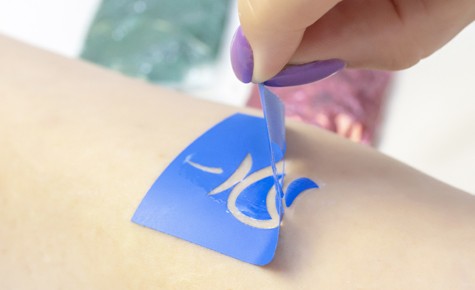
A shortcut method will allow people to claim a rate of 80 cents per hour, instead of calculating costs for specific running expenses as taxpayers would, under normal circumstances.
Multiple people living in the same house can claim this new rate individually. It is no longer a requirement to have a dedicated work from home area in order to claim from 1 March to 30 June.
The person MUST keep a record of hours worked from home.
The existing rules for claiming home remain available.
Of importance today – keep a record of hours worked at home starting 1st March 2020.
AcctWeb
Minimum Pensions Halved – 2020 & 2021
Retirees have support to preserve their superannuation benefits by changing their minimum pension.

Superannuation fund values will have suffered from coronavirus driven financial market volatility, particularly since stock market peaks of February 2020.
The Government is temporarily reducing the superannuation minimum drawdown requirements for account-based pensions and similar products by 50% for the 2019-20 and 2020-21 income years.
|
Age |
Default minimum draw down rates (%) |
Reduced rates by 50% for 2019-20 and 2020-21 |
|
Under 65 |
4 |
2 |
|
65-74 |
5 |
2.5 |
|
75-79 |
6 |
3 |
|
80-84 |
7 |
3.5 |
|
85-89 |
9 |
4.5 |
|
90-94 |
11 |
5.5 |
|
95 or more |
14 |
7 |
A similar temporary measure occurred from 2009 to 2011 following the global financial crisis.
This measure will reduce the need to sell investment assets (at a depressed time) to fund minimum drawdown requirements.
AcctWeb
Latest Industry News

How Do I Write Legally Compliant Terms and Conditions for My Business?
Terms and conditions bind your customers only where they actively accept them, so a tick box at checkout holds...

Paid parental leave super contributions have started
From July 2026, the new Paid Parental Leave Superannuation Contribution (PPLSC) has started. From...

If the business is no longer profitable, and is unlikely to be profitable in the future, your best option may...

Check out the this visualization, which tracks the evolution of dietary calorie intake from 1930 to...

Taxpayer given 35% penalty for BAS recklessness
Following an application for a refund of nearly $94,000, the Administrative Review Tribunal has set aside an...

SMEs warned as ATO ramps up tax debt collection
One insolvency specialist has emphasised the importance of small businesses engaging their accountants to stay...

Does Your Small Business Need to Follow AML Privacy Rules?
Compliance with new anti-money laundering (AML) laws may subject your small business to additional privacy...

Don’t get caught out at tax time with your multiples jobs
Picking up a second job, holding multiple part-time roles, or doing gig work is now part of everyday life. But...

Global companies turn to cost-cutting amid ongoing inflation
Rising operating costs and persistent inflation are placing renewed pressure on businesses worldwide, despite...

Warning for early lodger this tax time!
The ATO has a clear message this year: slow down and get it right. Early lodgers are far more likely to make...

ATO no longer treating debt the same as during COVID
One expert has stressed the importance of tax agents reminding their clients that the ATO is no longer as...

The evolution of the world’s languages
Check out the evolution of the world's most spoken languages from 2500 BC to...
Latest Guests News

Newsletter Newslettter We are pleased to supply you with the latest edition of Client Alert, which...