- 234 Balaclava Road, Caulfield North VIC 3161
- contactus@guests.com.au
- (03) 9509 7033
Payroll Tax 2020 concessions and JobKeeper
Employers subject to payroll tax will generally benefit from an expected relaxation of payroll tax by all states & Territories.

Each state has their own version of concessions, including increased thresholds and one-off grants. For more detail on each State and Territory, click on the appropriate link in the article in our news feed titled 'COVID-19 resources -Update July 2020'.
Generally, the principle will be that wages paid to meet the requirements of the JobKeeper scheme are exempt from payroll tax, to the extent that they exceed the employees earned wage.
The JobKeeper receipt by the employer is income, (no GST), so the subsidised payment to the employee should remain tax neutral to the employer.
The payments are exempt from payroll tax if the employee had been stood down.
Whether the employee payment is taxable will depend upon the wages before Jobkeeper and the hours worked.
Northern Territory has a new field on the Annual Declaration to identify the JobKeeper portion, which will be deducted from the gross.
Other states require exclusion of the JobKeeper portion of wages, subject to whether the wages are higher or lower than the JobKeeper amount.
Further details will be needed on the Annual Adjustment return, with calculations back to JobKeeper start in March 2020. Examples are provided by each collection authority.
Businesses with annual Victorian taxable wages, up to $3m, will have their entire payroll tax for the 2020 year waived. Any payroll tax already paid can be refunded. No further payments are required, although payroll tax reporting should continue.
AcctWeb
Extra Tools & Resources for our clients.
Over time we have supplied our clients with a growing collection of tools and resources to help in areas such as COVID-19 relief updates, articles on tax changes and updates, articles to help understand economic changes, calculators for all financial needs, and videos to help you and your family learn more about financial matters. We hope you enjoy these 'extras' and if you have any question then simply ask. *

Covid-19 updates. We have added an article to our latest news that is regularly updated with Federal and State government resources and tools so you don't have to find them yourselves and perhaps miss something important.
Latest news articles. 7-9 individual articles every month, though 13-15 in March, and all chosen for their relevance. Our website is a great place to stay informed.
Educational videos on accounting topics. All are relevant, interesting, educational and interesting. Videos that are changed three times a year to ensure you and your family are able to lean about many issues related financial issues and topics.
Calculators. A good range of calculators to help you better understand and manage your personal and family financial issues. Four of the more popular are: Pay calculator, Budget Calculator, Loan Calculator, and Super Calculator
Client portals. Portals are quite common on many sites and can be used to store your data, pay bills, log onto investment systems.
Ask us a question at any time. If you have a question on any related topic then don’t hesitate to use a form on our site to ask.
Your information is private and confidential and should be treated that way. Using Secure File Transfer means your information is encrypted when sent in either direction over the Internet.
Many sites also have a message window feature that displays messages of interest or that cover topics and deadlines you should be aware of.
* Not all are on every website.
Your Accountant
COVID-19 resources -Update July 2020
Several new links have been added to the many already in this article, links that date back to the beginning of the COVID-19 pandemic. If you have any questions, or require further assistance, please send us an email or phone.

Please click on the following links to access a wide range of Covid-19 related guidelines and resources for both Federal and State Government initiatives. Once done, click on the X (top right) to close the article and you'll return to this list. NB: Internet links are often altered by the source which means some of the following might not link properly. Ongoing testing is done to try and ensure this problem is minimised.
Latest Updates:
-
Federal Government COVID-19 Updates. Read more ….
-
NSW – New round of small business grants. Read more ….
-
Qld – Round 2 of Small Business COVID-19 Adaption Grant Program opens. Read more ….
-
Vic – Range of videos explaining topics effected by COVID-19 such as Land tax and Payroll Tax. Read more ….
-
Tas – An update on all COVID-19 matters in Tasmania. Read more ….
-
ACT – Updated 30-6-2020. Read more ….
-
SA – Updates for Land tax deferrals and Job Accelerator Grants. Read more ….
-
NT – COVID-19 Update. Read more ….
Previous Updates
-
COVID-19 Safe App. Download now
-
Myths about COVID-19 are all over social media. Here is the our Government's mythbusting response. Read more ….
-
$131.4 million Federal funding to help Public Hospital fight effects of COVID-19. Read more ….
-
$48.1 million for mental health & wellbeing pandemic response plan. Read more ….
-
State and Territory Government websites. Their latest responses to the coronavirus pandemic.
-
3 Step Framework for a Covidsafe Australia. Click here.
-
Easing of coronavirus (Covid-19) restrictions. Read more …
- Boosting cash flow for employers. Read more ….
- Increase in asset right-off from $30,000 to $150,000. See Backing Business Development – Fact Sheet: Delivering support for business investment
- How the ATO reviews Jobkeeper applications. Read more ….
- Click here for the latest coronavirus news, updates and advice from government agencies across Australia.
- Treasury Fact Sheets on Covid-19 relief measures. Originally there were 4, then 12. Now there are 21. Click here to access them all.
- Scam Watch Update. Read more about the increasing number of scams that have emerged since the Coronavirus outbreak.
-
State Government relief programs:
- NSW – Relief for NSW Small Business
- Queensland – Information and assistance for business and industry
- Victoria – Tax relief for eligible businesses
- Victoria – Business support fund
- Western Australia – COVID-19 relief
- Tasmania – COVID-19 Tax update
- ACT – Covid-19
- South Australia – COVID19 Relief Measures
-
Stage 3 – $130 billion relief package New Facts Sheets
- Breakdown of Federal Government Covid-19 support. Click here.
- Australian Government – Economic Response to the Coronavirus
- Articles and Updates in other Latest News articles including:
- Stage 3 – Covid-19 $1.1billion Domestic Violence, Medicare and Mental Health.
- Stage 2 – Covid-19 – $66 billion stimulus package.
- Stage 1 – Covid-19 Update – Small Business
- Stage 1 – PM launches $17.6 billion virus stimulus plan
‘Everyone is now on notice’: ATO acquires COVID-19 data on 3m Aussies
The ATO is set to acquire the data of 3 million Australians from Services Australia as it doubles down on the COVID-19 compliance front.
Last week, the ATO published a gazette notice informing that it would now acquire data from Services Australia, formerly the Department of Human Services, to verify individuals’ eligibility criteria for JobKeeper payments, temporary early access to superannuation and temporary cash-flow boost.
Data for 3 million Australians are expected to be used for the data-matching program, running from 19 April to 24 September.
The data that will be scrutinised include identification details, government payments such as the JobSeeker payment, and when the benefit started or ceased.
Details of incarcerated individuals for the period of 1 March 2020 to 27 September 2020 will also be acquired from state and territory correctional facility regulators.
According to the Tax Office, the data-matching program will allow it to identify and address taxation risks, including identity theft, or incorrect or misleading information included in applications for the COVID-19 stimulus measures.
The Institute of Public Accountants general manager of technical policy Tony Greco believes the ATO’s gazette notice and its recently published compliance approach mean claimants should begin reviewing their circumstances.
“Everyone is now on notice,” Mr Greco said.
“The ATO will now catch up with making sure that the cash-flow boost, JobKeeper, early release of super, all those measures have been done in accordance with the policy intent and the rules.
“When these measures were being implemented, there was a lot of misinformation, the dust hadn’t settled and people can argue that they got confused.
“Now that the dust has settled and you’ve entitled yourself to any of those things and you don’t believe you’ve qualified, then it is probably better to come forward voluntarily.”
Mr Greco also believes the ATO will pay close attention to the early release of super claims, with 2.1 million individuals now having been approved for the scheme, totalling $15.9 billion in payments.
Eligible Australians will be allowed to apply up to a further $10,000 between 1 July and 24 September.
“People think, ‘I got the money; therefore, I must be OK’, but that’s a false sense of security because the whole intent was to help people in financial stress, not to open up the floodgates to people who just wanted to access their super because someone down the road was able to,” Mr Greco said.
“They now have line of sight — Single Touch Payroll is giving them so much transparency around what people are earning on a pay-cycle basis, that anyone whose circumstances haven’t changed, it is probably better to get on the phone now.
“If you think you’re not eligible, the best thing you can do right now is to ring up to say to the ATO that you think you may not be eligible.”
Jotham Lian
29 June 2020
accountantsdaily.com.au
Work Related expenses – 2020
Although the coronavirus lockdown has changed the work habits of many taxpayers, the fundamental tax claims for 2020 apply the same old tax principles.

Home Office
- Claim the costs incurred, plus a new simpler short-cut method of 80¢ per diary hour.
Travel
- Motor vehicle costs can be claimed under several methods, but using a logbook will almost always produce the best claim. If you haven’t kept a logbook, how will you know what you missed out on? Total kilometres travelled by Australia generally has declined, leading to a similar expectation for every taxpayer. Are you any different?
- Other travel claims are expected to be much lower due to lockdown, so strong evidence of purpose as well as receipts can be expected.
Subscriptions
- Trade associations, etc, same rules. Have digital subscriptions or anti-virus software subscriptions increased?
Clothing & Laundry
- Same rules as always, but use may have changed. It is probable that most taxpayers will have reduced costs, but other habits may change e.g. sanitiser, which has significantly increased. What are your changes? Think about them now and make a note or ask the question.
Tax Agent Fees
- As always, these expenses are tax deductible.
Other
What expenses have increased which you can provide a rationale and some evidence to connect to your income generation?
AcctWeb
Year End Tax Deductions – “equipment”
As retailers promote heavily for taxpayers to buy before year end, are their advertisements real or imaginary?

If a retailer promotes a TV for a 40% discount at $2,500 with the slogan “eligible taxpayers will get a tax deduction”, is that real and should I be tempted?
If you have just begun working from home instead of the work office, as an employee you should ask “can I claim the $2,500?”
Short answer – No.
Home office work related expenses rules will allow depreciation of the non-private portion if there is a connection with employment. A reasonable question would be – why do you need a $2500 TV screen compared to a $150 screen or a notebook? Whilst the quantum is not the test, it goes to the credibility of the connection with employment.
If you can make the connection, the depreciation claim may be 20% of the cost for the remaining days to the end of the year. At a marginal tax rate of 30% the benefit is minor.
The justification for buying any equipment should firstly be economic, with tax benefit secondary
An alternate question may be – “why can’t I benefit from the instant asset write off that is constantly reported and advertised?
This relates to small business entities who probably don’t care about a tax deduction right now – they only care about staying in business. For most small business, tax deductions can help but the economic benefit of any expenditure is the first rule.
AcctWeb
Extra Tools & Resources for our clients.
Over time we have supplied our clients with a growing collection of tools and resources to help in areas such as COVID-19 relief updates, articles on tax changes and updates, articles to help understand economic changes, calculators for all financial needs, and videos to help you and your family learn more about financial matters. We hope you enjoy these 'extras' and if you have any question then simply ask. *
Covid-19 updates. We have added an article to our latest news that is regularly updated with Federal and State government resources and tools so you don't have to find them yourselves and perhaps miss something important.
Latest news articles. 7-9 individual articles every month, though 13-15 in March, and all chosen for their relevance. Our website is a great place to stay informed.
Educational videos on accounting topics. All are relevant, interesting, educational and interesting. Videos that are changed three times a year to ensure you and your family are able to lean about many issues related financial issues and topics.
Calculators. A good range of calculators to help you better understand and manage your personal and family financial issues. Four of the more popular are: Pay calculator, Budget Calculator, Loan Calculator, and Super Calculator
Client portals. Portals are quite common on many sites and can be used to store your data, pay bills, log onto investment systems.
Ask us a question at any time. If you have a question on any related topic then don’t hesitate to use a form on our site to ask.
Your information is private and confidential and should be treated that way. Using Secure File Transfer means your information is encrypted when sent in either direction over the Internet.
Many sites also have a message window feature that displays messages of interest or that cover topics and deadlines you should be aware of.
* Not all are on every website.
Your Accountant
Tax time 2020: ATO homes in on rental deduction claims
Rental deduction hotspots for this tax time have now been identified by the ATO as it anticipates a change in claims because of COVID-19 and recent natural disasters.

Rental deduction claims continue to be a focus point for the ATO leading into tax time 2020, with the agency doubling its in-depth audits last year on the back of findings that nine out of 10 claims contained an error.
With more than 2.2 million Australians claiming over $47 billion in deductions in 2017–18, the ATO has recognised that COVID-19, bushfires and floods have placed residential rental property owners in unforeseen circumstances, resulting in reduced rent, deferred payment plans and mortgage repayment deferrals.
ATO assistant commissioner Karen Foat noted that rent will only need to be included as income at the time it is paid, meaning if tenants have been given a rent deferral until the next financial year, these payments should not be included.
However, rental insurance that covers a loss of income will still need to be included in tax returns as assessable income.
While the banks have moved to defer mortgage loan repayments, Ms Foat noted that rental property owners are still able to claim interest being charged on the loan as a deduction, despite the repayment deferrals.
The ATO, however, will continue to scrutinise overclaimed interest, where some taxpayers have been directing some of the loan money to personal use, such as paying for living expenses, buying a boat or going on a holiday, and then claiming that loan interest as a deduction.
Impact on short-term rentals
Despite the impact of COVID-19 and natural disasters on short-term rental demand, Ms Foat noted that deductions are still available provided the property was still genuinely available for rent.
The ATO will look at factors such as reserving the property or leaving it vacant over peak periods, not charging the market rate and the types of terms and conditions of the bookings when deciding if active and genuine efforts are being made to ensure a property is available for rent.
Data matching with share economy platforms, such as Airbnb, will also be used to give the ATO greater oversight.
“Generally speaking, if your plans to rent a property in 2020 were the same as those for 2019, but were disrupted by COVID-19 or bushfires, you will still be able to claim the same proportion of expenses you would have been entitled to claim previously,” Ms Foat said.
“If owners decided to use the property for private purposes, offered the property to family or friends for free, offered the property to others in need or stopped renting the property out, they cannot claim deductions in respect of those periods.
“If you or your family or friends move into the property to live in it because of COVID-19 or bushfires, you need to count this as private use when working out your claims in 2020.”
Vacant land deductions
Recently legislated changes to tax deductions for vacant land mean that from 1 July 2019, taxpayers will no longer be able to claim deductions for holding vacant land with the intention of building rental property.
“So, if you are building a rental property, you cannot claim the deductions for the costs of holding the land, such as interest,” Ms Foat said.
“However, if your rental property was destroyed in the bushfires and you are currently rebuilding, you can claim the costs of holding your now vacant land for up to three years while you rebuild your rental property.”
The new law will not apply to land that is used in a business.
Other common errors
Ms Foat has also warned of taxpayers to steer clear of common mistakes that continue to pop up in returns each year.
These include claiming deductions for travel to inspect rental properties, not differentiating between capital works and repairs, and not apportioning claims for short-term rental properties when they are not genuinely available for rent.
Jotham Lian
25 June 2020
accountantsdaily.com.au
Early release of super sees ‘high take-up’
A recent research report has predicted that close to 2.5 million Australians are likely to access early release payments from super before 30 June. However, the number of SMSFs applying for early release payments is expected to be low.

The Association of Superannuation Funds of Australia (ASFA) said applications to access early release payments from superannuation continue to flow to the ATO at a substantial rate, currently 150,000 applications a week.
“However, this is well down on the nearly 700,000 applications made in the first week,” the report noted.
Based on the current flow of applications, the report by ASFA estimated that the total number made before 30 June might be in the order of 2.5 million, which would equate to total payments of around $18 billion for the 2019–20 financial year.
“This suggests a relatively high take-up of early release by those adversely affected by recent labour market developments. If early releases reach 2.5 million, this equates to nearly 19 per cent of the labour force,” it stated.
In terms of public offer funds, the bulk of early release payments have been made by industry funds, according to the report.
“Industry funds account for around 65 per cent of payments by value, with retail funds accounting for around 29 per cent. Public sector funds account for about 5 per cent,” it said.
The ASFA report estimates that the volume of early release payments from SMSFs is unlikely to be high.
“Over 40 per cent of SMSF members are retired and/or are of an age where unconditional release is possible. SMSF members also are older and wealthier on average compared to fund members more generally,” the report stated.
The research found that public offer funds with a heavy concentration of members employed in hospitality, restaurants and clubs have the highest rates of early release so far, at between 15 and 20 per cent of the accounts in such funds.
“Funds which have members concentrated in public sector employment have low rates of early release, at 3 per cent or less of member accounts. Public sector defined benefit funds have very low rates of release,” it stated.
Surprisingly, the report also found that funds with membership concentrated in health and related services have had substantial numbers of applications, at around 11 per cent of accounts.
“While permanent employees have maintained employment in the health sector, many casual and part-time workers have had reduced hours or no employment due to the cancellation of many forms of elective surgery,” it said.
Miranda Brownlee
30 June 2020
smsfadviser.com
Home Office Claims 2020
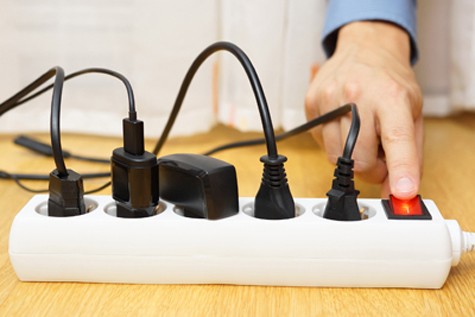
The coronavirus lockdown has meant many taxpayers are working from home for the first time. A special shortcut method just introduced means there are three methods to claim in the 2020 income tax return.
Shortcut method for work-space
- Claim 80¢ per hour worked at home after 1st March 2020 per taxpayer. A reliable daily time record is needed – has that been kept?
Fixed method for home office
- Claim 52¢ per hour for utilities, plus a percentage of phone, internet, stationery, consumables and depreciation of office equipment costing more than $300.
Actual method for home office
- Claim a percentage of all expenses including electricity, gas, cleaning, phone, internet, stationery, consumables, and depreciation of office equipment costing more than $300.
A four week diary establishes a fair percentage for the work pattern.
As always, the taxpayer needs reliable records. Keeping receipts is fundamental.
Taking a photo of your home office or work-space with date and time on computer screen is simple, yet effective. Just keep private or personal information out of view.
If in doubt, ask your accountant. And pay before year-end some of those July expenses to claim in the earlier year.
AcctWeb
Latest Industry News

How Do I Write Legally Compliant Terms and Conditions for My Business?
Terms and conditions bind your customers only where they actively accept them, so a tick box at checkout holds...

Paid parental leave super contributions have started
From July 2026, the new Paid Parental Leave Superannuation Contribution (PPLSC) has started. From...

If the business is no longer profitable, and is unlikely to be profitable in the future, your best option may...
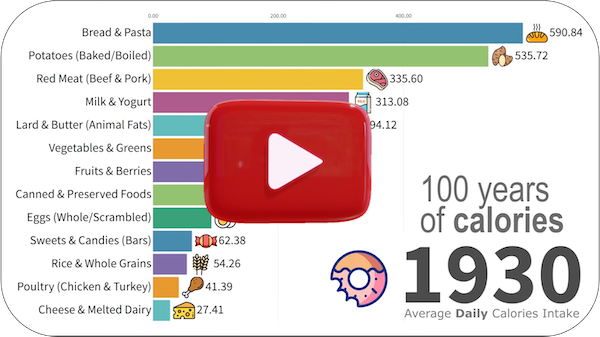
Check out the this visualization, which tracks the evolution of dietary calorie intake from 1930 to...

Taxpayer given 35% penalty for BAS recklessness
Following an application for a refund of nearly $94,000, the Administrative Review Tribunal has set aside an...

SMEs warned as ATO ramps up tax debt collection
One insolvency specialist has emphasised the importance of small businesses engaging their accountants to stay...

Does Your Small Business Need to Follow AML Privacy Rules?
Compliance with new anti-money laundering (AML) laws may subject your small business to additional privacy...

Don’t get caught out at tax time with your multiples jobs
Picking up a second job, holding multiple part-time roles, or doing gig work is now part of everyday life. But...

Global companies turn to cost-cutting amid ongoing inflation
Rising operating costs and persistent inflation are placing renewed pressure on businesses worldwide, despite...

Warning for early lodger this tax time!
The ATO has a clear message this year: slow down and get it right. Early lodgers are far more likely to make...

ATO no longer treating debt the same as during COVID
One expert has stressed the importance of tax agents reminding their clients that the ATO is no longer as...

The evolution of the world’s languages
Check out the evolution of the world's most spoken languages from 2500 BC to...
Latest Guests News

Newsletter Newslettter We are pleased to supply you with the latest edition of Client Alert, which...