- 234 Balaclava Road, Caulfield North VIC 3161
- contactus@guests.com.au
- (03) 9509 7033
New insolvency rules commence
The measures from 1st January 2021 apply to incorporated companies with liabilities less than $1 million.
For those businesses that are “unable to survive”, a new simplified “liquidation pathway” will apply for small businesses to allow faster and lower-cost liquidation.
To be eligible to access this new process a company must:
- have total liabilities which do not exceed $1 million on the day the company enters the process – this excludes employee entitlements;
- appoint a small business restructuring practitioner to oversee the restructuring process, including working with the business to develop a debt restructuring plan and restructuring proposal statement.
This principle has the potential to allow continuation of a longer-term successful business hit by short-term or covid cash flow difficulties.
AcctWeb
ATO promises not to ‘destroy’ businesses as it resumes debt collection
Businesses struggling with tax debts have been urged to re-engage with the ATO as it pledges not to “destroy the very thing that [it has] been trying to support” throughout the pandemic.

While the Tax Office has now confirmed that it has resumed pursuing and enforcing debt recovery, ATO second commissioner Jeremy Hirschhorn has reassured businesses that it will not go too hard too soon.
“We want people to re-engage. It’s a relatively soft engagement. We get that it’s really hard to go from nothing to full payment,” said Mr Hirschhorn at Chartered Accountants Australia and New Zealand’s Practice Power Up Conference on Wednesday.
“We are expecting a lot of payment plans to really try to get businesses gradually back fully into the system.
“But what we don’t want to do is to support companies or businesses all the way through a pandemic and then by dialling debt collection up too quickly, we destroy the very thing that we’ve been trying to support.”
The resumption of debt collection activity comes after the ATO paused its debt, audit and lodgement work at the height of COVID-19, resulting in its debt book growing by $20 billion, according to Mr Hirschhorn.
“We pivoted as an organisation, we turned off some sacred cows in the Tax Office,” he said.
“We turned off debt collection, we turned off lodgement chasing up, we really dialled back almost to no new audit activity, and gave taxpayers the opportunity to say, ‘Do I want to pause my existing compliance activity, continue it or slow it?’, so we really tried to put that in the hands of the taxpayer.”
Mr Hirschhorn said it was necessary for the ATO to now resume its business-as-usual activities, but it remained conscious of struggling businesses amid a recovering economy.
“Where we are now is really saying, look, everybody should be lodging, and the default is that everybody should be paying,” Mr Hirschhorn said.
“We recognise that it is a strange economy still, because some businesses are absolutely going gangbusters, and other businesses are really still struggling. It’s not just the obvious industries like tourism, but [for example], it’s been a fantastic time for suburban coffee shops, and a terrible time for CBD coffee shops.
“What we’re really saying is, please approach us and we’re going to be very empathetic or reasonable around debt, but we really expect you to lodge.”
Jotham Lian
23 April 2021
accountantsdaily.com.au
Taxpayers urged to keep work-from-home records
Moore Australia has called for taxpayers to keep a diligent log of the hours worked from home this financial year as tax time looms.
“Although Australia has fared well throughout COVID, our working patterns have changed in step with the rest of the world, as expected,” said David Tomasi, chairman of Moore Australia.
“It is important that Australians are aware of their entitlements under the ‘new normal’.”
While tax agents should be advising their clients on working-from-home entitlements, taxpayers should also be aware of the ATO’s shortcut method which in January was extended to 30 June this year.
“To their credit, the ATO has significantly simplified the process of claiming tax deductions related to working from home,” Mr Tomasi said.
The temporary arrangement allows taxpayers to claim a fixed rate of 80 cents an hour for all running expenses incurred as a result of working from home, as opposed to calculating costs for specific expenses.
Its introduction also saw the end of a measure which required taxpayers to have a dedicated work-from-home area, factoring in multi-person households, where each working taxpayer would now be able to claim.
“To claim home office deductions using the shortcut method, individuals need to keep a record of actual hours worked at home,” Mr Tomasi said.
“The shortcut method is not compulsory, and individuals can still claim based on actual expenses incurred.
“However, they would then have to comply with the necessary, and more complex, record-keeping requirements.”
Tax agents and self-lodgers interested in using the method will need to include a note that reads “COVID-hour rate” in their tax returns.
The method will cover a range of running expenses including electricity for lighting, cooling, heating and the running of other electronic items; phone and internet costs; and the depreciation of various items spanning computers, laptops, home office furniture, and other household fixtures that see wear as a result of a taxpayer’s working arrangements.
The Tax Office last extended its simplified working-from-home deduction method in January while New South Wales was reckoning with the containment of a COVID-19 outbreak which sent Sydney’s northern beaches into lockdown.
Introduced last April, it was first due to expire at the end of the last financial year, before it was in June extended to September last year, and then until December.
John Buckley
03 May 2021
accountantsdaily.com.au
Businesses feeling ‘adverse’ impacts of COVID-safe measures: ABS
While less than two out of 10 businesses are recording a dip in revenue, nearly two-thirds of them are still feeling the impact of COVID-safe controls, according to new data from the Australian Bureau of Statistics.

The Australian Bureau of Statistics (ABS) on Friday released the results of its latest Business Conditions and Sentiments Survey which showed that, while reported revenue decreases have fallen to just 18 per cent, many businesses remain challenged by COVID-safe controls and supply chain disruption.
Nearly 64 per cent of businesses are being “adversely impacted” by COVID-safe provisions like stringent cleaning requirements and the use of personal protective equipment (PPE) among their staff.
Of the businesses surveyed, 21 per cent of businesses said they had felt the impacts of at least one of these provisions to “a great extent”.
CreditorWatch chief economist Harley Dale said that while sparse reports of falling revenue emerge as a positive, the fact that such a large proportion of businesses are still feeling the impacts of COVID measures shows that “we are not out of the woods”.
“That is the best result since the ABS began this series in July 2020,” Mr Dale said. “It also represents the first time since December 2020 that an increase in revenue has outweighed a decrease in revenue.
“However, there is always a sting in the tail. Sixty-four per cent of businesses report COVID-related controls are still having an adverse impact on business conditions, which should be seen as a prescient warning that we are not out of the woods.”
John Shepherd, head of industry statistics at the ABS, said businesses have pivoted to adapt to changing conditions in various ways.
Some 62 per cent of business leaders said they’ve changed their ordering processes, while 41 per cent said they’d changed the way they deliver products and services to customers, and another 39 per cent said they have changed suppliers.
“Three in 10 (30 per cent) businesses are experiencing supply chain disruptions, with 37 per cent of these businesses affected to a great extent,” Mr Shepherd said.
“Another response from businesses has been to increased teleworking.
“Before COVID-19, one in five (20 per cent) businesses had staff teleworking. Currently, 30 per cent of businesses have staff teleworking, with 45 per cent of these experiencing improved staff wellbeing as a benefit.”
Pointing to the March CreditorWatch Business Risk Review, Mr Dale said that manufacturing, while still experiencing slowed productivity, could be turning a corner. He said supply disruptions highlight the risk of recoveries in these sectors slowing.
“Growth in credit is being driven by housing, according to the latest RBA stats, which is hardly surprising given government support programs,” Mr Dale said, “with owner -occupier housing credit driving the race on a three-month annualised basis.
“Contrary to some speculation, credit extended to housing investors is still not on the front grid. We need to see evidence of stronger outcomes for personal and business credit, and the CreditorWatch BRR reinforces this point.”
John Buckley
03 May 2021
accountantsdaily.com.au
ATO signals crackdown on 4 ineligible work-from-home claims
As tax time looms, the ATO has pointed to four key ineligible work-from-home claims it will be watching closely as taxpayers look to make the most of flexible working arrangements.

The ATO on Thursday urged all taxpayers to be aware that, while the temporary shortcut method will remain available to those claiming work-from-home deductions this year, personal and occupancy expenses, among others, cannot be claimed through any method.
Personal expenses like coffee, tea and toilet paper — while may be made available by some employers — aren’t directly related to earning income, and cannot be claimed by taxpayers who were forced to adapt from hybrid working arrangements last year.
Other ineligible expenses include those related to a child’s education, like online learning courses or laptops, as well as large upfront costs. Those could include any asset that costs over $300, like a computer, which can’t be claimed immediately and should instead be spread out over a number of years.
The ATO also warned that employees generally aren’t able to claim rent, mortgage interest, property insurance, or other land taxes and rates. The Tax Office said that working from home does not make a taxpayer’s home a place of business for tax purposes.
The ATO warns that claiming occupancy expenses could expose some taxpayers to capital gains tax when they leave their homes.
The temporary shortcut method, which in January was extended to 30 June this year, allows taxpayers to claim a fixed rate of 80 cents an hour for all running expenses incurred as a result of working from home, as opposed to calculating costs for specific expenses.
The method’s introduction did, however, spell the end of a measure which required taxpayers to have a dedicated work-from-home area, factoring in multi-person households, where each working taxpayer would now be able to claim.
“The shortcut method is straightforward; just multiply the hours worked at home by 80 cents,” said Tim Loh, assistant commissioner at the ATO. “The only proof you need is a record of the number of hours you’ve worked from home, such as a timesheet.”
The method covers a range of running expenses including electricity for lighting, cooling, heating and the running of other electronic items; phone and internet costs; and the depreciation of various items spanning computers, laptops, home office furniture, and other household fixtures that see wear as a result of a taxpayer’s working arrangements.
However, the shortcut is all-inclusive, Mr Loh said, and can’t be supplemented by additional, individual expense claims on items like phone and internet costs and other depreciation claims on items like furniture and laptops.
“If you decide to go with an existing method, I would encourage you to do your research and keep good records,” Mr Loh said.
“Keeping track of each individual expense and calculating the work-related use of each one can be fiddly, so be organised. “So, make sure you’ve read the guidance on our website or chat to your registered tax agent.”
The ATO’s reminder follows a separate call from Moore Australia earlier this week for taxpayers to keep a diligent log of the hours they work from home this year as tax time looms.
“To claim home office deductions using the shortcut method, individuals need to keep a record of actual hours worked at home,” said David Tomasi, chairman of Moore Australia. “The shortcut method is not compulsory, and individuals can still claim based on actual expenses incurred.
“However, they would then have to comply with the necessary, and more complex, record-keeping requirements.”
Tax agents and self-lodgers interested in using the method will need to include a note that reads “COVID-hour rate” in their tax returns, Moore Australia warned.
The Tax Office last extended its simplified working-from-home deduction method in January while New South Wales was reckoning with the containment of a COVID-19 outbreak which sent Sydney’s northern beaches into lockdown.
Introduced last April, it was first due to expire at the end of the last financial year, before it was in June extended to September last year, and then until December.
John Buckley
07 May 2021
accountantsdaily.com.au
Federal Budget 2021 – Health
While there are many aspects of our life covered in this year's Budget the following focuses on the issues related to Health.

Click on the following link to access more detail on the main issues covered in the part of the Budget.
-
Health – Overview
-
Budget at a glance
-
Guaranteeing Medicare and access to medicines
-
Hospitals
-
Ageing and aged care
-
Mental health
Department of Health
Building a more secure and resilient Australia
In this Budget, the Government is taking decisive action to build our economic resilience to deal with future shocks.

The following links take you to a detailed explanation of the Federal Government's aims, objectives and methods across these sections of our economy.
-
A secure and resilient Australia
-
National security
-
Energy
-
Manufacturing & trade
-
Technology
-
Regional Australia
-
Agriculture
-
Disaster resilience
-
The environment
Budget.gov.au
Federal Budget 2021 – Overview
The following links to the ABC where a brief overview of the Winners and Losers from this year's Federal Budget.

This is a good quick overview that explores the ways this Budget will impact on our daily lives.
-
Business – Winner
-
Taxpayers – Winners
-
Farmers – Winner
-
Women – Winner
-
Aged Care – Winner
-
Child Care – Winner
-
Mental health – Winner
-
Vaccines – Winner
-
Renewables – Loser
-
International Tourism – Loser
-
Young People – Neutral
-
Migration Rate – Loser
-
Pre-shool – Winner
-
Gaming Industry – Winner
-
Universities – Loser
-
Small Brewers – Winner
-
International Students – Neutral
-
New Residents – Loser
-
Medical Start Ups – Winner
-
Refugees – Neutral
Illustration: Georgina Piper and Emma Machan
Design: Ben Spraggon and Georgina Piper
Development: Colin Gourlay and Andrew Kesper
Source: ABC
ATO Small Business Newsroom – April
Help to keep up with the ATO.
Visiting the ATO's website can be daunting but here is a page that links to information important to small businesses everywhere.
For example:
- Schemes such as Jobkeeper,
- tips on claiming GST credits,
- information on expanding Single Touch Payroll (STP), and
- much more.
Click here to access this resource.
ATO
A broad range of Calculators – Resources
These calculators, along with videos that explain accounting ideas, latest news articles, an easy to use file transfer system, and a portfolio management portal make our website a great place to keep up-to-date and obtain help on many of your financial questions. *

These calculators are provided by MoneySmart, a taxpayer funded initiative, and will help you better understand questions in areas such as:
-
Managing my money
-
Borrowing and credit
-
Superannuation
-
Retirement
-
Investing
We hope you enjoy these 'extras' and if you have any question then click on the Contact Us button to ask.
* Not all are on every website.
Your Accountant
Latest Industry News
How Do I Write Legally Compliant Terms and Conditions for My Business?
Terms and conditions bind your customers only where they actively accept them, so a tick box at checkout holds...

Paid parental leave super contributions have started
From July 2026, the new Paid Parental Leave Superannuation Contribution (PPLSC) has started. From...
If the business is no longer profitable, and is unlikely to be profitable in the future, your best option may...
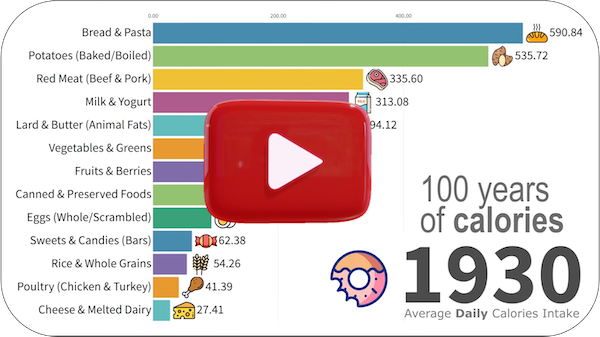
Check out the this visualization, which tracks the evolution of dietary calorie intake from 1930 to...
Taxpayer given 35% penalty for BAS recklessness
Following an application for a refund of nearly $94,000, the Administrative Review Tribunal has set aside an...
SMEs warned as ATO ramps up tax debt collection
One insolvency specialist has emphasised the importance of small businesses engaging their accountants to stay...
Does Your Small Business Need to Follow AML Privacy Rules?
Compliance with new anti-money laundering (AML) laws may subject your small business to additional privacy...

Don’t get caught out at tax time with your multiples jobs
Picking up a second job, holding multiple part-time roles, or doing gig work is now part of everyday life. But...

Global companies turn to cost-cutting amid ongoing inflation
Rising operating costs and persistent inflation are placing renewed pressure on businesses worldwide, despite...
Warning for early lodger this tax time!
The ATO has a clear message this year: slow down and get it right. Early lodgers are far more likely to make...

ATO no longer treating debt the same as during COVID
One expert has stressed the importance of tax agents reminding their clients that the ATO is no longer as...
The evolution of the world’s languages
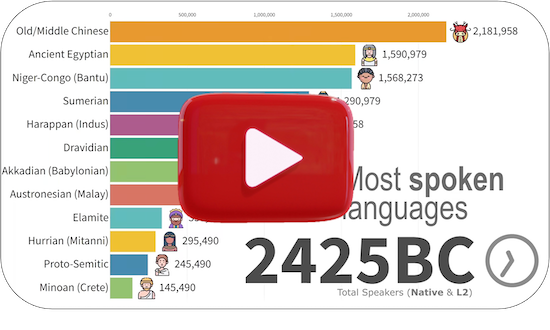
Check out the evolution of the world's most spoken languages from 2500 BC to...
Latest Guests News
Newsletter Newslettter We are pleased to supply you with the latest edition of Client Alert, which...