- 234 Balaclava Road, Caulfield North VIC 3161
- contactus@guests.com.au
- (03) 9509 7033
Capital gains tax
How to calculate capital gains tax (CGT) on your assets, assets that are affected, and the CGT discount.

.
What is capital gains tax?
Capital gains tax (CGT) is the tax you pay on profits from selling assets, such as property.
You report capital gains and capital losses in your income tax return and pay tax on your capital gains. Although it is referred to as 'capital gains tax,' it is part of your income tax. It is not a separate tax.
If you have a capital gain, it will increase the tax you need to pay. You may want to work out how much tax you will owe and set aside funds to cover it.
List of CGT assets and exemptions
Check if your assets are subject to CGT, exempt, or pre-date CGT.
Acquiring CGT assets
Establish the date you buy or acquire an asset, your share of ownership and records to keep.
CGT events
How and when CGT is triggered, such as when an asset is sold, lost or destroyed.
CGT discount
Find out if your asset is eligible for the 50% CGT discount.
Calculating your CGT
Use the calculator or steps to work out your CGT, including your capital proceeds and cost base.
Property and capital gains tax
How CGT affects real estate, including rental properties, land, improvements and your home.
Shares and similar investments
Check if you are an investor or trader, and how it affects tax on your shares or units in a fund.
Inherited assets and capital gains tax
How and when CGT applies if you sell assets you inherited, including properties and shares.
Foreign residents and capital gains tax
How CGT affects your assets if you are a foreign or temporary resident, or change your residency.
Relationship breakdown and capital gains tax
Find out if you can defer, or 'roll over', CGT on assets that transfer to you in a divorce.
Market valuation of assets
When and how to get your assets valued for CGT purposes.
How to complete the capital gains section in your tax return
Instructions for completing the CGT section of the individual income tax return.
Small business CGT concessions
Find out if your small business can reduce, disregard or defer CGT on an active asset.
Depreciating assets
How CGT affects depreciating assets like business equipment.
ATO
ato.gov.au
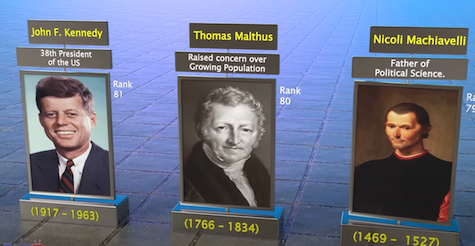
100 Most Influential people in the world.
Check out the people that changed the world
Changes to Australian Business Number (ABN) registration compliance
As part of the government’s intention to “strengthen” the ABN system, Treasury has released
draft legislation to imposing new compliance obligations for ABN holders to retain their
ABN.

.
The proposes two new grounds under which the Registrar of the Australian Business
Register may cancel an Australian Business Number.
The first proposed changes would allow the Australian Business Register to cancel a person’s
ABN if they haven’t lodged their required income tax returns for two or more income years
where the period for lodgement has ended. The un-lodged returns do not need to be
consecutive income years.
This ground for cancellation would apply for failures to lodge tax returns beginning with
income years commencing on 1 July 2022, so the earliest the Registrar could cancel an ABN
would be in the second half of 2024, if the ABN-holder failed to lodge tax returns for the
income years beginning on 1 July 2022 and 1 July 2023.
The other proposed changes would also allow the Registrar to cancel an ABN if the holder
hadn’t given a notification within the past 12 months that they still require the ABN and that
the information on the Register is current and correct. This power would be available to the
Registrar after 1 July 2024.
In effect, this would likely require ABN holders to check their ABN details and notify the
Registrar at least once in the period between the commencement of these provisions and
1 July 2024, and then at least once annually.
Acctweb
Looming changes for the “buy now, pay later” market
The Federal Government has released a consultation paper seeking views on options to
regulate the “buy now, pay later” (BNPL) market.

.
Currently the BNPL space is unregulated in Australia because it falls under the exemptions
available to certain types of credit under the National Consumer Credit Protection Act 2009.
This means BNPL products aren’t subject to responsible lending standards or the other
requirements of the Credit Act, and BNPL providers don’t need to hold an Australian credit
licence. This is despite involving financial products that offer credit.
Consumer advocates argue that this regulatory gap has the potential to create harm – “instant”
access to BNPL credit, without the lack of requirements and financial checks and potential
uncertainty on terms and fees which could end up in unsustainable debt.
The Reserve Bank of Australia estimates that approximately seven million active BNPL
accounts made a total of $16 billion in transactions in the 2021–2022 financial year – around
a 37% increase on the previous year. The majority of these are low value BNPL products
with spending limit of $2,000, although some include limits of up to $30,000 for large ticket
items.
The consultation paper proposes three broad options for regulatory intervention. Option 1
would impose a bespoke affordability assessment for BNPL providers under the Credit Act
and address any other regulatory gaps in a strengthened industry code to make it fit-for-
purpose. Option 2 would require BNPL providers to hold a credit licence and comply with
modified responsible lending obligations and a strengthened industry code. Option 3 would
impose the strictest regulation, with BNPL providers needing to hold a credit licence and
comply with all its regulations and the responsible lending obligations, including taking
reasonable steps to check that their BNPL products are suitable for each person who accesses
them.
Acctweb
Five new year’s tax resolutions
Don’t clean out the garage. Forget that lapsed gym membership. Here are 5 new year’s resolutions to keep if you want to stay on top of your tax and super in 2023.

.
17 January 2023
Know if you’re in business or not!
Are you earning an increasing income from a hobby? You might already be in business for tax purposes. Follow our step-by-step guide and find out how to meet your obligations.
Keep your business details and registrations up to date!
If you’re the director of an Aussie company, you need to apply for a director IDExternal Link. It’s important to update your ABN detailsExternal Link as emergency services and government agencies use this information to support businesses during disasters. Also, if you’re going to earn over $75,000 this financial year, you’ll need to register for GST.
Keep accurate and complete records!
Good record keeping helps you manage your business and its cash flow. See our record-keeping tips at record keeping for business.
Work out if Personal Services Income (PSI) rules apply to you!
PSI is income produced mainly (more than half) from your skills or efforts as an individual. If you're earning PSI, you'll need to work out if you're a personal services business to determine whether the PSI rules apply to your income. The rules affect how you report your income and the deductions you can claim.
Look after yourself!
The last few years have thrown some curve balls at small business, so it's good to be prepared. If you're struggling, the NewAccess programExternal Link can help. It’s free, confidential and designed for small businesses doing it tough.
We wish you all the best and hope you’re on track to thrive in 2023. When the fireworks have faded, know that we're always available to support businesses just like yours.
ato.gov.au
Did you pay your superannuation guarantee payment late?
After the Christmas and new year break, it is quite possible that some employers may have missed the
due date for the December 2022 quarter superannuation guarantee contributions (SCG) payment of
29th January 2023.

.
If this the case, then you are also will also need to ensure that you prepare and lodge a Super
Guarantee charge statement to the Australian Taxation Office by the due date of 28 th February 2023.
The statement will include any super guarantee shortfall amounts, nominal interest of 10% per annum
and administration fees of $20 per employee, per quarter. The statement is required even if you paid
your SCG obligations after the due date. Any later payments can be offset on your final liability or
can be used to offset future payments.
This statement can be prepared on Online Services portal, completing a SGC statement spreadsheet or
printing and mailing the pdf version of the SGC statement (although the ATO recommends online or
spreadsheet methods). If you require assistance with the calculation, there re SCG calculator tools on
the ATO website.
Acctweb
Inflation edges lower while GDP grows but slows
The latest figures from the ABS reveal economic growth last year and show inflation coming off its peak.

GDP growth slowed for the second consecutive quarter to just 0.5 per cent according to ABS figures for December, which was down on the previous period and below expectations of 0.8 per cent.
However inflation edged lower, to 7.4 per cent for the year to January against 8.4 per cent for calendar 2022.
Despite the December quarter slowdown in GDP growth, the seasonally adjusted annual figure came in at 2.7 per cent thanks to a fifth consecutive quarterly rise.
ABS head of national accounts Katherine Keenan said consumption was one of the key drivers, with both household spending up.
The rise in household spending was driven by food (up 2.4 per cent), hotels, cafes and restaurants (up 1.6 per cent) and transport services (up 5.7 per cent).
“Spending on discretionary services drove the rise in household consumption, however growth markedly slowed in comparison to the September quarter,” Ms Keenan said.
Inflation hit the household saving-to-income ratio, which also fell for the fifth consecutive quarter (from 7.1 per cent to 4.5 per cent).
“The household saving ratio continued to decline in the December quarter, to the lowest level since September 2017,” Ms Keenan said. “The fall was driven by increased interest payable on dwellings, income tax payable and increased spending.”
ABS head of prices statistics Michelle Marquardt said the inflation figure, of 7.4 per cent for the year to January, was lower than the 8.4 per cent rise for the year to December 2022 but still “the second highest annual increase since the start of the monthly CPI indicator series in September 2018”.
The most significant contributors to the January result were housing (+9.8 per cent), food and non-alcoholic beverages (+8.2 per cent) and recreation and culture (+10.2 per cent).
Ms Marquardt said the housing increase was lower than for December (+10.1 per cent) with movements in new dwellings and rents influential.
“Rents are growing more strongly than they were 12 months ago while the increases in new dwelling prices are moderating compared to a year ago,” she said.
The 8.2 per cent rise in prices for food and non-alcoholic beverages was also lower than the 9.5 per cent annual increase in December, with a decline in the cost of fruit and vegetables driving the figure lower.
The cost of holiday travel and accommodation rose 17.8 per cent for the year to January, down from 29.3 per cent for the year to December, thanks to a fall during the month.
“Airfares and holiday accommodation prices tend to be quite variable, and this month is no exception,” Ms Marquardt said. “On a monthly basis holiday travel and accommodation prices fell 7.2 per cent in January following a rise of 29.3 per cent in December.”
By Philip King
01 March 2023
accountantsdaily.com.au
One in seven SMSF directors yet to apply for ID
Around 100,000 SMSF directors still need to apply for their director ID despite the deadline passing two months ago. Extensions are available for legitimate reasons.

Speaking at the SMSF Association National Conference, ATO deputy commissioner, superannuation and employer obligations Emma Rosenzweig said around 600,000 directors of corporate trustees of SMSFs have now applied for their director ID.
Ms Rosenzweig said this means around 100,000 SMSF directors still need to apply for their director ID.
“We’re working through those people now, not just SMSFs but across the whole director population, to ensure that those people who haven’t yet got their ID have that in train and are applying. It’s really important that they do that,” she stated.
“Our business registry colleagues have some videos on how to go through the application process. I know for some people this process has been unfamiliar.”
SMSF professionals with clients that are yet to apply should encourage them to do so, she said.
“We're not at the point of imposing penalties yet, but that time will come. It’s not only penalties that can be applied, there are other options that we have available as well,” she warned.
Directors were originally required to apply for their ID by 30 November 2022. This was later extended to 14 December, with the ATO stating that penalties would not apply for anyone who applied before this date.
SMSF Adviser reported in December 2022 that out of the entire director population of 2.5 million, there were around half a million directors still yet to apply at 12 December.
The ATO previously stated that it would take a reasonable approach to directors who have genuinely tried to meet their director ID obligation but have not been able to due to their circumstances.
“Extensions are available for directors who have a legitimate reason why they have not yet been able to apply,” it said.
By Miranda Brownlee
27 February 2023
smsfadviser.com
Australian equities retain grip on SMSF assets
The largest portion of the SMSF investment pool is held in domestic shares, according to a recent survey.

Australian equities remain the dominant asset class for SMSFs at 38.8 per cent, according to the SuperConcepts SMSF Investment Patterns Survey for the December quarter.
The survey, which covers 4,400 funds and the investments they held to the end of 2022, shows most SMSF investors hold Australian equities through direct investments.
Direct Australian shares accounted for 30.3 per cent of the total SMSF investment pool compared with managed funds and ETFs at 6.3 per cent and ETFs at 1.5 per cent.
While there was a small decline in the allocation towards Australian equities, SuperConcepts executive manager technical and strategic solutions Philip La Greca said this was mainly due to market performance.
Managed funds and ETFs were far more popular for SMSFs investing in international equities, said Mr La Greca, with almost 80 per cent of international equities invested it through pooled structures.
“It’s interesting to see that fund managers are branching into different structures to penetrate other sectors as well,” he said.
Property remained the second biggest asset class for SMSFs, representing 16.4 per cent of the total investment pool.
“Nearly 85 per cent of exposure through direct holdings and all growth in this sector is attributed to the direct subset,” said Mr La Greca.
“It will be interesting, however, to observe whether there is a reported decline here in our next quarter’s report as valuations for 30 June 2022 and later appear.”
In terms of liquid investments, Mr La Greca said that “cash remains king” with short-term deposits still unattractive and not heavily used.
“There has been some use of other pool structures to try and achieve higher rates of return but this is also limited, resulting in most liquidity being managed through cash at bank,” he said.
With the decreasing average age for an SMSF trustee, Mr La Greca said there was likely to be a significant change in the allocation of investments aligned to a younger demographic in the upcoming years.
By Miranda Brownlee
16 February 2023
accountantsdaily.com.au
Residential rental properties
If you rent out property, you need to:

.
- keep records right from the start
- work out what expenses you can claim as deductions
- work out if you need to pay tax instalments throughout the year
- declare all rental-related income in your tax return
- consider the capital gains tax implications if you sell.
If you have an investment property that isn't rented or available for rent, such as a holiday home, then you generally can't claim deductions because it doesn't generate rental income.
To download a PDF guide on how to treat rental income and expenses, see our rental properties guide.
Owning and renting a property or holiday home
Find out about owning and renting a property and holiday home and check what records you should keep.
Records for rental properties and holiday homes
Find out about what records to keep and for how long for rental properties and holiday homes.
Rental income you must declare
Check which rental income you must declare and where you should declare it in your tax return.
Rental property genuinely available for rent
Find out if your rental property is genuinely available for rent so you can claim deductions and find out what shows your property isn't genuinely available to rent.
Rental property as investment or business
Work out if your rental arrangements are in the form of an investment or a business.
Rental expenses to claim
Check the deductions you can claim for your rental property.
Rental expenses you can't claim
Check the expenses you can't claim as a deduction for your rental property.
Holiday homes
Check if you can claim deductions for your holiday home expenses and any capital gains tax implications if you sell.
Selling your rental property
Find out about capital gains and losses when you sell or dispose of a rental property.
ato.gov.au
Latest Industry News

How Do I Write Legally Compliant Terms and Conditions for My Business?
Terms and conditions bind your customers only where they actively accept them, so a tick box at checkout holds...

Paid parental leave super contributions have started
From July 2026, the new Paid Parental Leave Superannuation Contribution (PPLSC) has started. From...

If the business is no longer profitable, and is unlikely to be profitable in the future, your best option may...
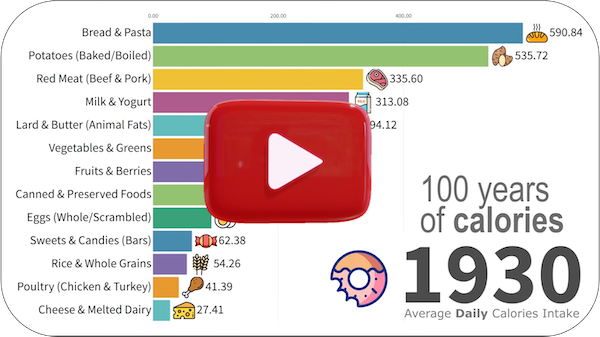
Check out the this visualization, which tracks the evolution of dietary calorie intake from 1930 to...

Taxpayer given 35% penalty for BAS recklessness
Following an application for a refund of nearly $94,000, the Administrative Review Tribunal has set aside an...

SMEs warned as ATO ramps up tax debt collection
One insolvency specialist has emphasised the importance of small businesses engaging their accountants to stay...

Does Your Small Business Need to Follow AML Privacy Rules?
Compliance with new anti-money laundering (AML) laws may subject your small business to additional privacy...

Don’t get caught out at tax time with your multiples jobs
Picking up a second job, holding multiple part-time roles, or doing gig work is now part of everyday life. But...

Global companies turn to cost-cutting amid ongoing inflation
Rising operating costs and persistent inflation are placing renewed pressure on businesses worldwide, despite...

Warning for early lodger this tax time!
The ATO has a clear message this year: slow down and get it right. Early lodgers are far more likely to make...

ATO no longer treating debt the same as during COVID
One expert has stressed the importance of tax agents reminding their clients that the ATO is no longer as...

The evolution of the world’s languages
Check out the evolution of the world's most spoken languages from 2500 BC to...
Latest Guests News

Newsletter Newslettter We are pleased to supply you with the latest edition of Client Alert, which...