Revised rules require fresh advice but clients often blame their tax professional, says Tim Munro.

- 234 Balaclava Road, Caulfield North VIC 3161
- contactus@guests.com.au
- (03) 9509 7033
Fuel Tax Claim Potential Errors in prior period BAS returns
From 30 March 2022 to 28 September 2022, businesses that acquired fuel for use in heavy
vehicles for travelling on public roads couldn’t claim fuel tax credits.

.
This is because the road user charge was more than the excise duty paid, which reduced the fuel tax credit rate
to nil.
Without realising this change, many businesses claimed the normal (old) fuel tax credit during this period in June 2022 Business Activity Statement (BAS).
To correct the overclaim, a correction can be made on the next quarterly BAS to decrease fuel tax credit amount, by including at label 7C (Fuel tax credit over claim).
If your GST turnover is less than $20m, this error must be corrected within 18 months.
Acctweb
ATO small business ideas or other business support
Tax and small business

.
Measuring small business tax performance
By measuring the income tax performance of small business taxpayers in Australia, we see that this population contributes over $89 billion in income tax – this is around 87% of the revenue we expect from them.
We have a program that measures:
- tax performance across all taxpayer populations
- the effectiveness of the tax and superannuation systems.
As part of this, we measure tax gaps (estimates of the difference between the tax collected and the amount that would have been collected if everyone was fully compliant with tax law).
The latest estimate of the net small business income tax gap for 2019–20 is $11.9 billion or 11.6%. This is a preliminary estimate and will be revised in future years using updated data.
We work out our estimate by reviewing the tax returns of a random sample of small business taxpayers – we call this the random enquiry program.
The random enquiry program helps us to:
- understand the taxpayer behaviours contributing to the tax gap
- identify the support businesses need to get their tax right
- devise strategies to increase willing participation in the tax system
- target our resources to combat shadow economy behaviour most effectively.
Recent events have impacted our random enquiry program. This has reduced the size of the sample used in the 2019–20 preliminary estimate. For this reason, the reliability rating of our estimate has also been reduced.
Tips for small business owners
We see common behaviours among small businesses that get their tax right. These tips will help you to pay the right tax.
Seek advice and support
A tax professional can help keep you on track and avoid costly mistakes.
Make sure you:
- choose a tax agent or BAS agent who is registered with the Tax Practitioners BoardExternal Link or a reputable bookkeeper
- keep your tax professional in the loop – regular contact will help them understand your business and give you the right advice
- talk to your tax professional or come to us if you're unsure of something or considering making changes to your business.
Check your business structure
Unnecessarily complex business structures can overcomplicate tax obligations. Talk to your tax agent to ensure your business structure suits the needs of your business.
Keep good records
Keeping good records is essential and will make it easier to report to us:
- Talk to your software provider or tax professional to check that your record keeping processes meet current requirements.
- Make sure you conduct regular reconciliation processes by cross-checking figures with your bank statements and source documents (for example, till tapes, tax invoices and receipts).
- Use suitable digital systems to run your business, such as point of sale software, accounting systems and mobile apps. These products can save you time and help you report accurately.
Get your income and expenses right
Ensure what you report is accurate:
- Report all your business income, even if it has been paid in cash, or into a private account. We use data matching and benchmarking to help us identify hidden activities.
- The figures you report need to be exact – so keep up to date records from the start and don't try and 'guestimate' after the event.
- Make sure your deductions relate to your business, and that you have the required evidence to support your claims.
Tips for tax professionals
Most small businesses have some form of tax professional representation. We see many examples of the support and assistance tax professionals provide to small businesses.
Here's how you can help your small business clients report correctly:
- Understand their business, not just their tax. Where possible, get to know your clients and their business so you're better positioned to help them report correctly.
- Check that they have chosen a business structure that best suits their needs.
- Talk to them about good record keeping practices and digital solutions (like accounting and point of sale software) to suit their business.
- Make sure you get all the information you need to report correctly. Your clients aren't tax experts and they don't know what they don't know. Ask them some questions to ensure you have the full picture. This is particularly important for the clients you don't have regular contact with.
- Where possible, work with the other tax professionals they use. Then you can ensure you are all on the same page and your figures match up.
What we're doing to reduce the gap
To reduce the tax gap, we identify and help businesses that are not paying the right tax.
Improving small business tax performance
We are exploring ways to deliver quality services and provide ongoing help to improve the tax performance of small businesses, taking into account that the environment they are operating in is rapidly evolving.
Balanced compliance approaches are in place to support those in need and ensure fairness in the tax and superannuation systems.
It is important to recognise the role Australia's tax system plays in supporting the community. Protecting the integrity of the tax system and maintaining its effectiveness is critical.
Given the impact the shadow economy has on the tax gap and on honest small business owners, we will continue to focus on businesses that actively avoid paying the right tax.
We're enhancing our enforcement strategy to better target people doing the wrong thing. With increasingly sophisticated technology and data capabilities, it's getting easier to identify businesses that avoid paying their fair share. We have a range of approaches to address this behaviour, from applying penalties and interest, right through to prosecution.
Getting the right amount of tax paid in the first place is the most efficient way to administer the tax system. We foster willing participation by considering how we can make it easier for businesses to comply.
We provide a suite of support tools and services to help small businesses meet their tax obligations. We look into what drives the kinds of mistakes businesses make so we can better target our products and make it easier for them to work with us.
Newly registered businesses are subscribed to the New to Business EssentialsExternal Link email service. This delivers timely and helpful government information to them over the first 12 months of operation. Through this service, new business owners are introduced to a range of government services and support.
Working with tax professionals and our other partners
We understand the value our partners provide to the small business community. We work closely with them to help small businesses understand their obligations.
Key partners we work with include:
- tax professionals (Tax agents, BAS agents, bookkeepers and business advisors)
- other business advisory groups (such as Financial Councillors Australia)
- industry associations
- financial institutions and legal advisors
- education providers
other departments across all levels of government, including the Australian Securities and Investments CommissionFair Work OmbudsmanDepartment of Prime Minister and Cabinetstewardship forums and other key stakeholders such as the Small Business Family Enterprise OmbudsmanSmall Business CommissionersSmall Business Champions.Helping business owners who have made mistakes
Tax can be complicated, and we know that business owners can make honest mistakes.
If you make a mistake, we'll explain where you've gone wrong and how to get it right next time. As part of our audit process we consider the nature of the error and whether the taxpayer is a candidate for penalty relief.
If you’ve done the wrong thing but you want to turn things around, come to us. We can help business owners who voluntarily disclose to get back on track.
Looking to the future
Helping business owners under difficult circumstances
It has never been a more challenging time to be a small business owner. If you're going through a difficult time, whatever the reason, we have options available to help you.
We can arrange payment plans, lodgment and payment deferrals if you are struggling to meet your tax or superannuation commitments. You can speak with us directly or ask someone to do this on your behalf.
We want to work with you before your situation gets more difficult. But it’s never too late to ask for help.
Improving small business tax performance is a key focus area in our Corporate plan.
We will achieve this by collaborating with partners to build a digital first tax ecosystem, enabling seamless tax reporting from business source systems.
By enhancing our use of data and introducing new tools and systems we will help small business owners by:
reducing their compliance costs ensuring they have timely information available to help with decision making
Products like Single Touch Payroll and eInvoicing, pave the way for a future with increased automation and a more seamless experience for small business taxpayers.
- reducing complexity and minimising the likelihood of mistakes.
- creating a level playing field and reducing opportunities for tax avoidance.
ato.gov.au
Protect your business from cyber threats
Computer hacking has been around for as long as there have been computers. Once it used to be computer geeks showing the world how smart they were. Now it's become very serious with almost any person, company or Government at risk from these criminal activities.

.
Recent hacks into large corporations have highlighted the need for these organisations to become more secure. Even more so now there are possible fines of up to $50 million for a financial firm that was recently hacked. This is serious money and the cost of stopping such attacks is also very high.
Where does this leave small businesses? A good question, as the level of expertise in most small businesses, is very low and the ability to pay high cyber security costs is low also. On the other hand, cybercriminals are looking for 'big treasure' for reasons such as identity theft, and it seems obvious that some are also supported by rogue states that want far more than some 'mum and dad' details.
What can a small business do.? Thankfully, State and Federal governments have made a start but they tend to focus on doing a very thorough job rather than what can be paid for by small businesses.
The following are some actions a small business can take to start moving down the road of improving its cyber security. Of course, there are many options if funds are available but just helping staff be more aware of what is dangerous is the place to start.
Set out below are actions you can take to help.
1. Review the information at these web addresses:
- https://business.gov.au/online/cyber-security/protect-your-business-from-cyber-threats#train-your-staff-to-be-safe-online
- https://www.cyber.gov.au/learn
- https://www.cyber.gov.au/acsc/view-all-content/ism/cyber-security-guidelines
2. For most small businesses the above is too much to digest but a review is recommended. Perhaps give a member of staff the responsibility to read this information and then discuss it with staff.
3. For many small businesses it seems that the best place to start is with how staff manage their online activities because it is here where small businesses are most vulnerable. A web address to help train staff is https://business.gov.au/online/cyber-security/protect-your-business-from-cyber-threats#train-your-staff-to-be-safe-online
Cybercriminals rely on the belief that they are better prepared to attack than businesses and governments are prepared to defend. But they are also timid. If you take some steps then a bit of pushback will help as, in most cases, the cyber-criminal will go looking for easier targets, and there will be many for them to choose from.
Peter Graham
Accountants face client backlash over blizzard of tax changes

.
Accountants have emerged from the pandemic into a blizzard of changes and keeping clients up to date risks a backlash over tighter compliance rules and increased fees says Tim Munro, CEO of Change Accountants and Change GPS.
Speaking on the latest Accountants Daily podcast, he said accountants worked hard to keep small businesses alive during COVID-19 only to be “suddenly bombarded from all different angles”.
“It is just insane what accountants are facing right now,” he said. “We’ve got professional firm profits, we’ve got section 100A, we’ve got payroll tax changes, we’ve got things like working from home deductions and changes, we’ve got things like [the] Owies case which affect family trusts.
“…These are monumental changes some of them, affecting a lot of our clients all at the same time and I fear that accountants – unless they put enough time and maybe technology into their businesses to help them to do these things – they won’t be able to give clients the advice that the clients need, and they will end up down the track having problems with clients if the ATO doesn’t like the approach that’s been taken.”
He said some accountants were “scared” of telling their clients that things had changed and they would need to charge them for new advice.
“Because they say, ‘Oh, but my client will tell me, you set it up for me like this in the past, you’re telling me that advice was wrong?’
“They don’t know how to explain that life has changed and circumstances have changed to their clients.
“It’s like a mobile phone – no matter what brand of phone you have, once a month there’s a software update. There’s little tweaks, things change all the time, maybe fix something that was broken, not quite right. That’s a normal part of life.
“Accountants need to get into the habit of explaining to their clients, ‘Look, I don’t make the tax laws. I don’t interpret things like the ATO does. But when they do, I’m here to explain to you what has changed and your options for what you need to consider. And that way, you’ll keep on the good side of the ATO.’ The podcast was recorded prior to PCG 2023/1 on work-from-home deductions and the revised 1 March start date stricter record-keeping requirements. However, Mr Munro said it was one example of how accountants faced a dilemma when draft regulations specified changes that might be amended later.
“We’re in this limbo-land between draft ruling and final ruling where things might change – that makes it incredibly difficult to advise clients.”
“Sometimes, you might need to tell your clients to keep invoices for everything and we’ll work out at the end of the year if we’re going do an actual claim, or the claim that the ATO will allow you per hour. You don’t know until we get to the end of the year.”
“The accountant can only go so far. We can tell our clients, you need to do this. But if they don’t keep those invoices, if they don’t keep those records, then there’s nothing that we can do, we mightn’t be able to claim certain things.
“And that’s when the clients will blame the accountant – I’ve seen happen so many times.”
Philip King
20 February 2023
accountantsdaily.com.au/
Changes to working from home deduction – started 1 Jul 2022
ATO brings in changes for calculating working from home deductions.

.
These changes will require more paperwork and time, and they come into effect for the 2022-2023 tax year.
How it works
You can claim 67 cents for each hour you work from home during the relevant income year. The rate includes the additional running expenses you incur for:
- home and mobile internet or data expenses
- mobile and home phone usage expenses
- electricity and gas (energy expenses) for heating, cooling and lighting
- stationery and computer consumables, such as printer ink and paper.
- The rate per work hour (67 cents) includes the total deductible expenses for the above additional running expenses. If you're using this method, you can't claim an additional separate deduction for these expenses.
A fixed rate of 67 cents per hour can be claimed.
Broadly put, the ATO will require a timesheet / diary / log book or similar evidence to be kept with the dates / exact numbers of hours worked (from home) on each date.
You must however still keep a record / invoice for at least one of these expenses, so we recommend you retain with your tax records an annual internet, phone and electricity invoice.
A transitional period will apply from July 2022 to February 2023 for the 2023 income tax return only.
Additional information is available here: https://www.ato.gov.au/individuals/income-and-deductions/deductions-you-can-claim/working-from-home-expenses/fixed-rate-method—67-cents/
Acctweb
Later retirement takes oldies back to living in ’70s
The labour shortage and increased workplace flexibility has seen potential retirees remain in the workforce for longer, says KPMG.

.
The great retirement is actually the great unretirement according to KPMG which says older people have returned to the 1970s in terms of when they stop work.
KPMG urban economist Terry Rawnsley said more experienced workers were being kept in jobs longer due to the labour shortage, the lack of international migration and greater workplace flexibility.
“Strong labour market conditions are helping to retain older workers in jobs for longer,” said Mr Rawnsley.
“The lockdowns during the pandemic made many older Australians in professional jobs realise that they could semi-retire and continue to dabble in the workforce from home or even from down at the coast.”
“And in what is a tight labour market, given the lack of international migration in recent years, employers have obliged.”
KPMG found that in 2022 the expected retirement age for men was 66.2 years, the highest since 1972, and for women it was 64.8 years, the highest since 1971.
Over the past 20 years the retirement age for men had risen from 63.2 years while for women it had increased from 61.7 years.
The great unretirement began during the pandemic with 537,000 extra employees joining the workforce during 2019–22, of which 179,000 were over 55.
KPMG said the pandemic also brought more women into full-time employment, while an increase in less physically demanding jobs had seen men work later in life.
“Over the last 30 years we’ve seen a shift towards service-based jobs and away from more physically demanding jobs,” said Mr Rawnsley.
The firm also found the level of education influenced a worker’s retirement age. Those with postgraduate degrees retired later than the rest of the labour force at 67.
Workers with a bachelor’s degree had an expected retirement age of approximately 66 and for those without tertiary education it was about 65.
Mr Rawnsley said the continued tight labour market and the increasing shift of work towards less labour-intensive roles meant the expected retirement age would stay high.
“On top of that, our economy is slowly becoming more and more educated, which is likely to shift the age of retirement for the whole labour force,” he continued.
KPMG said data from the Bureau of Statistics showed only 40 per cent of Australians retired when reaching the eligible age for superannuation with the remaining 60 per cent deciding to retire for other reasons.
Josh Needs
27 February 2023
accountantsdaily.com.au
Sharing economy reporting regime commences soon
As a part of the Federal Government’s strategy to combat the tax compliance risks posed by
the sharing economy, it has passed into law new requirements for operators of electronic
distribution platforms to provide information to the Australian Taxation Office on
transactions made through their platforms.

.
An “electronic distribution platform” is one that delivers services through electronic
communication (i.e. over the internet, including through applications, websites or other
software) and allows entities to make supplies available to end-user consumers through the
platform. A service isn’t considered an electronic distribution platform if it only advertises or
creates awareness of possible supplies online, operates as a payment platform or serves a
communication function.
Examples of sharing economy electronic platform operators include Uber, Airbnb, Car Next
Door, Menulog, Airtasker and Freelancer.
The new reporting regime applies to platform operators rather than to individuals who use
their sites or apps, but if you’re part of the sharing economy it’s still important to give the
ATO the right information. If you rent out your home for short stay accommodation, work as
a delivery driver or take on side jobs as a freelancer, we can help you keep your tax affairs in
order.
Electronic platform operators will soon be required to regularly provide transaction
information to the ATO through the Taxable Payments Reporting System (TPRS). The
information obtained will be used in ATO data-matching to help identify entities that may not
be meeting their tax obligations.
Acctweb
Details of tax calculation for $3m threshold a ‘mixed blessing
The proposed tax on earnings calculation for balances exceeding $3 million will see some members paying tax on unrealised earnings, says the SMSF Association.

.
Treasury has released a fact sheet explaining the details of how tax on earnings will be calculated in the wake of its decision to revise the treatment of super balances above $3 million.
SMSF Association chief executive Peter Burgess said the good news was that it meant super funds, including SMSFs, would not be required to calculate the earnings attributable to the member’s balance above $3 million.
“The ATO will use a prescribed formula to calculate the proportion of total earnings which will be subject to additional 15 per cent tax,” Mr Burgess said.
“Negative earnings can be carried forward and offset against this tax in future year’s tax liabilities.
However, on the debit side, the ATO will be using an individual’s total super balance to calculate their earnings, which means it will include all notional (unrealised) gains and losses.
“This essentially means some members will be paying tax on unrealised earnings which is highly unusual,” he said.
Mr Burgess said the association’s preferred approach would have been for the ATO to do a calculation of “notional earnings” using a similar approach to the existing excess contributions tax regime.
The fact sheet states that the ATO will use a set formula to calculate the earnings based on the information it receives from each super fund every year.
This formula will calculate the difference between the member’s total super balance for the current and previous financial year and adjust for net contributions (excluding contributions tax paid by the fund on behalf of the member) and withdrawals, it said.
The ATO already uses super fund reporting to calculate the total amount that individuals have in the super system.
Miranda Brownlee
03 March 2023
accountantsdaily.com.au
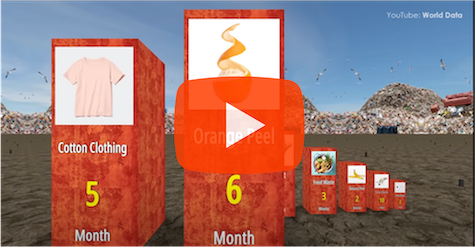
Comparison: How Long It Takes To Decompose?
Check out how long everyday items take to decompose.
Using your business money and assets for private purposes
You may need to report money and assets taken from your company or trust as income in your tax return.

.
Who needs to know?
This information will help you understand how money taken out of your business, or using business assets for private purposes, must be recorded and reported for tax purposes.
It applies if you are an individual who:
- is a director or shareholder of a company that operates a small business (your business)
- is a trustee or beneficiary of a trust that operates a small business (your business)
- is a director of a corporate trustee for a trust that operates a small business (your business)
- is or has been an associate of the shareholder (individual or entity). An associate can include a relative, partner, spouse, or another entity controlled by a shareholder.
How do you use money or assets from a company or trust
The most common ways you may take or use money or assets from a company or trust are as:
- salary and wages – see employment income
- fringe benefits, such as an employee using the business's car
- director fees
- dividends paid by the company to you as a shareholder (a distribution of the company’s profits) – see paying dividends and other distributions
- trust distributions by the trust to you as a beneficiary – see trustees and beneficiaries
- loans from the trust or company – see loans by private companies
- allowances or reimbursements of expenses you receive from the trust or company.
There are reporting and record-keeping requirements for each of these types of transactions.
How to record and report the use of your business money or assets
You may need to report and must maintain appropriate records that explain transactions of which you have:
- taken money or assets from your business
- used the business's assets for private purposes.
The ATO view on minimum record-keeping standards is provided in Taxation Ruling TR 96/7.
In this section
- Salary, wages or directors’ fees
- Fringe benefits and allowances
Salary, wages or directors’ fees
You can be an employee and a shareholder or director of the company that operates your business. You can also be an employee and a beneficiary of the trust that operates your business.
You must include any salary, wages or directors' fees you receive from your business as assessable income in your individual tax return.
The company or trust that operates your business can generally claim a deduction for any salaries, wages or director's fees paid.
Your business must:
- register for pay as you go (PAYG) withholding and withhold an amount from salary, wages and directors’ fees
- report the payment information to the ATO using Single Touch Payroll (STP)
- pay the amount withheld to the ATO and compulsory employee superannuation contributions to a complying super fund by the relevant cut-off dates.
Fringe benefits and allowances
Fringe benefits tax (FBT) applies when employees or directors of a company or their associates receive certain benefits from the company or trust. This could be a payment or reimbursement of private expenses or being allowed to use the business assets for private purposes such as the business's car.
Your business:
- may be entitled to claim a deduction for the cost of providing fringe benefits
- must lodge an FBT return and pay any FBT that applies to the fringe benefits provided to the employees or their associates
- must keep all records relating to the fringe benefits it provides, including how the taxable value of benefits was calculated.
There are various exemptions from FBT that may apply, for example, the small business car parking exemption.
The FBT liability for your business may be reduced if you (as an employee) make a contribution towards the cost of the fringe benefit.
You don’t need to report the value of fringe benefits that you (or your associate) receive, in your tax return, unless they are included as reportable fringe benefits on your payment summary or income statement.
Distribution of income and profits
In this section
- Dividends
- Trust distributions
Dividends
If your business is run through a company, the company can distribute its profits to its shareholders, which can include you.
This distribution of profits is known as a dividend.
If the company has franking credits, it may be allowed to frank the dividend by allocating a franking credit to the distribution. A franking credit represents income tax paid by the company on its profit and can be used by the shareholder to offset their income tax liability.
A company must issue a distribution statement at the end of each income year to each shareholder who receives a dividend. It must show the amount of the franking credit on the dividends paid and the extent to which they were franked. The company may also need to lodge a franking account tax return in certain circumstances.
Any dividends that you receive and franking credits on them must be reported in your tax return as assessable income.
The company cannot claim a deduction for dividends paid as these are not a business expense, but rather a distribution of company profit.
Trust distributions
If your business is operated through a trust, the trustee may make the beneficiaries presently entitled to a share of trust income by the end of the financial year according to the terms of the trust deed.
By the end of a financial year, the trustee should advise and document in the trustee resolution:
- details of the beneficiaries
- their share of the net income of the trust.
If the trustee resolution is not made according to the terms of the trust deed, it may be ineffective and, instead, other beneficiaries (called default beneficiaries) or the trustee may be assessed on the relevant share of the trust's net (taxable) income. Where a trustee is assessed, it may be at the highest marginal tax rate.
Details of the trust distribution should be included in the statement of distribution which is part of the trust return lodged for each financial year.
The trust cannot claim a deduction for distributions paid as it is not a business expense, but rather a distribution of trust income.
If the beneficiary of a trust is a company, and the trust does not pay the amount the company is presently entitled to, Division 7A of the Income Tax Assessment Act 1936 can apply.
Closely held trusts
If you have a trust within your family group, in some circumstances you may need to include a trustee beneficiary statement as part of the trust return lodged.
For further guidance, see closely held trusts.
Lending money or assets
In this section
- Companies lend money or assets to shareholders and their associates
- Trustees lend money or assets to beneficiaries and their associates
Companies lend money or assets to shareholders and their associates
A company can make a loan to its shareholders and associates.
When a company lends money or assets to a shareholder, the shareholder may be taken to have received a Division 7A deemed dividend if certain conditions are not met. If this happens, the shareholder will need to report an unfranked dividend in their individual tax return and the company will have to adjust their balance sheet to reduce their retained profits.
To avoid a Division 7A deemed dividend, before the company tax return is due or lodged (whichever comes first), the loan must either:
- be repaid in full
- put on complying terms.
To put a loan on complying terms, the loan must:
- be in a written agreement and signed and dated by the lender
- have an interest rate for each year of the loan that at least equals the benchmark interest rate
- not exceed the maximum term of 7 years, or 25 years in certain circumstances when the loan is secured by a registered mortgage over real property.
The company must include any interest earned from the loan in its tax return.
You (the shareholder):
- must make the minimum yearly repayment each year (use the Division 7A calculator to work this out)
- cannot borrow money from the company to make the minimum yearly repayment
- can make payments on the loan using a dividend declared by the company. This dividend must still be reported in your individual tax return as assessable income.
Trustees lend money or assets to beneficiaries and their associates
If you borrow money from the trust, you will need to keep a record of it. If the loan is on commercial terms, you will need to repay the principal and interest as per the loan agreement. The trust will need to report the interest as assessable income in its tax return.
There may be a situation where someone receives an amount of trust income instead of the beneficiary who is presently entitled to that amount in an arrangement to reduce tax. This can happen where the trustee, instead of paying the trust income to the presently entitled beneficiary, lends that money on interest-free terms to another person.
This is called a reimbursement agreement and section 100A of the Income Tax Assessment Act 1936 may apply. This means that the net income of the trust that would otherwise have been assessed to the beneficiary (or trustee on their behalf) is instead assessed to the trustee at the top marginal tax rate.
Repayments of loans made to companies and trusts
If you have lent money to your business, your business will make repayments to you.
Your business cannot claim a deduction for any repayments of principal it makes to you but may be able to claim a deduction for interest it pays to you on the loan. The company or trust should keep records of any loan agreements and documents explaining these payments being made to you.
You do not have to declare the principal repayments, but any interest you receive from your business is assessable income to you and must be included in your individual tax return.
When you take your business's money or assets in another way
If you take money out of your business or use its assets for private purposes in a way not described above, you or your business may have unintended tax consequences. This may include triggering Division 7A.
To ensure your business transactions are transparent:
- You should consider setting up a separate bank account for your business to pay business expenses and avoid using it to pay for your private expenses.
- If you take money out of the business or use its assets, make sure you keep proper records that explain all your business transactions, including all income, payments and loans to you and your associates from the business and loans from you to the business.
- If your company lends money to you or your associates, make sure it's based on a written agreement with terms that ensure it's treated as a complying loan – so the loan amount isn't treated as a Division 7A dividend.
- Ensure the transactions are correctly reported for tax purposes.
If you make an honest mistake when trying to comply with these obligations, you should tell us or your registered tax agent as soon as possible.
ATO
ato.gov.au
Latest Industry News

How Do I Write Legally Compliant Terms and Conditions for My Business?
Terms and conditions bind your customers only where they actively accept them, so a tick box at checkout holds...

Paid parental leave super contributions have started
From July 2026, the new Paid Parental Leave Superannuation Contribution (PPLSC) has started. From...

If the business is no longer profitable, and is unlikely to be profitable in the future, your best option may...
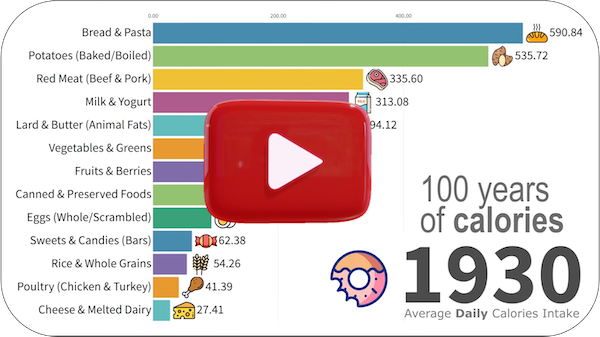
Check out the this visualization, which tracks the evolution of dietary calorie intake from 1930 to...

Taxpayer given 35% penalty for BAS recklessness
Following an application for a refund of nearly $94,000, the Administrative Review Tribunal has set aside an...

SMEs warned as ATO ramps up tax debt collection
One insolvency specialist has emphasised the importance of small businesses engaging their accountants to stay...
Does Your Small Business Need to Follow AML Privacy Rules?
Compliance with new anti-money laundering (AML) laws may subject your small business to additional privacy...

Don’t get caught out at tax time with your multiples jobs
Picking up a second job, holding multiple part-time roles, or doing gig work is now part of everyday life. But...
Global companies turn to cost-cutting amid ongoing inflation
Rising operating costs and persistent inflation are placing renewed pressure on businesses worldwide, despite...

Warning for early lodger this tax time!
The ATO has a clear message this year: slow down and get it right. Early lodgers are far more likely to make...

ATO no longer treating debt the same as during COVID
One expert has stressed the importance of tax agents reminding their clients that the ATO is no longer as...
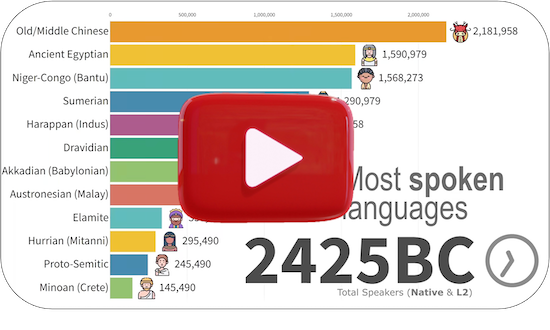
The evolution of the world’s languages
Check out the evolution of the world's most spoken languages from 2500 BC to...
Latest Guests News

Newsletter Newslettter We are pleased to supply you with the latest edition of Client Alert, which...