- 234 Balaclava Road, Caulfield North VIC 3161
- contactus@guests.com.au
- (03) 9509 7033
ATO no longer treating debt the same as during COVID
One expert has stressed the importance of tax agents reminding their clients that the ATO is no longer as lenient on tax debt collection as it was during the COVID-19 pandemic.

.
The cash flow positive position that businesses were in during the COVID-19 pandemic is a thing of the past, one expert has said.
According to the Australian National Audit Office’s 2024-25 ATO Management of Small Business Collectable Debt report, small businesses accounted for 66.1 per cent of all collectable debt.
“After reducing collection activities during the COVID-19 pandemic, in 2023–24, the ATO recommenced the application of a range of firmer actions, including garnishee actions, directions to pay, director penalty notices and disclosure of business tax debt actions,” the report reads.
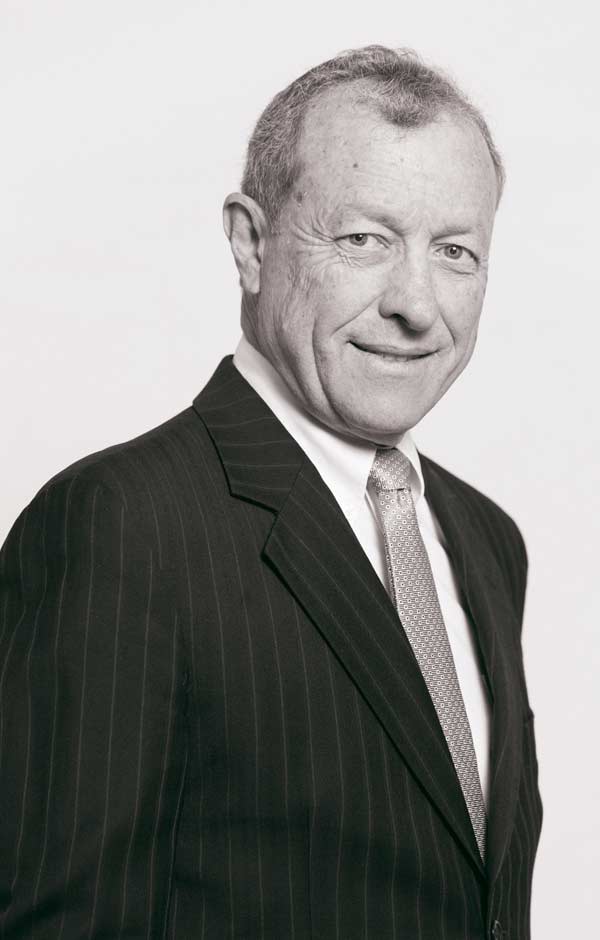
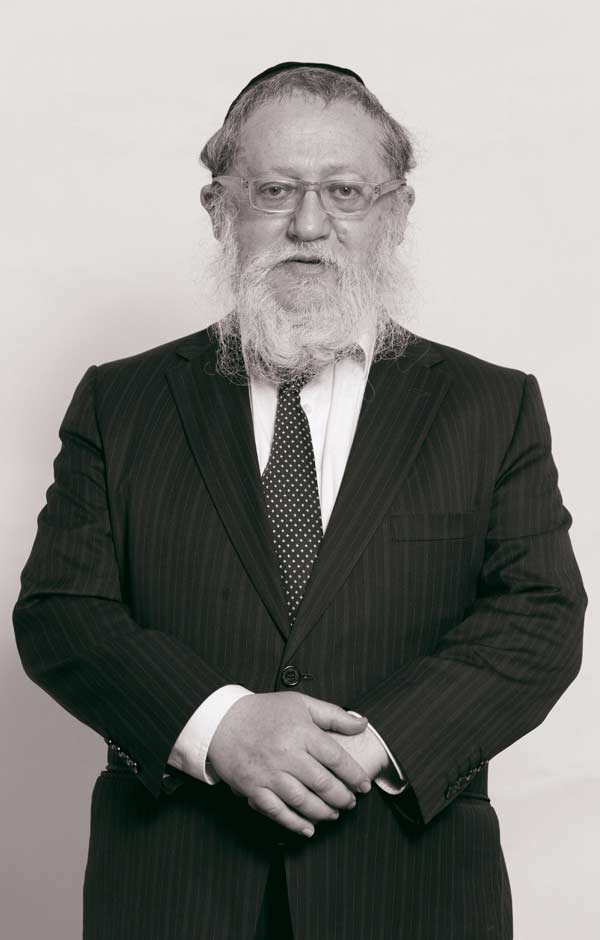
Speaking with Accountants Daily, Corson Fiske ANZ managing partner James Leslie-Watt (pictured) said businesses are falling behind in their ATO tax debt repayments partly because they are not cognisant of the Tax Office’s increased scrutiny off the back of the pandemic.
“A lot of people are still using the old excuse of COVID as a primary issue to the business,” Leslie-Watt said.
“There’s no real sort of guidance for a lot of directors when they first set up a business … they’re not really setting aside their capital to service their tax properly. They’re seeing the Tax Office as their bank essentially to fund the business.”
Accountants need to tell their clients that if they do nothing, they are going to face director penalty notices and garnishees, he said, and going above and beyond for clients to get them into a better position will be appreciated by clients.
He stressed that accountants must become strategic advisers rather than being an “end of year accountant looking backwards”, Leslie-Watt said.
“That’s the primary issue … is that their current relationship with their accountant is more backwards, looking rather than forward-looking. They look at all the mistakes that happened over the course of the financial year, rather than having a set plan, looking forward and projecting for the financial year.”
Accountants must start looking at their client books and identifying who is behind on their tax debts for income tax, GST, PAYG and superannuation, and having a conversation about the lead-up into May next year on their overall tax debt position, he said.
“They need to look at having a set plan, going forward, to be able to address all the issues before … they end up on the receiving end of the stick, with tax debt collection from the ATO.”
28 July 2026
Carlos Tse
accountantsdaily.com.au
The evolution of the world’s languages
Check out the evolution of the world's most spoken languages from 2500 BC to 2026
.
.
.
.
.
.
.
.
.
.
.

LRBA ban no better for housing supply or retirement, accountants clap back
Despite its aims to ease the housing crisis, Labor’s LRBA ban continues to receive a mixed response, with many concerned about the impacts on retirement security.

.
Accountants are calling recent changes to the use of limited recourse borrowing arrangements (LRBAs) disproportionate, saying they will not ease house prices and warning that they will harm SMSF holders, including younger Australians.
The change, aimed at restricting SMSF holders' ability to use LRBAs to purchase residential properties (which had been in place since 2007), has elicited numerous responses within the profession following its 23 June announcement, with support from the Greens.
“The structure is conservative by design, and there is little tax advantage to remove. The ban will not move house prices or add to supply. What it will do is close off a legitimate asset class for the many SMSF members whose balances are not large enough to buy property outright,” said Stuart Sheary, head of technical at the Institute of Financial Professionals Australia.
“This is not unchecked activity — residential property is a legitimate part of a diversified retirement portfolio. Rather than applying targeted, calibrated settings, the Government has chosen a blanket approach. Removing residential SMSF borrowing does not eliminate demand for property investment within superannuation,” added Andrew Chepul, chief executive of ColCap Financial Group.
In a joint statement, industry practitioners, including Chepul, said “if the Government proceeds, a more balanced alternative would be to allow limited recourse borrowing for one residential property within an SMSF”, calling for a more “proportionate and targeted policy”.
“If the Government is determined to act, a more proportionate approach would be to allow borrowing for a single residential property within an SMSF. This would preserve diversification, maintain appropriate guardrails, support trustee choice, and better align with the Government’s stated objectives,” said Mario Rehayem, chief executive of Pepper Money.
“This policy was introduced without consultation, detailed modelling or evidence of systemic risk. It should be reconsidered before it materially reduces Australians’ capacity to build sustainable retirement savings,” Rehayem said.
With many younger Australians actively engaging with their retirement savings, Bluestone chief executive Mark Jones said the policy risks undermining those taking responsibility for their financial future and destroying pathways to retirement security.
“Superannuation is a long-term investment. It is reasonable for members to take a long-term view and to hold growth assets, including direct property, over that horizon. Direct property has long been a part of that mix,” Jones said.
Previously, accountants have warned that these changes would crush trust in the nation’s retirement system, with some echoing the budget refrain of broken promises, others saying that the government is using a genuine vehicle for retirement savings as a bargaining chip, in a policy that is not evidence-based or in the public interest, but highly political.
26 June 2026
Carlos Tse
accountantsdaily.com.au
Social Security Payments and Their Effect on Discretionary Trusts
For businesses and families managing discretionary trusts, understanding how social security laws intersect with trust arrangements is critical. For businesses and families managing discretionary trusts, it is critical to understand how social security laws interact with trust arrangements.

.
The structure and operation of a discretionary trust can affect individuals who receive social security payments and may also benefit under the trust. In some cases, trust income or assets may be deemed to belong to the individual, reducing their social security entitlements. This article outlines the key legal rules, including:
- the definition of associates;
- control tests; and
- steps to reduce adverse impacts on social security recipients.
Interaction Between Social Security Payments and Discretionary Trusts
If certain conditions are met, Centrelink may treat the assets and income of a discretionary trust as belonging to an applicant. However, this can reduce or eliminate their social security entitlement. This may occur even if the individual is not a beneficiary and has never received any benefit from the trust.
In practice, this usually arises where Centrelink considers the individual to have “control” over the trust, such as where they are a beneficiary or a relative acts as trustee.
There are several scenarios where a trust may be deemed “controlled” by such an individual. Some examples are as follows:
- Trustee Involvement: The individual or their associate is a trustee of the trust.
- Reasonable Expectations: The trustee could reasonably be expected to make payments from the trust to the individual if the individual could not meet his or her living costs.
- Beneficial Interests: The individual and their associates hold 50% or more of the beneficial interests in the trust.
- Eligibility for Distributions: The individual and their associates collectively are eligible to receive distributions that exceed 50% of the total eligible recipients.
Control can also be inferred based on discretionary powers, such as the trustee’s ability to decide who receives distributions from the trust.
It is important to read the trust deed carefully and to understand the actual circumstances surrounding the trust and any pattern of distributions. These factors will provide an indication of whether an individual may “control” that trust for social security purposes.
Understanding Associates and Relatives in Controlled Private Trusts
The broad definition of “associates” means many people can be linked to a single trust, directly or indirectly. As a result, the actions of one person, such as a trustee or appointor, can affect the social security entitlements of other associated beneficiaries.
As such, the concept of “associates” plays a central role in determining whether a discretionary trust is controlled for social security purposes. An “associate” includes a “relative”, and the term “relative” is broadly defined to include a broad range of familial relationships, including direct relatives such as:
- parents;
- siblings,
- children; and
- more distant relations (i.e. first and second cousins and spouses).
In cases where a single individual serves as both the sole trustee and sole appointor of a discretionary trust, the control test is likely to be triggered. This can result in the trust being considered as a controlled private trust of the relatives who receive social security payments, such as siblings or parents, potentially affecting their social security entitlements.
Corporate Trustees and Control
Using a corporate trustee does not automatically prevent a trust from being considered “controlled” for social security purposes. If an individual sufficiently influences the company, such as by holding more than 50% voting rights, control may still be found. As a result, appointing a corporate trustee alone may not remove control where significant influence remains.
Renouncing Beneficial Interests
Individuals receiving social security payments may avoid being deemed to “control” a trust by renouncing their beneficial interests. Renunciation can be achieved by:
- Amending the Trust Deed: excluding the individual as a beneficiary of the trust.
- Executing a Deed of Renunciation: a separate legal document is required for each individual, formally relinquishing their entitlement to income or assets from the trust.
The renunciation must be irrevocable and witnessed appropriately. An example renunciation statement confirms the individual’s intention to give up any current or future benefits from the trust.
Capital Gains Tax Implications
While renunciation may prevent a trust from affecting social security payments, individuals should seek tax advice before proceeding. This is because renunciation can trigger capital gains tax (CGT) events, which may have adverse tax consequences for that individual. The CGT events that may be triggered by a renunciation are:
- CGT Event C2: The cancellation of an intangible capital asset. CGT event C2 may occur when a beneficiary renounces their interest, causing that interest to end. If the beneficiary had no prior entitlement to trust assets or income, any capital gain is likely to be nil.
- CGT Event H2: The receipt of something for an event relating to a CGT asset (such as an interest in a trust). This event may be triggered if the individual receives compensation for the renunciation, potentially resulting in a taxable capital gain.
- CGT Event E1: The resettlement of a trust may be triggered by an amendment to the trust deed to remove a beneficiary.
Mitigating Social Security Risks
To protect the social security entitlements of the beneficiaries, the following steps may be considered:
- Resignation of Trusteeship: Associates of social security recipients, serving as sole trustees or appointors, should consider resigning to remove the direct link between the trust and social security recipients.
- Renunciation of Beneficial Interests: Impacted recipients should execute a deed of renunciation to formalise their disassociation from the trust.
- Amendment of Trust Deed: Prepare a deed of amendment to the trust deed to exclude the social security recipients from being considered as eligible beneficiaries of the trust for the period of social security entitlements.
- Setting up the Trust Deed with the exclusion at the beginning: Excluding social security recipients as a beneficiary when the trust deed is drafted. This would be the best-case scenario as it would mitigate any tax events listed above.
However, the above actions should be considered carefully since there may be adverse tax consequences that arise as a result.
Corporate Governance Guide for SMEs
Running a small business? Download this free guide to understand your corporate governance responsibilities, including the decision-making processes.
Key Takeaways
The interplay between discretionary trusts and social security payments is complex. They can have negative consequences on an individual’s social security payments if that individual is deemed to have “control” of that trust. This can occur because of the broad definitions of associates and control under Australian law.
For businesses and families managing trusts, proactive measures are essential to safeguard their social security entitlements, such as:
- excluding social security recipients from beneficiaries of the trust; and
- resignation from trustee roles and renunciation of beneficial interests.
However, this must be balanced against broader tax consequences, especially with respect to CGT. By consulting legal professionals and understanding beneficiary arrangements and control tests, you can:
- make informed decisions;
- ensure compliance; and
- avoid unintended financial consequences.
Thomas Linnane
15 Jan 2026
legalvision.com.au
Components of a cyber security plan
What is a cyber security risk plan?

.
A cyber security risk management plan is a strategic blueprint that outlines how an organization identifies, evaluates, and mitigates threats to its digital assets. It aligns security controls with business objectives to protect the confidentiality, integrity, and availability of information systems against breaches or attacks.
Key Components
A comprehensive cyber security plan goes beyond basic IT by integrating specific policies, strategies, and actions into day-to-day operations:
- Asset Identification: Cataloguing and prioritising all critical data, hardware, and software systems.
- Risk Assessment: Systematically analysing vulnerabilities and estimating the likelihood and financial impact of potential cyber-attacks (e.g., ransomware, phishing).
- Mitigation Strategies: Implementing defensive measures to reduce, accept, transfer, or avoid identified risks.
- Data Breach Response: Outlining exactly who is responsible, when to trigger the protocol, how to contain the threat, and who to notify (customers, legal teams).
- Ongoing Monitoring: Continuously scanning for new vulnerabilities and reviewing controls to adapt to an evolving threat landscape.
Why It Matters
Without a solid plan, organisations risk operational downtime, severe regulatory penalties, and significant financial or reputational damage. A documented plan ensures that cybersecurity is not just a reactive IT problem, but a proactive, board-level discipline.
Frameworks & Tools
Many organizations base their plans on established standards or guidelines to ensure compliance and industry best practices. Australian organisations frequently align their frameworks with resources from the Australian Cyber Security Centre (ACSC), while global organizations often look to the ISO/IEC 27001 standard or frameworks provided by the National Institute of Standards and Technology (NIST).
To learn more about assessing your own organisational risks, consider reading up on threat modelling using the SANS Institute Glossary or the IBM Cybersecurity Risk Assessment Guide.
Acctweb
Impersonation scams are on the rise
Best defense is to pause – protect your ID and your finances.

.
Ever received an unexpected call, text or email asking you to ack quickly? We are sure you have.
Small mistakes become big mistakes when we’re busy or distracted – sending an email too quickly or clicking a link without thinking twice.
Impersonation scams are common threats we’re seeing as we approach the end of the financial year.
These scams can arrive by text message or email and often appear to come from banks, government agencies, or even someone you know – commonly try to create urgency – warning you there’s a problem with your account, a missed payment, or a tax issue that needs immediate action.
Scam activity increases at tax time, with common scams related to:-
- tax refunds or outstanding tax payments
- emails or texts claiming to be from the ATO or myGov
- request to ‘confirm’ personal or banking details
The safest response is to stop, don’t engage, and verify the request through official channels.
Do not engage immediately. Nothing is so important that it cannot wait – days, even weeks.
Put the urgency aside until you are sure it is legitimate.
Acctweb
ATO warns millions of Australian chasing tax deductions to stop making ‘unusual’ claims
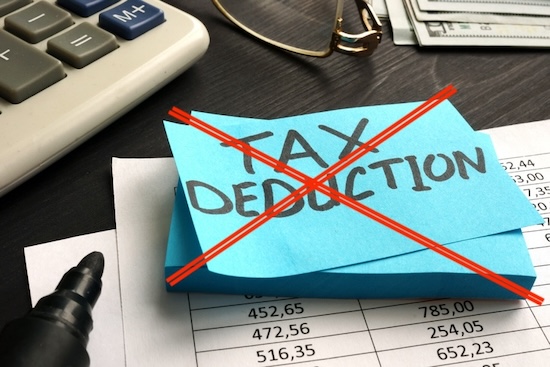
The tax office is warning Australians to stop claiming private expenses on their tax returns, with some attempting to claim baby expenses, personal gifts and meal deliveries as work-related.
.
More than 10 million Australians have claimed about $31 billion worth of work-related expenses in their 2024-25 tax returns so far, many relating to working from home.
The average claim made by taxpayers was $3,100.
The Australian Taxation Office (ATO) is using data matching, analytics and artificial intelligence to understand taxpayer behaviour and identify red flags.
ATO assistant commissioner Anita Challen said each year the agency got unusual claims that it had to reject.
“We have seen a claim for $17,000 of baby expenses for tiny winter clothes or medical expenses. [They're] all very important but not something that goes into your tax return,”
Ms Challen said.
“We've also seen a taxpayer look to claim $20,000 that they gifted to a family member as a tax deduction — definitely a no-go zone in terms of putting that in your tax return.
Work-related expense claims by individuals 2024-25
- Car expenses: $11.9 billion by 3.9 million individuals
- Travel expenses: $2.7 billion, 1.7 million
- Clothing: $2.4 billion, 7 million
- Self-education: $1.9 billion, 1.1 million
- Other: $12.1 billion, 8.7 million
- Total: $31.1 billion, 10.1 million individuals
Ms Challen said the smaller inappropriate claims included people working from home claiming food delivery for a virtual morning tea they were having with their team.
“We've also seen [claims for] the Christmas shirt and novelty T-shirts and things like that for the Christmas party. They are all private expenses and not to be put in your tax return.”
Ms Challen said each year, the same common errors were made by taxpayers.
“That includes incorrectly claiming work-related expenses, working from home deductions, and another one is under-declaring the income that you've earned,” she said.
“A good example of that is where you may have had multiple jobs and you might not have captured all of the employment income in your tax return.”
She reminded taxpayers that income is not always cash and money.
“It can come in kind, it can come [in] gifts, and you need to ensure that all of that is covered and included in your tax return,” she said.
Working from home? Don't claim private portion of bills
Ms Challen reminded taxpayers that when it comes to claims for working from home, “that excludes things like just checking a few emails in the morning or late at night”.
“Make sure that you incurred additional expenses as a result of working from home,” she said.
She said bills for items like internet, phone usage or electricity needed to be properly apportioned.
“You do need to make sure that you're excluding the things that may be used for private purposes, like the kids using all your downloads or streaming services,”
Ms Challen said.
Two methods of claiming WFH deductions
There are two methods for claiming expenses related to working from home — the “fixed cost” or “actual cost” method.
The fixed rate method is simpler and covers multiple expenses, while the actual cost method requires more detailed record-keeping but can potentially yield higher deductions for some people. It is best to check with an accountant or tax adviser on what would suit your individual circumstances.
The fixed rate method allows taxpayers to claim 70 cents per hour worked from home.
It provides for expenses such as electricity and gas, phone and internet bills, and stationery and computer consumables such as printer and ink.
To use the fixed rate method, taxpayers need detailed records of actual hours worked from home across the income year, which the ATO website says can include time sheets, spreadsheets, diaries, or employer rosters.
And you will need at least one record for each of the additional running expenses you incur that the rate per work hour includes. For example, if you incurred electricity and stationery expenses, keep one quarterly bill for your electricity expenses and one receipt for your stationery expenses.
There were 91 Australians who earned more than $1 million in total income yet paid no tax in 2022-23, new Australian Taxation Office (ATO) shows.
The fixed rate method's advantage is its simplicity. By applying a flat rate per hour, taxpayers can possibly avoid complex calculations and detailed expense tracking.
However, the fixed rate method excludes high-value home office equipment or office furniture and technology depreciations, which must be claimed as a separate deduction.
Also, under fixed rate, taxpayers can't claim additional deductions for expenses already covered by the fixed rate, such as internet bills or energy expenses, in their tax return.
The actual cost method requires taxpayers to calculate the exact work-related portion of all their working from home expenses.
Under this method, people can claim the work-related portion of electricity, gas, internet, and phone bills, as well as the decline in value (depreciation) of office equipment, and office furniture and cleaning costs (if they have a dedicated space).
This method can potentially result in higher tax deductions for those with significant working from home expenses. For example, a business owner with a dedicated home office may be able to claim portions of occupancy expenses (like mortgage interest, rent, land taxes, and house insurance premiums) if their home is their principal place of business.
But the actual cost method requires far more detailed record keeping.
The ATO website says for the actual cost method you will need to have a diary or similar record of the hours/days you worked from home, all receipts, bills, and documents that show exactly how much you spent, and documentation detailing how you calculated the “work-related” split.
Again, check the ATO website and/or speak to an accountant about what suits your circumstances best.
Car-related expenses, travel and clothing claims
Car-related travel made up the bulk of work-related expense claims. In 2024-25, 3.9 million people claimed about $11.9 billion in car expenses.
“Generally speaking, employees who are just sort of travelling from home to work and work to home can't claim their car expenses — that is considered a private expense,” Ms Challen said.
“Where you can claim, this year the rate is still 88 cents per kilometre, up to 5,000 kilometres.”
Travel expenses, clothing and self-education are other items people claim big on, with $7 billion claimed so far for the 2024-25 year.
“It's important to note that generally speaking, expenses such as ordinary clothes and private expenses aren't something that you can include in your tax return,” Ms Challen said.
“You do need to show a direct connection to the income that you're earning. And in some instances, even if your employer requires you to purchase certain clothing, it may not be deductible.
“So it's always good just to check and make sure that the deductions you're claiming are correct for the type of employment that you have.”
Investors renting out properties under watch
In their 2024-25 tax returns, 2 million individual investors claimed rental tax deductions.
The ATO will undertake 4,500 audits of taxpayers it considers are “high risk” because they overclaim or don't declare income relating to rental properties.
This resulted in an average net rental loss of $1,290, compared to an average net loss of $1,190 the year before.
Ms Challen said common mistakes included people claiming private loans as investment loans.
“It is important when it comes to rental properties to make sure that you're only claiming those deductions that are relevant to the income you're producing through that property.”Investors with rental properties and holiday homes are, once again, on the ATO's radar. (ABC News: Monish Nand)
Ms Challen also cautioned property investors to take care to understand the difference between repairs and improvements.
“For example, if you've got a leaky pipe in your bathroom and you're looking to fix that, and that turns into a more significant renovation where you want a new shower or a bath and a new sink,” she said.
“Of course, you can claim the costs associated with fixing the leaky pipe, but the rest might be more of a capital claim that you need to get more information on and different rules apply.”
Hundreds of thousands buying and selling crypto
Hundreds of thousands of Australians buy and sell cryptocurrencies every year, and Ms Challen said many still did not keep any records.
“They are treated the same as other assets such as shares, property or gold,” she said.
“It means that when you dispose of cryptocurrency, you do need to declare either the gain or loss that you make in terms of that sale.
“And, at the very least, if you own crypto, you need to know the time, date and the amount that's relevant to the sale of your cryptocurrency.
“A good tip is you can actually transfer some of the transaction information and schedule that on a quarterly basis, just so you don't miss those records that you may find useful later on.”Australians who buy and sell cryptocurrency will need to properly declare it on their tax returns. (AP: Rick Bowmer/File)
How the ATO uses data matching and AI to identify red flags
The ATO continues to use data matching, analytics and artificial intelligence to understand taxpayer behaviour and identify red flags.
It uses income data from banks, state revenue offices, land titles offices, motor vehicle registries, insurance companies, share registries, ASIC, PayPal, eBay, Uber, Airbnb and crypto asset exchanges.
This information allows the ATO to pre-fill tax returns and ensure taxpayers correctly declare their income. It also allows the agency to identify cases of fraud.
In last year's lodgements, more than 555,000 individual tax returns were adjusted in its data-matching programs before issuing tax assessments.
Ms Challen said the agency also used artificial intelligence to better understand taxpayer behaviour and give real-time alerts.
“For example, if a tradie was looking to claim chef knives, that would probably be a bit of a red flag for us, she said.
“What you might see when you're lodging your tax return is we try [to] nudge you and prompt to tell you that something's looking a little bit off.”
She said those alerts were a good opportunity to “just pause and check and make sure you're comfortable with what's in your tax returns”.
“Importantly, when we do use AI, there's always human oversight to ensure that we get it right, especially when there is an adverse impact to taxpayers,” she said.
“And in all instances, regardless of the technology that we use, taxpayers have rights of review if they are concerned with any of the outcomes.”
Ms Challen also reminded taxpayers not to lodge too early, noting that if they hold fire, much of their tax return will be pre-filled by the ATO.
“If you wait until the end of July to lodge your tax return, it'll be much, much easier for you when it comes to lodging this tax time,” she said.
“[Also] make sure that you pause and check the information before putting it in your tax returns.
“There is a lot of misinformation available through AI, social media platforms, and also well-meaning friends and family.”
Nassim Khadem
2 June 2026
abc.net.au
Tips to help you this tax time
With tax time around the corner, it's time to start getting your records in order for your 2025-26 tax return.

.
Remember the 3 golden rules for claiming deductions
You can claim a deduction for most expenses you incur running your business, as long as they are directly related to earning your assessable income. If you're not sure about what to claim, here are the 3 golden rules:
- The expense must be for your business – not for private use.
- If the expense is a mix of business and private use, you can only claim the portion that is used for your business.
- You must have records to prove it.
For more information on business tax deductions, visit Business deductions.
Tax time toolkit for small businesses
The ATO’s Tax Time toolkit can help you during tax time and throughout the year. The toolkit has a directory of links to useful information and fact sheets including:
- claiming home-based business expenses
- claiming motor vehicle expenses
- claiming travel expenses
- claiming digital product expenses
- using business money and assets
- pausing or permanently closing your business.
For more information, visit the Tax Time toolkit.
Income deductions for home-based businesses
If you run your business from your home and have a dedicated area set aside as a ‘place of business’, you may be able to claim occupancy and running expenses.
If you don’t have an area set aside as a place of business but you do some work from home, you may still be able to claim a deduction for some of your expenses relating to the area you use.
Fixed rate method
For the 2025-26 income year, you may be able to use the fixed rate method. This is a fixed rate of 70 cents for every hour you work from home that covers specific expenses such as electricity, internet and phone.
If you use the fixed rate method, you won’t be able to claim an additional separate deduction for the expenses already covered by this method. However, you can separately claim a deduction for the decline in value of depreciating assets, such as laptops, mobile phones and office furniture.
Claiming actual expenses
If you don't use the fixed rate method, you can claim the actual expenses you incurred while working from home.
Whichever method applies to you, remember to keep complete and accurate records, for at least 5 years, so you can substantiate your claims.
You can find out everything you need to know by visiting Home-based business.
Pay as you go (PAYG) instalments
If you’re running a new business, you should consider voluntarily entering into PAYG instalments.
PAYG instalments allow you to make regular prepayments of the tax on your business income, so you shouldn’t have a large tax bill when you lodge your return.
Find out how to start paying PAYG instalments by visiting PAYG instalments.
If you don’t voluntarily enter, you may be automatically entered into PAYG instalments if you earn business and investment income over the threshold.
Review your tax position regularly so the amount you prepay is closer to your expected tax for the year.
Find out how to vary your instalments by visiting Varying PAYG instalments.
Take advantage of small business concessions
It’s worth finding out whether you’re eligible for small business concessions, such as simplified depreciation rules, the small business income tax offset and immediate deductions for pre-paid expenses. They can help reduce your tax bill and some may also save you time.
For more information on available concessions, check out Small business concessions.
Instance asset write-off
Additionally, using the instant asset write-off, eligible small businesses can deduct the full cost of eligible assets costing less than $20,000 that are first used or installed ready for use between 1 July 2025 to 30 June 2026.
The $20,000 limit will apply on a per asset basis, so small businesses can instantly deduct the full cost of multiple assets, as long as the cost of each asset is less than the limit.
If you use the simplified depreciation rules and the cost of the asset is the same as or more than the relevant instant asset write-off limit, the asset must be placed into the small business pool.
For more information, check out Instant asset write-off.
Work out your motor vehicle expenses the right way
As a business owner, you can claim a tax deduction for expenses for motor vehicles – cars and certain other vehicles – used in running your business. You can claim expenses like fuel, insurance premiums, registration, depreciation, as well as servicing and repairs.
Your business structure and the type of vehicle you use affect the way you calculate motor vehicle expenses.
The car limit remains $69,674 for the 2025-26 income year. The car limit is the cost you can use to work out the depreciation of passenger vehicles that are designed to carry a load of less than one tonne and fewer than 9 passengers, excluding motorcycles or similar vehicles.
The maximum value you can use for calculating your depreciation claim is the car limit in the year in which you first used or leased the car.
Find out how by visiting Motor vehicle expenses.
Stay on top of your employer obligations
If you employ staff, make sure you’re prepared for your end of financial year (EOFY) tax and super obligations. As Tuesday 30 June 2026 approaches, stay up to date with your employer reporting obligations.
Fringe benefits tax (FBT)
The FBT year runs from 1 April to 31 March. Did you provide staff benefits on top of their salary and wages during the FBT year? The due date to lodge your FBT return and pay any FBT owed is Thursday 21 May 2026. However, if you already have a tax professional that lodges electronically on your behalf, you have until Thursday 25 June 2025.
Payday Super
From 1 July you must pay employees their super guarantee on payday, at the same time as their salary and wages. How you calculate super guarantee amounts is also changing. From 1 July, super guarantee amounts will be calculated as 12% of qualifying earnings (QE). QE includes ordinary time earnings, salary sacrifice contributions and other amounts that are currently included in an employee's salary or wages for super guarantee. Don’t wait until 1 July to prepare for Payday Super.
Single touch payroll (STP) reporting
Remember to make STP finalisation declarations by Tuesday 14 July 2026 for all employees you’ve paid during the financial year. Accurate reporting means your employees have the right information to lodge their income tax returns. For more information, visit End-of-year finalisation through STP.
It’s important to keep good records and have good payroll governance for your tax and super reporting. If you make a mistake, take the steps to correct it as soon as possible. You can find out more by visiting Record keeping for business.
Record keeping and digital services
A good record keeping system will help you manage your tax and super obligations all year round. This will make it easier to report and lodge your tax return on time.
You can use the ATO’s record keeping evaluation tool to help you make improvements and make tax time even easier. Use the tool by visiting Record keeping evaluation tool.
The right digital tools can also help you perform daily business activities easily and securely. Make sure you’ve set up myID and Relationship Authorisation Manager (RAM) to access the ATO’s online services, including Online services for business which allows you to manage your business reporting and transactions in one place.
For more information, visit Businesses and organisations online services.
Essentials to strengthen your small business
Are you looking to improve your financial, record keeping and business knowledge to support your business' long-term health?
The ATO have recently launched a free online learning platform to help small businesses understand how to handle their tax and super basics.
Essentials to strengthen your small business has courses specifically designed for small business needs. Course information is targeted, up-to-date and interactive.
You can pick and choose a specific learning pathway relevant to your needs, where you’re at in the business lifecycle and the industry you’re in. You can also complete each course at your own pace by saving your progress and coming back another time.
For more information, check out Essentials to strengthen your small business.
Download the ATO app and use Digital ID
The ATO app is a simple and easy way you can access and manage your tax and super on the go. The ATO app is free to download and use. As an individual or sole trader, you can quickly access your personal tax and super information in one place.
Find out more on the ATO app.
There are also several helpful features and tools you can use. You can use the myDeductions tool in the ATO app to scan receipts, track expenses and log work-related trips to stay on top of your vehicle.
When you are ready to prepare your tax return, your records from the myDeductions tool can be sent to your tax agent via email or can be used to prepare your return yourself.
To take advantage of all the app features and personalise your experience, create a myID account and link it to the ATO. When setting up, secure your sign in and use a Digital ID set to the highest level you can achieve.
Ask for help if you need it
Remember, it's important to lodge and pay in full and on time. If you're worried you won't be able to lodge and pay by the due date, contact your registered tax professional or visit the ATO website to find out what support options are available to you.
Australian Taxation Office (ATO)
3 June 2026
business.vic.gov.au
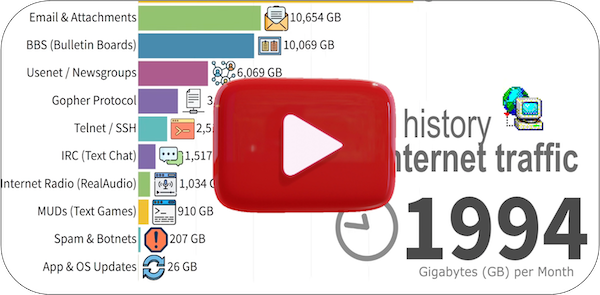
Check out what Uses the Most Internet Traffic: Data from 1994 to 2026
The evolution of global internet traffic from 1994 to 2026, tracking which technologies, platforms, and digital behaviors consumed the largest share of bandwidth across different eras of the web.
.
.
.
.
.
.
.
.
.
.
Managing your mental health and wellbeing during times of uncertainty
Running a small business has always required grit, creativity and the ability to adapt quickly. However, today’s environment brings a level of uncertainty that can present challenges for everyone.

.
Economic pressures, rising operating costs, shifting customer behaviour and ongoing workforce challenges don't just affect business decisions; they can also affect your mental health and wellbeing.
Here are some practical strategies to help you navigate uncertainty and manage stress.
The hidden stress of running a small business
In recent years, the level of uncertainty facing small business owners has intensified. For many small business owners this creates a persistent sense of being ‘on alert’, scanning for the next challenge or setback.
This heightened sense is a natural human response to unpredictability. When the brain perceives uncertainty as a threat, it activates the stress response system, preparing the body to react quickly.
In the short term, this can help business owners stay focused and responsive. When uncertainty becomes chronic, the stress response can remain switched on for long periods, taking a significant toll on mental health and wellbeing.
The mental toll of uncertainty
When business owners feel they cannot predict or control what comes next, it becomes harder to make decisions, plan ahead or feel optimistic about the future. Over time, this can take a significant toll.
Small business owners may find themselves imagining worst-case scenarios, replaying concerns late at night or feeling unable to switch off.
This can lead to fatigue, irritability, difficulty concentrating, a sense of being overwhelmed, reduced productivity and anxiety or low mood.
The emotional load of running a business can also lead to isolation. Many small business owners feel they must appear strong for their staff, customers and families. This can make it difficult to acknowledge when they are struggling.
How to stay steady in uncertain times
Without support, stress can accumulate and begin to affect physical health, relationships and decision-making.
While uncertainty is part of running a small business, there are practical ways to protect your mental wellbeing and create more breathing room in the day.
- Remind yourself that unpredictability is a reality of running a business, not a result of anything you’ve done or not done.
- Focus on what’s in your control and list the tasks, decisions or actions you can influence to shift attention away from the unknowns and reduce feelings of helplessness.
- Break down big worries into smaller, solvable pieces – instead of asking ‘what if the business doesn’t survive?’ ask ‘what can I adjust this month to improve cash flow?’
- Identify the signs that your stress is building, such as irritability, avoidance or overworking, so that you can intervene early rather than waiting until you’re overwhelmed.
- Celebrate the wins (no matter how small) to acknowledge progress to help counterbalance the brain’s tendency to fixate on threats and uncertainty.
It’s also important to think about your overall wellbeing and the steps you can take to create a calmer mindset. Small consistent habits can make a noticeable difference in how you cope, think and lead.
Useful wellbeing strategies
When feeling overwhelmed, small, practical habits can make a meaningful difference.
- Set boundaries around news and information like checking updates at set times rather than constantly scrolling. This helps reduce mental clutter and keeps the brain from staying in ‘threat mode’.
- Take short breaks away from devices. A few minutes of movement, stretching or fresh air can calm your nervous system and improve focus.
- Talking with others whether it’s a trusted peer, mentor or a professional support service can help lighten the load and offer perspective.
- Prioritise your sleep and rest. Fatigue magnifies stress. Protecting sleep and building in small moments of rest strengthens resilience and decision‑making.
- Practising grounding techniques like simple breathing exercises, mindfulness moments or sensory grounding can help calm the body and bring clarity when things feel chaotic.
These strategies won’t remove uncertainty, but they can help you navigate it with more steadiness, clearer thinking and a stronger sense of control.
Reaching out for support
When stress hits, the impulse can be to withdraw, but reaching out for support is a sign of strength.
Recognising early signs of distress in yourself and others is a proactive step toward preventing burnout or more serious mental health challenges.
Look for the following signs:
- withdrawal or reduced engagement
- irritability or mood changes
- difficulty concentrating
- disrupted sleep
- feeling constantly on edge
- loss of motivation or confidence.
Services like Beyond Blue’s NewAccess for Small Business Owners (NASBO) and Before Blue are designed to help small business owners and their teams navigate stress with practical, evidence-based strategies.
NASBO is a unique, free, confidential mental health coaching program that offers practical tools to manage stress, problem-solve and build coping strategies. Coaches understand the realities of running a business and provide guidance tailored to each person’s circumstances.
Visit NewAccess for Small Business Owners.
Before Blue (Beyond Blue’s workplace wellbeing program) provides counselling, wellbeing support and resources to help employees navigate stress and uncertainty. These services offer a safe space to talk through challenges and develop strategies to protect mental health.
vic.gov.au
Latest Industry News

How Do I Write Legally Compliant Terms and Conditions for My Business?
Terms and conditions bind your customers only where they actively accept them, so a tick box at checkout holds...

Paid parental leave super contributions have started
From July 2026, the new Paid Parental Leave Superannuation Contribution (PPLSC) has started. From...
If the business is no longer profitable, and is unlikely to be profitable in the future, your best option may...

Check out the this visualization, which tracks the evolution of dietary calorie intake from 1930 to...

Taxpayer given 35% penalty for BAS recklessness
Following an application for a refund of nearly $94,000, the Administrative Review Tribunal has set aside an...

SMEs warned as ATO ramps up tax debt collection
One insolvency specialist has emphasised the importance of small businesses engaging their accountants to stay...
Does Your Small Business Need to Follow AML Privacy Rules?
Compliance with new anti-money laundering (AML) laws may subject your small business to additional privacy...

Don’t get caught out at tax time with your multiples jobs
Picking up a second job, holding multiple part-time roles, or doing gig work is now part of everyday life. But...

Global companies turn to cost-cutting amid ongoing inflation
Rising operating costs and persistent inflation are placing renewed pressure on businesses worldwide, despite...

Warning for early lodger this tax time!
The ATO has a clear message this year: slow down and get it right. Early lodgers are far more likely to make...
ATO no longer treating debt the same as during COVID
One expert has stressed the importance of tax agents reminding their clients that the ATO is no longer as...
The evolution of the world’s languages
Check out the evolution of the world's most spoken languages from 2500 BC to...
Latest Guests News
Newsletter Newslettter We are pleased to supply you with the latest edition of Client Alert, which...