- 234 Balaclava Road, Caulfield North VIC 3161
- contactus@guests.com.au
- (03) 9509 7033
Do not trust myGov messages
You should never click on a link in an email purported to be from MyGov.

.
Criminals are ingenious in ways to defraud unsuspecting internet users – now a huge majority of the population. We are forced by the government to use myGov, despite its security shortcomings.
An article by David Penberthy in Sunday Herald Sun of 25 May 2025 again highlights our significant concerns about the forced use of a government on-line service.
The article reports that taxpayers accounts are being hacked with refunds stolen and no doubt with untold damage to their future financial security.
The government crucified Optus in September 2022 for similar breaches – will they be as aggressive to themselves? Response so far, have to put the blame on the taxpayers – disgraceful!
We can do no more than keep warning – do not use reply links and do not use myGov, unless you have no choice. As you know, every communication with Australian Taxation Office can be via a tax agent, and with Centrelink via a Registered Agent.
Acctweb
5 things smart businesses do to stop copycats
You’ve got a brilliant idea. A clever name. A design that turns heads. Now let’s make sure no one else takes it.

.
While it may sound complicated, intellectual property (or IP for short) is really just about protecting what makes your business special and giving you space to grow.
The Australian IP Report 2025 numbers speak for themselves:
- small businesses that file for IP rights (like trade marks or patents) are 16% more likely to experience high employment growth.
- patents and trade marks can increase your business startup value by up to 20%, especially in those early, make-or-break stages.
IP isn’t just protection, it’s a power move. We’ve highlighted 5 common mistakes and how you can avoid them.
1. Your business identity isn’t automatically protected
You think trade marks are only for ‘big companies’ so you skip any checks, only to find someone else has snapped up your name.
Your creations are more than ideas – they’re valuable assets. IP Australia defines intellectual property (IP) as ‘creations of the mind’, which include brands, logos, inventions, designs, and artwork. IP rights help you protect those assets (and profit from them) by giving you legal control over how they’re used, licensed or sold.
Unlike inventory, your assets can’t be locked away or physically controlled. A registered trade mark gives you the right to use the registered trademark symbol, ®, and signals your brand is officially protected under Australian law.
Important: Registering a business name, ABN or domain doesn’t give you ownership of your brand. To get exclusive legal rights (and stop others from using it) you need to register a trade mark.
There’s more to trade marks than just words and logos. You can register all sorts of unique brand elements, from sounds, colours, shapes and even movement.
Think beyond business names, trade marks can also cover:
- colours (Cadbury purple)
- shapes (Coca-Cola's bottle design)
- sounds (‘O, O, O, O’Brien’)
- words (like Ford).
For the full list of trade mark types, see IP Australia’s guide.
What you can do now
- Run a free availability search – even if you’re already trading under your name, it’s not too late. Use one of the search options below to see if your name, logo, or slogan is already registered, to make sure you’re not taking someone else’s registered IP.
- TM Checker.
- Australian Trade Mark Search (ATMS).
- Review and refine.
- If your first choice is registered, tweak your name or design and re-search until you've got a clear path.
- TM Checker not only checks similarity, it will also flag if your first choice is not unique or ‘distinctive’ enough to be a registered trade mark.
- Lock in your online identity.
- Grab matching domains, social handles and even a provisional business name so no one else jumps in.
Find more information on how trade marks work with IP Australia’s guide to trade marks for small business.
2. Register your trade mark – don’t assume IP is only for industry giants
You shrug off trade marks as ‘beyond my budget’, lean on free copyright … only to snort coffee when you spot someone else using your design.
According to IP Australia, only 7% of Australian small businesses have any kind of IP protection. That means a lot of business owners are unknowingly taking a risk with their branding exposed.
Here’s the thing: copyright and trade marks aren’t the same, and relying on one without the other can leave your brand exposed. Copyright protection in Australia kicks in automatically (no registration or fees) when you create an original work.
So, if you created your branding, you are automatically the copyright owner. However, the best way of protecting your business name, logo and other brand elements, is by registering a trade mark.
Don’t forget trade secrets in your IP protection. Trade secrets are confidential business details (like secret recipes or methods) that provide a competitive edge. Unlike patents or trade marks, trade secrets aren’t registered with an IP office and are protected through secrecy and confidentiality agreements – think KFC famous ‘11 herbs and spices’ recipe for example.
What you can do now
Claim your automatic copyright.
- Keep dated drafts, email records or server-stored files as proof you created your original work, like artwork, writing or code.
Apply for a trade mark and remember you can have multiple trade marks protecting individual brand elements.
- A registered trade mark gives you exclusive rights to your brand name, logo or slogan, and offers stronger legal protection than copyright alone.
- Australia-wide protection lasts for 10 years and can be renewed indefinitely.
- Fees start from $330.
Learn more and get started with:
- For IP-related tools and research, explore Business resources.
- Follow this easy step-by-step guide with How to apply for a trade mark – IP Australia.
- For first timers use TM Headstart (guided application experience).
- Protect your business name or idea.
3. Keep good records of your IP
You tuck brainstorm doodles into a ragged notebook and then panic when someone challenges ownership, and you can’t find a single page.
Some IP protection is automatic and free (like copyright), while others (like trade marks) require registrations and fees. No matter the IP type, you don’t have to start with expensive legal fees – solid recordkeeping can save you a headache when challenging copycats.
What you can do now
- Gather evidence to dispute infringements: know that your first step is to challenge copycats with proof of ownership.
- Save dated versions: notes, sketches, emails or digital files.
- Email ideas to yourself or collaborators for automatic timestamps.
- Lock in ownership: get written agreements and flag anything as confidential with non-disclosure agreements.
- If you’re unsure, pause and secure it before sharing.
- Regularly back up your work in secure locations.
- Protect IP across your supply chain: if you're sharing specs with manufacturers or researchers, make sure confidentiality is kept.
- Keep patent/design ideas under wraps until you file your application.
4. Protecting your IP overseas
You go viral abroad, and suddenly your logo is on someone else’s merch.
It’s easier than ever to reach customers overseas thanks to global platforms like eBay, Amazon and Etsy. But that exposure also means international competitors can see (and copy) what makes your business unique.
That’s why international IP protection matters. If you’re planning to expand or are already selling internationally, make sure your IP is protected in those markets. An Aussie trade mark or patent won’t cover you overseas and if someone else registers your idea first, it can be hard (and costly) to fight back.
What you can do now
- Decide where you’re likely to sell.
- Check if your IP is protected in those countries.
- Explore international IP options: What is international IP?
Get expert help: Get professional assistance with your IP.
5. Get help from IP professionals
You wing your trade mark application after a late-night Google spree … and accidentally file for something completely different.
Protecting your IP isn’t always simple. An IP lawyer or specialist can guide you through registering, managing and enforcing your rights, from launch to global expansion.
business.vic.gov.au
Regulations have changed for buy now pay later services
If you're one of the millions of Australians who use buy now pay later (BNPL) services, important changes are now in effect from 10 June 2025 that will give you stronger consumer protections.

.
BNPL services are now being regulated more like traditional credit products such as credit cards. Previously, BNPL services weren’t regulated under the National Consumer Credit Act, leaving a gap in consumer protection. But now, all BNPL providers need to hold an Australian credit licence and comply with consumer protection requirements.
This means your BNPL provider needs to:
- hold a credit licence (or have applied for one by 10 June 2025);
- be a member of the Australian Financial Complaints Authority (AFCA);
- follow responsible lending practices; and
- meet other consumer protection requirements.
You can verify registrations on Australian Securities and Investments Commission’s Professional Registers Search.
The new framework recognizes that BNPL services are generally lower-risk than traditional credit products. Most BNPL arrangements will be regulated as “low-cost credit contracts”, with modified requirements that balance consumer protection with the unique features of BNPL services.
Providers must meet responsible lending obligations when agreeing to a BNPL contract or credit limit increase for you, which generally includes seeking and verifying certain information about your financial situation and assessing their products suitability. You can ask to see the assessment your provider makes about your credit contract or limit increase; they must provide you with a free, written copy on request.
While BNPL services offer convenient payment options and support thousands of local jobs, these new regulations are designed to help prevent debt spirals and ensure you have proper protections when using these popular payment methods.
Acctweb
Prepare for Div 296 now, accountants warn
With the Division 296 super tax all but inevitable, accountants should be preparing their clients’ strategies now, a superannuation accountant has warned.

.
Superannuation partner at TAG Financial Services, Jason Roccasalvo, told the 2025 TAG Super and Tax Strategies Day that the time to start planning for the Division 296 super tax was now.
“What we have is enough certainty to start planning with our clients. The numbers might change, but we need to start planning now,” he said.
“If we're not planning now with our clients, our chance to act is going to be narrow, and we might have clients that have bad, bad results because we haven't got to them early enough.”
He warned that clients with ‘lumpy’ assets in their super funds, such as real estate, would need ample time to restructure their affairs.
“It's really important to be planning now. Because if we don't talk to our clients now, and we get law in January or February … if they're trying to navigate these lumpy assets and make a decision to get under threshold by 30 June, you're not allowing a lot of time,” he said.
The Albanese government has signalled that it would go ahead with its Div 296 super tax with the support of the Greens. It is set to introduce a new 15 per cent tax on a portion of superannuation earnings over a $3 million threshold.
While disgruntled clients could take their money out of superannuation to avoid the Div 296 tax, Roccasalvo noted that other means of holding money – companies, trust structures and in an individual’s name – came with their own sets of taxes.
Moving money into other structures could entail liabilities including capital gains tax, stamp duty and land tax, death tax and liquidity considerations.
“The best thing that you can do with [clients] is condition them that, unfortunately, [they’re] going to have to pay a little bit more tax. It's just a question of how and where.”
“It's a hard thing to say to clients, because, I don't know about you, but our clients hate paying tax. But that's a really hard thing to say, but it's the most real thing that you can tell people.”
Michelle Griffiths, investment and wealth partner at TAG Financial Services, explained that the most tax-effective strategy would depend on an individual client’s financial situation.
“Look at this as a holistic decision, not have your clients go straight to what is this tax on the $3 million and just look at that in isolation. I think that's dangerous,” she said.
Roccasalvo added that when clients altered the distribution of their wealth, it could have implications for estate planning.
“We've got clients that might be on, say, a second marriage. They may want their spouse to inherit their super and they might want their non-superannuation wealth to make its way to their children,” he said.
“If you're changing the distribution of that wealth, you're also changing your estate plan.”
He added that the burden of navigating the Div 296 tax would be ongoing, but the largest adjustments would happen during its first year of operation.
“This is not a one-year tax. This is an annual tax that's coming in. The big concerns are in the first year, because that's probably where most of the heavy lifting and most of the decision making for your clients is going to occur.”
“But each and every year, if you have a client that's hell bent on missing or dodging this tax, you're going to need to be conditioning them every year as to what the thresholds and caps are.”
Emma Partis
30 July 2025
accountantsdaily.com.au
What Terms Should I Include in a Capital Raising Term Sheet?
The primary purpose of the term sheet is to outline the key terms and conditions that will serve as the foundation for more detailed legal agreements.

.
A term sheet (also known as a ‘letter of intent’, ‘memorandum of understanding’, or ‘heads of agreement’) can be a crucial document in the capital raising process, serving as a non-binding outline of the key terms and conditions of a proposed investment deal. A term sheet is essentially a blueprint for the more detailed, legally binding documents that will follow, such as the share subscription agreement, shareholders’ agreement and constitution. This article explains the key legal concepts and terms typically contained in a term sheet for capital raising transactions.
1. Fundamental Economic Terms and Downside Protections
The term sheet should typically set out the fundamental economic terms of the deal. This may include things such as:
- the total investment amount;
- the round size;
- the company’s valuation (and whether that valuation is calculated on a pre or post-money basis);
- the type of securities being offered (such as ordinary shares, preference shares, or convertible securities);
- how the investment funds must be used, such as for growth and working capital requirements;
- whether the company intends to implement or top-up an employee share option plan or scheme; and
- who will bear the dilution.
In addition to basic economic terms, the term sheet should address the rights (if any) afforded to investors to protect the value of their investment. This may include things such as:
- Liquidation Preferences: This determines the order and manner in which investors will be paid in the event of a company sale or liquidation; and
- Anti-dilution Provisions: These are designed to protect investors from dilution in future funding rounds where the company’s valuation decreases.
2. Corporate Governance and Information Rights
Governance rights are another critical component of the term sheet. This section of the term sheet typically outlines the company’s board composition and whether one or more investors will have the right to appoint directors or board observers. The term sheet should ideally provide a breakdown of the decisions that require the company’s board of directors to make and those that require shareholder approval, along with the approval thresholds required to pass or approve such decisions.
For example, the term sheet may specify that day-to-day operational decisions shall be made by the company’s board of directors by ‘ordinary resolution’, being a resolution approved by more than 50% of the directors entitled to vote.
Investors, particularly sophisticated and professional ones, usually have their own reporting and compliance obligations. For this reason, the term sheet should also address the financial and operational information required to be provided to investors, as well as the frequency at which it is to be provided.
For example, the term sheet may include an obligation on the company to provide audited financial statements to investors within 120 days after the end of each financial year.
3. Shareholder Rights and Protections
As noted above, the term sheet should ideally include a list of items requiring shareholder approval. For example, the term sheet may specify that disposing of the company’s key assets, such as its intellectual property, must be approved by shareholders holding at least 75% of the company’s shares.
Term sheets often include general and minority shareholder protections such as pre-emptive rights, which give existing shareholders the right to maintain their percentage ownership in future funding rounds.
Another common minority protection is the ‘tag along’ right. Tag-along rights are provisions that allow minority shareholders to join in on a sale of shares by a majority shareholder, ensuring they can sell their shares on the same terms. This protects minority shareholders by giving them the option to sell their stake if the majority decides to sell theirs.
4. Founder Restrictions
In early-stage companies, investors often require vesting provisions for founder shares to ensure that the founders remain committed to the company over time. These provisions typically require the founders to earn their shares gradually, aligning their interests with the long-term success of the business.
Founder lock-ups are another common provision, which restricts the founders from selling their shares (or a portion of them) for a specified period after the funding round. This helps maintain stability and ensures that the founders remain invested in the company’s growth. Moreover, this provision prevents them from exiting too early and potentially destabilising the business.
5. Other Standard Terms
Other standard provisions in a term sheet may include:
- confidentiality clauses to protect sensitive information exchanged during negotiations;
- an exclusivity period during which the company agrees not to seek investment from, or negotiate with, other parties;
- any conditions that must be satisfied before the investment is finalised, such as the investor being satisfied with the results of its due diligence investigations in relation to the company;
- whether the company is required to reimburse the investor for a portion of its costs (such as legal fees incurred during negotiations up to a maximum amount);
- the date by which the funding round is expected to conclude;
- the laws that will govern the term sheet and the long-form transaction documents; and
- the dispute resolution procedures that must be followed in the event a dispute between the parties arises.
6. Binding Terms within Non-Binding Term Sheet
While parties often intend for the term sheet to be non-binding, they may want certain provisions to be legally enforceable. For this reason, the term sheet should clearly state which provisions are intended to be legally binding and which are non-binding. Commonly binding provisions may include clauses relating to:
- Exclusivity;
- Confidentiality;
- Costs;
- Dispute resolution
- Governing law.
Key Takeaways
The primary purpose of the term sheet is to outline the key terms and conditions that will serve as the foundation for more detailed legal agreements. These initial terms provide clarity and set expectations between the parties involved, ensuring alignment before proceeding to the more complex legal documentation. Therefore, it is crucial to tailor the term sheet to your unique circumstances and safeguard your interests.
By Ericsson Yu – Lawyer
30 June 2025
legalvision.com.au
Evolution of Boeing – 1916 – 2025
Check out the how Boeing planes have evolved over time.
.
.
.
.
.
.
.
.
.
.
.
.
.
.
.

3 more GST fraudsters sentenced under ATO’s Operation Protego
Three more GST fraudsters have been sentenced under the ATO’s Operation Protego, with one offender raking in $1.1 million through fraudulent claims.

.
Three people have been sentenced for GST fraud under the ATO’s Operation Protego, which aims to prevent, detect, investigate and prosecute instances of serious financial crime.
“Where we see deliberate attempts to cheat the system, there will be severe consequences,” ATO Deputy Commissioner and Serious Financial Crime Taskforce (SFCT) Chief John Ford said.
“These crooks face long-term consequences. Not only do they need to repay the money, but they now have a criminal record set in stone, which may affect their ability to secure employment, obtain finance or insurance and travel overseas.”
Under Operation Protego, the ATO has applied treatment to over 57,000 alleged offenders, finalised 62 investigations and referred 52 briefs of evidence to the Commonwealth Director of Public Prosecutions.
As of 31 May 2025, 112 people have been convicted, with jail terms of up to 7 years alongside orders to restrain real property.
In June, Darnelle Te Kiri was sentenced to 17 months' imprisonment for fraudulently obtaining $202,936 through false business activity statements (BAS).
In 2021, Te Kiri registered an ABN for hospitality and bar work services and lodged 8 false BAS over 7 months, the ATO said. She claimed to have spent over $2 million in purchases despite reporting little to no income.
An ATO audit found no evidence of a legitimate business. Funds had been spent on rent, groceries, pubs and gaming.
She was released on $1,000 recognisance to be of good behaviour for two years, and ordered to repay the full sum she had fraudulently obtained.
Daniel Copeland was sentenced to three years’ imprisonment, to be released after 12 months, for obtaining over $1.1 million in fraudulent GST refunds. He submitted 23 false BAS for a plastering services business which, according to ATO investigations, did not exist.
Copeland used the funds for gambling, personal living expenses, accommodation and purchases at a car dealership, the ATO found.
He was released on $100 recognisance with a 5-year good behaviour mandate, a breach of which would require him to serve the remaining two years of his sentence.
The third fraudster, Tewhanaupani Nukunuku, was sentenced to two years and three months’ imprisonment to be released after nine months with a $1,000 recognisance and a two-year good behaviour mandate.
Nukunuku pleaded guilty to obtaining a financial advantage of $168,000 through fraudulent GST refunds, lodging six false BAS over six months. An ATO audit found that he was not in business and did not hold the necessary licenses to perform the work he had claimed to do.
He spent part of the money on luxury items, including retail goods and a car. The ATO ordered him to pay back the full $168,000.
Deputy Commissioner Ford said that the prosecutions demonstrated the ATO’s commitment to the Australian tax and super systems, underscoring the public benefit that tax revenue provides.
“GST fraud steals funds that could have been used to support community services such as healthcare, infrastructure and education, instead of funding offenders’ personal luxuries.”
Emma Partis
20 June 2025
accountantsdaily.com.au
30 June 2025 – Tax Checklist – Small (and Micro) Business
With the end of financial year fast approaching, now is a great time to revisit your year-end obligations and look at tax planning.

.
This article is designed to be used as a prompt together with our associated checklist of action items, before 30 June 2025.
Bad debts
Write-off bad debts (physically in books)
Director fees and employee bonuses
Confirm commitments to pay director fees and employee bonuses (e.g., resolutions in place and employees noticed). PAYG withholding must be withheld when paid. Alternately, cease directors fees and draw down existing credit loans if the company has losses. Single touch payroll requirements and BAS return deadlines mean attention before reporting.
Donations
Bring forward planned donations (and have the highest earning member of the family pay for them). Keep in mind donations cannot create a loss. Ensure receipts are retained
Interest
Prepay interest on loans for income-producing assets
Bring forward deductible expenditure
Examples – repairs, stationery, consumables. Available to all entities, not just small business entities (SBEs).
Prepay deductible expenditure
All taxpayers may claim deductible prepaid expenditure where the expenditure is below $1,000 (excluding GST) or the expenditure is required by law (e.g., car registration fees). Where the expenditure is $1,000 or more, SBEs can deduct the full amount of prepaid expenditure if it relates to a period of 12 months or less. Note that this is also available to non-business expenditure of individuals (e.g., work-related expenses or rental property expenses).
Review stock
Identify any unusable or obsolete items and then write them off.
Depreciation
Depreciating assets costing less than $20,000 and acquired after 1 July 2024 will be eligible for an immediate deduction where a business has an annual turnover of less than $10 million.
The assets have to be used or installed ready for use by 30 June 2025. Review the existing depreciation schedule for plant and equipment that is still being depreciated but has been disposed of or is obsolete, which can be scrapped.
Electric vehicles
Also on the depreciation front, with the electric vehicle FBT exemption now available, be mindful that where an employer provides such a vehicle to an employee, depreciation deductions should be available to the employer (subject to the car limit). Plug-in hybrid electric vehicles acquired after 1 April 2025 do not qualify for the exemption.
Defer income
If possible, defer income until after year-end – e.g., send out invoices slightly later. Do you report cash or accrual for income tax or Goods & Services Tax? Keep in mind the resulting cashflow impact and the potential interaction with the personal services income (PSI) / personal services business (PSB) and non-commercial loss rules.
Skills and training investment – expired
The SBE skills and training boost, which was a 120% tax deduction, expired 30 June 2024.
Energy incentive – expired
The SBE energy incentive, also expired on 30 June 2024
Crystalise capital losses
Subject to broader financial considerations, realise capital losses to offset current year capital gains. Be mindful of the “wash sales” prohibition. A loss in future years cannot be offset this year.
Defer capital gains
Again, subject to broader financial considerations, consider deferring the realisation of capital gains until next year.
Non-commercial business losses
Consider whether the non-commercial loss rules apply to quarantine business losses (or think of them as hobby losses). Be mindful, there are some exemptions from the rules to allow claiming the losses in the current income year – including the assessable income test, property test, real property test, and other assets test.
Division 7A
Shareholder loans from companies need to be properly documented
Division 7A
Make repayments required under loan agreements. If the shareholder and company have agreed to make repayments by way of dividends (i.e., mutual off-set), ensure the company has sufficient franking credits and the dividends are legally declared and paid prior to 1 July (with appropriate documentation).
Trust distributions
Trustees of discretionary and family trusts must make valid distribution resolutions to
effectively distribute trust income to eligible beneficiaries. Beneficiaries should be made aware of their entitlements and benefit from their distributions. Proceed cautiously, taking account of the ATO’s new position on distributions and also recent
court cases.
Beneficiary TFN Report
Prepare and lodge a TFN Report by 31 July for beneficiaries who quoted their TFN to the trustee in the June quarter
Logbook
Substantial work-related or business use of a private vehicle will benefit by claiming motor vehicle expenses using the logbook method. This must be supported by a log book. Hence, start one immediately. Whilst a logbook must be kept for 12 weeks, the 12 weeks may overlap two income years provided it includes part of the year. (And record year end odometer readings.)
Private health insurance
Ensure you have adequate cover for all family members to avoid paying the Medicare Levy Surcharge, particularly where there has been a change in family circumstances (e.g., new baby, separation, adult children aging out etc.) Note all family must be covered- the tax return question is –“are all family members.. covered..”
Insurances
Have you (or your financial advisor) reviewed whether personal and business risks are adequately and appropriately covered? This can bring peace of mind at the same time as maximising deductions (including prepaying subject to cashflow).
Review business structure
Consider whether the business structure remains suitable and efficient (e.g., have commercial risks increased where a corporate or trust structure is warranted for increased protection; is a corporate beneficiary desirable; have family circumstances changed?). Some roll-overs are available, so don’t assume it is too difficult.
Acctweb
Mixing business and pleasure? Be vigilant this tax season
With the ATO sharpening its focus on work-related expenses, Corporate Traveller is warning ‘bleisure’ travellers to be careful.

.
Increased vigilance is needed for those mixing business with pleasure ahead of the 2024–2025 tax filing period, business travel management and solutions provider Corporate Traveller has suggested.
Corporate Traveller, in partnership with financial manager and tax agent Moneywise, have predicted that the ATO will have a particular focus on bleisure travellers, given that, according to Allied Market Research, such travel expenses are set to more than double to $731.4 billion over 10 years.
Amid such a potential crackdown, Moneywise global general manager John Tuohy advised being fully prepared to file one’s taxes, lest one run the risk of an audit.
“What most people don’t realise is that employees have until 31 October to file the 2025 financial year’s taxes. If you register with a tax agent, that deadline is extended until mid-May 2026, which is great for those who want to delay any tax payable,” he said.
“So, don’t rush it unless you know your tax is relatively simple and you’re expecting a refund.”
“There are over 14,000 pages of tax law in Australia, meaning there are lots of incentives and terms and conditions, and with the ATO focussing this year on work-related expenses, it’s particularly important to take that time to get it right, and to understand the nuances to avoid audit triggers,” Tuohy continued.
Corporate Traveller global managing director Tom Walley added: “This tax season, business travellers should take extra care to avoid scrutiny.”
“Keeping on top of your documentation should be a priority for every business traveller. This proactive approach will help you manage your tax obligations while travelling, and ensure you are compliant with Australian tax laws,” he said.
For the looming financial year, Tuohy recommended keeping a diary for work expenses: “Often, appropriate annotations in your calendar tool noting dates, times, durations, and places of work-related activities will suffice as a 'travel diary' for tax purposes and will substantiate deductions for specific and associated expenses.”
Professionals should also note, he said, that incidental and reasonable travel deductions can include Saturday and Sunday accommodation when necessary for business requirements on a Friday and the following Monday.
“Taking a partner or family on these trips would incur expenses that are clearly of a private nature, such as additional accommodation, meal and entertainment expenses. Don't be tempted to claim these on your tax. Similarly, when you extend travel for leisure before or after a work travel requirement, you will be expected to apportion the leisure component to private and non-deductible expenses.”
Elsewhere, Tuohy said that client entertainment expenses can be claimed, but only if the purpose of the expense is income-generating business related.
“Discussing business between parties, a project or negotiating a business outcome is more likely to be deductible. These cases would likely be covered by the employer and reimbursed, and this is more relevant to business owners than employees.”
Jerome Doraisamy
27 June 2025
accountantsdaily.com.au
Roles and Responsibilities in a Business Partnership
Set clear expectations from the start of your partnership

.
In Short
- Clearly define each partner’s roles and responsibilities to avoid misunderstandings and disputes.
- Establish decision-making processes, including voting rights and key decision areas.
- Prioritise regular communication and formalise arrangements in a written partnership agreement.
Tips for Businesses
Document roles, decision-making procedures and dispute resolution mechanisms in a formal agreement. Schedule regular meetings and use communication tools to stay aligned. As your business evolves, review and update your arrangements to keep them relevant and effective.
Business partnerships can be a powerful way to combine talents, resources and expertise to create a successful venture. However, the success of any partnership heavily relies on clearly defined roles and responsibilities. Without proper delineation, misunderstandings can arise, leading to conflicts and potentially jeopardising the business. This article examines the essential aspects of establishing clear expectations in a business partnership.
Defining Roles and Areas of Responsibility
One of the first steps in establishing a successful business partnership is clearly defining each partner’s roles and areas of responsibility. This process involves a thorough assessment of each partner’s strengths, weaknesses and expertise, allowing for an optimal allocation of tasks and duties.
Assessing Individual Strengths and Expertise
Begin by conducting an honest evaluation of each partner’s skills, experience and areas of expertise. This assessment should consider both technical skills and soft skills, such as leadership abilities, communication styles and problem-solving capabilities. By understanding each partner’s unique strengths, you can allocate roles that best utilise these attributes.
Clearly Outlining Specific Responsibilities
Once you’ve identified each partner’s strengths, it’s crucial to clearly outline specific responsibilities. This should include day-to-day operational tasks, strategic planning duties and any specialised roles within the business. Be as detailed as possible to avoid ambiguity. For example, instead of simply assigning ‘marketing’ to a partner, break it down into specific tasks such as ‘developing marketing strategies’, ‘managing social media accounts’ and ‘overseeing advertising campaigns’. The more clarity is provided from the outset, the more it will minimise the risks of misunderstandings and future disputes.
In some areas, there may be an overlap in skills or interests between partners. It’s important to address these overlaps and decide how responsibilities will be shared or divided. Similarly, identify any gaps in expertise that may need to be filled, either through additional training or by bringing in external resources or people.
To illustrate how roles and responsibilities might be divided in practice, consider the following examples:
- In an accounting firm partnership:
- Partner A (Tax Specialist): Responsible for managing the tax department, overseeing complex tax planning strategies and staying up-to-date with tax legislation changes.
- Partner B (Audit Specialist): In charge of leading the audit team, managing client relationships for audit services and ensuring compliance with auditing standards.
- In a restaurant partnership:
- Partner A (Culinary Director): Handles menu development, kitchen management and food supplier relationships.
- Partner B (Operations Manager): Manages front-of-house operations, staff hiring and training and customer relations.
- In a digital marketing agency partnership:
- Partner A (Content and SEO Strategist): Leads content strategy, SEO (ie, search engine optimisation) services and client account management.
- Partner B (Advertising and Growth Director): Oversees paid advertising campaigns, social media marketing and business development.
These are merely examples of how partners can divide responsibilities based on their individual strengths and expertise. However, it is also important to note that while partners may have primary areas of focus, they should still collaborate and communicate regularly to ensure the overall success of the business.
Documenting Roles in a Partnership Agreement
Once roles and responsibilities have been agreed upon, it’s crucial to document them in a formal partnership agreement. This legal document should clearly state each partner’s duties, areas of authority and any limitations on their decision-making power. Having this in writing can prevent future disputes and provide a reference point if questions arise about each partner’s responsibilities.
Establishing Decision-Making Processes
Clear decision-making processes are vital for the smooth operation of a business partnership. Without established procedures, partners may find themselves in a deadlock or making decisions that the other partner disagrees with, leading to conflict and potentially harming the business.
Determining Voting Rights and Procedures
Decide how voting rights will be allocated among partners. This could include equal voting rights for all partners, weighted voting based on ownership percentages, or other agreed-upon criteria. Establish clear procedures for conducting and recording votes to ensure transparency and accuracy.
For example, a partnership might establish that all major decisions require a 75% majority vote, with each partner’s vote weighted according to their ownership stake. They could specify that votes must be conducted during official partnership meetings, with at least 7 days’ notice given to all partners. The procedure might require that votes be recorded in official meeting minutes, detailing the motion, the votes cast and the outcome. By clearly outlining these procedures in their partnership agreement, partners can ensure transparency and fairness in decision-making processes.
Identifying Key Decision Areas
Outline which decisions require unanimous agreement and which can be made by individual partners or by a majority vote. Typically, major decisions such as taking on debt, admitting new partners, or changing the nature of the business require unanimous agreement, while day-to-day operational decisions are left to individual partners within their respective areas of responsibility.
Significantly, the classification of key decision areas ultimately depends on the specific business in which the partnership operates. For a local retail partnership, major decisions requiring unanimous agreement might include expanding to a new location, taking on significant debt for renovations or significantly changing the store’s product offerings. In contrast, routine decisions such as ordering seasonal inventory within pre-agreed budget limits or adjusting store hours during holiday seasons might be left to individual partners or decided by a majority vote. Partners should carefully consider their business’s unique characteristics when:
- defining which decisions require full partner involvement;
- ensuring the process is both efficient; and
- tailoring to their specific needs.
Implementing a Dispute Resolution Mechanism
Despite best efforts, disagreements may still arise. In this case, you should implement a clear dispute resolution mechanism in your partnership agreement. This could involve mediation, arbitration or other agreed-upon processes to resolve conflicts when partners cannot reach a consensus through normal decision-making channels.
Regular Review and Adjustment
Business environments change, and so do partnerships. Accordingly, establish a process for regularly reviewing and adjusting decision-making procedures as needed. This helps ensure that your decision-making processes remain effective and aligned with the evolving needs of your business and partnership.
Legal Vision
Latest Industry News

How Do I Write Legally Compliant Terms and Conditions for My Business?
Terms and conditions bind your customers only where they actively accept them, so a tick box at checkout holds...

Paid parental leave super contributions have started
From July 2026, the new Paid Parental Leave Superannuation Contribution (PPLSC) has started. From...

If the business is no longer profitable, and is unlikely to be profitable in the future, your best option may...

Check out the this visualization, which tracks the evolution of dietary calorie intake from 1930 to...

Taxpayer given 35% penalty for BAS recklessness
Following an application for a refund of nearly $94,000, the Administrative Review Tribunal has set aside an...

SMEs warned as ATO ramps up tax debt collection
One insolvency specialist has emphasised the importance of small businesses engaging their accountants to stay...

Does Your Small Business Need to Follow AML Privacy Rules?
Compliance with new anti-money laundering (AML) laws may subject your small business to additional privacy...

Don’t get caught out at tax time with your multiples jobs
Picking up a second job, holding multiple part-time roles, or doing gig work is now part of everyday life. But...

Global companies turn to cost-cutting amid ongoing inflation
Rising operating costs and persistent inflation are placing renewed pressure on businesses worldwide, despite...

Warning for early lodger this tax time!
The ATO has a clear message this year: slow down and get it right. Early lodgers are far more likely to make...

ATO no longer treating debt the same as during COVID
One expert has stressed the importance of tax agents reminding their clients that the ATO is no longer as...
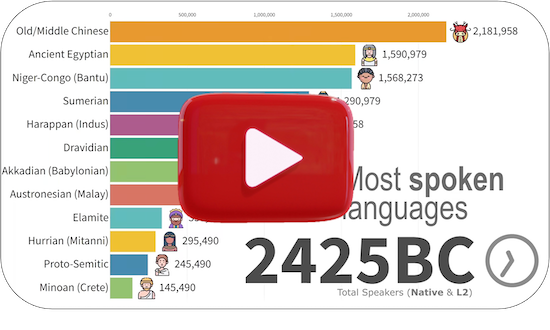
The evolution of the world’s languages
Check out the evolution of the world's most spoken languages from 2500 BC to...
Latest Guests News

Newsletter Newslettter We are pleased to supply you with the latest edition of Client Alert, which...