- 234 Balaclava Road, Caulfield North VIC 3161
- contactus@guests.com.au
- (03) 9509 7033
Government to ‘put to bed’ uncertainties with TRIS
As part of its raft of slated changes, the government has foreshadowed a legislative change that will confirm ….

…. what the classification of a transition to retirement income stream is where a member has satisfied a full condition of release, says a technical expert.
SuperConcepts general manager of technical services and education Peter Burgess says it looks likely that a legislative change will be made to “ensure a TRIS, which has automatically been converted to an account-based pension because the member has satisfied a full condition of release, will no longer be classified as a TRIS”.
“This is a common sense move and will ensure these pensions continue to be entitled to an earnings tax exemption post 30 June 2017,” he said.
Mr Burgess said if this change is implemented, it will “put to bed once and for all the argument that once a TRIS always a TRIS”.
Other slated changes in relation to the CGT relief rules for transition to retirement income streams appear consistent with the ATO’s law companion guides.
“In other words, it appears likely that a legislative change will be made so that a segregated TRIS will not be required to transfer amounts to the accumulation phase in order to be eligible for CGT relief,” Mr Burgess said.
As reported by SMSF Adviser last week, Minister for Revenue and Financial Services Kelly O’Dwyer said in a letter that the government intends to “make a number of minor and technical changes to the legislation to ensure that the legislation operates as was intended”.
Ms O’Dwyer said the government plans to legislate the various changes in the winter sittings of Parliament to ensure they are enacted by 1 July 2017.
MIRANDA BROWNLEE
Monday, 03 April 2017
www.smsfadviser.com
Report tips housing price spikes to wipe out super savings
Declining outright home ownership will effectively wipe out superannuation savings of some Australians, leading to a higher reliance on the government and taxpayers in retirement, according to a recent report.

The AIST report shows the declining home ownership due to deteriorating affordability will expose the inadequacy of Australia’s retirement income system, should the trend continue.
Economist Saul Eslake said there is little to suggest the trend will stop, leaving retirees in the next three or four decades in a precarious position.
“An increasing proportion of Australians will reach retirement age having either never attained home ownership or still having at least some mortgage debt outstanding on their homes, which they will then rationally pay off using some or all of their superannuation savings,” Mr Eslake said.
“Failure to address the ongoing deterioration in housing affordability will condemn future generations of Australians to poorer standards of living in retirement, and ultimately result in increased demands for higher levels of financial assistance to retirees, leading in turn to a higher burden of taxation on the diminishing proportion of the Australian population who will still be working.”
Statistics from the ABS show that overall home ownership rates have dipped by 5.5 points since 1966, with nearly half of the drop occurring from 2001.
A more disturbing trend follows those who have ‘outright’ home ownership – those who have paid off their mortgages – from a peak of 61.7 per cent in 1996 to 46.7 per cent in 2014, a drop of 15 points.
“These prospects should encourage Australia’s current generation of political leaders to give more thought to what can and should be done to ameliorate or reverse the long-term decline in home ownership rates among people currently aged between their mid-20s and their mid-50s,” Mr Eslake said.
JOTHAM LIAN
Thursday, 30 March 2017
www.smsfadviser.com
Impending GST changes good news for SMEs
Two mid-tier partners have said that the changes to GST introduced to Parliament last week is a good first step in helping Australian SMEs compete with overseas entities.

Changes to Goods and Services Tax (GST) collection online were introduced to the Parliament last week, which will see GST applied to low-value imported goods up to $1,000.
“The government understands Australians are increasingly shopping online from overseas vendors who are able to offer items without tax,” Small Business Minister Michael McCormack said.
“This means goods they provide can be cheaper than those offered by Australian businesses, giving an unfair advantage to foreign businesses. For many Australian small businesses, this has an impact on competitiveness as consumers flock to purchase cheaper imports.”
The legislation will require overseas vendors, electronic distribution platforms and goods forwarders with an Australian turnover of $75,000 or more to register for, collect and remit GST for low-value goods supplied to consumers in Australia.
The legislation will come into effect on 1 July 2017.
Bentleys’ Perth taxation and small business director, Ross Prosper, told Accountants Daily that the changes are a “great start” in helping SMEs succeed.
“Introducing the GST will mean those higher valued goods, $500 to $1,000, will look to the consumer to be more price-competitive now in Australia so ideally, they’ll be spending more of their Australian dollars with Australian businesses,” Mr Prosper said.
“It’s going someway to leveling the playing field between Australian-domiciled entities and overseas entities.”
BDO tax partner Fady Abi Abdallah also said that the changes are positive, but has concerns over compliance.
“These changes represent the latest measure in the government’s efforts to modernise the GST regime by ensuring that revenue collection remains in line with how the consumers of today buy goods, while at the same time attempt to address Australian business concerns dealing with offshore suppliers having a competitive advantage,” Mr Abdallah said.
“The real test is just how cooperative offshore suppliers will be in complying with these amendments.”
LARA BULLOCK
Wednesday, 22 February 2017
www.accountantsdaily.com.au
Tax debt release applications refused
The Administrative Appeals Tribunal (AAT) has recently refused the applications of two individuals who sought to be released from their tax debts under the tax law.

Case 1
An individual suffering from Parkinson’s disease had received income protection policy payments and sought to be relieved from the related tax debts, which totaled $130,416. He said he was unable to dispose of his home or an investment property to pay the debts, as there were mortgages over the properties in favour of his wife. The individual also argued that selling the properties would compound his illness and make it more difficult to meet his living needs. The AAT said the taxpayer did not make proper provisions to meet his tax liabilities and preferred to pay his other debts. Accordingly, relief was not granted.
Case 2
A Sunshine Coast real estate agent sought to be relieved from his tax debts, which totalled $437,681. He argued he had an outstanding compliance history and that his circumstances were the result of a catastrophic financial event in 2005. The Commissioner pointed to the taxpayer’s “unusually high level of discretionary spending, including on holidays, dining out and entertainment, which could be reduced”. The AAT said the taxpayer had a “poor compliance history” and agreed with the Commissioner’s description of his discretionary spending. The AAT was of the view that the taxpayer “simply gave priority to other matters and ignored his tax obligations”. The AAT accordingly refused the application for relief.
AcctWeb
Travel expense and transport of bulky tools claim denied
An individual has been unsuccessful before the Administrative Appeals Tribunal claiming work-related travel expenses.

The individual was a sheet metal worker whose home was located some 60 km from his employer’s main work site.
The worker argued that his employer required him to supply his own tools and that they were too bulky to be transported to work other than by car. He also submitted that his employer did not provide adequate secure storage facilities for his tools. In refusing the taxpayer’s claim, the Tribunal noted it was the taxpayer’s own admission that it was his own personal choice to transport his various hand tools out of security concerns. The Tribunal also said the taxpayer’s security concerns were “not supported by objective evidence”. The taxpayer’s claim was therefore refused.
The Australian Taxation Office (ATO) reminds individuals that in certain circumstances it will contact employers to verify employees’ claims. In this case, the ATO contacted the taxpayer’s employer to check his claims, including whether the employer supplied safe storage facilities.
An employer might consider their obligations under workplace agreements or union claims before replying to ATO. Hence the answer is not what the taxpayers hopes for.
AcctWeb
New law sheds light on global tax issues
Yesterday, the government passed the Diverted Profits Tax through the Senate, however one of the major accounting bodies has highlighted that multinational tax avoidance is an issue that needs to be dealt with globally.

The Diverted Profits Tax, which passed through the Senate on Monday, will commence on 1 July 2017 and is expected to raise $100 million in revenue a year from 2018-19.
The Diverted Profits Tax, which was announced in the 2016-17 Budget, targets multinationals that enter into arrangements to divert their Australian profits to offshore-related parties in order to avoid paying Australian tax.
General manager of technical policy at the IPA, Tony Greco, told Accountants Daily that this latest tax is part of a wider crackdown on multinationals.
“This profits diversion tax is one of two or three things done recently. The first was Multinational Anti-Avoidance Law (MAAL), and then there's the Diverted Profits Tax and country-by-country reporting,” Mr Greco said.
“These measures are quite broad, extensive and complex, so one would have to argue that it is a move in the right direction as far as the Australian government is concerned.”
While this is positive, Mr Greco said that this is a global issue that should be dealt with from an Organisation for Economic Co-operation and Development (OECD) level.
“It's what we're going to end up with if every country implements their own rules, then there's potentially going to be problems where a multinational is taxed twice as much in multiple countries under different rules,” he said.
“Ideally we need to fix this on a global basis, but we can't wait for the OECD to finalise its action plans when money's tight and Australia's been running deceits. Everyone's been calling on the government to act, so it has to be done sooner rather than later.”
While waiting for the OECD to make progress, Mr Greco said that Australia is taking these steps to soften the blow.
“While the OECD tries to finalise measures, countries like Australia have decided to preempt some of those base erosion and profit shifting announcements and effectively address the leakage. We all know it’s here,” he said.
“Effectively, they're tightening the net on multinationals because they're structured in such a way where they can avoid tax on their activities. These measures are trying to address that leakage ahead of the BEPS Action Plan coming to fruition.”
LARA BULLOCK
Wednesday, 29 March 2017
www.accountantsdaily.com.au
More ATO downtime looms ahead of tax time
One national accounting network has accepted the need for additional downtime in the wake of the ATO's massive digital crash, but is demanding that the ATO ensures a “robust IT platform” for accountants as we move in to tax time.

Earlier this month the ATO announced additional system maintenance in order to install its new storage area network, replacing the system that was the cause of the unplanned outages in December 2016 and February 2017.
The extra downtime includes this weekend, Easter weekend and the first weekend of May.
H&R Block tax communications director Mark Chapman said that while weekend downtime is nothing out of the ordinary, some accountants will feel the impact of these extra outages.
“The ATO is normally very careful to schedule downtime over weekends and also over public holidays, and they do it pretty regularly all throughout the year, so it’s not something that's unusual,” he said.
“Obviously there will be accountants working over the weekend who would be affected by that, but I think it’s fair to say that for the vast majority of accountants, who tend not to work on weekends or holidays, they actually would welcome the ATO going offline at that time because it’s a great deal, more attractive than going down during the working week.”
Mr Chapman said that while the downtime will inconvenience some accountants, the extra maintenance is necessary in the long run.
“We have to recognise that what they're going to do offline is to fix the issues that caused those outages in December and February,” he said.
“That's an absolutely top priority piece of work and if that means that the ATO has to put up the closed sign for a few days over Easter and over a couple of other weekends, then that's a price well worth paying if it means that we'll have stability going forward.”
Moving forward, Mr Chapman said the industry wants the ATO to be able to guarantee that outages such as those in December 2016 and February 2017 won’t happen again.
“The one thing that we want from the ATO now is to see a stable, robust IT platform as we go into tax time,” he said.
“It would've been an absolute disaster if this had happened in July or August, so we just hope that the action that the ATO is taking now will fix the problem once and for all and that we can then look forward to a stress-free tax season.”
LARA BULLOCK
Friday, 31 March 2017
www.accountantsdaily.com.au
FBT Reminder – Odometer Reading
Anybody who has a FBT obligation should take an odometer reading of motor vehicles.
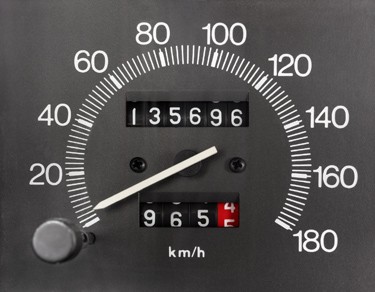
This reading is one of the annual requirements of the logbook method of fringe benefits calculations for the Fringe Benefits Tax period ending 31st March 2017.
Remember also that there are quite a few types of FBT and that Fringe Benefits Tax (FBT) law includes various categories of fringe benefits and specific valuation rules for each category. The list below outlines what needs to be considered.
You will need to pay FBT even if the benefit is provided to an associate of your employee or by a third party under an arrangement with you.
Benefits that attract FBT are:
- Car fringe benefits
- Car parking fringe benefits
- Entertainment and fringe benefits
- Expense payment fringe benefits
- Loan fringe benefits
- Debt waiver fringe benefits
- Housing fringe benefits
- Board fringe benefits
- Living away from home allowance fringe benefits
- Property fringe benefits (including property, goods or shares)
- Residual fringe benefits (benefits not covered by the above categories)
AcctWeb
ATO on ‘aggressive’ debt recovery hunt
The ATO is showing no signs of easing up on its crackdown on companies owing money and pushing them into insolvency if required, with one mid-tier firm citing a recent spike in insolvencies.

Last week, solvency and forensic accounting firm Worrells released The Worrells Insolvency Report 2015-16.
Looking back over the last 10 years, the report showed that the total number of insolvencies in Australia spiked in 2008-09 as a result of the GFC. After remaining steadily high through to 2012-13, the number of insolvencies dropped in 2014-15.
Now, interestingly, the numbers are beginning to spike again, and this is because of the ATO’s crackdown on debt according to Worrells partner Chris Cook.
“There are businesses out there that, if left to their own devices, just sit there in no man’s land with debt owing. So there are businesses, as unfortunate as it is, that sometimes need to look at liquidation as an alternative,” Mr Cook told Accountants Daily.
“The ATO is certainly a lot more aggressive than they used to be, they're a more active debt collector than they used to be. I don't see that necessarily as a bad thing, as long as they are compassionate to the businesses.”
The report showed that the number of applications the ATO lodged with the Federal Court of Australia to wind up a company increased dramatically in May 2015, signalling the beginning of their crackdown.
“The number goes up from April to May [2015] from around 100 up to about 550,” Mr Cook said.
“From there it stays fairly high for six months, then it goes up and down a little bit, and then in June last year, which is where our data finishes for the purposes of this report, it finishes at about 300.”
While the data from June 2016 isn’t available yet, Mr Cook said that the ATO is far from done with its crackdown.
“The ATO is not slowing down at this stage and to be fair, sometimes that needs to happen,” he said.
“I don’t think this is a short term thing. I think the ATO is going to continue with this aggressive debt collection campaign, and I don’t believe that's a bad thing, as long as it’s done properly.”
LARA BULLOCK
Wednesday, 22 March 2017
www.accountantsdaily.com.au
Client Alert – April 2017

In this issue:
- Ride-sharing drivers must register for GST
- Tax offset for spouse super contributions: changes from 1 July 2017
- ATO targets restaurants and cafes, hair and beauty businesses in cash economy crackdown
- Super reforms: $1.6 million transfer balance cap and death benefit pensions
- No deduction for carried-forward company losses
- Overseas income not exempt from Australian income tax
- GST on low-value imported goods
- Alternative assessments not tentative: Federal Court
Latest Industry News

How Do I Write Legally Compliant Terms and Conditions for My Business?
Terms and conditions bind your customers only where they actively accept them, so a tick box at checkout holds...

Paid parental leave super contributions have started
From July 2026, the new Paid Parental Leave Superannuation Contribution (PPLSC) has started. From...

If the business is no longer profitable, and is unlikely to be profitable in the future, your best option may...
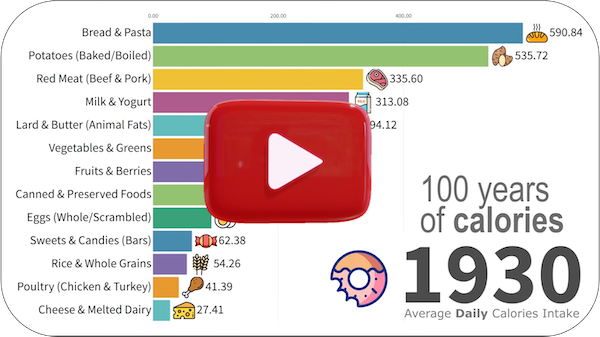
Check out the this visualization, which tracks the evolution of dietary calorie intake from 1930 to...

Taxpayer given 35% penalty for BAS recklessness
Following an application for a refund of nearly $94,000, the Administrative Review Tribunal has set aside an...

SMEs warned as ATO ramps up tax debt collection
One insolvency specialist has emphasised the importance of small businesses engaging their accountants to stay...

Does Your Small Business Need to Follow AML Privacy Rules?
Compliance with new anti-money laundering (AML) laws may subject your small business to additional privacy...

Don’t get caught out at tax time with your multiples jobs
Picking up a second job, holding multiple part-time roles, or doing gig work is now part of everyday life. But...

Global companies turn to cost-cutting amid ongoing inflation
Rising operating costs and persistent inflation are placing renewed pressure on businesses worldwide, despite...

Warning for early lodger this tax time!
The ATO has a clear message this year: slow down and get it right. Early lodgers are far more likely to make...

ATO no longer treating debt the same as during COVID
One expert has stressed the importance of tax agents reminding their clients that the ATO is no longer as...

The evolution of the world’s languages
Check out the evolution of the world's most spoken languages from 2500 BC to...
Latest Guests News
Newsletter Newslettter We are pleased to supply you with the latest edition of Client Alert, which...