- 234 Balaclava Road, Caulfield North VIC 3161
- contactus@guests.com.au
- (03) 9509 7033
Australian population figures
The following information covers Australia's recent population trends and movements.

SEPTEMBER KEY FIGURES
|
|
Population at end Sep qtr 2016 |
Change over previous year |
Change over previous year |
|
PRELIMINARY DATA |
'000 |
'000 |
% |
|
|
|||
|
New South Wales |
7 757.8 |
109.6 |
1.4 |
|
Victoria |
6 100.9 |
127.5 |
2.1 |
|
Queensland |
4 860.4 |
67.7 |
1.4 |
|
South Australia |
1 710.8 |
9.4 |
0.6 |
|
Western Australia |
2 623.2 |
25.2 |
1.0 |
|
Tasmania |
519.8 |
2.6 |
0.5 |
|
Northern Territory |
245.7 |
0.8 |
0.3 |
|
Australian Capital Territory |
398.3 |
5.8 |
1.5 |
|
Australia(a) |
24 220.2 |
348.7 |
1.5 |
|
|
|||
|
(a) Includes Other Territories comprising Jervis Bay Territory, Christmas Island and the Cocos (Keeling) Islands. |
|||

SEPTEMBER KEY POINTS
ESTIMATED RESIDENT POPULATION
§ The preliminary estimated resident population (ERP) of Australia at 30 September 2016 was 24,220,200 people. This is an increase of 348,700 people since 30 September 2015, and 91,300 people since 30 June 2016.
§ The preliminary estimate of natural increase for the year ended 30 September 2016 (155,500 people) was 5.1%, or 7,500 people higher than the natural increase recorded for the year ended 30 September 2015 (148,000 people).
§ The preliminary estimate of net overseas migration (NOM) for the year ended 30 September 2016 (193,200 people) was 8.9%, or 15,800 people higher than the net overseas migration recorded for the year ended 30 September 2015 (177,400 people).
POPULATION GROWTH RATES
§ Australia's population grew by 1.5% during the year ended 30 September 2016.
§ Natural increase and NOM contributed 44.6% and 55.4% respectively to total population growth for the year ended 30 September 2016.
§ All states and territories recorded positive population growth in the year ended 30 September 2016.
§ Victoria recorded the highest growth rate of all states and territories at 2.1%. The Northern Territory recorded the lowest growth rate at 0.3%.
Source: Australian Bureau of Statistics
Higher instant asset write-off threshold for small business extended
The Government will extend the current instant asset write-off ($20,000 threshold) for small business entities (SBEs) by 12 months to 30 June 2018.

The threshold amount was due to return to $1,000 on 1 July 2017. As a result of this announcement, SBEs will be able to immediately deduct purchases of eligible depreciating assets costing less than $20,000 that are acquired between 1 July 2017 and 30 June 2018 and first used or installed ready for use by 30 June 2018 for a taxable purpose. Only a few assets are not eligible for the instant asset write-off (or other simplified depreciation rules), for example horticultural plants and in-house software.
Assets valued at $20,000 or more (which cannot be immediately deducted) can continue to be placed into the general small business pool (the pool) and depreciated at 15% in the first income year and 30% each income year thereafter. The pool can also be immediately deducted if the balance is less than $20,000 over this period (including existing pools).
The instant asset write-off threshold and the threshold for immediate deductibility of the balance of the pool will revert to $1,000 on 1 July 2018.
The aggregated turnover threshold for a SBE will increase to $10 million (from 2016–2017). Accordingly, SBEs with aggregated turnover between $2 million and $10 million will benefit from the $20,000 instant asset write-off concession.
AcctWeb
SMSF trustees told to take action on contributions
With 30 June 2017 now looming, the SMSF Association has urged trustees looking to make concessional or non-concessional contributions not to delay until the last minute.

SMSF Association chief executive John Maroney says SMSF trustees who want to take advantage of the higher contributions that end on 30 June 2017 need to ensure any additional money is in their SMSF bank account before the end of the financial year.
“Trustees sometimes leave it until the last minute to make either concessional or non-concessional contributions, only to discover they have left it too late and those contributions become part of the following financial year’s contribution cap,” Mr Maroney said.
“This year, it’s particularly important they move early with the lower contribution caps taking effect on 1 July 2017. Remember, too, 30 June falls on a Friday, so don’t leave contributions till the end of the last week of June to make a deposit because transactions can take up to two or three days to clear and your funds could become a 2017-18 financial year contribution.”
Mr Maroney said SMSF practitioners need to ensure their clients are still within their current caps for either concessional or non-concessional contributions.
“It can happen that trustees can make a mistake with their contributions, so take the opportunity before 30 June to make sure you are inside the legal limits,” he said.
“Although excess contributions, either concessional or non-concessional, do not have the strong tax penalties that they used to have, going over the caps is still an unneeded compliance issue that is best avoided with the right planning.”
STAFF REPORTER
Tuesday, 6th June 2017
www.smsfadviser.com
Guests Accounting appoints new director: Ha Nguyen
The Directors of Guests Accounting are pleased to announce the appointment of Ha Nguyen (BBus MBA CPA) as a Director.
Ha has been with Guests for 15 years and has acted in a number of senior roles. She is a highly qualified professional who possesses extensive analytical skills in management accounting and is a technical expert in cloud accounting technologies.
Coupled with in depth knowledge as a tax and business advisor, Ha acts on a number of professional board committees and has regularly lectured at various Universities.

Client Alert – June 2017

In this issue:
- Tax assistance for people affected by Cyclone Debbie
- ATO adds value to developing financial literacy
- Does your business import or export goods and services?
- Senate Committee holds corporate tax avoidance hearing
- Higher education HELP changes: faster repayments and threshold changes
- Super guarantee non-compliance: Senate Committee report
- Illegal SMSF early access scheme leads to $6,000 fine
ATO Scam Alert

You should be wary of emails, faxes, SMS and phone calls claiming to be from the ATO.
“If you receive a suspicious email claiming to be from the ATO, do not click on any links, open attachments or respond to the sender.”
These could be scams designed to trick you into paying money or providing personal information.
Once they have your information, scammers may use it to:
- access your bank accounts
- take out loans in your name
- lodge false tax returns or BAS statements
- claim Centrelink or other benefits.
The ATO will never:
- threaten you with immediate arrest
- ask you to pay money to receive a refund or payment from us
- ask you to pay a debt via iTunes vouchers, or pre-paid credit card or store gift cards
- ask you to provide personal information, such as your tax file number (TFN) or credit card number, via email or SMS
- ask you to pay money into a personal bank account
- direct you to download files from the internet, or open attachments in unsolicited emails.
If you are ever unsure please call our office or contact the ATO on 1800 008 540.
The three core pillars of this year’s budget
The following links give you access to the specific issues and topics addressed in the 2017-18 Budget.

While there is much information in the other two Budget articles the following three links provide far more detail, via a number of sub pages, on the three core pillars of this year's budget.
When on the site click on the drop down in the right panel for access to sub-pages or use the Next button at the bottom of each sub-page.
-
Stronger growth (16 sub pages)
-
Guaranteeing the essentials (17 sub pages)
-
Living within our means (12 sub pages)
budget.gov.au
Federal Budget – 2017-18 – Overview
Comprehensive Budget overview : 27 sections covering every aspect of this year's Budget plus 6 Appendix of support information.
Through this link you'll be able to access a comprehensive breakdown of this years Budget.
There are 27 sections that can be accessed by either a drop down menu in the right panel or a Next button at the bottom of each section.
The main themes of this year's Budget are:
- Stronger growth to deliver more and better jobs
- Guaranteeing the essential services that Australians rely on
- Tracking cost of living pressures
- Ensuring the Government lives within its means
- Budget at a glance
- Budget aggregates and major economic parameters
Source: budget.gov.au
Federal Budget – 2017-18 – Budget documents
For those who like to 'get under the bonnet'
Click on this link if you'd like to access far more detail through:
- Overviews
- Budget speech
- Portfolio Papers
- Budget papers
- Ministerial Statements
- Fact sheets
Plus for the true researcher
Budget.gov.au
NTAA’s 2017-18 Budget Update – May 2017
The National Tax & Accountants’ Association (NTAA) has issued a summary of the federal government’s 2017-18 budget, handed down in parliament last night.
View, print or download NTAA’s 2017-18 Federal Budget Update
Latest Industry News

How Do I Write Legally Compliant Terms and Conditions for My Business?
Terms and conditions bind your customers only where they actively accept them, so a tick box at checkout holds...

Paid parental leave super contributions have started
From July 2026, the new Paid Parental Leave Superannuation Contribution (PPLSC) has started. From...

If the business is no longer profitable, and is unlikely to be profitable in the future, your best option may...
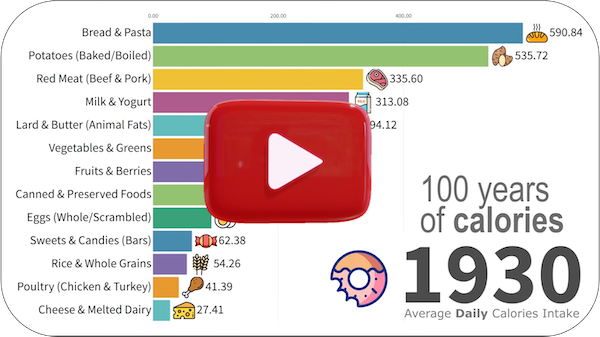
Check out the this visualization, which tracks the evolution of dietary calorie intake from 1930 to...

Taxpayer given 35% penalty for BAS recklessness
Following an application for a refund of nearly $94,000, the Administrative Review Tribunal has set aside an...

SMEs warned as ATO ramps up tax debt collection
One insolvency specialist has emphasised the importance of small businesses engaging their accountants to stay...

Does Your Small Business Need to Follow AML Privacy Rules?
Compliance with new anti-money laundering (AML) laws may subject your small business to additional privacy...

Don’t get caught out at tax time with your multiples jobs
Picking up a second job, holding multiple part-time roles, or doing gig work is now part of everyday life. But...

Global companies turn to cost-cutting amid ongoing inflation
Rising operating costs and persistent inflation are placing renewed pressure on businesses worldwide, despite...

Warning for early lodger this tax time!
The ATO has a clear message this year: slow down and get it right. Early lodgers are far more likely to make...

ATO no longer treating debt the same as during COVID
One expert has stressed the importance of tax agents reminding their clients that the ATO is no longer as...
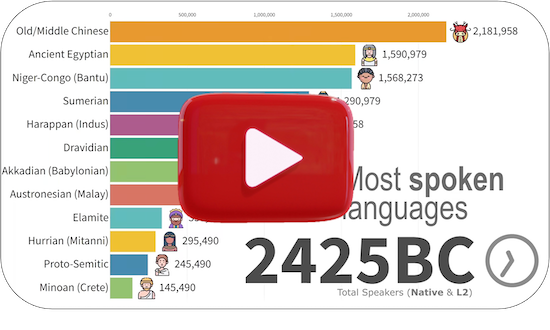
The evolution of the world’s languages
Check out the evolution of the world's most spoken languages from 2500 BC to...
Latest Guests News
Newsletter Newslettter We are pleased to supply you with the latest edition of Client Alert, which...