- 234 Balaclava Road, Caulfield North VIC 3161
- contactus@guests.com.au
- (03) 9509 7033
Caution advised on best interests duty with cryptocurrencies
While cryptocurrencies may not be considered financial products, authorised representatives and licensees are reminded related advice is not exempt from best interests duty.

Cryptocurrencies such as bitcoin and ethereum are becoming increasingly popular with accountants’ clients, and compliance consultants Assured Support is advising caution on best interests duty as the regulators increasingly circle.
“If you’re an adviser who doesn’t want to recommend cryptocurrencies but your client comes and asks you to include them in the portfolio, then you have a best interests duty to address that,” Assured Support principal Sean Graham told sister publication ifa.
“There are some advisers saying they can recommend it because it’s not a financial product, well, it may be in some circumstances and if you read the tea leaves, it’s going to be more highly regulated in the future,” he added.
You can read more about the implications for licensed advisers here.
The ATO has cryptocurrency in its sights. It is currently engaging in external consultation in a bid to monitor tax compliance and ensure general awareness of the associated tax obligations.
Accounting executives like HLB Mann Judd’s tax consulting partner Peter Bembrick expect regulation and surveillance monitoring to increase significantly.
This is particularly concerning for those who don’t understand that cryptocurrencies with characteristics similar to bitcoin are an asset for capital gains tax (CGT) purposes. The ATO issued confirmation of this last year.
Accountants with SMSF clients who are looking to invest in cryptocurrencies should also be certain the fund is permitted to hold it. You can read more about compliance do's and don’ts with superannuation here.
By: Killian Plastow and Katarina Taurian
30 JANUARY 2018
accountantsdaily.com.au
Business confidence hits 5-month high: NAB
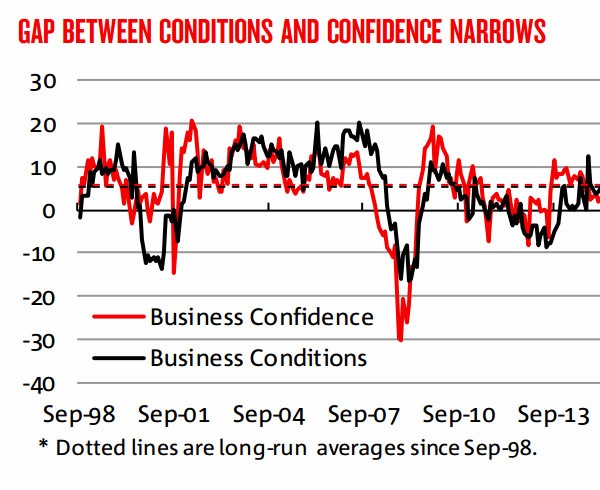
NAB’s business confidence index jumped four points in December as business confidence and business conditions begin to converge.

According to the latest results of NAB’s monthly business survey, business confidence has “almost” caught up to business conditions.
The business confidence index rose four points to 11 index points in the December 2017, the highest level since July 2017 – while the business conditions index remained unchanged at 13 points.
“This has helped to narrow the perplexing gap between business conditions and confidence evident over the past couple of years, and is an encouraging signal for investment,” NAB group chief economist Alan Oster said in a statement.
Source: NAB
The higher reading in business confidence was “perhaps driven by a stronger global economic backdrop”, as well as strong conditions across all industries bar retail.
“The construction industry is performing well, thanks to support from a large pipeline of residential construction and stronger non-residential building approvals,” Mr Oster said.
“Mining has also gone from being a major drag on the index to experiencing above average business conditions.
“The retail sector meanwhile continues to struggle with slightly negative business conditions, indicating a modest rate of contraction in the industry.”
Retail stood as the only industry that was a “consistent underperformer” and reporting negative business conditions.
Mr Oster also pointed out that employment growth figures were overstated and falling from its “current extraordinary heights”.
“Official employment figures show extraordinary employment growth of over 400,000 over the year to December,” he said.
“The NAB Business Survey employment index on the other hand has not experienced the same wild swings in recent years, and tends to suggest the official figures may be currently ‘overstating’ the degree of job creation.
“The employment index implies employment growth of a little less than 300,000 at present, and a slowdown to around 240,000 per annum over the next six months, or a monthly pace of around 20,000 per month.”
BY JESSICA YUN
Source: NAB
Wednesday, 31 January 2018
www.investordaily.com.au
Single Touch Payroll
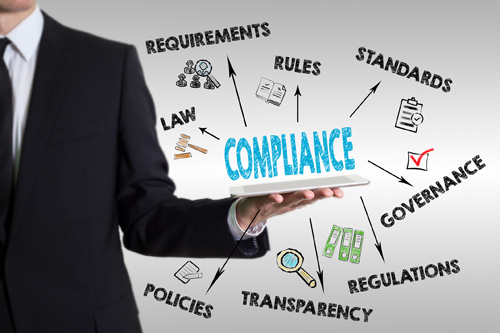
Single Touch Payroll refers to the way many businesses will have to manage their PAYG obligations from April 2018. In all probability all business will have to do so from July 1 2019 if the necessary legislation passes through government.
The following two resources will further explain this change and what it means to you. The first is a PDF we have prepared and the second is an ATO video.
Single Touch Payroll
Small business slips on lodgement deadlines
On-time lodgement slipped slightly for small businesses last financial year while debts owing spiked, prompting the ATO to consider new strategies to encourage compliance.

In the 2016/17 financial year, 75 per cent of small businesses lodged their statements on time, which is slightly lower compared to previous years.
Further, Australian small businesses owed about $13.9 billion in collectable tax debt at 30 June 2017, which is up from 7 per cent on the previous year.
Small businesses accounted for around 67 per cent of total collectable debt, with the construction industry having the lowest rate of on-time payment.
The ATO is encouraging those who are struggling to meet their debt repayments to come forward to negotiate a favourable outcome for both parties.
Those small business owners facing mental health issues can also engage in the ATO’s support services.
“ATO support is available for business operators facing health issues and includes deferred payment and lodgement arrangements where this will help them get back on their feet,” the tax office said.
The ATO also found the proportion of income tax returns received electronically from small businesses slightly increased on 2015/16 numbers at 96 per cent.
By: Katarina Taurian
01 NOVEMBER 2017
accountantsdaily.com.au
SMSFs warned on ‘ticking time bomb’ with outdated deeds
A surprising number of older SMSF deeds pre-dating the 2008 financial year still remain, some of which contain inappropriate clauses exposing members to unforeseen risks, an industry lawyer warns.

DBA Lawyers senior associate William Fettes said while reviewing and updating a trust deed can be a costly exercise, it is generally recommended that SMSF trust deeds are updated every four or five years or when there is a major legislative change.
The last major legislative change to superannuation that warranted a wholesale update, he said, occurred in mid-2007.
“[So] I think these pre-FY 2008 deeds are very much in the category where it's a no brainer — it's strongly encouraged that you would get an update,” said Mr Fettes.
“The ones that are even older than that are going to be worse. They really can be ticking time bombs. For example, where you've got some sort of principal employer entity there that's associated with the fund.”
The client may not realise it, he said, but if they, for example, deregister that company, some deeds have provisions that say the fund just has to be wound up.
“There's no way around it, and you end up tainting the fund significantly without even really realising it,” he said.
“Occasionally you can resurrect the company in order to try and fix that, but that's a whole big exercise in itself to deal with ASIC around resurrecting a company, and so it can be a real ticking time bomb for clients that have those really old deeds and so we still see plenty of that around.”
While it may not be strictly necessary for a trust deed to be updated following the more recent changes to the system, SMSF trustees may still want to in order to take advantage of certain strategies, he said.
“There is an argument that you can be fully compliant with the law because a lot of the major [changes] that were implemented with the tax provisions, around the transfer balance cap, the different interactions with the caps and a lot of the other concessions, are imposed by tax law. But you're not going to have the type of flexibility and features that you necessarily want in order to take full advantage of the best strategies and so forth.”
By: Miranda Brownlee
22 NOVEMBER 2017
smsfadviser.com
68% of SMEs ‘significantly stressed,’ 85% rely on accountants
A survey from the Institute of Public Accountants has found that more than a quarter of SMEs wouldn’t have gone into business if they realised the associated stress, and that a third of those surveyed wish they had engaged an accountant earlier.

After its small business roadshow and survey of about 250 SMEs, the Institute of Public Accountants (IPA) has finalised its preliminary research into the links between the mental health of SME clients and accountants, about six months after announcing its intentions to launch the major research project in June.
According to the survey results, 68 per cent of small businesses said that they are “significantly stressed,” and 69 per cent said that their small business is the primary reason for this stress.
Further, 85 per cent of the respondents said that engaging a public accountant significantly reduced their level of stress associated with their small business.
“Flipping that around, we were also surprised that over a quarter of small businesses told us that if they knew then, what they know now, they wouldn’t have gone into small business. That is quite alarming. That figure is quite an indictment on the economic and policy settings,” said IPA chief executive Andrew Conway.
Thirty-five per cent of those surveyed said that they should have engaged a professional accountant earlier in the life of their business.
The survey also found that over 93 per cent of small businesses rely on a public accountant for advice beyond standard compliance and tax-related matters.
The full findings of the research will be released at the IPA’s National Congress on the Gold Coast this week.
By: Katarina Taurian
21 NOVEMBER 2017
accountantsdaily.com.au
Statutory wills are underutilised in estate planning
Statutory wills are being neglected in situations where a family member has lost capacity with the absence of an established will, according to Australian Unity Trustees.

Australian Unity Trustee’s national manager of estate planning, Anna Hacker said one of the main issues she sees as an estate planner is families who “don’t realise” that they can establish a statutory will in the case that their loved one had not formed a will prior to developing the disease.
A statutory will functions the same as a personal will, however is proposed by someone else, she explained.
“I think it's certainly an important thing for people to remember. A lot of people don't realise you can do it [propose a statutory will], and they think: ‘oh no, well, mum's got dementia, so there's no way we can do a will now’.
“[However] the reality is you can and it can mean that the court can look at it in a much more objective way and really think about what that person wanted whereas after someone passes away there's more litigation.”
She said that, to her, “it makes a lot more sense” to propose a statutory will before the parent or family member passes away, especially if “you know it’s going to be a fight”.
Pointing to a recent case where a young child had severe physical disabilities due to problems at birth, Ms Hacker said statutory wills don’t just apply to the elderly.
She explained that this child had received $3.2 million in damages against the hospital which had been used to produce an income and buy a house for him, his siblings and his mother. His father had had little to do with him and his mother was the primary carer.
“The child was about to undergo serious surgery and an application was made for a statutory will to be made on his behalf, as he had never had capacity to create his own will.
“The court eventually approved a will that left the majority of the estate to the mother and siblings, with a small portion allocated to the father.
“Without the statutory will, the father would have been able to claim part of the family home and the funds, which would have seriously affected the other children and their mother.”
Ms Hacker added that while statutory wills are often considered as a last resort, there can be a greater role for them in estate planning.
“If a person has lost capacity, or indeed, never had capacity, it is entirely appropriate to look at whether a statutory will can be made.
“Often, statutory will applications are accepted by all parties and can allow for inclusion of strategies such as discretionary testamentary trusts,” she continued.
By: Lucy Dean
23 NOVEMBER 2017
smsfadviser.com
Taxation ruling on commercial website deductibility
An unfavourable opinion from the Australian Taxation Office sets out the tax deductibility of expenditure incurred in acquiring, developing, maintaining or modifying a commercial website for use in carrying on a business.

Broadly, the ruling explains that acquiring or developing a commercial website for a new or existing business is considered to be a capital expense, and is therefore not deductible. “Developing” could include internal labour costs. On the other hand, maintaining a website, including annual licence fees, remedying software faults, is generally a revenue expense, so may be deductible.
If you have a website and have incurred cost to enhance it, you need to carefully analyse all elements.
If there is new functionality or modification, even if piecemeal or incremental, this is likely to be capital.
Creating a presence on social media is deductible where the cost is trivial.
Unfortunately, this opinion creates many shades of grey to the characteristics of website costs beyond the knowledge of most small business people.
AcctWeb
Australia’s vital statistics
A truly fascinating set of numbers about our great country. Almost 150 different items covered.

Please click on the following link to see all this interesting information. The areas covered are:
- Overview
- Markets
- GDP
- Labour
- Prices
- Money
- Trade
- Government
- Business
- Consumer
- Housing
- Taxes
- Climate
Access all this data here.
tradingeconomics.com
Treasury finds Australia ‘increasingly uncompetitive’ as US moves on tax plans
Treasury has released a research paper detailing the implications of the US corporate tax reforms, highlighting its real potential to quash Australia’s competitiveness and stifle local wages.

The US recently released a framework for US tax reform, including a reduction in the federal corporate tax rate from 35 to 20 per cent, sparking concerns that it might attract an investment boom, leaving Australia behind.
The research paper, US Corporate Tax Reform: Implications for the rest of the world, raises the concern that an increased investment in the US will result in a permanent reduction in the level of GDP and real wages in Australia.
“The US reforms have the potential to accelerate tax competition between jurisdictions, making Australia’s current corporate tax rate increasingly uncompetitive internationally,” stated the report.
“While the US would experience higher GDP and real wages, other countries, including Australia, could experience a permanent reduction in the level of GDP and real wages unless they take steps to maintain their competitiveness.”
The paper also examined how countries such as the UK, Singapore, and Canada have cut their rates over the past decade in a bid to spur investment and drive economic growth, with the current OECD average at 24 per cent, down from 32 per cent in 2000.
However, Treasurer Scott Morrison believes the Enterprise Tax Plan, which aims to reduce the tax rate to 25 per cent for entities with turnover of up to $50 million, will “shore up our competitiveness on investment”.
“This is why the Turnbull government’s fully-funded Enterprise Tax Plan currently before the Parliament, will act to ensure Australia remains an attractive destination for investment,” said Mr Morrison.
According to Treasury modelling however, the size of the Australian economy will permanently increase by just over 1 per cent in the long term following the 5 per cent reduction in the corporate tax rate.
BDO national tax director Lance Cunningham believes that while tax reforms in Australia will now be a necessity, it has called for rational decision making, while cautioning against “knee jerk reactionary responses”.
“If the government is not careful, the US tax rate cut may result in Australia implementing protectionist counter measures rather than well thought-out tax reform driven by a need to boost the Australian economy,” Mr Cunningham said.
“Whatever the outcome, Australia should refrain from embracing unilateralism which is a path of incoherence and ultimately lower growth.”
By: Jotham Lian
09 NOVEMBER 2017
accountantsdaily.com.au
Latest Industry News

How Do I Write Legally Compliant Terms and Conditions for My Business?
Terms and conditions bind your customers only where they actively accept them, so a tick box at checkout holds...

Paid parental leave super contributions have started
From July 2026, the new Paid Parental Leave Superannuation Contribution (PPLSC) has started. From...

If the business is no longer profitable, and is unlikely to be profitable in the future, your best option may...

Check out the this visualization, which tracks the evolution of dietary calorie intake from 1930 to...

Taxpayer given 35% penalty for BAS recklessness
Following an application for a refund of nearly $94,000, the Administrative Review Tribunal has set aside an...

SMEs warned as ATO ramps up tax debt collection
One insolvency specialist has emphasised the importance of small businesses engaging their accountants to stay...

Does Your Small Business Need to Follow AML Privacy Rules?
Compliance with new anti-money laundering (AML) laws may subject your small business to additional privacy...

Don’t get caught out at tax time with your multiples jobs
Picking up a second job, holding multiple part-time roles, or doing gig work is now part of everyday life. But...

Global companies turn to cost-cutting amid ongoing inflation
Rising operating costs and persistent inflation are placing renewed pressure on businesses worldwide, despite...

Warning for early lodger this tax time!
The ATO has a clear message this year: slow down and get it right. Early lodgers are far more likely to make...

ATO no longer treating debt the same as during COVID
One expert has stressed the importance of tax agents reminding their clients that the ATO is no longer as...
The evolution of the world’s languages
Check out the evolution of the world's most spoken languages from 2500 BC to...
Latest Guests News

Newsletter Newslettter We are pleased to supply you with the latest edition of Client Alert, which...