- 234 Balaclava Road, Caulfield North VIC 3161
- contactus@guests.com.au
- (03) 9509 7033
How financial advice helps create wealth.
An article based on a 16 year study by Vanguard Investments Pty Ltd.

Last month I reported on a 16-year study by Vanguard Investments that found a financial adviser effectively adds around 3% to the value of a client’s portfolio over time.
The real significance of this is that you can have a finance professional take care of one of the most important jobs in your life (funding your retirement) for very little, if any, real cost. This can even be the case for those with smaller portfolios.
However, for many people the main problem is getting started and the cost is often seen as too high or the adviser focus can seem a bit too much on their needs rather than the client.
A major reason for this, unfortunately, is that increased regulation and monitoring has meant advisers have moved to a fee-based model and away from the commissions of yesteryear. This is a good outcome but it has meant advisers have had to increase entry costs which, in turn, has led many potential clients to see these costs as too high. A proverbial Catch 22.
It is because of this sort of conundrum that firms like Vanguard Investments have undertaken long term studies. The outcome from their work is that a WIN/WIN opportunity exists for all.
However, this benefit isn’t just from better investing, though that will often be the case. It’s the more holistic approach that wins the day. Vanguard Investments identify the following areas as those that will generate this positive outcome:
- Suitable asset allocation
- Cost-effective implementation (expense ratios)
- Rebalancing
- Behavioural coaching (Vanguard Investments found this to be the most significant contributor because there are some tasks people struggle with such as budgeting and expense management. Behavioural coaching addresses this issue).
- Tax efficiency (An example here is where an investor with a modest portfolio lost more than $250,000 in value over a 10-12 year period because they thought the three stock brokers they used were looking after tax related issues. They weren’t! If the planner had been involved sooner the outcomes would have been significantly different.)
- Total returns versus income investing.
Finally, the concerns many potential clients have over the cost of financial planning means they delay getting help early enough which, in turn, threatens the retirement outcomes they want to achieve.
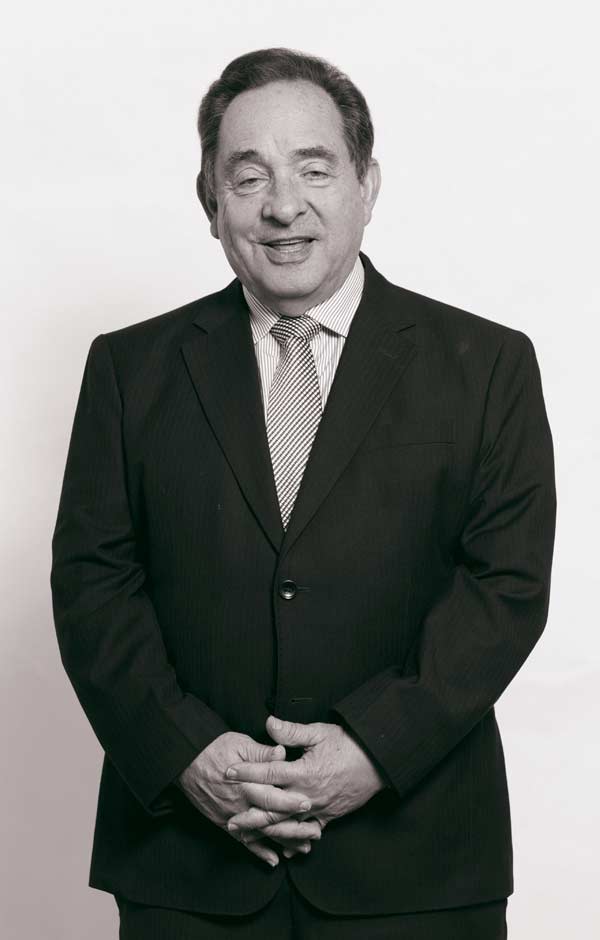
Peter Graham
AcctWeb / PlannerWeb
Identification numbers for directors
The Government has announced a package of reforms to combat phoenix activities, including the introduction of a Director Identification Number (DIN).

Phoenixing involves deliberately transferring assets from a failed or insolvent company to a new company, with the intention to avoid paying the original company’s creditors, tax and employee entitlements (that is, the new company illegally “rises from the ashes” of the indebted company).
The DIN would identify each director with a unique number, allowing regulators to map the relationships directors have with entities and other people.
Expect a lot more about this as the legislation and deadlines unfold.
AcctWeb
ATO claws back $850m in unpaid SG in FY 17-18
Compliance activities undertaken by the ATO in the 2017-18 financial year saw the ATO raise around $850 million in unpaid super entitlements.

Compliance activities undertaken by the ATO in the 2017-18 financial year saw the ATO raise around $850 million in unpaid super entitlements.
ATO deputy commissioner, superannuation, James O’Halloran said that during the 2017-18 financial year, the ATO received around 31,000 employee notifications and contacted approximately 24,000 employers.
“We also completed 19,000 employee-generated cases. Additionally, we initiated a further 13,000 SG audits and reviews based on our risk modelling. Total liabilities raised by this casework were approximately $850 million,” said Mr O’Halloran.
Miranda Brownlee
25 October 2018
smsfadviser.com
Appetite for property in SMSFs shows signs of life despite tough market
Interest in property investment from younger SMSF trustees continue to hold steady despite tighter policy controls around SMSF lending and some banks exiting the space altogether, says one mid-tier firm.

Pitcher Partners managing director Michael Minter said while the SMSF lending space has faced much tighter lending controls this year, particularly following the royal commission, the idea of using super to buy property within a super fund remains appealing to SMSFs from generation X and Y.
This comes despite the latest data from APRA showing that investor home loan approvals dropped by 12.4 per cent over the quarter, representing 31.1 per cent of new home loan approvals – a total of $117.5 billion.
Interest-only loans now represent 16.2 per cent of new home loan approvals, a 54.9 per cent pe in the last quarter.
While there are important risks to consider, Mr Minter said younger SMSF trustees are still attracted to holding property in super for some of the benefits associated with it, including a lower tax rate on SMSF income, a lower capital gain tax rate and tax deductions such as insurance premiums.
Mr Minter said there are two main types of generation X and Y investors.
“The first is the business owner who currently paid rent, but would prefer to buy a property, and have the rent paid into their super fund. The second wants to build their super balance through strategic property investments by borrowing and gearing,” he said.
He warned that there are important considerations that need to be made before undertaking property investments in super or an SMSF, however.
Practitioners, for example, he said, need to review their client’s financial goals current financial situation and tax obligations.
“Compare their current super fund against running an SMSF. Investment carries risk and the client must decide what level of risk you are comfortable with,” he said.
He also noted that $200,000 is the preferable amount to start an SMSF.
“Before making any property investment, the client should establish a set of investment criteria that they are comfortable with, including whether it’s residential or commercial, local or elsewhere or big or a mix of smaller properties. But whichever approach you adopt, research the options and the market thoroughly,” he said.
SMSF Reporter
23 October 2018
accountantsdaily.com.au
Superannuation gender gap narrowing, research shows
Over the past decade, there has been improvement in the number of women holding superannuation accounts and the size of their superannuation balances compared with that of men, according to a research house.

Research from Roy Morgan indicates that the proportion of women with superannuation has improved with 64.7 per cent of women now holding assets in super, compared to 57.4 per cent of women in 2008.
The proportion of men holding super has also improved but not as significantly, rising from 66.5 per cent in 2008 up to 69 per cent for this year.
The results were based on the Roy Morgan Single Source survey, which has conducted personal interviews with over 500,000 Australians over the past decade.
The survey also indicates that the average balance for women has also grown by 87 per cent, jumping from $68,000 in 2008 up to $127,000 this year.
The average balance for men grew 53 per cent from $115,000 up to $176,000.
According to Roy Morgan, the gap in superannuation balances between women and men has been closing across all age groups in the past decade.
The research shows that the biggest gain was made by the 50 to 59 female group, which improved by 15.2 percentage points, jumping from only 54.5 per cent of the male average in 2008 up to 69.7 per cent in 2018.
The other groups to show big improvements were those aged 35 to 49 with a 14.2 percentage point increase to 75.4 per cent, and the 60+ segment, up 9.8 percentage points to 72.1 per cent.
The female age that is closest to the male average is the 14 to 34 segment at 85.6 per cent, which has increased marginally from 83.9 per cent back in 2008.
Roy Morgan industry communications director Roy Morgan said that with the current gap indicating that the average superannuation balance for women represents just 72.2 per cent of the average male balance, there is still a long way to go, but is still a significant improvement on the 59.1 per cent recorded in 2008.
“In addition to problems associated with lower average incomes, females are more likely to have interrupted employment. However, despite these negative factors operating against them, women have made gains in closing the superannuation gap to men,” said Mr Morgan.
“Generally, both sexes are still unlikely to fund an adequate retirement entirely from superannuation unless contribution levels are increased and continue higher for several decades.”
Miranda Brownlee
15 October 2018
smsfadviser.com
ATO to contact clients over bank details
The Tax Office will be sending SMS text messages to clients who provided incorrect bank account details in their tax return over the next few weeks.

From 5 to 23 November 2018, the ATO will send SMS text messages to your clients if incorrect bank account details were included in their tax return and they are entitled to a refund.
Tax agents will receive an email list of clients who have been contacted for their information, with no action needed to be taken.
The text message will contain information telling clients that their refund cannot be processed due to incorrect bank account details and that they are required to phone the ATO to correct the details.
Clients who contact the Tax Office and provide correct details within seven days will be issued their refund electronically. On the flipside, clients who do not will be sent a cheque.
The ATO notice comes after increasing reports of new tax scams, including a recent scam involving fraudsters impersonating registered tax agents.
The ATO has asked that tax agents to reach out to clients to inform them that the Tax Office would never demand immediate payments; threaten them with arrest; and request payment by unusual means such as iTunes vouchers, store gift cards or Bitcoin cryptocurrency.
Scams are among the core issues affecting taxpayers and small business clients in 2018, with the ACCC revealing that $2.3 million in scams were reported as of August this year.
Jotham Lian
26 October 2018
accountantsdaily.com.au
Fringe Benefits Tax (FBT): employees’ private use of vehicles
The Australian Taxation Office has issued guidance for employers on determining an employee’s private use of a vehicle.

Draft Practical Compliance Guideline PCG 2017/D14 should provide more certainty and transparency about the circumstances where the ATO won’t apply compliance resources to investigating whether private vehicle use meets the car-related FBT exemptions.
Eligible employers who rely on this guideline won’t need to keep records to prove that an employee’s private use of a vehicle is minor, infrequent and irregular.
The eligibility conditions include the provision of an eligible vehicle, with no non-business accessories, to an employee to for work duties that is not part of salary-sacrifice arrangement, costs less than luxury car tax threshold and all steps have been be been taken to limit private use.
The vehicle must travel from home to work with diversion allowance of less than 2 kilometres, does not have a single private trip of more than 200 kilometres and total private trips of no more than 750 kilometres during FBT year.
One complying illustration is an employee who stops at a newsagent to pick up a paper (for personal use) on the way to work, but the diversion adds less than 2 kilometres to the total journey.
The same employee who travels from work to football practice which is more than 2 kilometres diversion from usual work to home travel will not be able to use this ruling.
Given the complexities this may generate, we suggest you talk to us about whether the new guidance applies to your FBT circumstances.
AcctWeb
Client Alert – October 2018

Claiming work-related expenses: ATO guides and toolkits
This year, the ATO has launched its biggest ever education campaign to help taxpayers get their tax returns right. The ATO says the campaign, which is running throughout tax time, includes direct contact with over three million selected taxpayers, as well as specialised guides and toolkits for taxpayers, agents, employers and industry bodies. A key component of the campaign is simple, plain English guidance for people with the most common occupations, like teachers, nurses, police officers and hospitality workers.
ATO Assistant Commissioner Kath Anderson says that last year work-related expenses totalled a record $21.3 billion, “and we have already flagged that over-claiming of deductions is a big issue”. The most popular topics this year include car, clothing, travel, working from home, and self-education expenses, and the guides for tradies, doctors, teachers, office workers and IT professionals have been popular.
Illegal phoenix activity: public examinations in Federal Court matter
The ATO has announced that public examinations started in a Federal Court matter on 27 August 2018 in relation to a group of entities connected to a pre-insolvency advisor. The examinations will focus on the suspected promotion and facilitation of phoenix activities and tax schemes.
More than 45 service providers, clients and employees of pre-insolvency advisors, as well as alleged “dummy directors” of phoenix companies, will be examined.
Banking Royal Commission: possible super contraventions
On 24 August 2018, the Royal Commission into banking, superannuation and financial services misconduct released the closing submissions, totalling over 200 pages, that set out possible contraventions by certain superannuation entities. The evidence surrounding these alleged breaches was revealed during the fifth round of public hearings, when high-level executives of some of the largest superannuation funds were grilled about practices that may involve misconduct or fall below community expectations.
The Commission heard evidence about fees-for-no-service conduct and conflicts of interests which affect the ability of some super fund trustees to ensure that they always act in the best interests of members. Questioning during the hearings focused particularly on how trustees supervise the activities of a fund and respond to queries from the regulators. Executives were also quizzed about expenditure on advertisements and sporting sponsorships, and finally, the Commission turned its attention to the effectiveness of the Australian Prudential Regulation Authority (APRA) and the Australian Securities and Investments Commission (ASIC) as regulators.
What’s next?
The Royal Commission’s interim report is now due, and the sixth round of public hearings (10–21 September 2018) is investigating conduct in the insurance industry. The Royal Commission has released four background papers covering life insurance, group life insurance, reforms to general and life insurance (Treasury) and features of the general and life insurance industries.
SMSF issues update: ATO speech
ATO Assistant Commissioners, Superannuation, Tara McLachlan and Dana Fleming recently spoke at the SMSF Association Technical Days in various capital cities. The speech was mainly about practical considerations to be taken into account when setting up a new self managed superannuation fund (SMSF) and during the first year of its operation. Other issues raised included SMSF registrations, annual return lodgements, SuperStream SMSFs and exempt current pension income and actuarial certificates.
ATO data analytics and prefilling help tax return processing
The ATO reports that a record number of tax returns have been finalised in the first two months of this year’s “tax time” period, thanks to prefilling of tax return data and the ATO’s correction of mistakes using analytics and data-matching. Over $11.9 billion has been refunded to taxpayers, and errors worth more than $53 million were detected and corrected before refunds were issued.
The ATO has prefilled over 80 million pieces of data from banks, employers, health funds and government agencies to make tax returns easier for taxpayers and agents. The ATO’s advanced analytics allow it to scrutinise more returns than ever before, and make immediate adjustments where taxpayers have made a mistake.
TIP: Having a tax agent prepare and lodge your return is a tax-deductible cost. Why not let us handle your tax this year?
Parliamentary committee recommends standard tax deduction, “push return” system
The House of Representatives Standing Committee on Tax and Revenue has tabled its 242-page report on taxpayer engagement with the tax system. This significant report covers issues that have also been canvassed in previous tax reform reviews such as the Australia’s Future Tax System Review and the Henry Review.
In its inquiry, the Committee examined the ATO’s points of engagement with taxpayers and other stakeholders, and reviewed the ATO’s performance against advances made by revenue agencies in comparable nations. The inquiry asked what taxpayers should now expect from a modern tax service that is largely or partly automated.
Australia’s complex system for claiming work-related tax deductions, for example, was highlighted during the inquiry as being out of step with approaches in most other advanced nations, which have almost universally standardised their approach. The Committee concluded that under Australia’s self-assessment model, more should be done to make tax obligations easier for taxpayers to understand and simpler to comply with. The report includes 13 recommendations to help achieve this goal.
12-month extension of $20,000 instant asset write-off
The Treasury Laws Amendment (Accelerated Depreciation for Small Business Entities) Bill 2018 has now passed through Parliament without amendment.
The Bill makes changes to the tax law to extend by 12 months the period during which small businesses can access expanded accelerated depreciation rules for assets that cost less than $20,000. The threshold amount was due to revert to $1,000 on 1 July 2018, but will now remain at $20,000 until 30 June 2019.
Australian Small Business and Family Enterprise Ombudsman Kate Carnell has welcomed the extension, but reminded small businesses and family enterprises that the instant asset write-off is a tax deduction, not a rebate – your small business needs to make a profit to be eligible to claim the benefit.
Cyptocurrency and tax: updated guidelines
The ATO says that for taxpayers carrying on businesses that involve transacting with cryptocurrency, the trading stock rules apply, rather than the capital gains tax (CGT) rules.
The ATO’s guidelines on the tax treatment of cryptocurrencies have recently been updated, following feedback from community consultation earlier this year. The ATO received about 800 pieces of individual feedback and submissions, and has now provided additional guidance on the practical issues of exchanging one cryptocurrency for another, and the related recordkeeping requirements.
The ATO as SMSF regulator: observations
In the opening address to the Chartered Accountants Australia and New Zealand National SMSF Conference in Melbourne on 18 September 2018, James O’Halloran, ATO Deputy Commissioner, Superannuation, shared some observations and advice from the ATO’s perspective as regulator for the SMSF sector. He spoke about matters including the crucial role of fund trustees, the ATO’s activities to address behaviour that seeks to take advantage of SMSFs, what sort of SMSF events attract close ATO scrutiny, and issues relating to the use of multiple SMSFs to manipulate tax outcomes.
Client Alert – September 2018
Super sector must address trust deficit
In a speech to the Financial Services Council Summit on 26 July 2018, Australian Securities and Investments Commission (ASIC) Chair James Shipton said the superannuation sector must restore the “trust deficit” and be more mindful of the responsibilities that come with being the custodians of other people’s money. Mr Shipton said the super industry has been exploiting opportunities to make money from members, citing examples of conduct that could lead to poor member outcomes, including poor advice, treatment of customers and defensiveness when it came to transparency about fund operations.
Mr Shipton said there is an urgent need for super funds to invest in systems, procedures and policies that can quickly identify emerging conduct and systemic issues. A recent ASIC review of 12 banking groups found that it took an average of four years between an issue occurring and being identified internally for investigation, before a significant breach report was finally lodged with ASIC.
Call to boost instant asset write-off to $100,000
The Australian Small Business and Family Enterprise Ombudsman, Kate Carnell, has called for the $20,000 instant asset write-off for small businesses to be embedded in legislation and extended up to $100,000 every three years. Ms Carnell said increasing the instant asset write-off to $100,000 every three years would enable small businesses with higher costs for key equipment to participate.
These recommendations stem from the Ombudsman’s November 2017 paper, Barriers to investment: a study into factors impacting small to medium enterprise investment.
Tax return required for excess super non-concessional contributions
The ATO has reminded taxpayers that they need to lodge a tax return for any financial year in which they exceed their non-concessional contributions cap, and that making excess contributions may lead to having to pay extra tax.
The annual non-concessional cap for individuals is $100,000 (or $300,000 over three years for people aged under 65), provided you have a total superannuation balance of less than $1.6 million at 30 June of the prior year. The ATO determines if you have exceeded the non-concessional cap by looking at your date of birth and the information reported by your super funds and in your tax return.
Taxpayers who go over the non-concessional cap can withdraw the excess non-concessional contributions (plus 85% of the associated earnings). The full amount of the earnings (100%) are then included in the taxpayer’s assessable income (and subject to a 15% tax offset). If an individual does not withdraw the excess contributions they are taxed at the top marginal tax rate (plus the Medicare levy).
APRA’s response to Productivity Commission draft report
The Australian Prudential Regulation Authority (APRA) has released its submission in response to the Productivity Commission’s draft report on superannuation efficiency and competitiveness. APRA agreed with a number of the Commission’s findings and the direction of many, but not all, of the recommendations in the draft report.
However, APRA has rejected the Commission’s claim that APRA’s powers and role, and their significant overlap with the powers and role of the Australian Securities and Investments Commission (ASIC), have resulted in “confusing and opaque” regulatory arrangements, poor accountability and a lack of strategic regulation. APRA Deputy Chair Helen Rowell said APRA’s role is to administer the prudential and retirement income provisions of the Superannuation Industry (Supervision) Act 1993. In that context, APRA is primarily responsible for ensuring that registrable superannuation entity (RSE) licensees manage their business operations to deliver quality member outcomes. By comparison, ASIC’s role is to oversee specific conduct obligations that apply to RSE licensees dealing with individuals in relation to disclosure, financial product advice and complaints.
Protecting Super Bill: Senate Committee report
The Senate Economics Legislation Committee has released its report on the Treasury Laws Amendment (Protecting Your Superannuation Package) Bill 2018, and has recommended that the Bill be passed.
The Bill, which is still before the Senate, contains the following measures to prevent the erosion of super balances:
- super fees capped at 3% per year for balances less than $6,000;
- exit fees banned for all super accounts, regardless of the balance;
- an insurance opt-in rule for:
- account balances less than $6,000;
- new members under age 25;
- accounts that have not received a contribution for 13 months; and
- inactive low-balance accounts (i.e. balance less than $6,000) will be transferred to the ATO.
First Home Super Saver scheme: ATO guidance
Law Companion Ruling LCR 2018/5, issued by the ATO on 15 August 2018, provides guidance on the First Home Super Saver (FHSS) scheme.
TIP: The FHSS scheme is designed to help eligible first-home buyers by allowing them to make voluntary superannuation contributions and then withdraw those amounts and associated earnings to use when purchasing a first home.
People who meet the eligibility criteria can access the scheme by applying to the ATO for a determination and a release authority. They must make superannuation contributions that are eligible for release under the scheme, namely voluntary concessional or non-concessional contributions that come within the relevant contributions cap.
There are limits on the amounts withdrawn ($15,000 per financial year and $30,000 in total, subject to the contribution caps).
ATO targeting car sharing platforms
The ATO has announced it will turn its attention to anyone earning income through car sharing platforms. ATO Assistant Commissioner Kath Anderson said there is evidence that some people who are undertaking sharing activities using third-party services such as Car Next Door, Carhood and DriveMyCar Rentals might not understand the taxation implications involved.
TIP: You must declare in your tax return any income you receive, and you cannot avoid tax by calling the car sharing a hobby.
While any car sharing expenses you claim as tax deductions must relate directly to the renting, hiring or sharing of your car, the Assistant Commissioner has said that most car sharers can legitimately claim deductions for costs like platform membership fees, availability fees, cleaning fees and car running expenses.
Delay in extending reportable payments to courier and cleaning services
The legislative logjam in Federal Parliament is affecting the implementation of a wide range of tax measures, and the ATO is having to implement some practical work-arounds.
In the 2017–18 Federal Budget the Government announced that from 1 July 2018, businesses that supply courier or cleaning services will need to report payments they make to contractors for courier or cleaning services. The payments must be reported to the ATO each year using the taxable payments annual report (TPAR). However, legislation to implement this is still before the Senate.
The ATO will not require TPARs to be lodged up until the law change is passed by Parliament. Taxpayers will be expected to keep sufficient business records to enable a TPAR to be prepared and lodged “as soon as is reasonably practicable after the law is enacted”.
GST: supplies of real property connected with Australia
GST Ruling GSTR 2018/1, issued on 22 August 2018, sets out the ATO’s view on when supplies of real property are connected with the indirect tax zone (Australia).
It states that a supply of real property is connected with Australia if the real property, or the land to which it relates, is in Australia. The ATO stresses that the test is the physical land’s location, not the location of the interest or right over the land. The supply of a right to accommodation in Australia also constitutes the supply of real property connected with Australia.
ATO set to pounce on undisclosed income streams
The ATO has warned that it will be increasing efforts to identify taxpayers who leave out certain payments and foreign income streams, as new international reporting standards kick in this month.

The tax office said it will strive to recover an annual shortfall of nearly $1.4 billion caused by inpiduals who leave income out of their tax returns, as part of its broader plan to recoup the $8.7 billion inpidual tax gap it revealed earlier this year.
Foreign income sources will be scrutinised, with the Common Reporting Standard (CRS) seeing the first lot of data to be exchanged with over 100 foreign tax authorities on 30 September.
According to the ATO, AUSTRAC data shows that taxpayers most commonly receive foreign funds from countries including the UK, USA, China, Switzerland, Hong Kong, New Zealand and Singapore.
“It’s important that everyone pays their fair share of tax, regardless of whether they earned income in Australia or abroad,” said ATO assistant commissioner Kath Anderson.
“We understand that people make mistakes and can forget to include some of their income. But those who leave out income to avoid paying their fair share of tax should be aware that there can be penalties and interest. Penalties can range from 25 per cent up to 75 per cent of the shortfall, in addition to paying the money owed.
“The most common mistake we see is taxpayers leaving out cash wages. But we are also seeing taxpayers either deliberately or accidentally failing to include income from second jobs, capital gains on cryptocurrency, the sharing economy, the gig economy and foreign-sourced income.”
Speaking to Accountants Daily, BDO partner Mark Molesworth said the implementation of CRS and the notice from the tax office meant accountants should revisit questions around foreign income streams with their clients.
“It will be worth for accountants to specifically ask clients whether they do have any sources of income offshore, any investments offshore,” said Mr Molesworth.
“It would be worth mentioning to clients, without indicating that they disbelieve their clients, that the CRS is now coming in and the data is going to be provided to the tax office, and if there is something that needs to be disclosed, then now would be the time to do it.
“My view is they would be very wise to make a voluntary disclosure and talk to the tax office before the tax office starts talking to them because their powers are broad and can be applied quite harshly, and you tend to get a better hearing from the tax office if you are voluntarily disclosing something to them rather than waiting for them to talk to you.”
Jotham Lian
19 September 2018
accountantsdaily.com.au
Latest Industry News

How Do I Write Legally Compliant Terms and Conditions for My Business?
Terms and conditions bind your customers only where they actively accept them, so a tick box at checkout holds...

Paid parental leave super contributions have started
From July 2026, the new Paid Parental Leave Superannuation Contribution (PPLSC) has started. From...

If the business is no longer profitable, and is unlikely to be profitable in the future, your best option may...

Check out the this visualization, which tracks the evolution of dietary calorie intake from 1930 to...

Taxpayer given 35% penalty for BAS recklessness
Following an application for a refund of nearly $94,000, the Administrative Review Tribunal has set aside an...

SMEs warned as ATO ramps up tax debt collection
One insolvency specialist has emphasised the importance of small businesses engaging their accountants to stay...

Does Your Small Business Need to Follow AML Privacy Rules?
Compliance with new anti-money laundering (AML) laws may subject your small business to additional privacy...

Don’t get caught out at tax time with your multiples jobs
Picking up a second job, holding multiple part-time roles, or doing gig work is now part of everyday life. But...

Global companies turn to cost-cutting amid ongoing inflation
Rising operating costs and persistent inflation are placing renewed pressure on businesses worldwide, despite...

Warning for early lodger this tax time!
The ATO has a clear message this year: slow down and get it right. Early lodgers are far more likely to make...

ATO no longer treating debt the same as during COVID
One expert has stressed the importance of tax agents reminding their clients that the ATO is no longer as...

The evolution of the world’s languages
Check out the evolution of the world's most spoken languages from 2500 BC to...
Latest Guests News
Newsletter Newslettter We are pleased to supply you with the latest edition of Client Alert, which...