- 234 Balaclava Road, Caulfield North VIC 3161
- contactus@guests.com.au
- (03) 9509 7033
Salary sacrificing and the superannuation guarantee
Employers should take note of the new rules that became law on 28 October 2019, regarding the application of compulsory superannuation guarantee to salary sacrificed superannuation amounts.

From 1 January 2020, where an employee salary sacrifices part of their salary into superannuation contribution benefits, these superannuation contribution amounts will be subject to further 9.5 per cent superannuation contributions. Employers who currently contribute the 9.5 per cent superannuation guarantee based on the cash salary only will need to update their systems to comply with the new law by 1 January 2020.
We also note that where the arrangements between the employer and the employee is such that superannuation contributions (including salary sacrifice contributions) are quoted on top of a remuneration package (rather than within the package), and the employer doesn’t currently contribute based on the full cash plus salary sacrifice contributions package, then those employers will have additional costs from 1 January 2020. We recommend that employers review all salary sacrifice arrangements for impacts for compliance with the new law.
For example: Remuneration $100,000 per annum (excluding superannuation guarantee contributions). Employee salary sacrifices $10,000 into superannuation; therefore, $100,000 remuneration is made up of $90,000 cash salary and $10,000 benefits. Prior to 1 January 2020, the employer was only obligated to contribute superannuation guarantee on the cash salary of $90,000 (which at 9.5 per cent is $8,550). From 1 January 2020, the employer will be required to contribute superannuation guarantee based on the full remuneration of $100,000 p.a. (which at 9.5 per cent is $9,500 (being an increase of $950 p.a.) (in addition to the $10,000 salary sacrifice contributions).
Further, the new law also ensures that salary sacrificed superannuation does not count towards an employer’s compulsory superannuation contributions obligations.
For example: Remuneration $100,000 p.a. (excluding superannuation guarantee contributions). Employee salary sacrifices $10,000 into superannuation; therefore, $100,000 remuneration is made up of $90,000 cash salary and $10,000 benefits. Prior to 1 January 2020, the employer could effectively make no additional superannuation contributions, because the salary sacrificed contributions of $10,000 count as employer contributions. That is, the employer is treated as meeting its obligations, as 9.5 per cent of $100,000 = $9,500, and $10,000 in superannuation contributions have been made (due to the employee’s salary sacrificed amounts). From 1 January 2020, the employer will be required to contribute superannuation guarantee based on the full remuneration of $100,000 p.a. (which at 9.5 per cent is $9,500) (in this case, this is an increase of $9,500 on top of the $10,000 salary sacrifice contributions).
Please note that this new law only applies to salary sacrifice amounts that constitute superannuation contributions. It is our understanding that the new law does not apply to other salary sacrificed items.
Reference: Treasury Laws Amendment (2019 Tax Integrity and Other Measures No. 1) Bill 2019
Judy White, BDO Australia
08 November 2019
accountantsdaily.com.au
Why so much super “stuff” this year?
New rules mean that insurance coverage will be cancelled on “inactive” superannuation accounts from 1 July 2019, unless the fund member informs the fund in writing that they want to keep the insurance.

Also, where an inactive account has a low balance (under $6,000) the fund will have to send that super to the Australian Taxation Office for “consolidation and safekeeping”.
If you haven’t made contributions or rolled over your super in the past 16 months, no matter what your balance, it’s important to check in with your fund now to keep your account active and maintain the insurance you want.
The new law also bans super funds from charging exit fees when you want to leave the fund, which should make it easier to change and consolidate your super accounts when you need to.
Life insurance within superannuation can be cheaper. If you are in doubt whether you should have it, why not ask your dependents?
AcctWeb
Don’t forget sharing economy income
Money that you earn from “gig” jobs through platforms like Uber, Airtasker and Airbnb, such as transporting passengers or renting out a room or house, counts as your assessable income.

This means you must declare it on your tax return. And, be aware the platform sends the income details direct to the Australian Taxation Office for their data matching surveillance.
Depending on your gig activities and expenses, you may also be able to claim deductions related to this type of income, but it’s important to keep evidence to support your claims. Smart taxpayers tell their tax agent well before year end.
AcctWeb
Impress your friends with your knowledge!!
Knowing this information is a 'must have' for this Christmas break.
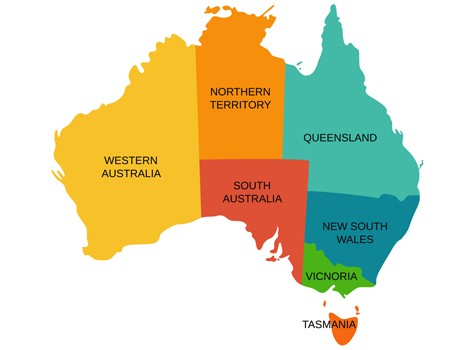
Please click on the following link to see all this interesting information. The areas covered are:
- Overview
- Markets
- GDP
- Labour
- Prices
- Money
- Trade
- Government
- Business
- Consumer
- Housing
- Taxes
- Climate
Access all this data here.
tradingeconomics.com/australia
Our Advent calendar for 2019
On behalf of all our staff we wish our clients a Merry Christmas, Happy New Year and a great holiday period.
Come back each day for an inspirational quote or poem about Christmas, summer and life in general from some of the great writers and poets.
(Please click on the image to open the Advent Calendar and then click on a date)

Tax Office sounds warning on 8 types of super schemes
The Australian Taxation Office has earmarked a number of superannuation and SMSF schemes it says are under additional scrutiny for their ability to enable taxpayers to evade laws around superannuation and tax rules.

There are a number of warning signs associated with illegal super schemes that Australians interested in SMSFs must be aware of.
Taking part in an illegal super scheme could see you penalised financially, disqualified from being a trustee and having to wind up your SMSF, or even spending time behind bars.
The Australian Taxation Office has now highlighted eight separate types of superannuation schemes that are attracting its attention for all the wrong reasons. These are:
Related-party property development ventures
While an SMSF can invest directly or indirectly in property development ventures, the Tax Office said “extreme care must be taken”.
Some arrangements can give rise to significant income tax and superannuation regulatory risks, such as the potential application of the non-arm’s length income provisions and breaches of regulatory rules about related-party transactions.
Non-concessional cap manipulation
Non-concessional cap manipulation sees individuals and some SMSF members “deliberately exceed their non-concessional contributions cap with a view to manipulating the taxable and non-taxable components of their superannuation account balances”.
Granting legal life interest over commercial property to SMSFs
This is done by SMSF members or other related entities to divert rental income so it can be taxed at a lower rate without full ownership of the property ever transferring to the SMSF.
Dividend stripping
In this scenario, shareholders in a private company transfer ownership of their shares to a related SMSF so that the company can pay franked dividends to the SMSF with the purpose of stripping profits from the company in tax-free form.
Some limited recourse borrowing arrangements (LRBAs)
Where these arrangements aren’t consistent with a genuine arm’s length dealing.
Personal services income
Where an individual — with an SMSF often in pension phase — diverts income earned from personal services to the SMSF so it is concessionally taxed or treated as exempt from tax.
The next two arrangements being monitored by the ATO relate to the new super caps and restrictions that apply as a result of the super changes that came into effect on 1 July 2017:
Improper use of multiple SMSFs
The ATO said having multiple SMSFs does not ordinarily raise compliance issues, but the establishment of additional SMSFs intended to manipulate tax outcomes would.
The example provided was a switching of each respective fund between accumulation and retirement phases.
Inappropriate use of reserves
In the past, many existing reserves “arose legitimately from legacy pensions that are no longer available”, the Tax Office has conceded.
However, there are now very limited appropriate circumstances where new reserves would be established and maintained in SMSFs.
Structures using reserves designed to bypass super balance and transfer balance cap measures will attract scrutiny.
To prevent falling prey to foul play and super schemes that are illegal, the ATO has asked taxpayers to make sure they are receiving ethical professional advice when undertaking retirement planning.
It emphasised the importance of seeking a second opinion from a trusted and reputable expert, especially where in doubt.
Grace Ormsby
25 November 2019
accountantsdaily.com.au
Client Alert – November 2019

Getting the benefit of your business tax losses
When you’re starting a new business venture, it may take some time before the business becomes profitable. And there may be other situations where an established business operates at a loss in a particular year. So, what does this mean tax-wise? When your deductions in an income year are greater than your assessable income, you have a “tax loss”. You generally can’t receive a refund for a tax loss, but you can use it in other ways.
If you’re a sole trader or individual partner, you may be able to use your business tax loss to offset other assessable income you earn personally. This includes salary and wages from employment and income from personal investments.
But watch out: if the loss is “non-commercial”, you can’t use it immediately to offset your other income. Instead, you must defer it.
Downsizer super contributions: getting it right
“Downsizer” contributions let you contribute some of the proceeds from the sale of your home into superannuation – but there are several important eligibility requirements.
Are you thinking about selling the family home in order to raise funds for retirement? Under the “downsizer” contribution scheme, individuals aged 65 years and over who sell their home may contribute sale proceeds of up to $300,000 per member as a “downsizer” superannuation contribution (which means up to $600,000 for a couple).
These contributions don’t count towards your non-concessional contributions cap and can be made even if your total superannuation balance exceeds
$1.6 million. You’re also exempt from the “work test” that usually applies to voluntary contributions by members aged 65 and over.
Health insurance and your tax: uncovered
If you don’t hold private hospital cover – or are thinking about dropping it – make sure you understand the financial consequences. You could be hit with an extra tax surcharge of up to 1.5% or cost yourself extra premiums in future.
Levies, surcharges and loadings – the terminology around health insurance and tax can be bewildering! But if you don’t hold private hospital cover, you need to understand how this may affect your tax.
The Medicare levy surcharge (MLS) is a tax penalty you must pay if you earn above a certain amount and don’t take out a sufficient level of private hospital cover for you and all of your dependants. It’s designed to give you a financial incentive to insure privately. The MLS is applied by the ATO at tax time and included in your assessment.
Small business CGT concessions: when do I qualify?
CGT concessions allow you to reduce – or in some cases, completely eliminate – the capital gain from the sale of a business asset, whether it’s held directly by your business entity or in another related structure.
What’s more, the concessions also allow you to make extra super contributions – sometimes up to $1,515,000 – in connection with the sale of business assets. This is an attractive opportunity for many small business owners heading for retirement, especially given the restrictive annual contributions caps that usually apply.
There are various concessions available, each with their own eligibility rules. There are two basic conditions you must meet before you can access any of the concessions. The first requirement tests whether your business is “small” enough to qualify. There are two alternative tests: a turnover test and a net assets test. The second major requirement is that the capital gain must arise from the sale (or other CGT event) of an “active” asset.
Unpaid super: important amnesty update for employers
The launch of Single Touch Payroll (STP) will dramatically improve the ATO’s ability to monitor employers’ compliance with compulsory super laws moving forward. This electronic reporting standard is now mandatory for all Australian businesses and gives the ATO fast access to income and superannuation information for all employees.
The government is getting tough on unpaid compulsory super guarantee (SG) contributions, but fortunately for businesses it has recently announced a revised “grace period” to rectify past non-compliance. All businesses should review their super compliance to consider what action they may need to take.
The timing of your disclosure is important. The proposed new amnesty will cover both previous disclosures made since 24 May 2018 (under the old amnesty scheme that the government failed to officially implement) and, importantly, disclosures made up until six months after the proposed legislation passes parliament.
Selling shares: how does tax apply?
Whether you own just a few listed shares or have an extensive portfolio, understanding how capital gains tax (CGT) applies when you sell your shares can help you plan your trades effectively. If you trade shares on a scale that amounts to a business of share trading, talk to your tax adviser about the different tax regime that applies.
Each time you sell a parcel of shares, you trigger a “CGT event” and you must work out whether you’ve made a capital gain on that parcel (where the proceeds you receive exceed the cost base) or capital loss (where the cost base exceeds the proceeds). You also trigger a CGT event if you give the shares away as a gift – perhaps to a family member. For tax purposes, you’re deemed to have disposed of the shares at their full market value.
All of your capital gains for the income year are tallied and reduced by any capital losses. This includes your gains and losses from all of your assets that year, not just shares. If you have an overall “net capital gain”, this is included in your assessable income and taxed at your marginal tax rate. If you have a “net capital
loss”, you can’t offset this against ordinary income like salary or rental income. Instead, a net capital loss can be carried forward to future years to apply against future capital gains.
ATO to scrutinise every return for tax time 2019
The ATO has announced that it will scrutinise every tax return lodged during Tax Time 2019 as part of its ongoing focus on “closing tax gaps”.
Assistant Commissioner, Karen Foat, said taxpayers who have done the wrong thing may be subject to an audit, even if the over-claim of deductions is minor. Third party data indicating under reported income, and deductions that appear high compared to people with a similar job and income level, tend to raise concerns, Ms Foat said.
If you’re subject to an audit, it’s not always doom and gloom. In some cases, you may get a higher deduction if the ATO discovers that you haven’t claimed something you’re entitled to. For example, you may be entitled to a deduction for depreciation on a laptop or other technology used for work but had incorrectly calculated the claim or omitted it altogether.
In the event of an audit and you’re found to have over-claimed, the ATO may apply penalties depending on your behaviour. If you’re found to have over-claimed based on a genuine mistake, for example, if you’ve claimed the costs which are private and domestic in nature that are sometimes used for work or study (e.g. sports backpack or headphones), the ATO may choose not to apply penalties.
Beware of insurance changes in superannuation
Since July this year, super funds have been required to cancel insurance on accounts that have not received any contributions for at least 16 months unless the member elects to continue the cover. In addition, inactive super accounts with balances of under $6,000 will either be automatically consolidated by the ATO with other accounts you may hold or transferred to the ATO. If your super is transferred to the ATO, any insurance will also be cancelled.
This applies to life insurance, total and permanent disability (TPD) insurance and income protection (IP) insurance that you may have with your super fund.
Another change coming to super funds in the not too distant future of 1 April 2020 is opt-in insurance for members under 25 years old and those with account balances of less than $6,000. From that date, members under 25 who start to hold a new choice or MySuper product will need to explicitly opt-in to insurance. Currently, the onus is on the member to opt out of insurance if they do not want it.
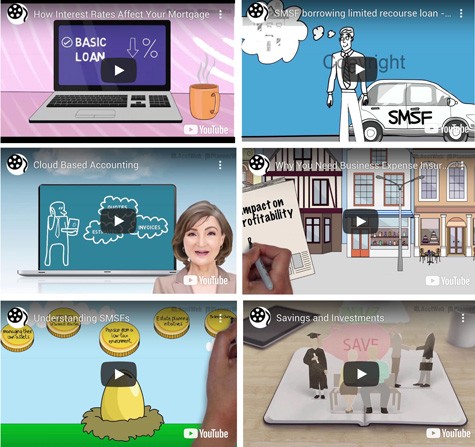
6 new accounting related videos
Videos are a good way to learn more about a topic or show to others who my be new to financial management.
Six new videos have just been added to our website. The topics covered are:
- How interest rates affect your loan
- SMSF borrowing limited recourse loan
- Cloud based accounting
- Why you need business expense insurance
- Understanding SMSFs
- Saving and Investments
Click on the Video menu entry above to view our new collection.
STP to be increasingly monitored
The ATO’s “softly softly” approach to Single Touch Payroll will not last long, warns a tax expert, as clients are urged to revisit historical data before the Tax Office catches up to them.

With Single Touch Payroll (STP) now mandatory for businesses of all sizes, BDO partner Ben Renshaw believes it will only be a matter of time before ATO audits increase as the agency begins analysing STP data.
“What the ATO has done with Single Touch Payroll is they’ve automated the process of collecting payroll data in a way that ultimately will make it much easier for them to audit,” Mr Renshaw said.
“So, my expectation is that the payroll data that the ATO is collecting from pretty much everybody now will be looked at using analytics tools and artificial intelligence–type tools to really start to pick out areas of concern from single organisations or industries or areas or whatever it might be.
“The ATO has got more and more data to be able to look at this, so they are committing more resources to this, but it’s part of the Single Touch Payroll approach that we’ve seen come in, and that’s going to drive more compliance in this space.”
Mr Renshaw said that while the ATO has adopted a collaborative approach to help employers get on board STP, that approach will not last forever.
“That gently, gently, softly softly approach, which has been fantastic, isn’t going to last forever,” Mr Renshaw said.
“The ATO is also going to look backwards. So when Single Touch Payroll information today highlights a concern or an error or an issue, the ATO will certainly want to look back historically, pre–Single Touch Payroll, to see if that issue also existed.
“[Employers] assume that STP is just a forward-facing thing, but you really need to be confident that what you’ve done historically is correct as well.”
Jotham Lian
08 October 2019
accountantsdaily.com.au
Synchronised global economic slowdown
The International Monetary Fund (IMF) grabbed headlines this month on releasing its latest World Economic Outlook report, downgrading its global growth forecasts to the lowest levels since the 2008-09 financial crisis.

Pointing to heightened economic and political uncertainty, particularly in China and the United States, the IMF cut its 2019 global growth forecast by 0.3 per cent to 3 per cent, and its 2020 estimate by 0.2 per cent to 3.4 per cent.
Vanguard also expects global growth to continue to soften over the next 12 months, and sees the likelihood of a shallow recession occurring in the US in 2020 as being above 50 per cent, with the risk of a more severe recession a 10 per cent probability.
The IMF's forecast also came with a stark warning: that the world is in a “synchronised economic slowdown”, with financial markets expecting interest rates to stay lower for longer than had been anticipated earlier in 2019.
Indeed, more cuts to official interest rates in the US, Australia and other countries are highly likely as central banks attempt to use monetary policy as a lever to kick start growth.
“Financial conditions have eased even more, helping contain downside risks and support the global economy in the near term,” said a joint commentary by the IMF's director of monetary and capital markets, Tobias Adrian, and deputy director Fabio Natalucci.
“But loose financial conditions come at a cost: they encourage investors to take more chances in a quest for higher returns, so risks to financial stability and growth remain high in the medium term.”
Risk and fixed income inflows
Macro-economic and policy events have been among the key drivers of markets instability for some time, although risk assets such as equities are continuing to trade at high valuation levels.
“These periods of time do come about and they tend to be a more difficult time to invest, because you need to stay engaged in the market to earn respectable returns,” says Christopher Alwine, principal, head of credit, of Vanguard's global Fixed Income Group.
“But, in staying engaged in the market, it's also important to make sure the risk levels that you're positioning your portfolios in are consistent with the risks of an economic downturn, because those risks are elevated.
“To a retail investor, that really comes down to how much you have in stocks versus fixed income and cash.”
Ongoing large inflows into listed and unlisted bonds funds, where investment returns over the past year have been very strong, are a strong indicator of the de-risking phenomenon that's been occurring, and continues to occur, globally.
In a weak macro-economic environment, pointing to low inflation, higher unemployment and lower growth, broad fixed income strategies should perform relatively well as a risk diversifier to more volatile equities.
Most importantly, when you have your worst periods of equity performance, you want to see fixed income perform well. Yet, that's not always the case.
Understanding interest rate risk
Investors do need to be aware that the fixed income asset class is not homogenous. Indeed, depending on the investment strategy being used, investors in fixed income can be exposed to market risks they may not have appreciated at the time of making their investment.
For example, interest rate risk or sensitivity (duration) can enhance returns when share markets perform poorly.
But a fixed income fund may not necessarily perform this way if a fund manager has structured a portfolio in a way where the fixed income investments made materially change the underlying nature of the fund.
“One of the biggest decisions that you can make in a fixed income portfolio is to make significant duration bets,” says Vanguard senior manager, investment product management, Scott Cornfoot. “They are single decisions that can be quite volatile and surprise investors.
“What you don't want is to invest in a fixed income portfolio and, when equities go badly or markets get jittery … to find that your manager has taken a big duration position (that is, has effectively gone underweight fixed interest) and your portfolio doesn't perform as you would expect.”
This is why low-cost actively managed global credit funds that invest in high-quality investment grade bonds, and which have very tight duration constraints, are attracting investor demand.
In addition to the risk-free component generated from government bonds, these credit funds seek to generate additional performance by investing across investment grade bond markets and by seeking out opportunities to add value through specific security selection.
So, in a synchronised economic slowdown climate, if you're moving to de-risk your portfolio by shifting capital into fixed income, it's important to understand the nuances within the asset class and how they may impact returns.
This is where a licensed financial adviser should be able to provide guidance.
Tony Kaye
Personal Finance Writer,Vanguard Australia
29 October 2019
Vanguardinvestments.com.au
Latest Industry News

How Do I Write Legally Compliant Terms and Conditions for My Business?
Terms and conditions bind your customers only where they actively accept them, so a tick box at checkout holds...

Paid parental leave super contributions have started
From July 2026, the new Paid Parental Leave Superannuation Contribution (PPLSC) has started. From...

If the business is no longer profitable, and is unlikely to be profitable in the future, your best option may...

Check out the this visualization, which tracks the evolution of dietary calorie intake from 1930 to...

Taxpayer given 35% penalty for BAS recklessness
Following an application for a refund of nearly $94,000, the Administrative Review Tribunal has set aside an...

SMEs warned as ATO ramps up tax debt collection
One insolvency specialist has emphasised the importance of small businesses engaging their accountants to stay...

Does Your Small Business Need to Follow AML Privacy Rules?
Compliance with new anti-money laundering (AML) laws may subject your small business to additional privacy...

Don’t get caught out at tax time with your multiples jobs
Picking up a second job, holding multiple part-time roles, or doing gig work is now part of everyday life. But...

Global companies turn to cost-cutting amid ongoing inflation
Rising operating costs and persistent inflation are placing renewed pressure on businesses worldwide, despite...

Warning for early lodger this tax time!
The ATO has a clear message this year: slow down and get it right. Early lodgers are far more likely to make...

ATO no longer treating debt the same as during COVID
One expert has stressed the importance of tax agents reminding their clients that the ATO is no longer as...

The evolution of the world’s languages
Check out the evolution of the world's most spoken languages from 2500 BC to...
Latest Guests News
Newsletter Newslettter We are pleased to supply you with the latest edition of Client Alert, which...