- 234 Balaclava Road, Caulfield North VIC 3161
- contactus@guests.com.au
- (03) 9509 7033
COVID-19: Early Childhood Education and Care Relief Package
From Monday 6 April additional support for Early Childhood Education and Child Care Services and their families.

On 2 April 2020, the Australian Government announced the new Early Childhood Education and Care Relief Package. From Monday 6 April 2020 weekly payments will be made directly to early childhood education and care services in lieu of the Child Care Subsidy and the Additional Child Care Subsidy, to help them keep their doors open and employees in their jobs.
Payments will be made until the end of the 2019-20 financial year and families will not be charged fees during this time. These payments will complement the JobKeeper Payment announced by the Prime Minister on 30 March 2020.
Early childhood education and child care services do not need to apply for the payments, they will be paid automatically.
In addition, up to and including 5 April 2020, services can now waive gap fees for families due to the impact of COVID-19. This can go back as far as 23 March 2020 and is in addition to changes already announced..
For more information:
- Department of Education, Skills and employment COVID-19 page.
- Information for early childhood education and care providers and services – PDF
Source: education.gov.au
Now I’m working from home, what can I claim?

As more people are now working from home many are wondering what can and can’t be claimed and what records they need to keep. The following information, plus some tools and fact sheets, will help but your accountant and financial planner can help you the most with this question.
What tax deductions can you claim?
If you work from home, you can claim the work-related proportions of household costs such as:
- Heating, cooling and lighting bills
- Costs of cleaning your home working area
- Depreciation of home office furniture and fittings
- Depreciation of office equipment and computers
- Costs of repairing home office equipment, furniture and furnishings
- Small capital items such as furniture and computer equipment costing less than $300 can be written off in full immediately (they don’t need to be depreciated)
- Computer consumables (like printer ink) and stationery
- Phone (mobile and/or landline) and internet expenses
Ideally, you should have a specific room set aside as a home office. If you are using a room with a dual purpose (e.g. dining room), or a room shared with others (e.g. lounge room) you can only claim the expenses for the hours you had exclusive use of the area.
How do you claim?
You can use either of these methods:
Diary method/actual running expenses
Keep a diary to work out how much of your household running expenses relate to doing work in your home office. The diary needs to detail the time you spend in the home office, compared with other users of the home office. Keep your diary record for a representative four-week period. The ‘work-use proportion’ can then be used to determine your work-related claim, for whatever period of time they are required by the Government or Employer regulation to work from home. Of the two methods this usually produces the larger deduction, but the record-keeping requirements are more stringent.
It may well be that you are already working from home from time to time but that the amount of remote working will spike over the next few weeks or months. If that’s the case, keep a separate diary for the period of your ‘corona-induced’ home working to justify the larger claim for this period – but don’t try to apply this larger work-related proportion to the whole year!
ATO rate per hour method
Alternatively, you can use a fixed rate of 52 cents per hour for home office expenses for heating, cooling, lighting and the decline in value of furniture, instead of keeping details of actual costs. You just need to keep a record of the number of hours you use the home office and multiply that by 52 cents per hour.
In addition to claiming 52 cents per hour, you can also make a separate claim for:
- phone and internet expenses;
- computer consumables and stationery; and
- depreciation of computers or other equipment.
Finally, a word of warning: it is quite common for people to have insufficient documentation to support a home office claim, particularly around the proportionate split between business use and personal use so be sure to keep records.
The ATO have calculators (at present only the 2018/19 is available) available to assist you with calculating these deductions and links below for more information.
- Home / Office Expenses – Information
- Home / Office Expenses – Calculator (2018-19 only at this stage)
Based on ATO information and resources.
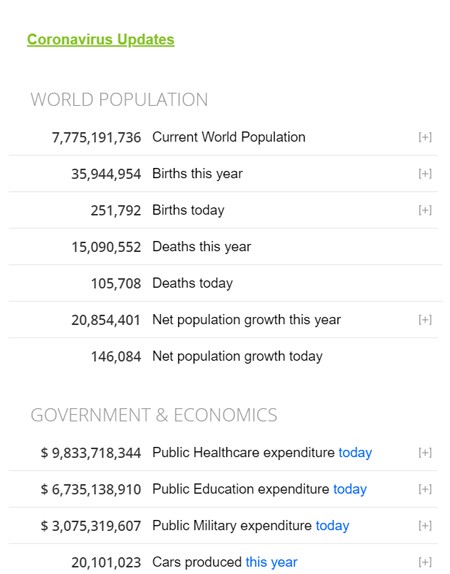
Global statistics plus Covid-19 updates
The following website gives the running totals for many everyday categories and the numbers are almost, if not, overwhelming when seen on a global scale.
Click on the image below to link to a website that collects data from sources all over the globe and simply counts the numbers. Global births and deaths, for example. How much is spent on health and public education. Be prepared though for how much is spent on illegal drugs or how many cigarettes are smoked every day. Included is a link to the latest Coronavirus statistics as well.
Mind blowing stuff.
Covid-19 resources.
Multiple sources of help and explanation the relief packages and programs our Governments have recently. All relate to Covid-19 so that you don't have to hunt for information or miss out. Your accountant can help with any question you have.

Please click on the following links to access a wide range of resources. Once done, click on the X (top right) to close the article and you'll return to this list.
- Covid 19 – Frequently asked questions
- Breakdown of Federal Government Covid-19 support. Click here.
- Australian Government – Economic Response to the Coronavirus
- 12 Treasruy Fact Sheets on Covid-19 releif measures. Click here.
- Articles and Updates in other Latest News articles including:
- Stage 3 – Covid-19 $1.1billion Domestic Violence, Medicare and Mental Health.
- Stage 2 – Covid-19 – $66billion stimulus package.
- Stage 1 – Covid-19 Update – Small Busines
- Stage 1 – PM launches $17.6 billion virus stimulus plan
- State Government releif programs:
- Victoria – Tax relief for eligible businesses
- Western Australia – COVID-19 payroll tax relief
- Tasmania – COVID-19 Tax update
- ACT – Covid-19
- South Australia – COVID19 Relief Measures
- Scam Watch Covid – 19 Scam Watch
Historic $130bn wage subsidy to cover 6 million workers
Prime Minister Scott Morrison has now unveiled an extraordinary $130 billion wage subsidy which will see businesses receive $1,500 a fortnight per employee for the next six months.
In the third and largest economic stimulus package announced by the government in response to the coronavirus pandemic, up to 6 million workers are set to be eligible for the $130 billion wage subsidy, known as the JobKeeper payment.
The flat $1,500 payment, which will be delivered by the ATO, will be paid to businesses, including businesses structured through companies, partnerships, trusts and sole traders.
Employers will be required to pass on the full $1,500 a fortnight, before tax, to eligible employees.
To qualify, businesses with a turnover of less than $1 billion will need to self-assess a reduction in revenue of 30 per cent or more, relative to a comparable period a year ago.
Businesses with a turnover of more than $1 billion will need to demonstrate a loss of 50 per cent of revenue.
Eligible employees will include those employed by the employer at 1 March 2020, including those who have been stood down. Retrenched workers can be re-hired to qualify for the payment.
How to apply
Eligible businesses, including not-for-profits, charities, and self-employed individuals, will need to register an intention to apply on the ATO’s website.
Information on the number of eligible employees engaged as at 1 March 2020 and those currently employed by the business, including those stood down or rehired, will need to be provided to the ATO, although the Tax Office will look to use Single Touch Payroll data to pre-populate the employee details for the business.
The ATO will make payments to the employers monthly in arrears but the first payment will be sent in the first week of May and will be backdated to 30 March 2020 to allow employers to start paying their workers now.
Employers will be required to report the number of eligible employees employed by the business to the ATO on a monthly basis.
‘A lifeline’
According to Mr Morrison, the wage subsidy is meant to prop up businesses by paying for their employees even as the economy comes to a standstill.
“We will pay employers to pay their employees and make sure they do,” said Mr Morrison.
“This plan is about keeping those businesses together, by keeping these employees in these businesses.
“We want to keep the engine of our economy running through this crisis. It may run on idle for a time, but it must continue to run.”
What employees will get
Businesses must pay their employees a minimum of $1,500 per fortnight, before tax.
According to Treasury’s fact sheet, if an employee ordinarily receives $1,500 or more in income per fortnight before tax, they will continue to receive their regular income according to their prevailing workplace arrangements, with the JobKeeker payment to subside all or part of their income.
If an employee ordinarily receives less than $1,500 in income per fortnight before tax, their employer must pay their employee, at a minimum, $1,500 per fortnight, before tax, meaning employers will not be able to pocket the difference.
If an employee has been stood down, their employer must pay their employee, at a minimum, $1,500 per fortnight, before tax.
The $1,500 will be taxed as ordinary income but employers can choose to pay superannuation on the amount.
Employees who receive the JobKeeker payment will not be allowed to double dip with the recently expanded JobSeeker payment, which is paid through Services Australia.
The latest package by the government brings the total amount thrown at the coronavirus crisis to $214 billion, including the $66.1 billion second tranche support package and the initial $17.6 billion.
Mr Morrison said the government is currently in discussions with Labor to reach agreement over the latest announcement and will be looking to recall Parliament shortly to speed through legislation as it did with the first two packages.
Treasury example:
Employer with employees on different wages
Adam owns a real estate business with two employees. The business is still operating at this stage but Adam expects that turnover will decline by more than 30 per cent in the coming months. The employees are:
Anne, who is a permanent full-time employee on a salary of $3,000 per fortnight before tax and who continues working for the business; and
Nick, who is a permanent part-time employee on a salary of $1,000 per fortnight before tax and who continues working for the business.
Adam is eligible to receive the JobKeeper Payment for each employee, which would have the following benefits for the business and its employees:
The business continues to pay Anne her full-time salary of $3,000 per fortnight before tax, and the business will receive $1,500 per fortnight from the JobKeeper Payment to subsidise the cost of Anne’s salary and will continue paying the superannuation guarantee on Anne’s income;
The business continues to pay Nick his $1,000 per fortnight before tax salary and an additional $500 per fortnight before tax, totalling $1,500 per fortnight before tax. The business receives $1,500 per fortnight before tax from the JobKeeper Payment which will subsidise the cost of Nick’s salary. The business must continue to pay the superannuation guarantee on the $1,000 per fortnight of wages that Nick is earning. The business has the option of choosing to pay superannuation on the additional $500 (before tax) paid to Nick under the JobKeeper Payment.
Adam can register his initial interest in the scheme from 30 March 2020, followed subsequently by an application to ATO with details about his eligible employees. In addition, Adam is required to advise his employees that he has nominated them as eligible employees to receive the payment. Adam will provide information to the ATO on a monthly basis and receive the payment monthly in arrears.
Self-employed
Melissa is a sole trader running a florist. She does not have employees. Melissa’s business has been in operation for several years. The economic downturn due to the Coronavirus has adversely affected Melissa’s business, and she expects that her business turnover will fall by more than 30 per cent compared to a typical month in 2019.
Melissa will be able to apply for the JobKeeper Payment and would receive $1,500 per fortnight before tax, paid on a monthly basis.
Jotham Lian
31 March 2020
accountantsdaily.com.au
Stage 2 – Covid-19 stimulus package.

Detail on what the second stimulus package means to your hip pocket, Centrelink payments and staff retention.
The announcements for individuals, retirees, households and employers:
- Temporary early release of superannuation for those in need
- Reducing the minimum drawdown rates for superannuation income streams for the 2019/20 and 2020/21 years
- Reducing the deeming rates by a further 0.25%
- An additional $750 lump sum for pensioners and concession card holders
- Additional income support payments for the unemployed
- Keeping staff employed
NB: There is another article on our site that covers details of Stage 1 of the Government’s Covid-19 stimulus package.
Release of super funds:
The Federal Government has decided to allow financially stressed people to access $10,000 tax free of their super fund this financial year and $10,000 next financial year.
Treasurer Josh Frydenberg made the announcement on Sunday as part of a broader $66 billion stimulus package to mitigate the fallout from the outbreak that has killed more than 13,000 people worldwide and is tipped to plunge the global economy into a recession.
“These extraordinary times demand extraordinary measures,” the treasurer said in a statement. “The government is taking unprecedented action to strengthen the safety net available to Australians that are stood down or lose their jobs and increasing support for small businesses that do it tough over the next six months.”
Eligibility: One of the following requirements must be satisfied for the early release of super:
- You are unemployed; or
- You are eligible to receive a job seeker payment, youth allowance for jobseekers, parenting payment, special benefit or farm household allowance; or
- On or after 1 January 2020:
- You were made redundant; or
- Your working hours were reduced by 20 per cent or more; or
- If you are a sole trader – your business was suspended or there was a reduction in your turnover of 20 per cent or more.
If eligible, individuals can apply directly to the ATO via MyGov (www.my.gov.au) and will be required to certify that they meet the eligibility criteria. The ATO will then issue a determination and contact the super fund directly to release the money.
It is anticipated that payments will be available from mid-April. Payments will be received tax free and will have no impact on existing income support payments.
Reduction of minimum pension drawdown requirements
As we saw in the Global Financial Crisis (GFC), a temporary reduction to the minimum payment rules will apply for superannuation income streams to assist retirees who would otherwise be forced to sell down assets to meet their minimum pension.
For the 2019/20 and 2020/21 financial years, the minimum drawdown rates will be:

Deeming rates.
Further to the recent decrease in deeming rates announced earlier this month, the Government will reduce deeming rates by another 0.25% from 1 May 2020. The new rates are provided in the table below.

Additional $750 lump sum payment
Two separate lump sum payments will now be available to eligible social security, veteran and other income support recipients and eligible concession card holders as follows:
Payment one – available to those eligible income support recipients and concession card holders at any time between 12 March 2020 and 12 April 2020.
Payment two – available to eligible payment recipients and concession card holders on 10 July 2020.
The two lump sum payments will be received tax free and will not impact existing income support payments.
The payment will be made automatically from July 13 to about 5 million Australians, including those receiving the age pension, a carers allowance or family tax benefit and Commonwealth senior card holders.
For payment one, the qualifying payments and concession cards are as follows:

To be eligible for payment two, the same list applies EXCEPT if you are entitled to the Coronavirus Supplement (explained below).
Additional income support for the unemployed and faster access
The Government will introduce the Coronavirus Supplement, a $550 per fortnight payment available for the next six months to eligible payment recipients. Additionally, access to income support will be expanded and the claims process accelerated to ensure timely payments for those in need.
Eligibility: The payment categories eligible to receive the Coronavirus Supplement are:
- Jobseeker Payment (including all the payments that are currently moving to Jobseeker Payment)
- Youth Allowance Jobseeker
- Parenting Payment
- Farm Household Allowance
- Special Benefit recipients
While the Coronavirus Supplement is available (temporary measure for approximately six months), the Government will expand access to income support (such as Jobseeker Payment) to:
- Permanent employees who are stood down/lose their job
- Sole traders/self employed
- Casual workers
- Contract workers
The standard allowance income test must be met however the assets test that normally applies to allowances (ie $1 over the asset test threshold results in no payment) will be waived for the Coronavirus Supplement period.
Some waiting periods will also be reduced or waived. The standard one week Ordinary Waiting Period, the Liquid Assets Waiting Period (LAWP) and the Seasonal Work Preclusion Period will all be waived.
How to apply: The Government is encouraging all applications to be made online or over the phone if internet access is not available. Measures have been adopted to accelerate the claims process such as removing the requirement for Employment Separation Certificates and the need to make appointments with an employment service.
The commencement date for the Coronavirus Supplement and the expanded access to income support is 27 April 2020.
Casuals and sole traders
If you’ve found yourself affected by the economic downturn, you’ll be able to access a “coronavirus supplement” of $550 a fortnight for the next six months.
That’s on top of other benefits — so if you’re already receiving payments through Jobseeker (formerly known as Newstart), you can claim both.
Sole traders and casual workers who are currently making less than $1,075 a fortnight will be eligible to receive the full supplement.
In practice, that means if you’re a single parent (receiving a maximum fortnightly payment of $612 through Jobseeker), for example, and you meet the criteria, you’ll take home about $1,162 a fortnight.
“This means anyone eligible for the maximum Jobseeker payment will now receive more than $1,100 a fortnight, effectively doubling the Jobseeker allowance,” Treasurer Josh Frydenberg said.
Sole traders or casual workers who have had their income or hours reduced by 20 per cent or more as a result of coronavirus will also be able to access to up to $10,000 of their superannuation tax-free.
Employers who want to keep staff
Not-for-profits and small businesses with a turnover under $50 million will receive a tax-free cash payment of up to $100,000 to help them retain staff and continue operating.
The Government expects 690,000 businesses employing 7.8 million people and 30,000 not-for-profits will be eligible for measures in the stimulus package.
It doesn’t mean extra pocket money if you’re an employee, but by linking the payments to staff wage tax withholdings, businesses will be given an incentive to hold on to more of their workers.
“We know that small businesses are enormously resilient but this is really hurting them,” Mr Morrison said.
“Whether it is a coffee shop or mechanic or hairdresser… by providing at a minimum $20,000 and up to $100,000 for small businesses who employ people, [it] gives them a chance to get to the other side.”
Expect more to come…
An important thing to keep in mind is that this is the second suite of measures announced by the Government in just a matter of weeks. Details about the first stimulus package can be read here.
For more information
For more information on these measures and other announcements made by the Australian Government visit treasury.gov.au/coronavirus or speak with your Financial Planner or Accountant.
Source: Several sources and the ATO.
Covid-19 Update – Small Business
Small businesses will be the hardest hit by the ramifications of Covid-19. The following is more information to help small business owners better understand some of the business support that’s now available.

Late last week there was an article added to this site about the Federal Governments stimulus package.
Then 4 Fact Sheets became available to help understand the stimulus package. Plus more information can be found here .
- Cash flow assistance for business
- Stimulus payments to households to support growth
- Assistance for severely affected regions
- Delivering support for business investment
This latest update provides more detail on how the stimulus package operates. For example, Cash flow payment for employers. ‘Eligible businesses will automatically receive payments of 50 per cent of their Business Activity Statements or Instalment Activity Statement from 28 April 2020, with refunds to be paid within 14 days.’ Read more detail here.
ATO
Treasury
Small Business WA
The Government’s Coronavirus Economic Response

Government announces increased tax benefits in response to the Coronavirus
The Government has announced its economic response to the Coronavirus in the form of a $17.6 billion economic stimulus package. The package has been marketed as a measure to protect the economy by maintaining confidence, supporting investment and keeping people in their jobs.
It is expected that an appropriate package of Bills (which will provide further detail in relation to the proposed measures) will be introduced into Parliament in the final sitting week in March 2020 (i.e., presumably from 23 March 2020) for urgent consideration and passage.
The Key Tax Measures include:
- From Thursday 12 March 2020, the instant asset write-off threshold has been increased from
$30,000 (for businesses with an aggregated turnover of less than $50 million) to $150,000 (for businesses with an aggregated turnover of less than $500 million) until 30 June 2020.
- A time-limited 15-month investment incentive (through to 30 June 2021) which will operate to accelerate certain depreciation
This measure will also be available to businesses with a turnover of less than $500 million, which will be able to immediately deduct 50% of the cost of an eligible asset on installation, with existing depreciation rules applying to the balance of the asset’s cost.
As announced, this measure is proposed to only apply to new depreciating assets first used, or installed ready for use, by 30 June 2021.
- Tax-free payments of up to $25,000 for eligible small and medium businesses (i.e., with a turnover of less than $50 million that employ staff) based on their PAYG withholding obligations.
- Tax-free payments of $750 to social security, veteran and other income support recipients and eligible concession card holders. It is estimated that around half of those who will benefit will be pensioners. These payments will commence to be automatically made from 31 March 2020.
- Administrative relief from the ATO for some tax obligations for people affected by the Coronavirus outbreak, on a case-by-case basis. Additionally, the ATO is setting up a temporary shop front in Cairns within the next few weeks with dedicated staff specialising in assisting small business and is currently considering further temporary ‘shop fronts’ and face-to-face options.
In addition to these key tax measures, the Government has also announced additional economic stimulus measures including:
- Wage subsidies to support the retention of apprentices and trainees – Employers with less than 20 full-time employees may be entitled to apply for Government funded wage subsidies amounting to 50% of an apprentice’s or trainee’s wage for up to nine months from 1 January 2020 to 30 September 2020. The maximum subsidy for each apprentice/trainee is $21,000.
Importantly, where an employer is not able to retain an apprentice, the subsidy will be available to a new employer that employs that apprentice.
It is proposed that employers will be able to register for the subsidy from early-April 2020.
- Assistance to severely affected regions – The Government has also committed to set aside
$1 billion to support regions and communities that have been disproportionately affected by the economic impacts of the Coronavirus, including those heavily reliant on industries such as tourism, agriculture and education. This will include:
- The waiver of fees and charges for tourism businesses that operate in the Great Barrier Reef Marine Park and the waiver of entry fees for Commonwealth National Parks.
- The provision of additional assistance to help businesses identify alternative export markets or supply chains.
- Further targeted measures to further promote domestic tourism.
© National Tax & Accountants’ Association Ltd: March 2020
GUESTS Notes
Tax-free payments of up to $25,000 for eligible small and medium businesses (i.e., with a turnover of less than $50 million that employ staff) based on their PAYG withholding obligations.
Businesses with turnover of less than $50 million and which employ staff will be eligible for the assistance which will automatically be issued via a credit to the taxpayer’s activity statement account from 28 April 2020.
Businesses that remit PAYG withholding for employees will receive a maximum payment of 50% of the withheld amount for the March 2020 quarter and June 2020 quarter (but capped at $25,000). Businesses with employees but that do not remit PAYG withholding will still be eligible to receive assistance of $2,000.
Quarterly lodgers will be eligible to receive the payment for the quarters ending March 2020 and June 2020.
Monthly lodgers will be eligible to receive the payment for the March 2020, April 2020, May 2020 and June 2020 lodgements.
To provide a similar treatment to quarterly lodgers, the payment for monthly lodgers will be calculated at three times the rate (150 per cent) in the March 2020 activity statement. The minimum payment will be applied to the business’ first lodgement.
As the Coronavirus continues to cause widespread disruption, it’s important for organisations to take precautionary measures and formulate action plans to mitigate risks on impacts to business operations.
We are here to assist you and your business and will continue to keep you up date with any information released by the Government.
Avi Paluch – Partner – ap@guests.com.au
Andrew Goldberger – Partner – bg@guests.com.au
Ha Nguyen – Partner – hn@guests.com.au
Mory Kalkopf – Partner – mk@guests.com.au
Moshe Trebish – Partner – mt@guests.com.au
Additional downloads:
PREPARING FOR COVID-19
TIPS FOR SMALL BUSINESS TO PREPARE FOR COVID-19
PM launches $17.6 billion virus stimulus plan
The Prime Minister has announced a stimulus plan to curb the economic impact of the coronavirus and keep “Australians in jobs and businesses in business”.
The package, aimed to provide an immediate stimulus to the economy, will be worth $17.6 billion, with a projected impact of $22.9 billion.
It includes tax relief for small businesses, a $750 one-off cash payment for welfare recipients and wage assistance to keep apprentices in work.
“Each measure is temporary, each measure is targeted, and each measure is proportionate to the challenges we face,” Treasurer Josh Frydenberg told media in Canberra.
Prime Minister Scott Morrison confirmed that the government plans to spend $11 billion before June 30 this year, with the remainder to be injected into the economy before the end of the next financial year.
“This plan is about keeping Australians in jobs. This plan is about keeping a business in business, particularly small and medium-sized businesses, and this plan is about ensuring the Australian economy bounces back stronger on the other side of this and, with that, the Budget bounces back with it,” Mr Morrison told media.
Under the plan, the government is lifting the threshold for the instant asset write-off from $30,000 to $150,000, and expanding it to businesses with an annual turnover up to $500 million, up from $50 million. It has also announced a 50 per cent accelerated depreciation deduction above existing deductions, which will be available to June 30, 2021.
Additionally, businesses with turnover up to $50 million will receive a tax-free cashflow boost for employers worth up to $25,000, designed to help pay wages.
It has also set up a coronavirus regional and community fund aimed to assist those in the most impacted areas such as tourism and export.
Maja Garcia Djurdjevic
12 March 2020
mybusiness.com.au
A resource hub for our clients.
We provide 24/7 access to many extra tools and resources to help you build on what we offer concerning your tax and other financial affairs. *

Latest News. 7-9 individual articles every month and all chosen for their relevance. Our website is a great place to stay informed.
Educational Videos. All are relevant, interesting, educational and interesting. Videos that are changed three times a year to ensure you and your family are able to lean about many issues related financial issues and topics.
Calculators. A good comprehensive range of calculators to help you better understand and manage your personal and family financial issues. Four of the more popular are: Pay calculator, Budget Calculator, Loan Calculator, and Superannuation Calculator
Client Portals. Portals are quite common on many sites and can be used to store your data, pay bills, log onto investment systems.
Ask us a question at any time. If you have a question on any related topic then don’t hesitate to use a form on our site to ask.
Your information is private and confidential and should be treated that way. Using Secure File transfer means your information is encrypted when sent in either direction over the Internet.
Many sites also have a message window feature that displays messages of interest or that cover topics and deadlines you should be aware of.
Your Accountant
* Not all are on every website.
Latest Industry News

How Do I Write Legally Compliant Terms and Conditions for My Business?
Terms and conditions bind your customers only where they actively accept them, so a tick box at checkout holds...

Paid parental leave super contributions have started
From July 2026, the new Paid Parental Leave Superannuation Contribution (PPLSC) has started. From...

If the business is no longer profitable, and is unlikely to be profitable in the future, your best option may...
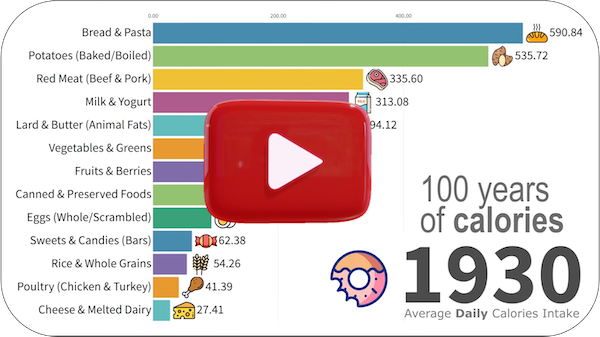
Check out the this visualization, which tracks the evolution of dietary calorie intake from 1930 to...

Taxpayer given 35% penalty for BAS recklessness
Following an application for a refund of nearly $94,000, the Administrative Review Tribunal has set aside an...

SMEs warned as ATO ramps up tax debt collection
One insolvency specialist has emphasised the importance of small businesses engaging their accountants to stay...

Does Your Small Business Need to Follow AML Privacy Rules?
Compliance with new anti-money laundering (AML) laws may subject your small business to additional privacy...

Don’t get caught out at tax time with your multiples jobs
Picking up a second job, holding multiple part-time roles, or doing gig work is now part of everyday life. But...

Global companies turn to cost-cutting amid ongoing inflation
Rising operating costs and persistent inflation are placing renewed pressure on businesses worldwide, despite...

Warning for early lodger this tax time!
The ATO has a clear message this year: slow down and get it right. Early lodgers are far more likely to make...

ATO no longer treating debt the same as during COVID
One expert has stressed the importance of tax agents reminding their clients that the ATO is no longer as...
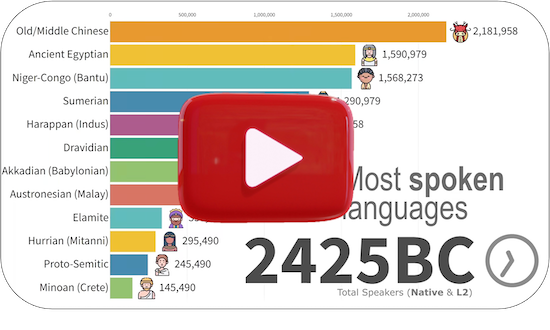
The evolution of the world’s languages
Check out the evolution of the world's most spoken languages from 2500 BC to...
Latest Guests News

Newsletter Newslettter We are pleased to supply you with the latest edition of Client Alert, which...