- 234 Balaclava Road, Caulfield North VIC 3161
- contactus@guests.com.au
- (03) 9509 7033
‘Follow the spirt of the law’, warns ATO
The Australia Taxation Office has cautioned businesses against taking advantage of the government’s most recent expanded asset write-off scheme and the new loss carry-back provision.

Full expensing of plant and equipment and the ability to carry back losses are two measures introduced in the budget with the aim of encouraging businesses to invest and accelerate economic growth after the COVID-19 crisis.
But speaking at an event hosted by the Australian Financial Review, ATO second commissioner Jeremy Hirschhorn expressed his concern over businesses turning to “artificial mechanisms” to take advantage of these measures.
“These measures should be embraced, but for the purpose for which they were introduced. Invest in new plant, upgrade your facilities, claim a tax offset and reinvest the money in your business and jobs!” Mr Hirschhorn said.
He also advised financial officers to do the right thing and refrain from artificially shifting profits and losses around their group to access the loss carry-back.
“At a more granular level as CFOs, make sure your business analysts are including these tax cash flow advantages in your DCF models, in conjunction with your heads of tax making appropriate variations to your tax instalments to bring home that cash flow advantage,” Mr Hirschhorn said.
“Similarly, accessing the loss carry-back to support executive bonuses, increased dividends or to repatriate cash to offshore related parties is likely to be viewed poorly by the community.”
Speaking about the “weighty” responsibility entrusted on the business community to recover the post-COVID economy, Mr Hirschhorn urged businesses to “follow the tax law, but also follow the spirit of the law”.
“I suspect the community will have even less sympathy for companies seen to be exploiting loopholes.”
Mr Hirschhorn further urged entities to consider the optics of “making a statement in your annual report noting that the pandemic has not substantially impacted the operations of your business while at the same time collecting hundreds of millions of dollars in stimulus”.
“You have been entrusted by the government with leading the economic recovery with a range of stimulus measures,” he said.
“With this comes increased expectations around corporate behaviour including tax. There is an opportunity to rise to these expectations and increase the community’s trust in large organisations.”
Maja Garaca Djurdjevic
02 November 2020
accountantsdaily.com.au
Employers cautioned over ‘hard and fast’ decline in turnover eligibility
Accountants assisting clients with the JobKeeper extension have been urged to pay close attention to the actual decline in turnover test, with the ATO unable to offer leeway for those who come just shy of the requirements.

With JobKeeper now requiring entities to satisfy the new actual decline in turnover test, rather than the projected decline in turnover test used earlier in the program, the ATO will be required to follow the strict letter of the law in ensuring the requisite percentage declines are satisfied.
“[In JobKeeper 1], the legislation didn’t require the actual turnover to decline, so we saw a lot of organisations make a projection in a very difficult environment… and a lot of those projections didn’t pan out and that’s fine,” said ATO assistant commissioner Sandra Farhat on a recent ChangeGPS webinar.
“But moving into the extension, that is the test; the test is an actual decline.
“There is really no discretion in relation to decline in turnover, so there is no ability for the ATO to say, ‘Well, you were close, just not close enough, but we’ll let you through’ — the 30 per cent is a hard and fast legislative requirement.
“It is a significant change from a projected decline in turnover to an actual decline in turnover.”
The approach is a shift from the “sympathetic and understanding” stance that the ATO committed to earlier in the year when queried on how it would police the projected decline in turnover estimates.
ATO second commissioner Jeremy Hirschhorn told a Senate inquiry in May that the ATO would not nitpick turnover estimates that fell just short of the requirements because the law had merely required entities to make a reasonable estimate.
“If it ultimately turns out that the estimate was overly pessimistic and a business only went down 29 per cent, instead of an estimated 35 per cent, that is OK; what the legislation requires is a reasonable estimate,” Mr Hirschhorn said earlier this year.
Clawing back JobKeeper payments
The ATO’s confirmation of its new position comes as it releases fresh guidance on how it will manage JobKeeper payments that were incorrectly paid out.
For payments that were made because of an honest mistake, the ATO will not seek to recover these payments.
The facts and circumstances of each case will be considered, including whether the mistake was made earlier in JobKeeper when there was less public guidance.
Entities that did not take reasonable steps to check their eligibility will not be considered as having made an honest mistake.
Where payments will need to be repaid, the Tax Office will write to the entity to inform it of the reasons for clawing back the payments, how much needs to be repaid, and how repayments can be made.
Objections will be considered, while payment plans will be made available to those who aren’t able to pay on time.
The ATO also notes that it will generally not impose administrative penalties for JobKeeper overpayments that were the result of a mistake.
However, administrative penalties will apply if there is evidence of deliberate actions to obtain JobKeeper payments that an entity would not have otherwise been entitled to.
Jotham Lian
23 October 2020
accountantsdaily.com.au
Businesses not meeting obligations warned as ATO restarts compliance programs
The ATO has warned businesses not staying up to date with their obligations that it may impact their eligibility for future stimulus measures, as the Tax Office readies to recommence its work to address key risks to the tax and super system.

The ATO has warned businesses not staying up to date with their obligations that it may impact their eligibility for future stimulus measures, as the Tax Office readies to recommence its work to address key risks to the tax and super system.
While the Australian Taxation Office will continue to focus on implementing government stimulus measures, including those announced in the federal budget, it will shortly recommence its work to address key risks to the tax and super system.
Speaking at an event hosted by Chartered Accountants Australia and New Zealand, Deborah Jenkins, deputy commissioner of small business, said that businesses doing well need to resume their obligations, while those facing ongoing hardship are encouraged to get in contact with the ATO.
“Because it is hard for us to identify who is still impacted, we need to return to a normal setting for our work program. It’s not as simple as applying postcode logic — for obvious reasons. In bushfires, we can use this approach to support impacted businesses,” Ms Jenkins explained.
“We have recommenced and adapted our strategies to address compliance risks, being very conscious of the impacts still being faced by many businesses.”
Since 1 September, the ATO has stopped providing blanket extensions to small business audit cases and has recommenced activity where the business is either not adversely impacted by COVID or is now in a position to progress.
“I want to emphasise that we will continue to be empathetic to each client’s situation and provide additional time if they need it,” Ms Jenkins said.
Looking ahead, she said that the ATO will be resuming its review and audit programs addressing shadow economy behaviour.
“We will be continuing our use of taxable payments reporting system data to check that contractors in a range of industries are lodging and meeting their income tax and GST obligations in full,” Ms Jenkins said.
“Taxable payments annual reports (TPAR) data allows us to match the payments reported by payers to contractors (payees) income tax returns to identify where contractors may have omitted income.
“We have also been piloting a nudge approach where we have contacted some contractors ahead of their 2020 tax return lodgement to remind them to include their TPRS reported income this year.”
Moreover, from November 2020, the ATO will be contacting tax agents and their clients who are contractors in the cleaning, courier and building and construction industries and may not have included all of their income in their 2019 tax return.
“We will be using a combination of emails and phone calls to contact tax agents in advance of their clients receiving letters,” Ms Jenkins continued.
In regard to the ATO’s shadow economy program more broadly, she revealed that some strategies are being reconsidered as some of the previous approaches, like visiting businesses in person, are unlikely to be possible in the coming year.
She said: “We will continue to use a combination of review and audit programs, delivering help and education and building community awareness of our work to address the shadow economy — we will just need to do things a little differently.
“We are also applying agent-focused strategies to the black economy by taking the insights generated through our tax practitioner model and identifying agents with higher than normal levels of black economy risk in their client base.”
Other areas the ATO will be closely monitoring are loss claims and unreported fund extractions from small-business companies.
“We are currently overhauling our GST high-risk refund models to enable us to more effectively detect and action high-risk refunds before payment,” she said.
“Our broad focus now beyond the specific risks we are focused on is ensuring people are staying in the system. Businesses need to be lodging, and if they can pay, they should. Those who still need help just need to contact us and we will be here to support them. But we are conscious that many businesses are doing well, so we need to be reminding them to meet their obligations.”
Maja Garaca Djurdjevic
02 November 2020 2
mybusiness.com.au
Comprehensive list of COVID-19 initiatives and packages.
The response by our Governments to the COVID-19 crisis has been a very good one. Following is a comprehensive listing of links to important Federal and State initiatives and programs since the pandemic began.
Please click on the following links to access a wide range of Covid-19 related updates, initiatives, guidelines and resources from both Federal and State Governments.
Recent Updates
- Jobkeeper payment and coronavirus supplement extended
- Treasury Fact Sheets on COVID-19 relief measures. Click here to access them all.
- COVID-19 overseas financial assistance
- Additional funding to reinforce Australia's Aged Care sector
- Pandemic leave disaster payment
- 1billion defence initiatives to aid COVID-19 recovery
- Pandemic leave disaster payment – Tasmania
- New deal secures potential COVID-19 vaccine for every Australian
- Federal Government site.
Previous Updates:
-
Jobkeeper Update – Extension to March 2021. Read more ….
-
Victorian Government Stage 4 Restrictions. Read more ….
-
Victoria – Health and Human Services – Stage 4 restrictions. Read more ….
-
Victoria – State Revenue Office – Land Tax. Read more ….
-
Federal Government COVID-19 Updates. Read more ….
-
NSW – New round of small business grants. Read more ….
-
Qld – Round 2 of Small Business COVID-19 Adaption Grant Program opens. Read more ….
-
Vic – Range of videos explaining topics effected by COVID-19 such as Land tax and Payroll Tax. Read more ….
-
Tas – An update on all COVID-19 matters in Tasmania. Read more ….
-
ACT – Updated 30-6-2020. Read more ….
-
SA – Updates for Land tax deferrals and Job Accelerator Grants. Read more ….
-
NT – COVID-19 Update. Read more ….
- COVID-19 Safe App. Download now
-
Myths about COVID-19 are all over social media. Here is the our Government's mythbusting response. Read more ….
-
$131.4 million Federal funding to help Public Hospital fight effects of COVID-19. Read more ….
-
$48.1 million for mental health & wellbeing pandemic response plan. Read more ….
-
State and Territory Government websites. Their latest responses to the coronavirus pandemic.
-
3 Step Framework for a Covidsafe Australia. Click here.
-
Easing of coronavirus (Covid-19) restrictions. Read more …
- Boosting cash flow for employers. Read more ….
- Increase in asset right-off from $30,000 to $150,000. See Backing Business Development – Fact Sheet: Delivering support for business investment
- How the ATO reviews Jobkeeper applications. Read more ….
- Click here for the latest coronavirus news, updates and advice from government agencies across Australia.
- Scam Watch Update. Read more about the increasing number of scams that have emerged since the Coronavirus outbreak.
-
State Government relief programs:
- NSW – Relief for NSW Small Business
- Queensland – Information and assistance for business and industry
- Victoria – Tax relief for eligible businesses
- Victoria – Business support fund
- Western Australia – COVID-19 relief
- Tasmania – COVID-19 Tax update
- ACT – Covid-19
- South Australia – COVID19 Relief Measures
-
Stage 3 – $130 billion relief package New Facts Sheets
- Breakdown of Federal Government Covid-19 support. Click here.
- Australian Government – Economic Response to the Coronavirus
- Articles and Updates in other Latest News articles including:
- Stage 3 – Covid-19 $1.1billion Domestic Violence, Medicare and Mental Health.
- Stage 2 – Covid-19 – $66 billion stimulus package.
- Stage 1 – Covid-19 Update – Small Business
- Stage 1 – PM launches $17.6 billion virus stimulus plan
Part 3 – Budget reminders. Under the Hood.
The 2020 Federal Budget was one of the most far reaching and complex ever brought in. This is the first of three articles to remind us of important topics the budget addressed.

Temporary full expensing of eligible capital assets
Most businesses are now able to claim full deductions for depreciation assets.
Businesses with aggregated annual turnover of less than $5 billion will be able to deduct the full cost of eligible capital assets in the year they are first used.
Full expensing in the year of first use will apply to:-
- new depreciating assets;
- the cost of improvements to existing eligible assets;
- for small and medium businesses (aggregated turnover of less than $50 million – second-hand assets
Applies to eligible capital assets acquired from 7.30pm AEDT on 6 October 2020 and first used or installed by 30 June 2022
Temporary loss carry-back for companies
Eligible companies can elect to carry back tax losses from the 2019-20, 2020-21 or 2021-22 income years to offset previously taxed profits in 2018-19 or later income years.
The effect of the election will be to generate a refundable tax offset and it will first be available when lodging the 2020-21 tax return, subject to the amount carried back not being more than the earlier taxed profits and not generating a franking account deficit.
The new loss carry-back measure is designed to promote economic recovery by providing cash flow support to previously profitable companies that COVID-19 has turned into loss making businesses – many such businesses might find it difficult to survive or re-employ staff if they had to wait years to get tax relief for the losses under the present system.
As with a similar scheme operated in 2012-13, the carry back is notional – it is not necessary to amend the prior year return – the benefit is received in the assessment for the year in which the election is made.
The tax refund will be available on election by eligible businesses when they lodge their 2020-21 and 2021-22 tax returns.
JobMaker Plan Boosting Apprenticeships Wage Subsidy
From 5 October 2020 to 30 September 2021, businesses of any size can claim the wage subsidy for a new, or recommencing, apprentices or trainees.
Eligible businesses will be reimbursed 50% of an apprentice or trainee’s wages, up to $7,000 per quarter, capped to 100,000 places.
AcctWeb
Client Alert – November 2020

Budget personal tax cuts and business concessions now law
Several tax announcements from the 2020 Federal Budget have now been passed into law.
These include bringing forward changes to the personal income tax thresholds so that they apply from 1 July 2020. From that date, the top threshold of the 19% personal income tax bracket is increased from $37,000 to $45,000. The top threshold of the 32.5% tax bracket is increased from $90,000 to $120,000. The low income tax offset increases to $700 and the low and middle income tax offset (up to $1,080) is retained for 2020–2021.
A range of tax concessions already available to small businesses have been extended to medium sized businesses as well, and businesses with turnover less than $5 billion can deduct the full cost of eligible depreciating assets that are installed ready for use between 6 October 2020 and 30 June 2022.
Implement new PAYG withholding rates by 16 November
The ATO has issued updated tax withholding schedules to reflect the 2020–2021 income year personal tax cuts. Employers must now make sure they are withholding the correct amounts for pay runs processed in their systems from no later than 16 November onwards.
With these changes coming partway through the income year, employees and other payees will receive their entitlement to the reduced tax payable for the entire 2020–2021 year when they lodge their income tax returns for that period.
Working from home “shortcut” deduction extended
The ATO advises that the “shortcut” rate for claiming work-from-home running expenses has been extended, in recognition that many employees and business owners are still required to work from home due to COVID-19 This shortcut deduction rate was previously extended to 30 September 2020, but will now be available until at least 31 December 2020.
Eligible employees and business owners, therefore, can choose to claim additional running expenses incurred between 1 March 2020 and 31 December 2020 at the rate of 80 cents per work hour, provided they keep a record (such as a timesheet or work logbook) of the number of hours worked from home during the period.
JobKeeper decline in turnover tests: temporary trading cessation
An additional category for alternative “decline in turnover” tests is now available for the purposes of the revised JobKeeper payment system (which commenced on 28 September 2020) for entities that temporarily ceased trading for some or all of the relevant comparative period.
Under the revised system, an entity must have had an actual decline in its turnover for the applicable quarter relative to the same quarter in 2019. This generally involves making a one-to-one comparison of the 2020 numbers to those in the corresponding period in 2019, to see if it exceeds the 15%, 30% or 50% decline threshold (depending the type of entity).
Alternative tests can only be used if there is not an “appropriate relevant comparison period” in 2019, and four requirements must be satisfied for an entity to use the alternative tests for the new “temporary cessation of business” category. That is, in the comparison period:
- the entity’s business had temporarily ceased trading due to an event or circumstance outside the ordinary course of the entity’s business;
- trading temporarily ceased for a week or more;
- some or all of the relevant comparison period occurred during the time in which the entity’s business had temporarily ceased trading; and
- the entity’s business resumed trading before 28 September 2020.
Tip: If your business doesn’t meet the requirements for the temporary cessation category, you may still be eligible to apply alternative tests under other categories. Contact us to find out more.
Data-matching program: apprentices and trainees
The Department of Education, Skills and Employment (DESE) has commenced a new ongoing data-matching program with the ATO in relation to the Supporting Apprentices and Trainees (SAT) measure. The program seeks to confirm the eligibility of employers receiving the subsidy, as well as stamp out any potential double-dipping of government assistance (for example, claiming both SAT and JobKeeper support at the same time for the same employee).
Under SAT, employers can apply for a wage subsidy of 50% of the apprentice’s or trainee’s wage paid until 31 March 2021. To be eligible, an apprentice must have been in an Australian apprenticeship with a small business as at 1 March 2020. SAT has since been expanded to include medium sized businesses that had an apprentice in place on 1 July 2020. Employers of any size who re-engage an eligible out-of-trade apprentice are also eligible to claim the SAT wage subsidy. However, there are restrictions on when an employer can claim SAT for an eligible apprentice.
Data relating to around 117,000 apprentices and trainees and more than 70,000 employers will be transferred between DESE and the ATO. The program will be ongoing, with data transfer to occur at regular intervals as required over the life of the SAT measure.
Where the data-matching program detects a discrepancy or an anomaly that requires verification, DESE will contact the business and provide them with an opportunity to verify the accuracy of the information on which the eligibility was based. Businesses will be given at least 28 days to respond and any relevant individual circumstances will be taken into consideration.
Small business tax options during COVID-19: ATO reminder
The ATO has reminded businesses impacted by COVID-19 that they have a range of tax options to consider, including claiming a deduction for any losses. And for businesses finding it difficult to estimate income for the purposes of PAYG instalments, the ATO will not apply penalties or interest for excessive variations where businesses make a “best attempt” to estimate their end-of-year tax.
Tip: If you need additional time or support to get your tax return in order or work out what’s next for your business, we can help. Contact us, or phone the ATO on 1800 806 218.
Tax losses
Sole traders and individual partners in a partnership who meet certain conditions can offset current year losses against other assessable income (such as salary or investment income) in the same income year. Otherwise, the loss can be deferred or carried forward and offset in a future year when the business next makes a profit. Businesses set up under a company structure that have made a tax loss in a current year can generally carry forward that loss for as long as they want. Of course, it’s crucial to keep proper records when claiming a deduction for losses.
Closing a small business
The ATO has acknowledged that some businesses may need to close their doors – either temporarily or permanently – due to COVID-19, particularly in Victoria. It calls on such businesses to “do their best to keep up with tax and super obligations”.
If a business is forced to close permanently as a result of COVID-19, or for any other reason, it must still lodge any outstanding activity statements and instalment notices, make GST adjustments on the final activity statement and lodge final tax returns. This will enable the ATO to finalise the tax account and issue any refunds that might be owed.
Insolvency reforms announced for small businesses
The Government has announced that it will introduce insolvency reforms to help small businesses restructure in response to COVID-19, including:
- the introduction of a new debt restructuring process for incorporated businesses with liabilities of less than $1 million, drawing on key features from Chapter 11 of the US Bankruptcy Code;
- moving from a one-size-fits-all “creditor in possession” model to a more flexible “debtor in possession” model;
- providing a rapid 20-business day period for the development of a restructuring plan by a small business restructuring practitioner, followed by 15 business days for creditors to vote on the plan; and
- creating a new, simplified liquidation pathway for small businesses to allow faster and lower cost liquidation.
Safeguards will be included to prevent companies from using the new processes to undertake corporate misconduct, including firms seeking to carry out illegal phoenix activity.
The new insolvency processes are proposed to be available from 1 January 2021.
JobKeeper payments satisfy “work test” for super contributions
The Australian Prudential Regulation Authority (APRA) has published new guidance on the interaction between JobKeeper payments and satisfying the “work test” for the purpose of voluntary superannuation contributions.
Where an individual is aged 67–74 and is stood down from their employment due to the impacts of COVID-19 but is in receipt of the JobKeeper payment, APRA says a super fund trustee can accept a personal contribution from that individual under the super “work test” rules. APRA’s view is that where an employer is receiving the JobKeeper wage subsidy for an individual, registrable superannuation entity (RSE) licensees should consider the individual to be “gainfully employed” for the purposes of the “work test”, even if that individual has been fully stood down and is not actually performing work. In APRA’s view, this is appropriate because the individual is still employed and is obtaining a valuable benefit from their employer.
SMSF asset valuations: concession during COVID-19
The ATO has advised that it will not apply a penalty for self managed super fund (SMSF) trustees that have difficulty obtaining evidence to support market valuations of assets due to COVID-19.
SMSF trustees are required to provide objective and supportable evidence to their auditor each year to establish that assets of the fund are valued at market value.
During the 2020 and 2021 financial years, the ATO will not apply a penalty if it is satisfied that the difficulty in obtaining valuation evidence is due to COVID-19. Instead, the ATO will send the SMSF trustee a letter advising them to ensure they comply with the ATO’s valuation guidelines and have supporting valuation evidence by the time of their next audit if possible. However, the ATO warns that repeated contraventions of the valuation evidence requirements could lead to future penalties.
Digital AGMs and signatures: legislative determination
The Government has formally extended the ability for companies to convene annual general meetings (AGMs) and other prescribed meetings entirely online until March 2021.
This extension allows company boards to:
- provide notice of AGMs to shareholders using email;
- achieve a quorum with shareholders attending online; and
- hold AGMs meetings online, with shareholders able to put questions to board members online and vote online.
Company officers are also permitted to use electronic signatures to meet the relevant legal requirements
Part 2 – Budget reminders. Under the Hood.
The 2020 Federal Budget was one of the most far reaching and complex ever brought in. This is the second of three articles to remind us of important topics the budget addressed.

Changes to the JobKeeper Payment Scheme
These changes to the JobKeeper Payment schemes have been reported earlier.
After 3 August 2020 the employment reference date for assessing employee eligibility changed from 1 March 2020 to 1 July 2020.
The logic for this, is that after first lockdown, some employers hired new staff that then were stood down or disadvantaged by second lockdown.
The decline in turnover test for assessing employer eligibility for the December 2020 and March 2021 quarters, must be met only in the previous quarter – from 28 September 2020.
The decline in turnover eligibility criteria have been changed from 28 September 2020 so that employers are required to demonstrate that their actual turnover was sufficiently affected in the previous quarter (rather than in every quarter from June 2020 onwards) to be eligible for the payment in the December 2020 and March 2021 quarters.
Other aspects of scheme have been reaffirmed – end date is 28 March 2021. Several tiers now apply, and regular reporting is required.
Note – superannuation guarantee rules still apply, although they have become more complex.
Personal Tax Reduction
A further recovery measure to encourage consumer spending is from tax cuts. Lower personal tax occurs when tax rates apply at a higher threshold. This change will apply immediately on PAYG (employee) deductions.
The Government has brought forward the second stage of its legislated Personal Income Tax Plan from 1 July 2022 to 1 July 2020.
The top threshold of the 19% personal income tax bracket will increase from $37,000 to $45,000.
The top threshold of the 32.5% personal income tax bracket will increase from $90,000 to $120,000.
The maximum amount of the Low Income Tax Offset will increase from $445 to $700.
The Low and Middle Income Tax Offset – capped at $1,080 – will be retained for the 2020-21 income year.
Payroll packages will implement the new rates as soon as the Australian Taxation Office provides appropriate guidance.
JobMaker Hiring Credit
Another incentive to encourage economic recovery is a subsidy for new employment.
The Government will provide $4 billion over the next three years from 2020-21 to accelerate employment growth by supporting organisations that take on additional employers through a hiring credit.
The JobMaker Hiring Credit will be available to eligible employers over 12 months from 7 October 2020 for each additional new job they create for an eligible employee. The credit will be:-
- $200 a week for each additional eligible employee they hire aged 16 to 29 years old
- $100 a week for each additional eligible employee aged 30 to 35 years old
The employee must be in an additional job created from 7 October 2020. To demonstrate this, there must be an increase in:-
- the employer’s total employee headcount (minimum of one additional employer) from the reference date of 30 September 2020
- the payroll of the business for the reporting period as compared to the three months to 30 September 2020
To be eligible, an employee must:-
- have worked at least 20 paid hours per week on average for the full weeks they were employed over the reporting period
- have commenced their employment between 7 October 2020 and 6 October 2021
- have received the JobSeeker Payment, Youth Allowance (other) or Parenting Payment for a least one month within the past three months before they were hired.
This will be administered through a yet to be created Australian Taxation Office sub-system.
Eligible employers will be able to claim quarterly in arrears from the Australian Taxation Office. Claims open from 1 February 2021.
AcctWeb
Part 1 – Budget reminders. Under the Hood.
The 2020 Federal Budget was one of the most far reaching and complex ever brought in. This is the first of three articles to remind us of important topics the budget addressed.

Exempting granny flat arrangements from CGT
Whilst there has been Centrelink encouragement for granny flats, the capital Gains Tax issues have prevented wider acceptance. That may change now.
The law will be amended to provide a targeted CGT exemption for granny flat arrangements.
The CGT exemption will apply to arrangements with older Australians or those with a disability, where there is a formal written agreement in relation to the granny flat.
The new exemption is proposed to apply from the first income year after the date of Royal Asset of the enabling legislation. This should mean the 2021 financial year.
The change will only apply to agreements that are entered into because of family relationships or other personal ties and will not apply to commercial rental arrangements.
Temporary Full Expensing of Eligible Capital Assets
Most businesses are now able to claim full deductions for depreciating assets.
Businesses with aggregated annual turnover of less than $5 billion will be able to deduct the full cost of eligible capital assets in the year they are first used.
Full expensing in the year of first use will apply to:-
- New depreciating assets
- The cost of improvements to existing eligible assets
- For small and medium businesses (aggregated turnover of less than $50 million) – second-hand assets
Applies to eligible capital assets acquired after 7.30pm on 6 October 2020 and first used or installed by 30 June 2022.
In an extension to the previous rules, eligible businesses that acquire eligible new or second-hand assets under the $150,000 instant asset write-off by 31 December 2020 will have an extra six months, until 30 June 2021, to first use or install those assets.
Whilst the acquisition date is important, the asset must also be in use or ready for use.
Victoria’s business support and other State grants to be tax neutral
The Victorian Government’s business support grants for small and medium businesses, as announced on 13 September 2020, will become non-assessable, non-exempt (NANE) income for tax purposes.
The Federal Government will extend this arrangement to similar grants by all States and Territories on an application basis.
NANE income treatment is only available for grants announced on or after 13 September 2020 and paid between 13 September 2020 and 30 June 2021.
On 13 September 2020, the Premier of Victoria announced a $3 billion Business Resilience Package to help Victorian businesses impacted by the ongoing COVID-19 business restrictions and to prepare for ‘COVID Normal’ business.
The package includes grants of $10,000, $15,000 or $20,000 for eligible businesses in targeted sectors, depending on the size of annual payroll, in a third round of Business Support Fund.
State based grants without this legislation, are considered to be assessable income for income tax purposes There is no immediate benefit, but this change will mean no 2021 income tax becomes payable.
AcctWeb
Budget 2020 – A very comprehensive break down.
The following 35 links break the 2020 Federal Budget down into bite size bits.

All the links you will need to read about exactly what Budget 2020 means for you:
JobMaker
Creating jobs and rebuilding our economy
- Jobs and tertiary qualifications
- Taxes
- Infrastructure and transport
- Residential construction
- Energy security
- New and emerging technologies
- Australian industry
- Defence
- Research
- Women
- Digital business
- Global competitiveness
- Credit and insolvency
COVID-19 Response
Supporting Australians through the crisis
- Australian Government’s response
- Protecting Australian's health
- Families
- Early access to super
- Senior Australians
- Income support
- HomeBuilder
- JobKeeper Payment
- Apprentices and Trainees
- Support for businesses
Guaranteeing the Essential Services
- Guaranteeing the Essential Services
- Health
- Aged care
- Disability assistance
- Veterans and their families
- Education
- Investing in our future skills
- Your Future, Your Super
- Supporting communities
- Keeping Australians safe
- A more resilient Australia
- Lower energy prices
Federal Government
Budget 2020 – Fact Sheets
The following links are to Fact Sheets that describe in detail how the Federal Government feels the 2020 Budget will impact you.
Budget 2020 – Fact Sheets (PDFs)
Economic Recovery Plan for Australia
Federal Government
Latest Industry News

How Do I Write Legally Compliant Terms and Conditions for My Business?
Terms and conditions bind your customers only where they actively accept them, so a tick box at checkout holds...

Paid parental leave super contributions have started
From July 2026, the new Paid Parental Leave Superannuation Contribution (PPLSC) has started. From...

If the business is no longer profitable, and is unlikely to be profitable in the future, your best option may...
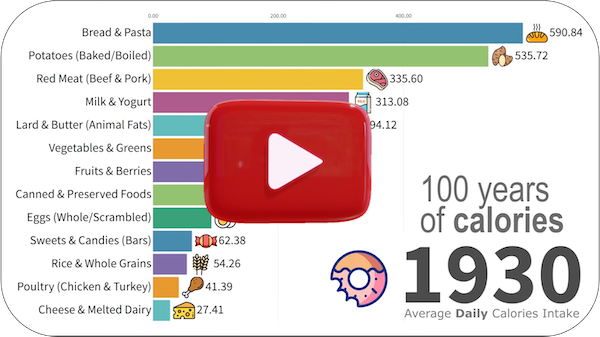
Check out the this visualization, which tracks the evolution of dietary calorie intake from 1930 to...

Taxpayer given 35% penalty for BAS recklessness
Following an application for a refund of nearly $94,000, the Administrative Review Tribunal has set aside an...

SMEs warned as ATO ramps up tax debt collection
One insolvency specialist has emphasised the importance of small businesses engaging their accountants to stay...

Does Your Small Business Need to Follow AML Privacy Rules?
Compliance with new anti-money laundering (AML) laws may subject your small business to additional privacy...

Don’t get caught out at tax time with your multiples jobs
Picking up a second job, holding multiple part-time roles, or doing gig work is now part of everyday life. But...

Global companies turn to cost-cutting amid ongoing inflation
Rising operating costs and persistent inflation are placing renewed pressure on businesses worldwide, despite...

Warning for early lodger this tax time!
The ATO has a clear message this year: slow down and get it right. Early lodgers are far more likely to make...

ATO no longer treating debt the same as during COVID
One expert has stressed the importance of tax agents reminding their clients that the ATO is no longer as...
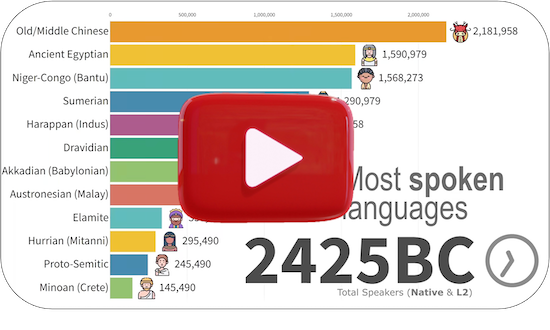
The evolution of the world’s languages
Check out the evolution of the world's most spoken languages from 2500 BC to...
Latest Guests News
Newsletter Newslettter We are pleased to supply you with the latest edition of Client Alert, which...