- 234 Balaclava Road, Caulfield North VIC 3161
- contactus@guests.com.au
- (03) 9509 7033
COVID-19 disaster payments to be tax-free: Prime Minister Scott Morrison
Prime Minister Scott Morrison has declared that COVID-19 disaster payments will now be tax-free, a policy change that will have ramifications for accountants and their clients, say tax experts.
Mr Morrison told ABC Radio on Thursday morning that the federally funded income support scheme would now provide tax-free payments of $750 a week to workers who lose 20 or more hours of work a week, and $450 a week to those who lose between eight and 20 hours.
The PM then stressed his point on Seven Network’s Sunrise, stating, “I’ve made that very clear this morning, back through the system, they won’t be taxable. JobKeeper, by the way, was.”
Mr Morrison’s position comes despite the Treasury, the ATO and Services Australia all publicly noting that COVID-19 disaster payments are taxable income.
A Treasury official told Accountants Daily that a policy change had indeed been made and that the Treasury was in the process of updating its guidance as of Friday morning.
A legislative change is unlikely to be required, given the COVID-19 disaster payment is authorised under regulations issued by the Governor-General rather than through legislation.
The Institute of Public Accountants general manager of technical policy, Tony Greco, said granting the $750 a week payment with a tax-free status would mean workers will take home more than they did under the original JobKeeper program.
Disaster payment recipients can expect to be better off by $90 a week compared with the JobKeeper wage subsidy, based on an annualised $39,000 income of $750 each week.
“The main concern is that these payments have always been stated as assessable, so now there’s confusion,” said Mr Greco. “It is a significant shift in treatment from what people have been told and what we have come to expect.
“This is a seismic shift in the tax treatment for recipients and a windfall which will come at a huge cost to the taxpayer.”
Michael Croker, tax leader at Chartered Accountants Australia and New Zealand, said the policy change would come at a bigger cost to taxpayers and open up questions around the taxable status of payments made since 3 June — the day the COVID-19 disaster payment was announced.
“Tax policy wonks will be concerned about the so-called income and substitution effects,” said Mr Croker.
“Within the hard-hit NSW business community, the new policy will be factored into the question often put to accountants: ‘Is it better to stand down workers, lower business labour costs and send them to Services Australia for the COVID-19 disaster payment?’.
“For some low-paid workers, $750 tax-free a week could even be a temporary pay rise, an outcome at odds to the take-home pay of a comparable employee still on the business’s payroll.”
According to Mr Morrison, more than $490 million in COVID-19 disaster payments have been paid to over 955,000 workers in NSW and Victoria.
The payments, which were increased on Wednesday from $600 to $750 a week for workers who lost more than 20 hours, and raised from $450 from $375 for those who lost between eight and 20 hours, are expected to cost the federal government $750 million a week.
Jotham Lian
30 July 2021
accountantsdaily.com.au
Tax mix to rely more heavily on income tax as the Treasurer ducks austerity
The Australian economy is predicted to grow “slower than previously thought” over the next 40 years, as the nation grapples with a tax mix that relies heavily on income tax despite an ageing population.
The federal government on Monday released its 2021 Intergenerational Report (IGR), the fifth of its kind, which forecast slowed growth for the Australian economy over the next 40 years as Australia’s population ages, and puts pressure on federal deficit repayment.
Personal income tax receipts are expected to grow faster than GDP, increasing from 11.1 per cent of GDP in 2020–21 to 12.7 per cent of GSP in 2035–36.
This will account for 53.1 per cent of total taxation receipts, up from 49.6 per cent this financial year.
The report goes on to suggest that company tax receipts will likely remain volatile as indirect and consumption-based taxes form a smaller proportion of total tax receipts than they have in the past.
Committee for Economic Development of Australia (CEDA) chief executive Melinda Cilento said the government’s assumption that Australia’s tax mix will mostly rely on income tax isn’t a realistic one.
“Comprehensive tax reform must be put back on the table, with a renewed resolve to reshape the system to sustain a strong and dynamic economy and pay for the essential services so important to our communities,” Ms Cilento said.
Treasurer Josh Frydenberg said the report details the long-tail impacts the COVID-19 pandemic are likely to mount in the face of the Australian economy but warned against hiking taxes.
“Our population is growing slower and ageing faster than expected,” Mr Frydenberg said. “The Australian economy will continue to grow, but slower than previously thought. Growth will continue to be highly dependent on productivity gains.
“Growing the economy is Australia’s pathway to budget repair, not austerity or higher taxes. Only by growing the economy can we continue to guarantee the essential services Australians rely on.”
An ageing population
According to the IGR, the old-age dependency ratio in 2019–20 was 4.0 working-age people for every person aged over 65. The ratio is projected to fall further by 2060–61 to 2.7 working-age people for every person over 65.
The fall, according to the report, presents challenges for Australia’s long-term economic growth and fiscal outlook, as a working-age person’s taxes will be required to support a greater number of people aged over 65, with no revenue mechanisms yet in place to offset the nation’s ageing population unable to work.
It highlights that a larger, older population will require greater government spending in healthcare, the Age Pension and end-of-life support, and has implications for participation and productivity growth.
As the population continues to age and adds pressure to the budget, the report suggests government policy will need to adapt and foster economic growth to overcome these fiscal challenges, instead of generating feasible revenue streams to support them.
“While Australia’s debt is sustainable and low by international standards, the ageing of our population will put significant pressures on both revenue and expenditure,” it said.
The report goes on to highlight that future governments will need to manage spending pressures by “improving the efficiency of service delivery” and delivering services like health and aged care via targeted programs paid for by the lowest, most “efficient” taxes possible.
Mr Frydenberg said federal deficits are expected to decline from current GDP of 7.8 per cent to 0.7 of a percentage point in 2036–37, before widening to 2.3 per cent in 2060–61.
“It’s a trajectory similar to many of the previous IGRs reflecting the impact of an ageing population and existing policy settings,” Mr Frydenberg said. “However, the budget position is significantly better than projected in most past IGRs.
“The Howard government’s 2002 and 2007 IGRs forecast deficits at the end of the 40-year period of 7 per cent and 5 per cent, respectively, and the Rudd government's 2010 IGR forecast a deficit of 4 per cent in 2050.”
On economic growth, the Treasurer said governments will need to invest further in skills, infrastructure and digital transformation, along with a more efficient tax system, though he shied away from detailing what that might look like, in both his speech, and the report.
“With productivity responsible for over 80 per cent of Australia’s national income growth over the past 30 years, the task is obvious and the choice is clear,” Mr Frydenberg said.
“If we want to maintain our living standards, generate higher wages and create more jobs, Australia has no alternative other than to pursue economic reform, much of which is hard and contested.”
John Buckley
29 June 2021
accountantsdaily.com.au
Tax implications – more than one job
If you are working two or more jobs casually or have overlapping contract work, you need to be careful to avoid an unexpected end of financial year tax debt.

With insecure, contract and casual work becoming increasingly common, particularly in the current COVID-19 affected economy, it’s no surprise that many young and not-so-young Australians may have income from more than one job.
A tax debt may arise where a person with more than one job claims the tax-free threshold in relation to multiple employers, resulting in too little tax being withheld overall. To avoid that, you need to look carefully at how much you’ll be earning and adjust the pay as you go (PAYG) tax withheld accordingly.
Currently, the tax-free threshold is $18,200, which means that if you’re an Australian resident for tax purposes, the first $18,200 of your yearly income isn’t subject to tax. This works out to roughly $350 a week.
A simple solution for people who have more than one employer/payer at the same time is only claim the tax-free threshold from the employer who usually pays the highest salary or wage. The other employer/payer will then withhold tax from your payments at a higher rate (the “no tax-free threshold” rate).
If you have two or more incomes, for example from casual or contract jobs or because you get a pension and have part-time employment income, we can help you figure out your tax withholding arrangements and avoid a surprising bill at tax time.
AcctWeb
ATO extends Division 7A COVID-19 relief
The Tax Office has extended relief for taxpayers who are unable to meet the minimum yearly repayments on Division 7A loans due to COVID-19.

On Monday, the ATO confirmed it would offer an extension of the repayment period for those who are unable to make their minimum yearly repayments (MYRs) by the end of the lender’s 2020–21 income year due to the ongoing effects of COVID-19 under section 109RD.
A similar extension was provided last year for the 2019–20 MYR. Taxpayers who obtained the extension last year will be required to make up the shortfall of their 2019–20 MYR by 30 June 2021.
Borrowers seeking the relief this year will be required to complete a streamlined online application form where they will be asked to confirm the shortfall, that the COVID-19 situation has affected them and that they are unable to pay the MYR as a result.
The ATO can only make a decision in writing after the end of the lender’s 2020–21 income year, within 28 days on receipt of the lodgement form.
Once approved, borrowers will be informed that they will not be considered to have received an unfranked dividend if the shortfall is paid by 30 June 2022.
The streamlined application process only applies to applications for an extension of the 2019–20 and 2020–21 MYR of up to 12 months under section 109RD for COVID-19-affected borrowers, with the ATO noting that it is not intended to be available in the 2021–22 income year and beyond.
Borrowers can still apply to obtain a longer extension of time outside the streamlined process under section 109RD, or for relief on the grounds of undue hardship under section 109Q.
Further details and the approved ATO form can be accessed here.
Jotham Lian
22 June 2021
accountantsdaily.com.au
Super transfer balance cap increase from 1 July 2021
This year will be the first indexation increase of the $1.6 million pension limit.

If you’re nearing retirement and have a large amount in your transfer balance account, it may be wise to take advantage of this after 1 July 2021 due to the pension transfer cap increase from $1.6 million to $1.7 million.
At the time you first commence a retirement phase superannuation income stream, your “personal transfer balance cap” is set at the general transfer balance cap for that financial year.
When the general transfer balance cap is indexed to $1.7 million from 1 July 2021, there won’t be a single cap that applies to all individuals. Rather, every individual will have their own personal transfer balance cap of between $1.6 million and $1.7 million.
Each calculation will be dependent on member balance in each superannuation account and pension start date.
AcctWeb
ATO extends STP finalisation due date
Employers have been given additional time to complete their Single Touch Payroll finalisation declaration this year as the ATO recognises the ongoing impacts of COVID-19.
Employers with arm’s length employees will now be given until 31 July to make their end-of-year STP finalisation declaration, an extension from the usual 14 July due date.
The ATO said the extension follows the continued “impacts of COVID-19 on the Australian community”, but urged employers who were able to complete the declaration at an earlier date to do so.
“It’s important that you finalise your employees’ data by 14 July if you can, and let your employees know when you have so they can lodge their income tax returns,” said the ATO.
The Institute of Certified Bookkeepers executive director Matthew Addison said it was pleasing to see the ATO provide an extension in light of lockdowns occurring across the country.
“It is a great measure of consideration and support of the immense expectations upon agents and employers in what has been an adversely impacted year,” Mr Addison said.
“Bookkeepers and accountants are reporting significant anxiety and stress on themselves as well as from businesses and their teams with this end of year in particular.
“Advisers helping business through understanding and coping with different phases of ‘COVID lockdown’ adds to a time of year that is already rife with compliance deadlines.
“The relaxing of this deadline will assist with ensuring that the end-of-year income statements for individuals are prepared correctly.”
The finalisation due date for those with a mixture of closely held payees and arm’s length employees will remain at 30 September for closely held payees. Small employers who only have closely held payees will need to complete the finalisation by the payee’s income tax return due date.
Jotham Lian
30 June 2021
accountantsdaily.com.au
Home Office & end of 2021 tax year
In a Covid-ravaged financial year, small business owners need consider what actions now can benefit in saving income tax. Taxpayers with the best records often have the best deductions.

With just a few weeks to go until 30 June, it is time to check the log books for telephone use, diary of home-office hours use, or vehicle logbook if using those methods.
If your room has a designated workspace or room, calculate the work-related portion of most or all home office expenses. The new covid work at home deduction is usually the lowest calculation but it is easy.
If you are running your own business from home, you may also be able to claim work-related share of occupancy expenses.
Start with all the costs for the premises – but not rates or interest on the home loan. Working with your tax agent can clarify what portion can be claimed.
The Australian Taxation Office recently warned people to be careful with work-related expenses such as car and travel claims, which are expected to fall in this years income tax returns, with so many people working from home.
Examples of home office equipment which can be claimed in full –
- Home printers
- Monitors
- Cables
- Sit-stand desks and ergonomic seats
- Health and safety products, including social distancing floor decals and so-called sneeze screens
There is in effect no limit on how much you can spend on home office equipment – consider your budget though before deciding a tax purpose is the dominant reason to buy.
Don’t forget internet services, phone plans, backup & anti-virus software in the list to claim.
AcctWeb
Year-end tax planning
Tax time is here again and pressure is mounting.
Work-related purchases, donations and superannuation are key areas where people can boost their deductions by taking action now.
Prepaying expenses that relate to 12 months cover, before 30 June can create bigger deductions, – for example, professional memberships, professional journals and subscriptions, even insurance premiums for investment properties and income protection.
Prepay the costs of a conference later in the year.
Interest on investment loans can be another prepayment – and combine it with a reduced interest rate.
Need to buy something for your job or home office? Do it now.
Many people will be able to claim for a number of work-related expenses they wouldn’t otherwise have had to consider, such as home internet and items required for home office.
Donations to most legitimate charities are tax deductible – there are many, many deserving charities in need of help in this covid – ravaged year.
Many taxpayers can contribute up to $25,000 into their super this year – including employer contributions and salary sacrifice, but it must be well before end of June. The funds must be received and processed by the fund before 30 June, so do it as soon as possible!
Spouse contributions made for low-income partners is sometimes of benefit.
Using a logbook for 12 weeks to map your work-related car expenses in normal years can be the biggest tax deduction. But this year might calculate a higher percentage because there has been such limited holidays or private use because of lockdowns ( Melbourne taxpayers particularly) out of the total travelled this year.
Many people only claim the cents a kilometre method of 72 cents for up to 5000km travelled, but often cars can deliver bigger deductions, once petrol, maintenance, insurance and other costs are combined, with a log book.
Invest a few moments now, to save more than a few dollars at tax time.!
Post Federal budget reflections
The federal budget 2021–22 was handed down by the Treasurer, the Hon Josh Frydenberg MP, on 11 May 2021. This article considers the key issues as we wait for the legislative amendments to give effect to the budget measures.

At the time JobKeeper was announced on 30 March 2020, I described the scheme as akin to a pot of boiling water on the stove (representing the economy) where the gas levels cannot be maintained (due to COVID-19 lockdowns). Rather than turn the gas off, it was reduced to a low simmer. This would allow the pot to return to the boil more quickly than if the water was allowed to go stone cold.
It worked … the Australian economy has rebounded faster and stronger than expected, as evidenced by the latest budget numbers. For all its minor design flaws, JobKeeper kept businesses afloat and employees in jobs.
While an eye-watering deficit of $106.6 billion has been forecast for 2021–22, the budget measures have been positively received by many observers, containing plenty of good news for most. This budget was undoubtedly prepared with a forthcoming Federal election in mind (expected to be held no later than 21 May 2022) and against the backdrop of an electorate weary from the COVID-19 pandemic.
As I reflect on the package of key tax and superannuation measures announced this year, it is apparent that some of the measures can be classified into one of the following three categories:
- measures which are long overdue and constitute a ‘clean up’;
- measures which are welcome but could go further; and
- measures which are difficult to fault for their intent or purpose, but which require further consultation.
Letting go of LMITO
Before I do so, I’d like to comment on the highly visible Low and Middle Income tax offset (LMITO), thanks to extensive media coverage. If anyone is thinking the LMITO should be further extended (beyond 2021–22) or retained permanently, remember that it was baked into Stage 2 of the Personal Income Tax Plan. Stage 2 was originally legislated to apply from 1 July 2022 which would have subsumed the limited life LMITO.
However, last year’s budget brought forward Stage 2 by two years and unexpectedly extended the LMITO by 12 months to 2020–21. The LMITO’s life will be further extended to 2021–22, meaning it will endure for what will now be four years, as originally intended in the Personal Income Tax Plan, from 2018–19 to 2021–22.
Importantly, the nexus between the LMITO and the Stage 2 tax cuts has been decoupled. The tax cuts package was designed before COVID-19. The continuation of the LMITO for an additional two years has morphed into an economic stimulus measure. Its proposed removal after 2021–22 will visibly cut into family budgets as its recipients have become accustomed to the offset and come to rely on it. Perhaps the ‘bonus’ two years of the LMITO could have been rebadged (even renamed) by the government as a stimulus measure, as its subsumption by the Stage 2 tax cuts on 1 July 2020 seems to have gone unnoticed by most taxpayers and the media.
Long overdue measures
- The proposed removal of the exclusion of the first $250 of deductions for self-education expenses (not likely before 1 July 2022) is a sensible measure. This annoying rule — a legacy of the concessional deduction of the 1960s, the $250 rebate of the 1970s and the removal of that rebate in the early 1980s — imposes an unnecessary compliance burden on taxpayers.
- The proposed removal of the $450 monthly income threshold for superannuation guarantee purposes (not likely before 1 July 2022) is a sensible and long overdue change, particularly in this digital age of electronic payments and reporting. This measure is expected to benefit 300,000 low income employees, of which 63 per cent are women.
- The proposed removal of the active member test for SMSFs and small APRA funds (not likely before 1 July 2022) is also a long overdue measure. This sensible change will allow those temporarily stranded offshore due to our international border closure to continue to contribute to their own funds without having to set up a separate superannuation account managed by a large fund. The increase in the period under the temporary absence rule for fund trustees from two years to five years is also sensible, particularly for those trustees whose temporary absences overseas have been unexpectedly extended by COVID-19.
Welcome measures that could go further
- The proposed removal of the work test for those aged 67–74 making voluntary superannuation contributions (not likely before 1 July 2022) is a pleasing measure but falls short. The work test will be removed for those making voluntary non-concessional contributions or concessional contributions under a salary sacrifice arrangement but will remain for those aged 67–74 who cannot access salary sacrifice arrangements or earn solely investment income and seek to make personal deductible contributions. At a time when all efforts should be made to encourage superannuation savings, it is curious why this unnecessary restriction on the making of some concessional contributions remains.
- Temporary full expensing and loss carry back are economic stimulus measures from last year’s budget. These will be extended for a further 12 months, to 30 June 2023 and 2022–23 respectively. While this is welcome, the annual extension and/or expansion of the asset write-off mechanism (in one form or another since 12 May 2015), in particular, is inefficient and confusing for taxpayers and practitioners. It is high time the government decides on the appropriate asset and business turnover settings and makes these mechanisms a permanent feature of the law, for once and for all.
- The introduction of a patent box — a concessional corporate tax rate of 17 per cent on income derived from Australian patents in the medical and biotechnology sectors — is an innovative response from the government. There is enormous scope to expand the concept to other industries (noting that the clean energy sector has already been flagged).
Awaiting further detail
- The changes to the corporate tax residency rules — announced in last year’s budget — will now be sensibly extended to include trusts and corporate limited partnerships. However, we await further detail on the new ‘significant economic connection to Australia’ test for companies incorporated outside Australia announced in last year’s budget.
- The introduction of a new individual tax residency ‘bright line test’ should, theoretically, replace the current ‘resides test’ and the three statutory tests. However, the proposed secondary ‘Factor test’ may present new challenges for those who fail the primary ‘bright line test’, particularly when taxpayers try to navigate the ‘Australian economic connections’ factor. It is hoped that the government will look to consult further with the profession before finalising its policy position on the detail of this measure. We need to be careful we are not effectively replacing one set of complex tests with another, without gaining any ground.
Other significant measures
Other notable measures announced in the budget include the following:
- the eligible age for making downsizer superannuation contributions will be reduced from 65 to 60 (not likely before 1 July 2022);
- the maximum releasable amount under the First Home Super Saver Scheme will be increased from $30,000 to $50,000 (not likely before 1 July 2022);
- taxpayers will be allowed to self-assess the effective life of intangible assets rather than being required to use the statutory effective lives set out in s 40-95(7) of the ITAA 1997 (but not until 1 July 2023);
- the cessation of employment will be removed as a taxing point for tax deferred employee share scheme interests; and
- small business entities (aggregated turnover of less than $10 million) will be provided with the ability to apply to the Small Business Taxation Division of the Administrative Appeals Tribunal (AAT) to pause or modify ATO debt recovery action until the underlying dispute is resolved by the AAT, rather than applying through the courts.
The start date of the measures
The government released the budget for 2021–22 on 11 May 2021, yet none of the key tax and superannuation measures commence on 1 July 2021 (noting the continuation of temporary full expensing and loss carry back until 2023). Most of the measures start on the first 1 July following Royal Asset of the enabling legislation. While this acknowledges the reality of the inevitable passage of time between the date of announcement and the date of Royal Assent (allowing time for the measures to be passed by Parliament), it means that, ironically, most of the tax and superannuation measures contained in the federal budget 2021–22 will not commence until 1 July 2022 at the earliest.
This timing places the commencement of these measures beyond the next Federal election. If the measures are enacted before then, any changes could only be effected by further legislative amendment. If any of the measures are still unenacted when the Parliament is dissolved and:
- the Coalition is re-elected — presumably the policies would be retained and any unenacted measures contained in bills lapsing on the dissolution of the Parliament would be reintroduced;
- the Opposition forms government — it would be a matter for the Australian Labor Party to set out their policies and confirm whether the Coalition’s budget measures will be adopted.
As usual, we shall wait and see what transpires.
A final word on tax reform…
The budget did not contain any commitment to a holistic tax reform agenda. We still hope that the government will commit to tax reform to improve the efficiency and equity, and reduce the complexity, of the tax and superannuation system.
The government could take up opportunities set out in The Tax Institute’s pre-budget submission on expediting dispute resolution and dealing with some of the penalty issues raised in our submission, including the draconian 200 per cent penalty imposed under the superannuation guarantee regime for failure to lodge an SG statement.
Robyn Jacobson
The Tax Institute
28 May 2021
accountantsdaily.com.au
ATO sheds light on crypto compliance focus
The Tax Office has urged advisers and taxpayers alike to heed its guidance on accounting for cryptocurrency come tax time, when it will be looking to ensure that all capital gains events are accurately reported — not just gains.

Speaking at a tax-time tips seminar on Thursday, ATO assistant commissioner Adam O’Grady warned tax agents and taxpayers that his office will be closely watching all capital events related to cryptocurrency come tax time.
“It is really important for all capital assets; we will be looking to ensure that the people have reported the capital gains events — and this is for both gains and losses,” Mr O’Grady said.
Mr O’Grady urged tax agents to make use of data pre-filled by the ATO. He said that in addition to using pre-filled data to assist agents submit accurate returns, it will also be using data supplied by Australian cryptocurrency exchanges to cross-reference returns.
“We get information and data on property sales from all the state and territory revenue offices,” he said. “We have very good shares data as well and it’s available as a pre-filled service [where] you can download different shares transactions for your clients.
“We are also getting cryptocurrency information from Australian scientists as well. So we’ll be using that information to look at returns as they come in.
“And when people have had significant capital gains events according to that data, if it’s not reported in the return, we’ll be looking to hold those returns and again enquire with you and with your clients as to where those transactions are.”
Mr O’Grady stressed the importance of reporting all capital gains events — whether they be losses or earnings — to avoid unwanted attention from the Tax Office.
“One of the emerging themes we are seeing in the capital gains space is losses not being reported through the tax return. It’s really important to still report those losses through the return,” he said.
“Not only does it avoid us having to follow up as to why you haven’t done that for the year, and while it may not be a financial impact to you, or the clients this year, because those losses are quarantined. It applies for future years.”
Mr O’Grady’s warnings follow the beginnings of an ATO crypto compliance crackdown last year, as the pandemic prompted a marked increase in consumer investment.
The Tax Office has since allocated substantial resources into cryptocurrency data matching and the promotion of taxpayer obligations for those buying, selling and holding crypto assets.
The ATO last year said that it would work with designated service providers, or DSPs, to obtain data used to identify buyers and sellers of crypto assets and quantify related transactions.
The Tax Office then uses data provided by DSPs and cross-references them against ATO records to identify individuals who may not be meeting their registration, lodgement or payment obligations.
Last year, the ATO took a good-faith approach to those who had failed to meet their crypto asset tax obligations, but it isn’t expected to last much longer, according to H&R Block director of tax communications Mark Chapman.
Mr Chapman in February said that now is time for those involved in cryptocurrencies to pay attention to the “tax side of things”, before the ATO ramps up enforcement of undeclared crypto assets.
“I think the first thing to say is that the ATO has, within the last year or so, started gathering data from cryptocurrency exchanges, the actual providers,” he said. “As a result of that, I think the ATO now has a much better understanding of who’s involved in this market.”
While the ATO has been expected to ramp up auditing around cryptocurrencies for the past three years, and hasn’t, its “light touch” isn’t expected to last much longer.
The ATO first showed signs of cracking down on compliance in March last year, when an undisclosed number of letters were sent to taxpayers, warning them to come clean with their capital gains or losses.
“Quite a few clients and non-clients have received these letters from the ATO, flagging that there’s a mismatch in their data,” Mr Chapman said. “And I think that’s prompting a lot of people to come in to see their tax agent, or maybe to see a tax agent for the first time if they’ve been doing it themselves.
“But I’m not convinced that [the ATO’s light-touch approach] will necessarily last forever.
“I think, as the data comes in, as the ATO has a greater awareness of how many people are in this space, they will start to take a slightly firmer line.”
John Buckley
24 May 2021
accountantsdaily.com.au
Latest Industry News

How Do I Write Legally Compliant Terms and Conditions for My Business?
Terms and conditions bind your customers only where they actively accept them, so a tick box at checkout holds...

Paid parental leave super contributions have started
From July 2026, the new Paid Parental Leave Superannuation Contribution (PPLSC) has started. From...

If the business is no longer profitable, and is unlikely to be profitable in the future, your best option may...
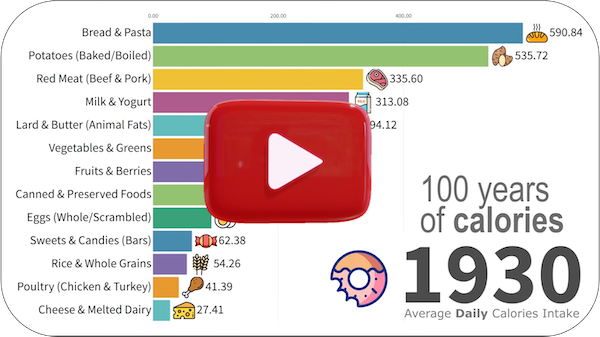
Check out the this visualization, which tracks the evolution of dietary calorie intake from 1930 to...

Taxpayer given 35% penalty for BAS recklessness
Following an application for a refund of nearly $94,000, the Administrative Review Tribunal has set aside an...

SMEs warned as ATO ramps up tax debt collection
One insolvency specialist has emphasised the importance of small businesses engaging their accountants to stay...

Does Your Small Business Need to Follow AML Privacy Rules?
Compliance with new anti-money laundering (AML) laws may subject your small business to additional privacy...

Don’t get caught out at tax time with your multiples jobs
Picking up a second job, holding multiple part-time roles, or doing gig work is now part of everyday life. But...

Global companies turn to cost-cutting amid ongoing inflation
Rising operating costs and persistent inflation are placing renewed pressure on businesses worldwide, despite...
Warning for early lodger this tax time!
The ATO has a clear message this year: slow down and get it right. Early lodgers are far more likely to make...

ATO no longer treating debt the same as during COVID
One expert has stressed the importance of tax agents reminding their clients that the ATO is no longer as...

The evolution of the world’s languages
Check out the evolution of the world's most spoken languages from 2500 BC to...
Latest Guests News

Newsletter Newslettter We are pleased to supply you with the latest edition of Client Alert, which...