- 234 Balaclava Road, Caulfield North VIC 3161
- contactus@guests.com.au
- (03) 9509 7033
State and Federal COVID-19 support
The following links are to the latest state and federal government plans, schemes, programs, and initiatives to help businesses and individuals manage the impact of yet more COVID-19 restrictions.

FEDERAL GOVERNMENT
VICTORIA
- https://www.coronavirus.vic.gov.au/financial-support-for-businesses-and-workers
- https://business.vic.gov.au/
- https://www.sro.vic.gov.au/coronavirus
NSW
- https://www.service.nsw.gov.au/campaign/covid-19-help-businesses
- https://www.nsw.gov.au/covid-19/financial-support
- https://www.revenue.nsw.gov.au/grants-schemes
QLD
- https://www.business.qld.gov.au/starting-business/advice-support/grants/covid19-support-grants
- https://www.covid19.qld.gov.au/government-actions/financial-support-for-individuals
- https://desbt.qld.gov.au/training/employers/coronavirus-assistance
ACT
- https://www.act.gov.au/business/business-support/covid-19-economic-support-for-business
- https://www.covid19.act.gov.au/community/access-help
- https://www.revenue.act.gov.au/covid-19-assistance
South Australia
- https://www.covid-19.sa.gov.au/school-and-community/financial-support-for-individuals
- https://www.treasury.sa.gov.au/Growing-South-Australia/stimulus-measures-to-support-businesses-and-the-community-impacted-by-covid-19
- https://business.sa.gov.au/COVID-19-business-information-and-support
WA
- https://www.wa.gov.au/organisation/department-of-the-premier-and-cabinet/covid-19-coronavirus-support-business
- https://www.smallbusiness.wa.gov.au/blog/wa-coronavirus-relief-package
- https://www.jobsandskills.wa.gov.au/jobs-and-skills-centre/covid-19-support-individuals-and-jobseekers
TAS
- https://www.coronavirus.tas.gov.au/business-and-employees/business-support
- https://www.business.tas.gov.au/covid-19_business_support_package
- https://www.stategrowth.tas.gov.au/coronavirus
- https://www.sro.tas.gov.au/about-us/covid-19
NT
- https://coronavirus.nt.gov.au/business-and-work
- https://businessrecovery.nt.gov.au/businesses
- https://business.gov.au/risk-management/emergency-management/coronavirus-information-and-support-for-business
- https://treasury.nt.gov.au/dtf/territory-revenue-office/payroll-tax/payroll-tax-relief
- https://nt.gov.au/industry/business-grants-funding
NSW support measures, plus update for payroll tax.
A combination of information from the 13-7-21 and the 26-7-21.

Payroll tax update:
All NSW businesses that have a payroll tax liability will now have the option of deferring lodgement and payment of their 2020–21 annual reconciliation until 7 October 2021.
Businesses that are required to lodge monthly returns will also have the option of deferring their returns due in August and September until 7 October 2021.
Those who choose to defer their payments will also be eligible for an interest-free payment plan of up to 12 months.
The NSW government will also grant businesses with wages between $1.2 million and $10 million a 25 per cent reduction of their 2021–22 payroll tax if they have experienced a 30 per cent decline in turnover.
“We know the effects of restrictions are being felt right across the state and that’s why we have ensured that all payroll tax customers are able to take advantage of the deferral and repayment options, regardless of size or geographical location,” NSW Finance and Small Business Minister Damien Tudehope said.
“We want to free up cash for businesses at a time when businesses are doing it tough, by waiving or deferring their tax.”
The state’s payroll support is part of its $4 billion support package, which includes the 2021 COVID-19 business grant, the JobSaver payment and the micro-business support grant.
New NSW support measures as at 13-7-21
Businesses in NSW can now expect new support payments and larger grants, while individuals are set to receive increased disaster payments as the state battens down the hatches in the face of an extended lockdown.
A list of key measures announced so far:
New business support payments:
- A new direct payment to be made available to entities with an annual turnover between $75,000 and $50 million who can demonstrate a 30 per cent decline in turnover compared with an equivalent two-week period in 2019.
- Eligible entities will be required to maintain their full-time, part-time and long-term casual staffing level as of 13 July.
- Eligible entities, which include not-for-profits, will receive payments of between $1,500 and $10,000 per week based on the level of their payroll.
- For non-employing businesses, such as sole traders, the payment will be set at $1,000 per week.
- The payments will be administered by Service NSW, with registrations of interest to open on Wednesday, 14 July.
Expanded business grants, payroll support, tax relief:
- Eligible businesses with wages below $10 million can claim grants between $7,500 and $15,000 to cover the first three weeks of restrictions.
- A new $1,500 per fortnight payment for micro-businesses with a turnover of between $30,000 and $75,000 which experience a decline in turnover of 30 per cent.
- Payroll tax waivers of 25 per cent for businesses with wages of between $1.2 million and $10 million that have experienced a 30 per cent decline in turnover.
- A capped grant of up to $1,500 for residential landlords who are not liable to pay land tax who reduce rent for tenants estimated at $210 million.
- Land tax relief equal to the value of rent reductions provided by commercial, retail and residential landlords to financially distressed tenants, up to 100 per cent of the 2021 land tax year liability.
- A short-term eviction moratorium for rental arrears where a residential tenant suffers loss of income of 25 per cent due to COVID-19 and meets a range of criteria.
- Deferral of gaming tax assessments for clubs until 21 December 2021 and hotels until 21 January 2022.
Individuals:
- From 18 July, the COVID-19 Disaster Payment will increase from $500 to $600 each week if a person has lost 20 hours or more of work a week, or $325 to $375 each week if a person has lost between 8 and 20 hours of work.
- The payment will be made available to NSW individuals outside Commonwealth-declared hotspots in Sydney if they have lost hours and satisfy the eligibility criteria.
- The payment will be a recurring payment for approved recipients for as long as the Commonwealth-declared hotspot and lockdown restrictions remain in place. This will remove the need for recipients to re-claim for each seven-day period of a lockdown.
The full eligibility criteria for both the business and individual support measures are currently being developed by Service NSW and Services Australia, with the information provided above current as of 13 July.
Jotham Lian 26-7-21 and 13-7-21
accountantsdaily.com.au
Superannuation Guarantee Rates Reminder
The current superannuation guarantee rates for employees has increased to 10% rate from pay periods ending after 1st July 2021. This has changed from the 9.5% superannuation guarantee rate used since 2014.

Employers are encouraged to review their payroll software to ensure that their systems are up to date and are calculating the correct rates. The incorrect rates will lead to unintended underpayments of superannuation, which may attract penalties.
We also recommend that employers review your employee’s contracts to ensure that you are calculating the superannuation correctly on the employees renumeration package. The first quarterly superannuation guarantee subject to the new rate will be September 2021, due by the 28th October 2021.
As a reminder, the following superannuation guarantee (SG) rates are to be implemented in due course:
|
Period |
SG Rate |
|
1 July 2021 to 30 June 2022 |
10.00% |
|
1 July 2022 to 30 June 2023 |
10.50% |
|
1 July 2023 to 30 June 2024 |
11.00% |
|
1 July 2024 to 30 June 2025 |
11.50% |
|
1 July 2025 to 30 June 2026 |
12.00% |
AcctWeb
‘Mammoth consequences’: ATO’s NALI ruling draws ire from accountants
The recent ruling on non-arm’s length income (NALI) in super funds by the ATO will have far-reaching consequences for the superannuation sector, according to industry experts.

First issued as a draft in September 2019, the finalised Law Companion Ruling 2021/2 issued on Wednesday, which clarifies the ATO's interpretation of amendments to NALI rules relating to non-arm’s length expenditure (NALE).
The Institute of Public Accountants, The Tax Institute and Chartered Accountants Australia and New Zealand have now joined together to call for the ruling to be narrowed to the law’s original intent.
“At the same time as the whole super sector has been helping Australians navigate their retirement like never before, they’ve been waiting with bated breath for the finalisation of this ruling which seems to demand perfection,” said the joint bodies.
“The ruling forces all super funds to carefully consider if all losses, outgoings and expenditures have occurred on arm’s length terms.
“It is concerning that if finance teams, accountants or advisers get any transaction wrong in any super fund including APRA regulated funds, that fund could pay the highest marginal tax rate at 45 per cent on all its income including realised capital gains.
“There are mammoth consequences for minor errors which means that solutions need to be worked through very carefully, requiring considerable time and expertise. Because of this potential outcome all super funds need more certainty about how they go about their business.”
The joint bodies note that the LCR 2021/2 ruling applies to a much broader range of circumstances and has much greater impact than what the super industry had understood the original government announcement was targeted at.
“The ruling which has opted to show the broad application of these non-arm’s length rules even to relatively benign situations and the ATO has clearly indicated that it intends to apply a broad interpretation to these rules.
“The ATO has provided multiple opportunities for professional bodies and the industry to comment on these rulings throughout its development and we look forward to continuing this collaboration with the ATO to investigate how this ruling will apply in practice.
“We will also work with the government to request that these rules be narrowed so that benign or minor expenses cannot create such a disproportionate outcome to a super funds’ tax affairs and in turn severely deplete retirement of Australians.”
Increased risks and litigation impacts
With the confirmation of the ruling, DBA Lawyers director Daniel Butler said the ATO has taken a pro-revenue construction of legislation that results in numerous far-reaching and severe consequences.
“The construction that a ‘general expense’ taints all of a fund’s entire income, both ordinary income and statutory income, is the preferred construction posited by the ATO,” Mr Butler said. The ATO does not acknowledge the preferred construction put forward by numerous professional bodies.
“This was not expected by many in the SMSF industry and has caused great concern in the SMSF sector that the ATO may seek to assess many mum and dad SMSFs doing typical dealings.
“Numerous professional bodies submitted that a general expense such as a lower accounting fee has little, if any, nexus to income derived; any connection at best could be described as tenuous and remote.
“The good news is that the ATO will not dedicate its compliance resources if there are reasonable attempts to benchmark an arm’s length service fee being charged.”
Mr Butler said it would remain to be seen how the courts would react to the ruling if such matters proceed to litigation.
“What view would a court cast on say a $100 discount resulting in a 45 per cent tax on an average mum and dad SMSF of $1.3 million with a diversified investment portfolio on the basis that the ATO argue that a $100 discount on an accounting fee has a sufficient connection to every share, managed fund, deposit, interest in real property (direct and indirect) and the fund’s other investments, etc,” Mr Butler explained.
“One would hope that a judge would see the absurd and severe consequences that can result from this construction and construe the NALE provisions in a balanced manner. The rules of statutory construction where tax is being levied must be clear and should be construed accordingly where absurd and unintended consequences arise. That is not to say the ATO are not without an argument, but is it the preferred construction that would hold sway in a court of law?
“Importantly, the ATO is not a law maker and the ruling is light on in relation to providing appropriate reason or authority to support the ATO’s views.
“Despite the ruling not being the law, given taxpayers wear the onus of proof, the ATO view generally prevails as not many taxpayers are prepared to ventilate technical points of law with the ATO that has vast resources at its disposal.”
There is also the risk that some ATO officers may seek to apply NALI inappropriately and give rise to substantial costs to defend unfounded NALI claims, according to Mr Butler.
“There is no formal early engagement and voluntary disclosure for NALI as there is for contraventions of the Superannuation Industry (Supervision) Act 1993 (Cth),” Mr Butler continued.
“Such a system is needed as SMSFs are often afraid to approach the ATO given its recent stance on NALI matters. The ATO should encourage funds to come forward and due to reduced penalties and more flexible approach for engaging with the ATO.”
Conflicting and complex applications
While the ATO has sought to clarify certain points such as whether a person is acting as in an SMSF trustee/director capacity or in their own individual capacity, the ruling has come as a disappointment to many in the superannuation industry.
Heffron managing director Meg Heffron said whilst the ATO has consulted widely, “it has ended up in a place that won’t please a lot of us on every front.”
Ms Heffron noted that the ruling explicitly distinguishes between this type of “once-off NALE” and a similar problem where the expense relates to the purchase of an asset.
“Unfortunately, there is a permanent problem for NALE under these circumstances. The ruling even provides an explicit example where an LRBA is entered into on non-arm’s length terms. Even refinancing and moving to arm’s length terms doesn’t help – all income and capital gains, now and forever, will be NALI,” Ms Heffron said.
“That’s rough. It means there is actually no solution for LRBAs that aren’t set up on a solid market basis.”
Ms Heffron noted that whilst the ATO had softened its original stance on the application of NALI to professionals such as accountants doing work for their own SMSFs using company equipment, there were still plenty of questions to answer in regard to this subject.
“The importance of relying on a licence or insurance – it would seem that (for example) it’s fine for a qualified accountant to do their SMSF’s bookwork on their work computer and using their expertise gained via their work. But if they also lodged their tax return under their firm’s corporate tax agency, that is likely to create a problem,” Ms Heffron said.
“A similar issue would appear to arise for financial advisers. An example provided in the ruling (Example 7, Levi) makes it clear that it’s fine for Levi to place investments for his SMSF (even using his work computer). But we’re unclear as to how far that stretches. If Levi’s SMSF is invested via the same platform as all Levi’s other clients, can he manage it under the same dealer code?
“And finally, the ruling does acknowledge the commercial reality of things like staff discounts. It provides examples about situations where (say) accounting fees for work on SMSFs of the staff who work at the firm can be discounted without automatically creating NALE.
“A key feature of the examples provided, however, is that the trustee/member is not in a position to influence the discount. How far does this go? Could we be in the bizarre situation where I can offer all Heffron staff a discount on their SMSF work but can’t receive one myself because I can influence the decision? It’s not clear.”
Tony Zhang
29 July 2021
smsfadviser.com
ATO Small Business Newsroom – July / August
The ATO provides information on a large number of business related topics, issues, rules and regulations. We hope this article will help quickly you keep up to date.
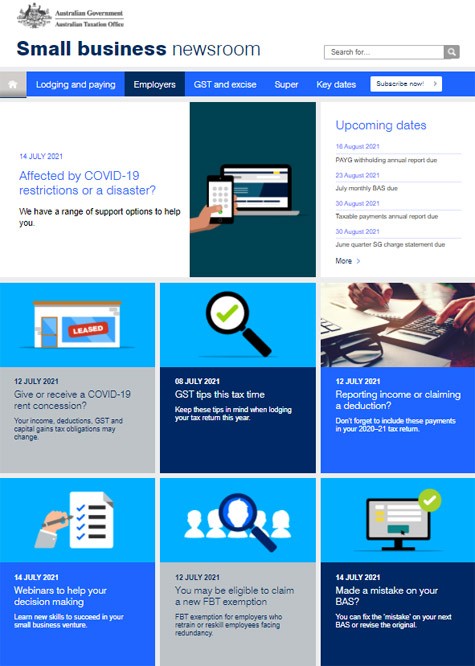
Visiting the ATO's website can be daunting but here is a page that links to information important to small businesses everywhere.
For example:
- Upcoming dates
- Afected by COVID-19
- GST tips
- Reporting income or claiming a deduction
- Made a mistake on your BAS?
- More ….
Click here or the image to access this resource.
ATO
Hardship priority processing of tax returns
If your business is experiencing financial difficulties due to the latest lockdowns, the Australian Taxation Office (ATO) may be able to help by processing your tax return faster and expediting the release of any refund to you.

Priority processing of a business tax return doesn’t guarantee a refund. If your business has outstanding tax or other debts with Australian government agencies, the credit from a return may be used to pay down those debts first.
You can apply for ATO priority processing through your tax professional after the lodgement of the tax return in question. Once the initial request for priority processing is received, you’ll be notified and contacted if more information is required. Processing will take more time for businesses that have lodged several years’ worth of income tax return amendments at the same time, and for those that have unresolved tax debts.
Before lodging any priority processing request, check the progress of your return by contacting your tax professional. If the return is in the final stages of processing, you may not need to lodge a priority processing request – the return will be finalised before the ATO has an opportunity to consider the request.
AcctWeb
‘Nowhere to hide’: New gig economy reporting regime set to debut
Share economy participants will no longer be able to evade their tax obligations as the government looks to legislate a new compulsory reporting regime.

The new reporting regime will see share economy platforms — such as Uber, Airbnb and Deliveroo — required to report information of all transactions to the ATO, in the same way the taxable payments reporting system (TPRS) is being currently applied across a number of industries.
Transactions relating to a ride-sourcing or a short-term accommodation service will be first in line for the reporting regime, with share economy platforms required to report these transactions from 1 July 2022.
All other share economy transactions will fall under the new reporting regime from 1 July 2023.
The ATO will specify the frequency of the reporting but has indicated that it will begin requiring reports on a biannual basis.
Draft legislation released by the Treasury on Tuesday notes that all electronic platforms that allow entities to make supplies available to an end-user consumer through the platform will be covered by the new regime.
It includes platforms such as a website, internet portal, app, gateway, store or marketplace.
The requirement will generally not apply if the transaction only relates to a supply of goods where ownership of the goods permanently changed, where title to real property is transferred, or the supply is a financial supply.
The measure, first raised in the 2019–20 Mid-Year Economic and Fiscal Outlook, comes after the Black Economy Taskforce found that without a reporting regime in place, it would be difficult for the ATO to gain information on compliance of sharing economy participants unless targeted audits were used.
It also argued that a reporting regime would send a clear signal to sharing economy participants that in most cases payments would be taxable.
The Institute of Public Accountants’ Tony Greco, who sits on the taskforce, believes the new reporting regime will send a strong message to gig economy participants.
“There’s nowhere to hide anymore,” said Mr Greco. “If you are a participant and whether it was intentional or unintentional that you didn’t report that income, those days are over.
“It is a significant and growing part of the economy and the risk to revenue just becomes too big to ignore.
“Participants will have nowhere to hide once the reporting regime takes hold which will lead to a level playing field with other sources of income such as wages.”
Jotham Lian
07 July 2021
accountantsdaily.com.au
Client Alert – August 2021

ATO tax time support: COVID-19 and natural disasters
The ATO has a range of year-end tax time options to support taxpayers who have been affected by the COVID-19 pandemic and recent natural disasters.
Income statements can be accessed in ATO online services through myGov accounts from 14 July.
The ATO also reminds those who may have lost, damaged or destroyed tax records due to natural disasters that some records can be accessed through their myGov account or their registered tax agent. For lost receipts, the ATO can accept “reasonable claims without evidence, so long as it’s not reasonably possible to access the original documents”. A justification may be required on how a claim is calculated.
Tip: Even if you can’t pay, it’s still important to lodge on time. We can help you understand your tax position and find the best support for you.
JobKeeper
Payments received as an employee will be automatically included in the employee’s income statement as either salary and wages or as an allowance. However, sole traders who received JobKeeper payment on behalf of their business will need to include the payment as assessable income for the business.
JobSeeker
Payments received will be automatically included in the tax return at the Government Payments and Allowances question from 14 July.
Stand down payments
Employees receiving one-off or regular payments from their employer after being temporarily stood down due to COVID-19 should expect to see those payments automatically included in their income statement as part of their tax return.
COVID-19 Disaster Payment
The Australian Government (through Services Australia) COVID-19 Disaster Payment for people affected by restrictions is taxable. Taxpayers are advised to ensure they include this income when lodging their returns.
Other assistance
The tax treatment of assistance payments can vary; the ATO website outlines how a range of disaster payments impact tax returns and includes guidance on COVID-19 payments, including the taxable pandemic leave disaster payment.
Early access to superannuation
Early access to superannuation under the special arrangements due to COVID-19 is tax free and does not need to be declared in tax returns.
Hardship priority processing of tax returns
If your business is experiencing financial difficulties due to the latest lockdowns, the ATO may be able to help by processing your tax return faster and expediting the release of any refund to you. To be eligible for priority processing, you’ll need to apply to the ATO and provide supporting documents (within four weeks of your submission) outlining your circumstances. “Financial difficulty” may include many situations such as disconnection of an essential service, pending legal action or repossession of a business vehicle.
Tip: Priority processing of a business tax return doesn’t guarantee a refund. If your business has outstanding tax or other debts with Australian government agencies, the credit from a return may be used to pay down those debts.
You can apply for ATO priority processing over the phone or through your tax professional after the lodgment of the tax return in question. Once the initial request for priority processing is received, you’ll be notified and contacted if more information is required. Processing will take more time for businesses that have lodged several years’ worth of income tax returns of amendments at the same time, and those that have unresolved tax debts.
Before lodging any priority processing request, check the progress of your return through online services, over the phone or by contacting us as your tax professional. If the return is in the final stages of processing, you may not need to lodge a priority processing request – the return will be finalised before the ATO has an opportunity to consider the request.
Workplace giving versus salary sacrifice donations
Have you made donations either through workplace giving or salary sacrifice arrangements with your employer? If so, and you want to claim a deduction in your tax return, it’s important to know that the tax treatment differs depending on which method you used to make the donation.
Essentially, workplace giving is a streamlined way for employees to regularly donate to charities and deductible gift recipients (DGRs). Usually a fixed portion of your salary is deducted from your pay each pay cycle and your employer forwards the donation on to the DGR. However, the amount of your gross salary remains the same and, depending on your employer’s payroll systems, the amount of tax you pay each pay period may or may not be reduced to take into account the donation.
On the other hand, under a typical salary sacrificing donation arrangement, you agree to have a portion of your salary donated to a DGR in return for your employer providing you with benefits of a similar value. Your gross salary is reduced by the salary sacrificed amount and the amount of tax you pay each pay period will be reduced. Your employer makes the donation to the DGR.
If you’ve made a donation under workplace giving, you can claim a deduction in your tax return. This is regardless of whether or not your employer reduced the amount of tax you paid each pay cycle to account for the amount of the donation. Your employer will give you a letter or email stating the total amount donated to DGRs, and the financial year in which the donations were made. Alternatively, your employer will provide the total amount of donations you made for the year in your tax time payment summary, under the “Workplace giving” section.
If you’ve made a donation to a DGR under a salary sacrifice arrangement, however, you’re not entitled to claim a deduction in your tax return, since it’s your employer that is making the donation to the DGR – not you.
If you make donations outside the workplace, remember that for a donation to be deductible it must be made to a DGR and truly be a gift or donation of $2 or more. You can still claim a deduction if you receive a token item in recognition of your donation (eg a lapel pin, wristband or sticker).
Tip: It’s important to note that many crowdfunding campaigns and sites are not run by DGRs, so any donations made to those causes should be carefully examined before claiming them – it’s likely they won’t be deductible.
Employers beware: increase in super guarantee
From 1 July 2021, the rate of super guarantee increased from 9.5% to 10%. Businesses using manual payroll processes should be careful that this change doesn’t lead to unintended underpayment of super, which may attract penalties.
The new rate of 10% is the minimum percentage now required by law, but employers may pay super at a higher rate under an award or agreement.
Most payroll and accounting systems will have incorporated the increase in their super rate, but it’s always good to check. If your business is still using a manual process to pay your employees, you’ll need to work out how much super to pay under the new rate.
Tip: The rate you should use to calculate your employee’s super contributions depends on the date that you are paying your employees – it doesn’t matter if the work was performed in a different quarter. The new rate applies to all super payments made after 1 July 2021.
This latest increase to 10% is by no means the last time the super guarantee rate will change over the next few years. From 1 July 2022 to 30 June 2023 (ie next financial year) the rate will increase to 10.5%, followed by another 0.5% point increase to 11% in the 2023–2024 financial year. So, employers will need to be on their toes to make sure the right amount of super guarantee is paid for the next few years.
COVID-19 lockdown support: NSW, Vic and SA
If your business or employment income has been affected by recent COVID-19 related lockdowns in New South Wales, Victoria and South Australia, financial help is available from both the state and Federal governments. Depending on the length of the lockdown, businesses may be eligible to receive a co-funded small and medium business support payment, as well as various cash grants.
Federal support
For small and medium businesses, depending on the length of the lockdown, the Federal government will fund up to 50% small and medium business support payments to be administered by the states.
Non-employing businesses (eg sole traders) will also be eligible.
The Federal government will also seek to make various state business grants tax exempt and provide support for taxpayers through the ATO with reduced payment plans, waiving interest charges on late payments and varying instalments on request.
For individuals, the COVID-19 Disaster Payment will be available in any state or territory where a lockdown has been imposed under a state public health order.
New South Wales
Eligible businesses will be able to claim state government grants under the business grants program. Smaller and micro businesses that experience a specified decline will be eligible for a payment per fortnight of restrictions.
Payroll tax waivers will be available for certain businesses, as well as payroll tax deferrals and interest free payment plans.
Commercial, retail and residential landlords who provide rental relief to financially distressed tenants will be able to claim land tax relief. Residential landlords that are not liable for land tax may be able to claim a capped grant where they reduce rent for tenants.
The NSW government will also be protecting tenants with a short-term eviction moratorium for rental arrears where a residential tenant suffers a loss of income due to COVID-19 and meets a range of other criteria. There will also be no recovery of security bonds, lockouts or evictions of impacted retail/commercial tenants prior to mediation.
Victoria
Businesses in Victoria will be provided with cash grants from the state government. These payments will be automatically made to eligible businesses and sole traders to minimise delays. The state government estimates that up to 90,000 business that previously received assistance payments in relation to previous lockdowns will receive the new cash grants.
South Australia
Small and medium-sized businesses that suffer a significant loss of income or were forced to close as a result of South Australia’s seven-day lockdown are being offered an emergency cash grant as part of a $100 million business support package. The package also includes a new cash grant for eligible small businesses that don’t employ staff.
In addition, the SA government will provide fully-funded income support payments for eligible workers in regional SA who live or work outside of the Commonwealth-declared “hotspot” local government areas, and are therefore not entitled to the Federal COVID-19 Disaster Payment.
Client Alert – July 2021
Temporary COVID Disaster Payment now available
The Federal Government has announced a temporary COVID Disaster Payment to assist workers who live or work in a Commonwealth declared hotspot, who are unable to attend work and earn an income as a result of state-imposed health restrictions that last for longer than one week.
The payment, available for Australian citizens, permanent residents and eligible working visa holders, is up to $500 per week for recipients who lose 20 hours or more of work, and $325 per week those who lose under 20 hours of work.
Access to the payment is available through Services Australia from 8 June 2021.
Private health insurance rebates frozen
Is your private health insurance getting more expensive every year? Part of the reason could be that the government has once again introduced legislation to freeze the related income thresholds, which were originally meant to be indexed with inflation on 1 April each year.
While the government likes to blame the funds for hikes adding to the cost of living, the reality is that the income thresholds for the private health insurance incentive have also not been indexed to keep pace with inflation since the 2014–2015 income year, and the rebate percentage is staying the same this year as for the 2019–2020 income year.
Most people with private health insurance take the private health insurance incentive in the form of reduced premiums on their cover, although it can also be taken as a tax offset.
For individuals and families with private health insurance, the rebate adjustment factor remaining the same as in the 2019–2020 income year will translate into a real-life cut in the rebated amount.
For example, private health insurance for basic (Bronze) hospital cover plus extras for two adults and two young children ranges from $300 to $600 per month. At an average figure of $450 per month, the annual cost of the insurance would equate to roughly $5,400. Assuming the adults are under 65 and earning less than $180,000 as a family, the total rebate on the yearly premium would be $1,354.
If the family applies the rebate to reduce the premiums for their cover, instead of paying $450 per month they would pay $337 per month. However, because indexation is now frozen until 1 July 2023, if private health insurance prices increase next year in line with previous average increases, the same family earning the same amount of money will end up paying more for their private health insurance, because the rebate percentage will stay the same.
The average 2021 price increase for health insurance premiums was 2.74%, the lowest increase since 2001. However, most large insurers increased their prices more, with the maximum increase by a fund listed as 5.47%. According to some figures, health insurance premiums have increased by 57% in the last decade, while the consumer price index (CPI, or inflation) has only grown by 20%.
Extending from our example, if the average price of $450 per month increases by 5% for 2022, the family will pay $22 extra per month before the rebate is applied. The total annual premium would be $5,670 and the total rebate on the yearly premium would be $1,420.
Again, if the family applies the rebate to reduce their premiums, they will end up paying $354 per month in 2022, which equates to $17 a month extra for the same policy with the same benefits, while they are earning substantially the same amount due to stagnant wages growth.
Tip: In a time when household budgets are coming under increasing strain, it’s good to know about changes on the horizon. If you’d like to know more specifically about how this freeze could affect you, contact us today.
Cryptocurrency trading is subject to tax: new ATO data-matching program
Over 600,000 Australian taxpayers have invested in crypto-assets in recent years. The ATO has recently issued a reminder that although many people may believe that gains made through cryptocurrency trading are tax-free, or only taxable when the holdings are cashed back into “real” Australian dollars, this is not the case – capital gains tax (CGT) does apply to crypto-asset gains or losses.
While it may appear that cryptocurrencies operate in an anonymous digital world, the ATO does closely track where these assets interact with the “real” financial world through data from banks, financial institutions and cryptocurrency online exchanges, following the money back to the taxpayer.
This year the ATO will write to around 100,000 people with cryptocurrency assets explaining their tax obligations and urging them to review their previously lodged returns. It also expects to prompt 300,000 taxpayers to report their cryptocurrency capital gains or losses as they lodge their 2021 tax returns.
Alongside these communications, the ATO is beginning a new data-matching program focused on crypto-asset transactions. It will acquire account identification and transaction data from cryptocurrency designated service providers for the 2021 financial year through to the 2023 financial year inclusively. The ATO estimates that the records relating to approximately 400,000 to 600,000 individuals will be obtained each financial year.
ATO compliance: economic stimulus measures
Businesses that have accessed government economic stimulus measures need to take extra care this tax time. The ATO has announced that it will increase its scrutiny, conducting compliance activity on various economic stimulus measures introduced to help businesses recover from the effects of COVID-19. These stimulus measures include loss carry-back, temporary full expensing and accelerated depreciation.
While the ATO will continue to support businesses, most of whom are doing the right thing, it is looking at behaviour or development of schemes designed to deliberately exploit various stimulus measures. All taxpayers who’ve used the schemes should review their claims to ensure they are eligible, and that the amounts claimed are correct.
The loss carry-back measure allows eligible corporate entities to claim a refundable tax offset in their 2020–2021 and 2021–2022 company tax returns. In essence, companies get to “carry back” losses to earlier years in which there were income tax liabilities, which may result in a cash refund or a reduced tax liability.
The temporary full expensing measure allows immediately deducting the business portion of the cost of eligible new depreciating assets or improvements. Eligible businesses also have access to the accelerated depreciation measure for the 2019–2020 and 2020–2021 income years, in which the cost of new depreciating assets can be deducted at an accelerated rate.
The ATO will review claims as part of its tax time compliance activities as well as actively identifying tax schemes and arrangements seeking to exploit those schemes. The ATO will actively pursue concerning or fraudulent behaviours, including imposing financial penalties, prosecution and imprisonment for the most serious of cases.
Tip: If your business used the various stimulus measures, we can help you confirm your eligibility and the amount of deduction claimed to avoid potentially costly compliance activity from the ATO down the line.
Personal use assets and collectables in SMSFs
Would you like to hold a wine collection, artworks, or a classic car in your self-managed superannuation fund (SMSF)? Well, you can if you follow some strict rules.
Firstly, the investment in collectibles or personal use assets must be for genuine retirement purposes and not to provide any present day benefit to either the members of the SMSF or related parties. Secondly, the assets cannot be used by members or related parties in any capacity. Thirdly, the asset must be insured in the fund’s name within seven days of acquisition. All of these requirements, plus other rules, need to be met to avoid falling afoul of super rules.
This means that whatever collectable or personal use asset your SMSF purchases, it can’t be used by members or related parties in any capacity. Consider a classic car: if it is owned by the SMSF as an investment, it cannot be driven by a member or any related party for any reason. This holds true even if the only reason for driving the car is to maintain it or to perform restoration work.
The rules also mean that any collectable or personal use asset owned by your SMSF can’t be stored at the private residence of any member or related party. However, the asset can be stored – not displayed – in non-private-residence premises owned by a related party. For example, an artwork can’t be displayed in the business premises of a related party where it would be visible to clients and employees, but it could be stored in a cupboard. It could also be leased to unrelated parties on arm’s length terms.
The ability to insure must also be considered where your SMSF is investing in collectables or personal use assets. The items must be insured within seven days, under either separate policies or one collective policy. The owner and beneficiary of the policy must be the SMSF itself. If the SMSF has already made the investment but cannot to obtain insurance, the ATO must be notified.
Client Alert – June 2021
Are you ready for Tax Time 2021?
Don’t jump the gun and lodge too early
Tax time 2021 is almost here, but it’s likely to be anything but routine. Many people on reduced incomes or who have increased deductions may be eager to lodge their income tax returns early to get their hands on a refund. However, as always the ATO is warning against lodging too early, before all your income information becomes available. It’s important to remember that employers have until the end of July to electronically finalise their employees’ income statements, and the same timeframe applies for other information from banks, health funds and government agencies.
For most people, income statements have replaced payment summaries. So, instead of receiving a payment summary from each employer, the income statements will be finalised electronically and the information provided directly to the ATO. The income statement can be accessed through myGov and the information is automatically included in the tax return for people who use myTax.
Tip: Tax agents can also access this information, and we’re here to help you get your return right this year.
Although you may be eager to lodge as soon as possible, the ATO has warned against lodging too early, as much of the information on your income may not be confirmed until later. It’s generally important to wait until income statements are finalised before lodging a tax return to avoid either delays in processing or a tax bill later on. Your income statement will be marked “tax ready” on myGov when it’s finalised, and other information from banks, health funds and government agencies will be automatically inserted into your tax return when it’s ready towards the end of July.
If you still choose to lodge early, the ATO advises carefully reviewing any information that’s pre-filled so you can confirm it’s correct. When lodging early you’ll also have to formally acknowledge that your employer(s) may later finalise income statements with different amounts, meaning you may need to amend your tax return and additional tax may apply.
How COVID-19 has changed work-related expenses
COVID-19 has changed many people’s work situations, and the ATO expects their work-related expenses will reflect this during tax time in 2021. In 2020 tax returns, around 8.5 million Australians claimed nearly $19.4 billion in work-related expenses.
“Our data analytics will be on the lookout for unusually high claims this tax time”, Assistant Commissioner Tim Loh has said. “We will look closely at anyone with significant working from home expenses, that maintains or increases their claims for things like car, travel or clothing expenses. You can’t simply copy and paste previous year’s claims without evidence.”
The ATO does know that some “unusual” claims may be legitimate, and wants to reassure people who have evidence to explain their claims that they have nothing to fear. It also recognises that tax rules can be confusing and sometimes people make mistakes on their returns while acting in good faith.
Remember, to claim any work-related expense you must have spent the money yourself and not been reimbursed by your employer. The expense needs to be directly related to earning your income (not a private expense), and you need to keep relevant records (receipts are best).
Working from home
The temporary shortcut method for working from home expenses is available for the full 2020–2021 financial year. This allows an all-inclusive rate of 80 cents per hour for every hour people work from home between 1 July 2020 and 31 June 2021, rather than needing to separately calculate costs for specific expenses.
All you need to do is multiply the number of hours you worked at home by 80 cents, keeping a record such as a timesheet, roster or diary entry.
Remember – the shortcut method is temporary. To claim part of an expense over $300 (such as a desk or computer) in future years, you still need to keep your receipts.
The temporary shortcut method can be claimed by multiple people living under the same roof and (unlike the existing methods) doesn’t require you to have a dedicated work area at home.
The shortcut is all-inclusive. You can’t claim the shortcut and then claim for individual expenses such as telephone and internet costs and the decline in value of new office furniture or a laptop.
Tip: The existing fixed rate and actual cost methods are also still available for claiming work-related expenses instead – we can advise on what’s best for your situation.
Personal protective equipment
If your specific work duties involve physical contact or close proximity to customers or clients, or your job involves cleaning premises, you may be able to claim personal protective equipment (PPE) items such as gloves, face masks, sanitiser or anti-bacterial spray.
This includes industries like healthcare, cleaning, aviation, hair and beauty, retail and hospitality.
Car and travel expenses
If you’re working from home due to COVID-19 but need to travel to your regular office sometimes, you can’t claim the cost of travel from home to work, because these are still private expenses.
ATO data-matching targets rental property owners
The ATO has announced it will run a new data-matching program to collect property management data for the 2018–2019 to 2022–2023 financial years, and will extend the existing rental bond data-matching program through to 30 June 2023.
Each year the ATO conducts reviews of a random sample of tax returns to calculate the difference between the amount of tax it has collected and the amount that should have been collected – this is known as a “tax gap”. For the 2017–2018 year the ATO estimated a net tax gap of 5.6% ($8.3 billion) for individual taxpayers, with rentals making up 18% of the gap amount. The new and extended data-matching programs are intended to address this gap, making sure that property owners are reporting their rental income correctly and meeting their related tax obligations.
The information will include property owner identification details, addresses, email addresses, contact numbers, bank account details, and business contact names and ABNs (if applicable).
Rental property details will include addresses, dates that properties were first available for rent, periods and dates of leases, rental bonds details, rent amounts and periods, dwelling types, numbers of bedrooms, rental income categories and amounts, rental expense categories, rental expense amounts and net rent amounts. The programs will also obtain details of the property managers involved.
Tip: If you’re not sure whether you’ve included the right amount of rental income in your return, we can help you get on the front foot with the ATO and lodge an amendment if necessary.
Can I be released from my tax debts?
As the economy adjusts to the removal of most COVID-19-related government support measures, coupled with the slow national vaccination rollout and mostly closed international borders, there is no doubt that many Australians are facing financial difficulties in the immediate short term. If you have a tax debt that is compounding your financial difficulties, there may be a solution – you may be able to apply to be permanently released from the debt, provided you meet certain criteria.
To be released from a tax debt you need to be in a position where paying those debts would leave you not able to provide for yourself, your family or others you’re responsible for. This includes providing items such as food, accommodation, clothing, medical treatment and education.
When someone applies to be released from a tax debt, the ATO will look at their household income and expenditure to determine if they have the ability to pay all or part of the debt, and will set up a payment plan if required. It will also look at the person’s household assets and liabilities including their residential home, motor vehicle, household goods, tools of trade, savings for necessities, collections etc. and identify whether the sale of a particular asset could repay all or part of the tax debt.
Even when the ATO has established that the payment of a tax debt would cause the taxpayer serious hardship, it will look at other factors within that person’s control that may have contributed to this hardship. For example, it will consider how the tax debt arose and whether the person has disposed of funds or assets without providing for tax debts, as well as their compliance history. It will also check whether the person may have structured their affairs to place themselves in a position of hardship (eg by placing assets in trusts or related entities).
Debts that the ATO can consider for release include income tax, PAYG instalments, FBT and FBT instalments, Medicare levy and surcharge amounts, certain withholding taxes, and some penalties and interest charges associated with these debts.
ATO’s discretion to retain refunds extends to income tax
As a part of a suite of measures introduced by the government to combat phoenixing activities, the ATO now has the power to retain an income tax refund where a taxpayer (including both businesses and individuals) has outstanding notifications. The discretion to retain refunds previously only applied in relation to notifications under the business activity statement (BAS) or petroleum resources rent tax (PRRT) but has now been expanded.
This new extension of powers applies to all notifications that must be given to the ATO (eg income tax returns) but does not include outstanding single touch payroll (STP) or instances where the ATO requires verification of information contained in a notification.
The ATO notes that its new powers to retain refunds will not be taken lightly and will only be exercised where the taxpayer has been identified as engaged in “high-risk” behaviour and/or phoenixing activities.
Tip: Illegal phoenix activity is when a company shuts down to avoid paying its debts. A new company is then started to continue the same business activities, without the debt.
Once the ATO decides to use its discretion to retain a refund, it will be retained until either the taxpayer has given the outstanding notification or an assessment of the amount is made, whichever event happens first. There are also circumstances where the taxpayer can apply to have the retained amount refunded and/or apply to have the decision reviewed.
2021 FBT returns are due
If your business has provided fringe benefits to your employees, you should be aware that the 2021 FBT return (for the period 1 April 2020 to 31 March 2021) is due, and payment of any associated FBT liability is required immediately.
If you prepare your own return, it can be lodged up until 25 June 2021 without incurring a “failure to lodge on time” penalty. However, the associated FBT liability must have been paid by 21 May 2021, and a general interest charge will apply to any payments made after that date.
If your business hasn’t paid FBT before, you are required to make the payment in a lump sum for the year on 21 May. This also applies where your business paid FBT in the previous year, but the liability was less than $3,000. If you paid $3,000 or more in the previous year, the FBT liability will be paid in quarterly instalments with your business’s activity statements in the following year, with the balancing payment to be made on 21 May.
You also need to be aware that while there have been a lot of recent announcements about changes to FBT, many of these proposed changes are not yet law. In those instances, you need to apply the legislation current at the time of your return, and make the appropriate amendments later when the changes do become law.
For example, the government recently announced an FBT exemption for retraining and reskilling benefits that employers provide to redundant (or soon to be redundant) employees where the benefits may not be related to their current employment. While this change is intended to apply from the date of the announcement once the legal change is enacted, businesses need to apply the current legislation to this latest FBT return and amend it later if necessary.
Tip: The change to allow businesses with less than $50 million in turnover to access certain existing FBT small business concessions will apply to benefits provided to employees from 1 April 2021 onwards.
Beware: phishing and investment scams on the rise
Emails impersonating myGov
The ATO and Services Australia have issued a warning about a new email phishing scam doing the rounds. The emails claim to be from “myGov” and include screenshots of the myGovID app. myGovID can be used to prove who you are when accessing Australian government online services.
The scam emails ask people to click a link to fill in a “secure form” on a fake myGov page. The form requests personal identifying information and banking details.
This scam is all about collecting personal information rather than gaining access to live information via myGov or myGovID. ATO systems, myGov and myGovID have not been compromised.
The ATO and myGov do send emails and SMS messages, but they will never include clickable hyperlinks directing you to a login page for online services.
If you’ve opened an email that looks suspicious, don’t click any links, open any attachments or reply to it.
The best way to check if the ATO or another government service has actually sent you a communication is to visit the myGov site, my.gov.au, directly (without clicking an emailed link) or to download the myGovID app. You can then log in securely and check your myGov inbox and linked services.
If you’ve received a suspicious email and mistakenly clicked a link, replied and/or provided your myGov login details or other information, change your myGov password and if you’ve provided your banking details, contact your bank.
Cold calls and emails encouraging superannuation rollovers
The Australian Securities and Investments Commission (ASIC) has recently advised it is aware of scams that target Australians and encourage them to establish self-managed superannuation funds (SMSFs).
People are cold-called or emailed, and scammers pretending to be financial advisers encourage the transfer of funds from an existing super account to a new SMSF, claiming it will lead to high returns of 8% to 20% (or more) per year.
In fact, people’s super balances are instead transferred to bank accounts controlled by the scammers.
Scammers use company names, email addresses and websites that are similar to legitimate Australian companies that hold an Australian financial services licence. They even use a “legitimate” company to ensure the SMSF is properly established and compliant with Australian laws, including creating a separate SMSF bank account set up in the investor’s name.
The scammers then transfer money from the existing super fund, either with or without the knowledge of the investor, and steal it by using the real identification documents the person has provided to set up the SMSF in an account fully controlled by the scammers.
If you’re contacted by any person or company who encourages you to open an SMSF and move funds, you should always make independent enquiries to make sure the scheme is legitimate. This is especially true if you weren’t expecting the phone call or email!
Always verify who you are dealing with before handing over your identification documents, personal details or money.
Fake news articles touting cryptocurrency investments
ASIC has also received an increased number of reports from people who have lost money after responding to advertisements promoting crypto-assets (or cryptocurrency) and contracts for difference (CFD) trading, disguised as fake news articles.
Some advertisements and websites falsely use ASIC logos or misleadingly say the investment is “approved” by ASIC.
A common scam tactic is promoting fake articles via social media. They look realistic and impersonate real news outlets like Forbes Business Magazine, ABC News, Sunrise and The Project.
Once someone clicks on these advertisements or fake articles, they’re directed to a site that is not linked with the impersonated publication, and asked to provide their name and contact details. Scammers then get in contact, promising investments with unrealistically high returns.
Many of these scams originate overseas. Once money has left Australia it’s extremely hard to recover, and banks and ASIC are unlikely to be able to get it back.
Crypto-assets are largely unregulated in Australia and are high-risk, volatile investments. Don’t invest any money in digital currencies that you’re not prepared to lose, and always seek professional advice when making investment decisions.
Remember that most reputable news outlets, and especially government-funded broadcasters like the ABC, don’t offer specific investments as part of their news coverage.
ASIC does not endorse or advertise particular investments. Be wary of any website or ad that says the investment is approved by ASIC or contains ASIC’s logo – it’s a scam. ASIC does not authorise businesses to use its name and branding for promotion.
Latest Industry News

How Do I Write Legally Compliant Terms and Conditions for My Business?
Terms and conditions bind your customers only where they actively accept them, so a tick box at checkout holds...

Paid parental leave super contributions have started
From July 2026, the new Paid Parental Leave Superannuation Contribution (PPLSC) has started. From...

If the business is no longer profitable, and is unlikely to be profitable in the future, your best option may...
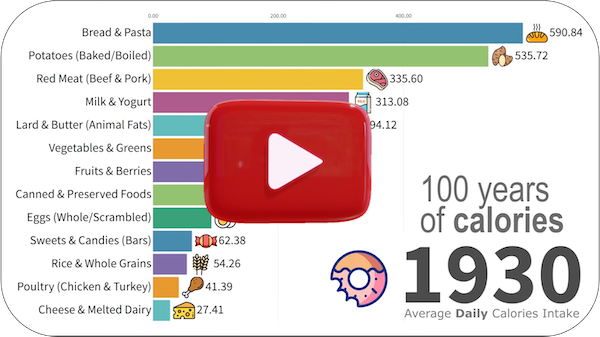
Check out the this visualization, which tracks the evolution of dietary calorie intake from 1930 to...

Taxpayer given 35% penalty for BAS recklessness
Following an application for a refund of nearly $94,000, the Administrative Review Tribunal has set aside an...

SMEs warned as ATO ramps up tax debt collection
One insolvency specialist has emphasised the importance of small businesses engaging their accountants to stay...

Does Your Small Business Need to Follow AML Privacy Rules?
Compliance with new anti-money laundering (AML) laws may subject your small business to additional privacy...

Don’t get caught out at tax time with your multiples jobs
Picking up a second job, holding multiple part-time roles, or doing gig work is now part of everyday life. But...

Global companies turn to cost-cutting amid ongoing inflation
Rising operating costs and persistent inflation are placing renewed pressure on businesses worldwide, despite...

Warning for early lodger this tax time!
The ATO has a clear message this year: slow down and get it right. Early lodgers are far more likely to make...

ATO no longer treating debt the same as during COVID
One expert has stressed the importance of tax agents reminding their clients that the ATO is no longer as...

The evolution of the world’s languages
Check out the evolution of the world's most spoken languages from 2500 BC to...
Latest Guests News
Newsletter Newslettter We are pleased to supply you with the latest edition of Client Alert, which...