- 234 Balaclava Road, Caulfield North VIC 3161
- contactus@guests.com.au
- (03) 9509 7033
Greenhouse gas emission by country since 1880
The total sum of CO2 emissions since 1880 (in tons). Food for thought, that's for sure

Treasury consults on increase to charities financial reporting threshold
The revenue thresholds defining small, medium and large charities are set to be raised, saving over 5,000 charities the need to produce reviewed or audited financial statements.

Treasury is now consulting on exposure draft legislation that the government hopes will reduce red tape, and increase transparency of, the charity sector.
Among the changes is an increase to the revenue thresholds for charities, with small charities to be defined as those with an annual revenue below $500,000, up from the current $250,000 threshold.
Medium-sized charities, currently defined as those with revenues between $250,000 and $1 million, will now see the threshold raised to $500,000 to less than $3 million.
Likewise, large charities will be defined as those with revenues of $3 million or more.
The higher annual revenue thresholds will have a direct impact on a charity’s annual reporting obligations, with approximately 2,500 small charities no longer being required to produce annual financial reports, saving each charity around $2,400 in accounting fees annually.
Over 2,700 medium-sized charities will also no longer be required to produce audited financial statements, saving them around $3,000 in accounting expenses annually.
The proposed thresholds, however, remain lower than those recommended by the ACNC’s 2018 review. It had called for the thresholds to be increased to less than $1 million for a small entity, from $1 million to less than $5 million for a medium entity, and $5 million or more for a large entity.
Other changes proposed in the exposure draft legislation include a requirement for all registered charities to disclose related party transactions, with small registered charities to make a simplified disclosure involving a brief description of related party transactions.
According to Treasury, the change will provide greater transparency and accountability, particularly around “transactions that pose a higher risk to charitable assets being used for private benefit”.
The regulations will provide an exemption to medium and large charities with only one remunerated key management person, from the requirement to disclose, as part of their related party transactions, aggregate remuneration paid to responsible persons and senior executives.
Jotham Lian
22 September 2021
www.accountantsdaily.com.au
ATO extends COVID-19 relief for SMSFs
The ATO has made an extension to several COVID-19 compliance relief for SMSFs to cover the 2021-22 financial year.

In a recent update, the ATO said that COVID-19 continues to have a significant financial effect on SMSFs, particularly in some states or territories where there are re-occurring and prolonged lockdown periods.
“As a result, you may still find yourself in a position where you (in your role as trustee), or a related party of the fund, are having to provide or accept certain types of relief, which may give rise to contraventions under the super laws,” the ATO said.
“The COVID-19 health crisis has also resulted in many countries imposing travel bans and restrictions, and you may have become stranded overseas for long periods, which can have an effect on your fund’s residency status.
“In recognition of this, we have extended the following types of relief, currently offered for the 2019-20 and 2020-21 financial years, to cover the 2021–22 financial year.
“You must ensure you properly document the relief and can provide your approved SMSF auditor with evidence to support it for the purposes of the annual SMSF audit.”
Rental and loan repayment relief
If rental relief provided by an SMSF, or a related non-geared company or unit trust, to a tenant in the form of a reduction, waiver, or deferral gives rise to a contravention of the super laws, the ATO notes it will not take any compliance action against the fund.
This is provided if the relief is offered on commercial terms (having regard to state and territory COVID-19 support measures) due to the financial impacts of COVID-19, and the SMSF has properly documented the arrangement.
“We plan to make a determination similar to Self-Managed Superannuation Funds (COVID-19 Rental income deferrals – In-house Asset Exclusion) Determination 2020 for the 2021-22 financial year,” the ATO noted.
“This will ensure that a rental deferral offered by your fund or a related party to a tenant does not cause a loan or investment to be an in-house asset in the current and future financial years. However, in the interim, we will adopt the above compliance approach.”
The ATO also said that if loan repayment relief is provided by an SMSF to a related or unrelated party due to the financial impacts of COVID-19, and the relief is offered on commercial terms and the changes to the loan agreement are properly documented, it will not take any compliance action against the fund.
“If an SMSF has a limited recourse borrowing arrangement in place with a related party and the lender offers loan repayment relief to the fund due to the financial impacts of COVID-19, we will accept the parties are dealing with each other at arm’s length, and the arrangement does not give rise to non-arm’s length income, provided the relief is offered on commercial terms (having regard to the terms of relief offered by commercial lenders for real estate investment loans), and you have properly documented the changes to the loan agreement.”
In-house asset and residency relief extended
If an SMSF exceeds the 5 per cent in-house asset threshold at 30 June 2021 due to the financial impacts of COVID-19, the fund must still prepare a written plan to reduce the market value of the fund’s in-house assets to below 5 per cent by 30 June 2022.
However, the ATO notes it will not take any compliance action against the fund where it has not executed the plan by 30 June 2022 due to the financial impacts of COVID-19. For example, because the SMSF is unable to execute the plan because the market has not recovered in some areas, or it may be unnecessary to implement it as the market has recovered.
The ATO has also made an extension to residency relief requirements for SMSF members that may be stranded overseas.
“If you are stranded overseas due to COVID-19, and this causes you to be out of Australia for more than two years, this may affect whether your fund meets some of the residency conditions to be an Australian super fund for tax purposes (and hence, whether the fund is a complying super fund and entitled to receive tax concessions),” the ATO explained.
“Provided there are no other changes in the SMSF or your circumstances affecting the other residency conditions, we will continue to not apply compliance resources to determine whether the fund meets the residency test.”
Tony Zhang
23 September 2021
www.smsfadviser.com
Government expands SME loan scheme eligibility
Businesses that didn’t previously receive JobKeeper will now be eligible for loans of up to $5 million under the scheme, which will be made available through select lenders until 31 December.

Treasurer Josh Frydenberg on Wednesday announced that the Morrison government will do away with requirements that a business would need to have previously received JobKeeper or be a flood-affected business to be eligible for the SME Recovery Loan Scheme.
Under the scheme, businesses facing sustained economic impact as a result of the pandemic with a turnover of less than $250 million will be able to access loans of up to $5 million over a 10-year term.
The scheme also includes a government guarantee on 80 per cent of the loan amount, and offers lenders the option to offer borrowers a repayment holiday of up to 24 months.
Its design also allows for businesses to use the funds to refinance pre-existing debt owed by eligible borrowers, including those from the SME Guarantee Scheme, and can be either unsecured or secured.
Mr Frydenberg said the expanded scheme will allow lenders to continue supporting small Australian businesses at their time of need.
“The expansion complements other financial support the Commonwealth is offering to businesses impacted by the current COVID‑19 health restrictions,” Mr Frydenberg said.
“The Morrison government will continue to support small businesses as they seek to rebuild, adapt and create jobs on the other side of this crisis.”
The SME Recovery Loan Scheme was rolled out in early 2020 as one of the federal government’s earliest pandemic support packages.
Its earliest iteration has since been expanded upon and extended to offer loan cap increases, more generous shifts on cost splitting with lenders, and increases in turnover eligibility.
When it was most recently expanded in March, the scheme was only made available to recipients of JobKeeper payments between 4 January and 28 March, those that applied during the first phase of the scheme, and others that were affected by floods.
The Morrison government’s March expansion saw the limit of eligible loans rise from $1 million to $5 million under the scheme, as well as a cost split shift which will see the government guarantee a higher portion of the loan.
The shift saw the government’s 50-50 split with banks shift to an 80-20 split.
Businesses with a higher turnover benefited, too, as the cap on eligible turnover increases from $50 million to $250 million.
John Buckley
26 August 2021
accountantsdaily.com.au
Pitfalls and proposed changes in the use of R&D tax incentives
Since its introduction, a number of taxpayers have fallen foul of the ATO in its administration of the research and development (R&D) tax incentive scheme under the Income Tax Assessment Act 1997 (Cth) (ITAA) for failing to have claimed an offset for an activity that strictly complies with the relevant tests.

In light of the current review by the federal government into the dual administration of the R&D regime by the ATO and Industry Innovation and Science Australia (IISA), and the decision in Commissioner of Taxation v Bogiatto,[1] we provide this update on recent developments in the R&D tax incentive space.
Common mistakes in R&D tax offset claims
To claim a tax offset, a taxpayer is required to register their R&D activity with IISA, however registration does not determine eligibility for the offset.[2] The IISA may make a formal assessment of the R&D activity, however, as this often does not occur, the registration of R&D activities is mostly based on self-assessment. This often leads to taxpayers making mistakes when claiming R&D expenditures – we discuss two common issues below.
Not generating new knowledge
When claiming activities as core R&D activities, taxpayers must ensure that the activity was conducted for the purpose of generating new knowledge.[3]
In the matter of Havilah Resources Ltd and Innovation and Science Australia (Taxation), Re [2020] AATA 933, Havilah was an exploration company with a number of gold, copper and iron ore mining sites. Havilah sought to register a number of activities relating to its mining sites as R&D activities, including routine hydrogeological and gold tertiary clay investigations. The IISA had found that these activities were neither core nor supporting R&D activities.
Havilah appealed IISA’s decision to the AAT. The AAT had regard to the statutory object of the R&D incentive, that the knowledge gained is likely to benefit the wider Australian economy. It is not enough that new knowledge is generated – there must be experimental activities conducted in a scientific way for the purpose of generating new knowledge.[4]
The AAT found that some of the activities relating to the hydrogeological investigations generated knowledge relating to the specific characteristics of the sites and could only be used for another project facing similar conditions. The knowledge was not likely to benefit the wider Australian economy and was not conducted for the purposes of generating new knowledge.[5]
In relation to the investigation of the gold tertiary clays, the AAT held that the knowledge generated was the result of routine methods of investigation involving sampling and testing at a particular site. The activities were not carried out for the purposes of generating new knowledge likely to benefit the wider economy, but was for the purpose of acquiring site-specific information for the sole benefit of Havilah.[6]
This case demonstrates that a successful R&D offset claim must demonstrate some wider applicability and general benefit to the Australian economy – consistent with the purpose of the scheme.
Generic research activities are unlikely to constitute core R&D activities
R&D activities must involve a systemic progression of work that is based on principles of established science and that proceeds from hypothesis to experiment and evaluation, and that leads to logical conclusions. The outcome of such experimental activities cannot be known in advance.[7]
This point was demonstrated in Coal of Queensland Pty Ltd v Innovation and Science Australia [2021] FCAFC 54 (Coal of Queensland). In Coal of Queensland, the taxpayer mining company sought to register an investigation into the location, size and quality of a coal deposit that had historically produced low-quality coal. It was found by the Full Federal Court that while the exact values of expected coal yields from the deposit could not have been known in advance, the outcome of the research could have been predicted from what was known at the time.[8] The Full Federal Court also upheld the Tribunal’s findings that the absence of R&D plans or documentation by the taxpayer was a valid consideration in determining that the activities were not core R&D activities.
Promoter penalties
Section 290-50 of the Taxation Administration Act 1953 (Cth) imposes a penalty on any entity that promotes tax exploitation scheme – this can often prove problematic for tax advisers and accountants.
In February 2021, the Federal Court handed down a landmark promoter penalty of $22,680,000 against a former tax agent and registered accountant.
In Commissioner of Taxation v Bogiatto [2020] FCA 1139, it was alleged by the Commissioner that Mr Bogiatto and his associated companies promoted a tax exploitation scheme involving the R&D tax incentive. Mr Bogiatto operated over 20 schemes involving 14 taxpayers where it was alleged that the R&D claims made were not reasonably available at law. The tax exploitation schemes typically involved Mr Bogiatto persuading a taxpayer to make an application for the R&D tax incentive before advising the taxpayer to use certain figures that he had prepared to incorporate into the taxpayer’s return.
Thawley J found that each of the schemes involved tax evasion as the claims were grossly exaggerated or wholly unavailable.[9] Thawley J held that Mr Bogiatto knew that the R&D claims were not reasonably arguable and that he had deliberately put forward claims that he knew were wholly or partly unjustifiable and had engaged in evasion.[10]
In Commissioner of Taxation v Bogiatto (No 2) [2021] FCA 98, Thawley J imposed a penalty of $22,680,000 against Mr Bogiatto and his associated companies.[11] In arriving at this landmark penalty, Thawley J had regard to the amount of consideration received by Mr Bogiatto and his associated companies in applying the principles of general and specific deterrence.[12] Regard was also had to the losses suffered by the tax evasion scheme participants, the nature and extent of the contraventions, including that the conduct occurred over a number of years, and the lack of cooperation Mr Bogiatto demonstrated towards the Commissioner.[13]
Recent policy and regulatory developments
Over the course of 2020 and so far in 2021, there have been a number of policy developments, some of which are intended to increase the clarity and transparency of the R&D offset system.
New online portal
Earlier this year in June, AusIndustry released a new “R&DTI portal” to replace the previous PDF form. The new online form is intended to be more closely aligned with the ITAA and IDR Act and includes rewritten questions to assist companies to understand the information they needed to provide when applying to the incentive.[14]
Draft guidance on ‘at risk rule’
The ATO published the draft tax ruling TR 2021/D3 on 25 June 2021 to clarify the uncertainty relating to the “at risk rule” contained in s 355-405 of the ITAA. The “at risk rule” prohibits or limits the deductions an entity may make for R&D expenditure if that expenditure was for consideration.[15] The draft ruling clarifies that “consideration” includes non-monetary benefits.[16]
Treasury Laws Amendment (A Tax Plan for the COVID-19 Economic Recovery) Act 2020 (Cth)
The Treasury Laws Amendment (A Tax Plan for the COVID-19 Economic Recovery) Act 2020 (Cth) was passed into law on 14 October 2020 and introduced a number of amendments to the R&D tax incentive legislation. The key changes include:
- The R&D expenditure threshold has been increased to $150 million.[17]
- R&D entities with a turnover of less than $20 million are able to claim an R&D offset equal to the R&D entity’s corporate tax rate plus 18.5 per cent.[18]
- R&D entities with a turnover of more than $20 million are able to claim an R&D offset equal to the R&D entity’s corporate tax rate plus either 8.5 per cent or 16.5 per cent, depending on the amount of total R&D expenses.[19]
- Permitting the IISA to make determinations about the circumstances in which it will exercise its power or perform its functions.[20]
Review of dual-agency administration model
Earlier this year in May, the federal government announced that the Board of Taxation would review the dual-agency administration model for the R&D tax incentive. The review will consider opportunities to reduce duplication between the ATO and IISA, simplify administrative processes and reduce compliance costs for applicants. The review is open for consultation until 15 September 2021. The Board of Taxation is to report to the government by 30 November 2021.[21]
William Madani
Holding Redlich
03 September 2021
accountantsdaily.com.au
[1] (No 2) [2021] FCA 98
[2] Industry Research and Development Act 1986 (Cth) (IDR Act) s 27A.
[3] ITAA s 355025(1)(b).
[4] Havilah at [25].
[5] Havilah at [91], [132].
[6] Havilah at [158].
[7] ITAA s 355-25(1)(a).
[8] Coal of Queensland at [101].
[9] Commissioner of Taxation v Bogiatto [2020] FCA 1139 at [15].
[10] Ibid at [709] – [710].
[11] Commissioner of Taxation v Bogiatto (No 2) [2021] FCA 98 at [5].
[12] Ibid at [51] – [53].
[13] Ibid at [64], [66], [70] and [73].
[14] See AusIndustry R&D Tax Incentive, “Upcoming changes to the R&DTI application form – Overview factsheet”.
[15] ITAA s 355-405.
[16] TR 2021/D3 at [17].
[17] ITAA s 355-100(3).
[18] ITAA s 355-100(1).
[19] ITAA ss 355-100(1), (1A).
[20] IRD Act s 31C.
[21] See Board of Taxation, “R&DTI – Review of the dual-agency administration model”.
Extra ‘super’ step when hiring new employees
Most new employees are eligible to choose the super fund you pay their super guarantee contributions to.

Currently, when a new employee doesn’t choose their own super fund, you must pay super contributions into your default fund.
From 1 November, if you have new employees start, you may have an extra step to comply with the choice of fund rules. If a new employee doesn’t choose a super fund, you may need to request their 'stapled super fund' details from us.
A stapled super fund is an existing super account which is linked, or 'stapled', to an individual employee so that it follows them as they change jobs.
The change aims to reduce account fees by stopping new super accounts being opened each time they start a new job.
From 1 November, you will be able to request stapled super fund details for new employees using Online services for business.
What you can do now
To make sure you're ready when the time comes, check and update the access levels of your authorised representatives using Online services on behalf of your business. This will also protect the personal information of your employees.
Read more.
ATO
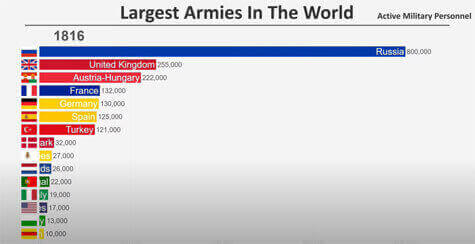
World’s largest armies 1816 – 2020
Adding a slice of interesting trivia is a great way to offer something or those clients who don't want to read, and September is no exception. What we add is great for trivia competitions, especially if you get to draft the questions.
ATO issues warning to first-time investors
A surge in first-time investors trading shares and exchange-traded funds (ETF) has prompted the ATO to issue a warning on share tax treatment and the behaviour that raises red flags.

The ATO on Monday warned young investors trading ETFs that any attempts to offset capital losses against tax paid on their income – or avoid paying it altogether if the share price of their ETF drops, but they still own the share – will be caught.
The ATO’s warning comes off the back of a wave of new EFT investors who have been afforded entry into the market off the back of the rise of micro-investment platforms popularised by the pandemic.
ASX data shows the Australian ETF sector swelled by some $20 billion in the first half of this year, 20 years after the first ETF product hit the ASX.
The product’s rise has been marked by two components. First, its simplicity: an investor can purchase one ETF, or a “basket”, which contains various shares in hundreds and sometimes even thousands of listed companies.
The second component that has driven their popularity is the emergence of micro-investing platforms that allow investors to buy in with small cash amounts. However, with a lowered barrier of entry has come a wave of tax misunderstanding among new investors.
The Tax Office reminded young investors that capital losses, or “paper losses”, only occur at the sale of a share, and can’t be claimed on shares that only see price dip. They also said that capital losses can only be offset against capital gains, and not other types of income.
ATO assistant commissioner Tim Loh said paper loss missteps have become a recurring trend among enthusiastic young investors but warned that his office’s data-matching capabilities will catch them out.
“Each year we see some enterprising entrepreneurs trying to offset their capital losses against income tax applied to other income such as salary or wages,” Mr Loh said. “Others attempt to offset a ‘paper loss’ against actual income.
“Our sophisticated data analytics are able to spot this and we may apply penalties for investors that have intentionally done the wrong thing.”
The Tax Office also offered clarity on the tax treatment of dividends and distribution reinvestment. The ATO said taxpayers should be mindful of declaring all distributions, even if they don’t withdraw cash from the account, and their shares are redistributed or reinvested.
Mr Loh said dividends and distribution have become an area of ETF tax treatment commonly and increasingly misunderstood by new or young investors.
“Most people recognise that they must pay tax on any money earned from selling shares,” Mr Loh said. “But many don’t realise that tax also applies to dividends and distributions, even if they are automatically reinvested into a reinvestment plan.”
Anything received through a dividend or distribution reinvestment plan is considered income for tax purposes, according to the ATO, and is treated in the same way as receiving cash would be.
Mr Loh said his office is keenly aware of the growth of the market and that these platforms have helped a “record” number of new investors into the market. But, he said, most of them aren’t aware of their tax obligations.
“Unfortunately, first-time investors often don’t understand their taxation obligations, don’t keep appropriate records and are more likely to make mistakes when lodging tax returns,” Mr Loh said.
He said that, while the ATO has access to data from ASIC, brokers, exchanges, and a whole host of other entities, it’s still important that investors double-check their declarations.
“While this data makes tax time much simpler, it is still important for investors to check that all their relevant data has been included,” he said.
Mr Loh said that keeping good records plays a crucial role in getting it right come tax time.
“Taxes on share and ETF investments can be complex, and poor record-keeping doesn’t make it any easier,” Mr Loh said.
“Keeping good records, including dates, prices, commissions, and details of taxable events such as share splits, share consolidations, mergers, and demergers is essential to avoiding trouble at tax time.
“We want to make tax as easy as possible and using data from share trading platforms and SDS from ETFs is a vital way that we help taxpayers avoid simple mistakes.”
John Buckley
07 September 2021
accountantsdaily.com.au
Unemployment rate falls to 12-year low
The latest round of employment data shows the unemployment rate fell by 0.3 of a percentage point to 4.6 per cent through July. But the 12-year low might not signify labour market strength, experts say.

New employment data released by the Australian Bureau of Statistics (ABS) on Thursday showed the unemployment rate fall to a 12-year low of 4.6 per cent through July, driven by a large drop in the New South Wales unemployment rate, which fell by 0.6 of a percentage point, and a fall in the state’s participation rate, which fell by 1.0 percentage point.
July’s labour data, which covered the early weeks of the Greater Sydney lockdown and beat market expectations by 5 per cent, revealed that restrictions across NSW and Victoria have impacted the national labour market.
ABS head of labour statistics Bjorn Jarvis said that the drop in unemployment, however, doesn’t necessarily signal labour market strength, as the participation rate fell from 66.2 per cent to 66.0 per cent.
“The fall in the national unemployment rate in July should not necessarily be viewed as a sign of strengthening in the labour market,” Mr Jarvis said. “It’s another indication of the extent of reduced capacity for people to be active in the labour market, in the states with the largest populations.
“As lockdown conditions ease, we have seen participation increase. For instance, the Victorian participation rate fell by 0.4 of a percentage point in June and recovered by 0.4 of a percentage point in July, prior to the start of the lockdown later in the month.”
Mr Jarvis said large falls in participation were recorded early in the pandemic, and they have been seen again through recent lockdowns.
“In Victoria, we saw unemployment fall by 19,000 people in July 2020, during the second wave of lockdown, and by 13,000 in the June 2021 lockdown,” Mr Jarvis said. “The fall in unemployment in New South Wales in July 2021 was more pronounced than either of these, falling by 27,000 people.
“In each of these instances, the unemployment rate also fell. Falls in unemployment and the unemployment rate may be counterintuitive, given they have coincided with falls in employment and hours, but reflect the limited ability for people to actively look for work and be available for work during lockdowns.
“This means that people are falling out of the labour force.”
Hours worked fell by 0.2 of a percentage point nationally from June to July, and by 7.0 per cent in New South Wales alone, while hours worked in Victoria jumped by 9.7 per cent, following its 8.4 per cent drop in June.
“Hours worked data continues to provide the best indicator of the extent of labour market impacts from lockdowns,” Mr Jarvis said.
“In New South Wales, hours worked fell by 7.0 per cent in July, compared with a 0.9 [of a percentage point] fall in employment. This highlights the extent to which people in New South Wales had reduced hours or no work through the early stages of the lockdown, without necessarily losing their jobs.”
Meanwhile, the underemployment rate rose for a second consecutive month, up 0.4 by of a percentage point to 8.3 per cent in July, a jump the ABS suggests is reflective of the fall in hours worked across NSW, with its underemployment rate increased by 2.1 percentage points to 9.3 per cent.
Treasurer Josh Frydenberg said July’s labour force statistics highlight the toll that lockdown restrictions are taking on the economy.
“Particularly in New South Wales,” Mr Frydenberg said. “With a fall in the number of hours worked in the month of July of 7 per cent. And it increased the effective unemployment rate to a 0.3 [of a percentage point], as 230,000 people in New South Wales became employed but on zero hours.
“But as I have said of this podium before and as these numbers bear out, there is an ominous resilience in the Australian recon two economy. We have bounced back before as restrictions have eased, and we will bounce back again.”
Shadow treasurer Jim Chalmers said the fall in July’s unemployment rate symbolises the Morrison government’s failures to provide adequate COVID-19 economic support and an efficient vaccination program.
“The unemployment rate fell in July because 37,000 Australians gave up looking for work,” Dr Chalmers said.
“Meanwhile, the economy bleeds billions of dollars a week because of Scott Morrison and Josh Frydenberg’s failures on vaccines, quarantine and economic support.”
Commonwealth Bank of Australia senior economist Belinda Allen said that, as a result of lockdowns, she expects the national workforce to shrink by a further 300,000 through August and September.
“The risk lies towards a larger fall,” she said, “particularly now that the lockdown has been extended to regional NSW, and with it looking more likely, the lockdown in Melbourne will be an extended one.
“Hours worked will deteriorate further. Some people will leave the labour force, seeing the participation rate fall, which will limit the extent of the lift in the unemployment rate. We expect it to reach 5.6 per cent in the coming months.”
John Buckley
20 August 2021
accountantsdaily.com.au
Lockdowns and mental health
Victoria endures its sixth lockdown as the state's cases grow; NSW records 1,281 new local COVID-19 cases and three deaths. Lockdowns to be eased once 70% of the population is double vaccinated against COVID-19 yet today some 60% of Australians are in lockdown.

Depression and anxiety were already part of life for some but COVID-19, and the resultant lockdowns, have worsened, and broadened across society as a whole, these mental health issues. We have no choice in regard to lockdowns but more of us are struggling to comprehend, understand, tolerate, and manage increasing amounts of time in isolation. Also, while the pandemic and lockdowns are bad enough, it seems that increasingly people are concerned and anxious about aggressive feelings they have towards those who are causing lockdowns in the first place.
Mental health and lockdowns.
-
Depression and anxiety are three times higher during the COVID-19 lockdowns.
-
Experts say the COVID-19 pandemic is a large-scale traumatic event.
-
It has caused physical, emotional, and psychological distress, and not just for patients of the virus.
While we have been working tirelessly to keep our faces covered, wash our hands, and socially distance ourselves, even from loved ones, we may not have realized how the pandemic and lockdowns have chipped away at our mental health.
Contributing factors to depression and anxiety
There has been a large body of research now into the mental health impacts of COVID-19 and the findings mean we all have to be on guard to help ourselves, our loved ones and the wider community manage during these tough times.
Research finds that certain groups were at greater risk of depression and anxiety, groups such as those on lower incomes and those with low household savings. These groups had a 50 percent greater risk of depression and anxiety than those of higher income.
But income isn’t the only factor. Isolation and uncertainty contribute to depression and anxiety in people of all socioeconomic backgrounds.
‘The rates of depression have significantly increased during the pandemic because people are more socially isolated, have less structure and routine, and more uncertainty about the future, which leads to doubt and negative predictions.’
Beyond that there is the change in the “big picture.” “What does this do to the plans people had? What if they were about to start a job, or lost a job, and now experiencing financial hardship as a result of it? What if they lost a significant other or family member and now have to face life without that person?”
‘On top of it all, there is no way to know when it will all end. Needless to say, it is understandable why depression and anxiety are on the rise.’
How to address depression symptoms during COVID-19
There are many ways to help ease the symptoms of depression and anxiety even during a pandemic.
Depression is a common condition that affects millions of people around the world. This means there are verified and trusted methods for dealing with symptoms so that you can get back to living and enjoying your life.
“Identifying those at risk for mood symptoms — for example, those with a history of depression or anxiety, substance abuse history, those facing long-term unemployment, or those who feel a sense of isolation from others — is vital for early detection and intervention.” “Recognizing warning signs in our friends and family members, such as feelings of hopelessness and withdrawal from others, can be a way to connect individuals with the appropriate services before symptoms worsen.”
For those who may not know if they are struggling with depression and anxiety, symptoms can include:
-
low energy
-
insomnia
-
weight loss
-
low mood
-
feeling like a burden to others
-
feelings of guilt
-
suicidal ideation
“Based on the symptoms, you can decide how you want to approach it. It could be as simple as developing a semblance of structure or routine to your day, or setting a reminder to take time for yourself, even if it’s just an hour.”
There is also psychotherapy, which is one of the most valued tools when it comes to improving mental health.
“To suddenly feel like you have someone to listen and understand you and allow you to see things from a different perspective — that’s worth a lot. Especially when someone is struggling with depression.”
‘Additionally for some people medication can help.’
‘In the midst of a pandemic and recession one way to help is simply to reach out to family and friends and check in on their mental health.’
“Everyone is struggling in one way or another during COVID-19. Don’t be afraid to reach out for help or share your experiences with those close to you,” LeMonda said. “Chances are, you’ll find you’re not alone.”
Latest Industry News

How Do I Write Legally Compliant Terms and Conditions for My Business?
Terms and conditions bind your customers only where they actively accept them, so a tick box at checkout holds...

Paid parental leave super contributions have started
From July 2026, the new Paid Parental Leave Superannuation Contribution (PPLSC) has started. From...

If the business is no longer profitable, and is unlikely to be profitable in the future, your best option may...
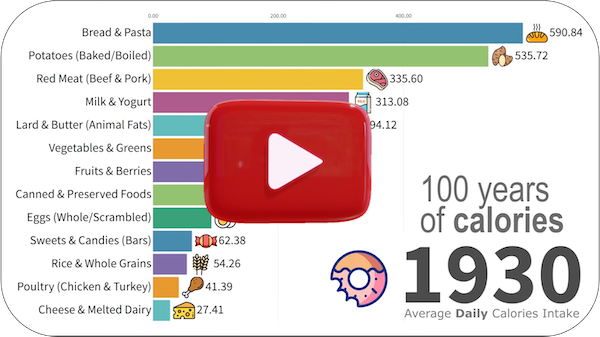
Check out the this visualization, which tracks the evolution of dietary calorie intake from 1930 to...

Taxpayer given 35% penalty for BAS recklessness
Following an application for a refund of nearly $94,000, the Administrative Review Tribunal has set aside an...

SMEs warned as ATO ramps up tax debt collection
One insolvency specialist has emphasised the importance of small businesses engaging their accountants to stay...

Does Your Small Business Need to Follow AML Privacy Rules?
Compliance with new anti-money laundering (AML) laws may subject your small business to additional privacy...

Don’t get caught out at tax time with your multiples jobs
Picking up a second job, holding multiple part-time roles, or doing gig work is now part of everyday life. But...

Global companies turn to cost-cutting amid ongoing inflation
Rising operating costs and persistent inflation are placing renewed pressure on businesses worldwide, despite...

Warning for early lodger this tax time!
The ATO has a clear message this year: slow down and get it right. Early lodgers are far more likely to make...

ATO no longer treating debt the same as during COVID
One expert has stressed the importance of tax agents reminding their clients that the ATO is no longer as...
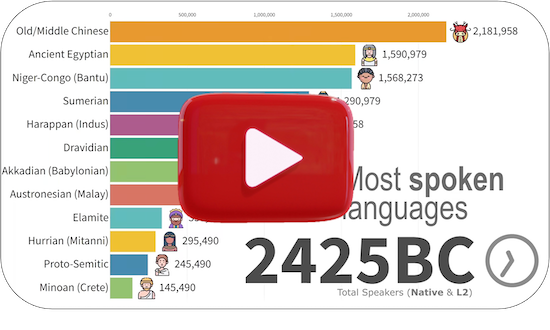
The evolution of the world’s languages
Check out the evolution of the world's most spoken languages from 2500 BC to...
Latest Guests News

Newsletter Newslettter We are pleased to supply you with the latest edition of Client Alert, which...