- 234 Balaclava Road, Caulfield North VIC 3161
- contactus@guests.com.au
- (03) 9509 7033
Client Alert – February 2023

Non-deductible threshold removed for self-education expenses
Self-education expenses are generally tax-deductible for individuals if there’s a sufficient connection with your income-producing activities. However, until new legislation was recently passed, the amount you could deduct was limited by s 82A of the Income Tax Assessment Act 1936 so that only the amount spent over a $250 threshold was deductible.
This threshold was an artefact from when the self-education deduction measure was first introduced more than 40 years ago, alongside a long-repealed concessional tax rebate of $250. The original intention of the deduction limit was to ensure that taxpayers didn’t receive both the tax rebate and a tax deduction for the same set of expenses.
With the non-deductible threshold removed, you will only need to ensure the following applies when you claim a self-education deduction:
- you incurred the expense in gaining or producing your assessable income;
- the expense isn’t private, domestic or capital in nature; and
- the deduction isn’t prevented by another provision of the tax law (eg such as some childcare and travel expenses that would previously have been useable to reduce the $250 threshold).
The change applies for tax assessments for the 2022–2023 income year and onwards.
Tip: This change doesn’t affect the types of self-education expenses that are deductible. The costs of textbooks, stationery and professional journals will still be deductible, while certain student contributions and payments to reduce HELP, financial supplement and other higher education debts stay non-deductible, as do expenses you incur before commencing an occupation or to help you obtain a new occupation.
Tax debts and relationship breakdowns: a warning
The ability of the Family Court to divide the assets owned personally by a couple – including superannuation – on a relationship breakdown is largely without question. A recent case has now shed further light on the ability of the Family Court to allocate responsibility for payment of the tax debts of either spouse.
A High Court decision in 2018, Commissioner of Taxation v Tomaras, confirmed that tax debts can be apportioned by the courts where a couple’s relationship has broken down. In that case, the wife had failed to pay her tax debts and was out of time to challenge the debt assessments. The husband had been declared bankrupt. As part of the property settlement proceedings, the wife asked the court to order that the husband should become the debtor who would have to pay the ATO.
The court found that one spouse could indeed be substituted for the other in relation to a tax debt like this, but it also confirmed this isn’t always appropriate. Given that the husband was bankrupt and there was no time left to challenge the debt assessments, the court did not exercise its powers to make him liable for the tax debts that had been assessed to the wife.
More recently, the case of Cao & Trong in 2022 further explored the Family Court’s powers in relation to tax debts. In this case, allocation of an amount in the region of $3.1 million was in dispute between the former spouses, the ATO and the Child Support Register.
The ATO was owed more than $7 million in unpaid tax, and in the end the court found that it was entitled to 100% of the disputed amount. In making this finding, the court said that the parties had enjoyed an opulent lifestyle while the debt was due to the ATO, and in fact this lifestyle was mainly possible because they avoided paying the large amounts they owed.
This recent finding is a timely reminder that the ATO can and will intervene in family law disputes to protect the revenue due to the Commonwealth, and that the courts will actively ensure the rights of the ATO are protected and enforced.
Sharing economy reporting regime commences soon
As a part of the Federal Government’s strategy to combat the tax compliance risks posed by the sharing economy, it has passed into law new requirements for operators of electronic distribution platforms to provide information to the ATO on transactions made through their platforms.
An “electronic distribution platform” is one that delivers services through electronic communication (i.e. over the internet, including through applications, websites or other software) and allows entities to make supplies available to end-user consumers through the platform. A service isn’t considered an electronic distribution platform if it only advertises or creates awareness of possible supplies online, operates as a payment platform or serves a communication function.
Examples of sharing economy electronic platform operators include Uber, Airbnb, Car Next Door, Menulog, Airtasker and Freelancer.
Tip: The new reporting regime applies to platform operators rather than to individuals who use their sites or apps, but if you’re part of the sharing economy it’s still important to give the ATO the right information. If you rent out your home for short stay accommodation, work as a delivery driver or take on side jobs as a freelancer, we can help you keep your tax affairs in order.
Electronic platform operators will soon be required to regularly provide transaction information to the ATO through the Taxable Payments Reporting System (TPRS). The information obtained will be used in ATO data-matching to help identify entities that may not be meeting their tax obligations.
Administrative Appeals Tribunal to be replaced
The Federal Government has announced that it will abolish the Administrative Appeals Tribunal (AAT) and replace it with a new Federal administrative review body. According to Attorney-General the Hon Mark Dreyfus, the AAT’s dysfunction has had a very real cost to the tens of thousands of people who rely on it each year to independently review government-body decisions. A dedicated taskforce within the Attorney-General’s department has been formed, and stakeholder consultation will be held on the design of the new body.
The government has said it will implement a transparent and merit-based appointment process. It has committed to providing additional capacity to enable the rapid resolution of existing backlogs, and to implementing consistent funding and remuneration arrangements to enable the new system to respond flexibly to fluctuating case numbers. Thus far, it has committed to appointing an additional 75 new members to the AAT to deal with existing backlogs.
To ensure the new body is user-focused, accessible, fair and efficient, the government says it will also improve additional support services and emphasise early resolution where possible. A single, modern, reliable and fit-for-purpose case management system will be introduced.
Current cases before the AAT will continue. Taxpayers who have already applied to the AAT for a review of a decision will not need to submit a new application. The government envisages that many current cases before the AAT will be decided or finalised before the establishment of the new Federal administrative review body. Any undecided remaining cases will transition to the new review body when it is established.
SMSF changes and reminders for 2023
If you’re thinking of starting a self-managed superannuation fund (an SMSF) in 2023, you need to be aware of the recent changes made by the ATO on fund registration, and the application of the Director ID regime to funds with corporate trustees.
Previously, after an SMSF was established and trustees were appointed, the trustees had 60 days to register the SMSF with the ATO by applying for an Australian Business Number through the Australian Business Register. That application included a section where bank account details of the SMSF could be added, along with other information such as the fund’s Tax File Number.
Due to the recent explosion in fraudulent schemes targeting SMSFs, this feature has been removed in a bid to protect the retirement savings of Australians. New SMSFs will now need to provide the ATO with their bank account details after the SMSF registration process, using the online portal for businesses, via phone, or through a registered tax agent. If you’re contemplating starting an SMSF with a corporate trustee, you’ll also need to ensure the directors of the corporate trustee apply for Director IDs before their appointment is made through Australian Business Registry Services (ABRS). The Director ID is a unique 15-digit identifier that will follow each individual through their business life and was introduced as a part of a suite of measures to combat phoenixing and other illegal activities. The process is free, simple, online and only requires individuals to confirm their identity. Every individual must apply for their own Director ID, and no one else can apply on their behalf.
Five new year’s tax resolutions
Don’t clean out the garage. Forget that lapsed gym membership. Here are 5 new year’s resolutions to keep if you want to stay on top of your tax and super in 2023.

.
17 January 2023
Know if you’re in business or not!
Are you earning an increasing income from a hobby? You might already be in business for tax purposes. Follow our step-by-step guide and find out how to meet your obligations.
Keep your business details and registrations up to date!
If you’re the director of an Aussie company, you need to apply for a director IDExternal Link. It’s important to update your ABN detailsExternal Link as emergency services and government agencies use this information to support businesses during disasters. Also, if you’re going to earn over $75,000 this financial year, you’ll need to register for GST.
Keep accurate and complete records!
Good record keeping helps you manage your business and its cash flow. See our record-keeping tips at record keeping for business.
Work out if Personal Services Income (PSI) rules apply to you!
PSI is income produced mainly (more than half) from your skills or efforts as an individual. If you're earning PSI, you'll need to work out if you're a personal services business to determine whether the PSI rules apply to your income. The rules affect how you report your income and the deductions you can claim.
Look after yourself!
The last few years have thrown some curve balls at small business, so it's good to be prepared. If you're struggling, the NewAccess programExternal Link can help. It’s free, confidential and designed for small businesses doing it tough.
We wish you all the best and hope you’re on track to thrive in 2023. When the fireworks have faded, know that we're always available to support businesses just like yours.
ato.gov.au
Inflation edges lower while GDP grows but slows
The latest figures from the ABS reveal economic growth last year and show inflation coming off its peak.

GDP growth slowed for the second consecutive quarter to just 0.5 per cent according to ABS figures for December, which was down on the previous period and below expectations of 0.8 per cent.
However inflation edged lower, to 7.4 per cent for the year to January against 8.4 per cent for calendar 2022.
Despite the December quarter slowdown in GDP growth, the seasonally adjusted annual figure came in at 2.7 per cent thanks to a fifth consecutive quarterly rise.
ABS head of national accounts Katherine Keenan said consumption was one of the key drivers, with both household spending up.
The rise in household spending was driven by food (up 2.4 per cent), hotels, cafes and restaurants (up 1.6 per cent) and transport services (up 5.7 per cent).
“Spending on discretionary services drove the rise in household consumption, however growth markedly slowed in comparison to the September quarter,” Ms Keenan said.
Inflation hit the household saving-to-income ratio, which also fell for the fifth consecutive quarter (from 7.1 per cent to 4.5 per cent).
“The household saving ratio continued to decline in the December quarter, to the lowest level since September 2017,” Ms Keenan said. “The fall was driven by increased interest payable on dwellings, income tax payable and increased spending.”
ABS head of prices statistics Michelle Marquardt said the inflation figure, of 7.4 per cent for the year to January, was lower than the 8.4 per cent rise for the year to December 2022 but still “the second highest annual increase since the start of the monthly CPI indicator series in September 2018”.
The most significant contributors to the January result were housing (+9.8 per cent), food and non-alcoholic beverages (+8.2 per cent) and recreation and culture (+10.2 per cent).
Ms Marquardt said the housing increase was lower than for December (+10.1 per cent) with movements in new dwellings and rents influential.
“Rents are growing more strongly than they were 12 months ago while the increases in new dwelling prices are moderating compared to a year ago,” she said.
The 8.2 per cent rise in prices for food and non-alcoholic beverages was also lower than the 9.5 per cent annual increase in December, with a decline in the cost of fruit and vegetables driving the figure lower.
The cost of holiday travel and accommodation rose 17.8 per cent for the year to January, down from 29.3 per cent for the year to December, thanks to a fall during the month.
“Airfares and holiday accommodation prices tend to be quite variable, and this month is no exception,” Ms Marquardt said. “On a monthly basis holiday travel and accommodation prices fell 7.2 per cent in January following a rise of 29.3 per cent in December.”
By Philip King
01 March 2023
accountantsdaily.com.au
Did you pay your superannuation guarantee payment late?
After the Christmas and new year break, it is quite possible that some employers may have missed the
due date for the December 2022 quarter superannuation guarantee contributions (SCG) payment of
29th January 2023.

.
If this the case, then you are also will also need to ensure that you prepare and lodge a Super
Guarantee charge statement to the Australian Taxation Office by the due date of 28 th February 2023.
The statement will include any super guarantee shortfall amounts, nominal interest of 10% per annum
and administration fees of $20 per employee, per quarter. The statement is required even if you paid
your SCG obligations after the due date. Any later payments can be offset on your final liability or
can be used to offset future payments.
This statement can be prepared on Online Services portal, completing a SGC statement spreadsheet or
printing and mailing the pdf version of the SGC statement (although the ATO recommends online or
spreadsheet methods). If you require assistance with the calculation, there re SCG calculator tools on
the ATO website.
Acctweb
One in seven SMSF directors yet to apply for ID
Around 100,000 SMSF directors still need to apply for their director ID despite the deadline passing two months ago. Extensions are available for legitimate reasons.

Speaking at the SMSF Association National Conference, ATO deputy commissioner, superannuation and employer obligations Emma Rosenzweig said around 600,000 directors of corporate trustees of SMSFs have now applied for their director ID.
Ms Rosenzweig said this means around 100,000 SMSF directors still need to apply for their director ID.
“We’re working through those people now, not just SMSFs but across the whole director population, to ensure that those people who haven’t yet got their ID have that in train and are applying. It’s really important that they do that,” she stated.
“Our business registry colleagues have some videos on how to go through the application process. I know for some people this process has been unfamiliar.”
SMSF professionals with clients that are yet to apply should encourage them to do so, she said.
“We're not at the point of imposing penalties yet, but that time will come. It’s not only penalties that can be applied, there are other options that we have available as well,” she warned.
Directors were originally required to apply for their ID by 30 November 2022. This was later extended to 14 December, with the ATO stating that penalties would not apply for anyone who applied before this date.
SMSF Adviser reported in December 2022 that out of the entire director population of 2.5 million, there were around half a million directors still yet to apply at 12 December.
The ATO previously stated that it would take a reasonable approach to directors who have genuinely tried to meet their director ID obligation but have not been able to due to their circumstances.
“Extensions are available for directors who have a legitimate reason why they have not yet been able to apply,” it said.
By Miranda Brownlee
27 February 2023
smsfadviser.com
Australian equities retain grip on SMSF assets
The largest portion of the SMSF investment pool is held in domestic shares, according to a recent survey.

Australian equities remain the dominant asset class for SMSFs at 38.8 per cent, according to the SuperConcepts SMSF Investment Patterns Survey for the December quarter.
The survey, which covers 4,400 funds and the investments they held to the end of 2022, shows most SMSF investors hold Australian equities through direct investments.
Direct Australian shares accounted for 30.3 per cent of the total SMSF investment pool compared with managed funds and ETFs at 6.3 per cent and ETFs at 1.5 per cent.
While there was a small decline in the allocation towards Australian equities, SuperConcepts executive manager technical and strategic solutions Philip La Greca said this was mainly due to market performance.
Managed funds and ETFs were far more popular for SMSFs investing in international equities, said Mr La Greca, with almost 80 per cent of international equities invested it through pooled structures.
“It’s interesting to see that fund managers are branching into different structures to penetrate other sectors as well,” he said.
Property remained the second biggest asset class for SMSFs, representing 16.4 per cent of the total investment pool.
“Nearly 85 per cent of exposure through direct holdings and all growth in this sector is attributed to the direct subset,” said Mr La Greca.
“It will be interesting, however, to observe whether there is a reported decline here in our next quarter’s report as valuations for 30 June 2022 and later appear.”
In terms of liquid investments, Mr La Greca said that “cash remains king” with short-term deposits still unattractive and not heavily used.
“There has been some use of other pool structures to try and achieve higher rates of return but this is also limited, resulting in most liquidity being managed through cash at bank,” he said.
With the decreasing average age for an SMSF trustee, Mr La Greca said there was likely to be a significant change in the allocation of investments aligned to a younger demographic in the upcoming years.
By Miranda Brownlee
16 February 2023
accountantsdaily.com.au
Residential rental properties
If you rent out property, you need to:

.
- keep records right from the start
- work out what expenses you can claim as deductions
- work out if you need to pay tax instalments throughout the year
- declare all rental-related income in your tax return
- consider the capital gains tax implications if you sell.
If you have an investment property that isn't rented or available for rent, such as a holiday home, then you generally can't claim deductions because it doesn't generate rental income.
To download a PDF guide on how to treat rental income and expenses, see our rental properties guide.
Owning and renting a property or holiday home
Find out about owning and renting a property and holiday home and check what records you should keep.
Records for rental properties and holiday homes
Find out about what records to keep and for how long for rental properties and holiday homes.
Rental income you must declare
Check which rental income you must declare and where you should declare it in your tax return.
Rental property genuinely available for rent
Find out if your rental property is genuinely available for rent so you can claim deductions and find out what shows your property isn't genuinely available to rent.
Rental property as investment or business
Work out if your rental arrangements are in the form of an investment or a business.
Rental expenses to claim
Check the deductions you can claim for your rental property.
Rental expenses you can't claim
Check the expenses you can't claim as a deduction for your rental property.
Holiday homes
Check if you can claim deductions for your holiday home expenses and any capital gains tax implications if you sell.
Selling your rental property
Find out about capital gains and losses when you sell or dispose of a rental property.
ato.gov.au
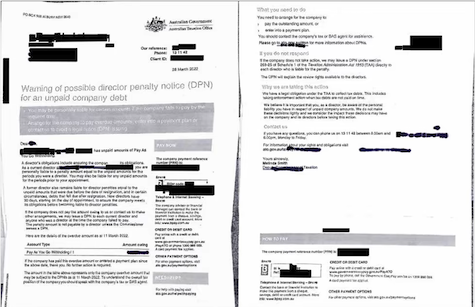
ATO figures reveal final 2022 DPN tally
After a slow start in May, figures show how the office went up through the gears with director penalty notices.
.
The ATO accelerated up through the gears on debt collection in 2022 to issue a total of almost 18,500 director penalty notices, figures released yesterday reveal.
The office also unsheathed a fresh weapon in its armoury by disclosing the tax debts of almost 500 businesses to credit referral agencies for amounts of $100,000 and above.
The final figures show that more than one in three directors failed to act after an April mail blitz by the ATO warned 52,000 directors about debts involving 30,000 companies.
By August, the ATO had issued 7,000 DPNs and was dispatching them at the rate of 120 a day. For the final five months of the year, it was also referring about 20 businesses a day to credit agencies after sending warning letters to more than 29,000.
The ATO said its debt recovery campaign, suspended during the pandemic, had been a success.
“We’ve seen an encouraging response to our letter campaigns, with a significant level of clients making payments or entering payment plans,” an ATO spokesperson said.
“The value of debt owed by clients at the start of the campaigns was $17.3 billion. As a result of these two campaigns, over $714 million has already been paid in full and a further $5.4 billion is now actively managed under payment arrangements.
“For those that have not responded we have progressed to issuing DPNs and disclosing the tax debt information of eligible businesses.
“In the 2022 calendar year, we issued almost 18,500 DPNs to individual directors in respect of more than 13,500 companies for unpaid GST, income tax withholding, and superannuation guarantee charge.
“In relation to Disclosure of Business Tax Debt, we disclosed nearly 500 businesses in 2022 to credit reporting agencies.”
The result of the ATO campaign also showed up in final insolvency figures for 2022, released by ASIC.
They revealed 4,806 total appointments over companies for the second half of 2022, a rise of 51 per cent of the corresponding period in the previous year.
Philip King
19 January 2023
accountantsdaily.com.au
ATO issues fresh warning on illegal early access schemes
With illegal early access schemes on the rise, the Tax Office has issued a fact sheet warning super members about the promoters of these schemes.

.
In a recent update, the ATO warned superannuation members to be wary of anyone known as promotors who want to help set up an SMSF for the purposes of illegally accessing super.
The ATO said it’s important that anyone running an SMSF is aware that accessing super can be illegal at times.
“As a trustee of a SMSF it is your responsibility to ensure that if you are accessing your super early, you are doing this within super laws,” the ATO cautioned.
The ATO has recently released a fact sheet, Accessing your super may be illegal, which highlights what SMSF trustees need to know about accessing their super and what to do if they are approached by a promotor.
The fact sheet warned that some promotors may say they can help individuals set up an SMSF in order to access their super for reasons such as paying off your credit card, buying a house or to go on a holiday when this is actually illegal.
“These people will often charge you a lot of money, tell you to transfer some or all your super from your existing super fund to the SMSF and tell you that you can use as much as you need for personal expenses,” the fact sheet warned.
The ATO also warned there is the risk of identity theft with these kinds of schemes.
“These promoters may also ask for your personal information. If you give it to them, they can steal your identity. With your personal information, they can steal your super for themselves,” the ATO warned.
The ATO advised anyone contacted by one of these promotors to contact the ATO on 13 10 20 straight away to get advice.
“Do not agree to anything and do not sign any documents or give them your personal details,” it stated.
“Don’t access your super before you retire unless you meet one of the conditions that makes it legal to access your super and receive relevant approval.”
The ATO reminded SMSF trustees that most people can only access their super when they retire and turn 60 or when they turn 65, otherwise it’s illegal.
Last year, ATO assistant commissioner SMSF risk and strategy, Justin Micale, warned that the ATO was seeing an increasing number of trustees taking advantage of their direct access to their superannuation bank account and using these savings to pay for business debts, holidays, renovations and new cars.
Mr Micale said the ATO was stepping up its focus on licensed and unlicensed promoters of illegal early access schemes.
“This behaviour is unacceptable particularly as we know promoters often target people who are in vulnerable communities, under financial pressure and with low financial and super literacy,” he said.
Miranda Brownlee
23 January 2023
smsfadviser.com
smsfadviser.com
100A ruling leaves trust decisions haunted by ‘uncertainty’
The ATO fails to resolve the key question of what constitutes “ordinary family and commercial dealing”, tax professionals say.

.
Uncertainty will haunt trust distribution decisions next June because the ATO’s final ruling on s100A fails to resolve the key issue of what constitutes an “ordinary family or commercial dealing” and the likely result will be an additional tax burden on small family business, tax professionals say.
Final ruling TR 2022/4 released last week has quickly attracted critics for its lack of substantive changes to the draft published in February despite an extended consultation period and many detailed submissions.
Head of tax at the Institute of Financial Professionals Australia Phillip London said how “ordinary family dealing” applied to an adult beneficiary would need to be tested in law to get clarity.
“Why is the instance of a young adult beneficiary deciding to leave their trust entitlement in the family business as working capital for the foreseeable future not an ordinary family dealing? Should not assets generated by a family business be utilised for the benefit of that family?” he asked.
“There is nothing artificial or contrived about these things, nor do they involve any unnecessary complexity.
“Rather than conduct test cases in respect of section 100A on highly complex matters such as Guardian and Blood, the tax professional is looking for certainty on the relatively straightforward matter of a distribution to an adult beneficiary. It is this the ATO should be focusing their attention on in a litigation program.”
John Jeffreys of John Jeffreys Tax said the additional examples in TR 2022/4 “raise more problems than they answer” and cited example 2, which involves the “cultural practice” of a grandparent (“Azra”) giving gifts to younger family members.
“The example says, ‘This cultural practice is relevant in considering whether transactions that involve Azra gifting money to her grandchildren out of funds from a trust distribution she has received have been entered into in the course of ordinary family or commercial dealing.’
“This statement by the ATO is not good enough. The ATO could say that this is an ordinary family dealing, but there is no clear statement that such a gift is an ordinary family dealing. It is just ‘relevant’ in considering whether section 100A applies.
“Why cannot the ATO make the clear statement that such an ordinary family occurrence is ordinary family dealing? But it does not do this! It clearly leaves open the question of whether Azra is deemed not to be (and never to have been) presently entitled to her trust distribution. Why? Because she gave a Christmas present to her grandchildren! There is no reason for the ATO to leave the taxpaying community with such uncertainty about such a common occurrence.”
BDO tax technical national leader Lance Cunningham said the ATO had disregarded comments made in the Guardian case, which awaits an appeal decision, that indicate that the term “ordinary” is in contradistinction to the term “extraordinary”.
“This has been interpreted by some commentators to indicate that a dealing will be ordinary if it does not contain any elements of artificiality,” he said. “However, in the final ruling the ATO has maintained its view that this is not the correct interpretation of the judge’s comments in the Guardian case. The ATO also says that these comments on ordinary family dealings were orbiter and not presidential as the case was decided on the basis that there was not a reimbursement agreement, i.e. it did not turn on the question of whether the arrangement was an ordinary family or commercial dealing.”
Mr Jeffreys said the uncertainty that remained would slow down the distribution decision process in the run-up to 30 June next year.
“More advice will need to be taken and more consideration of distribution decisions made,” he said.
“It would be useful for accountants to form good working relationships with skilled trust lawyers so that the trust income distribution process can flow smoothly. It maybe that some trust deeds will need to be amended. Also, accountants may want lawyers to draft trust distribution minutes.
“I expect that lawyers will begin to draft sets of documents (that they will sell) to assist trustees and accountants to deal with the challenges of these new rulings.”
Mr London said the net result would run contrary to pledges made during the May election campaign.
“We are just seven months out from a federal election that saw both major parties committing not to increase the tax burden on small business. The application of these guidelines will likely impose an additional tax burden on small family business where the Tax Commissioner applies their terms.”
Philip King
13 December 2022
accountantsdaily.com.au
Latest Industry News

How Do I Write Legally Compliant Terms and Conditions for My Business?
Terms and conditions bind your customers only where they actively accept them, so a tick box at checkout holds...

Paid parental leave super contributions have started
From July 2026, the new Paid Parental Leave Superannuation Contribution (PPLSC) has started. From...

If the business is no longer profitable, and is unlikely to be profitable in the future, your best option may...
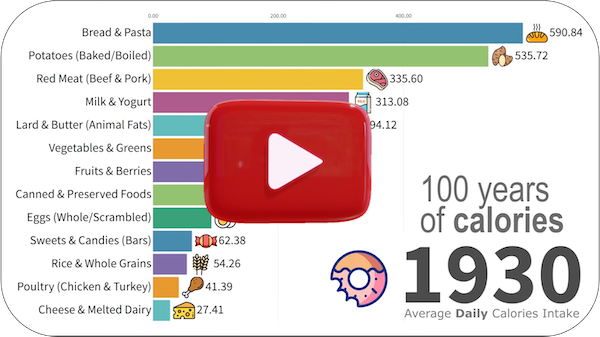
Check out the this visualization, which tracks the evolution of dietary calorie intake from 1930 to...

Taxpayer given 35% penalty for BAS recklessness
Following an application for a refund of nearly $94,000, the Administrative Review Tribunal has set aside an...

SMEs warned as ATO ramps up tax debt collection
One insolvency specialist has emphasised the importance of small businesses engaging their accountants to stay...

Does Your Small Business Need to Follow AML Privacy Rules?
Compliance with new anti-money laundering (AML) laws may subject your small business to additional privacy...

Don’t get caught out at tax time with your multiples jobs
Picking up a second job, holding multiple part-time roles, or doing gig work is now part of everyday life. But...

Global companies turn to cost-cutting amid ongoing inflation
Rising operating costs and persistent inflation are placing renewed pressure on businesses worldwide, despite...

Warning for early lodger this tax time!
The ATO has a clear message this year: slow down and get it right. Early lodgers are far more likely to make...

ATO no longer treating debt the same as during COVID
One expert has stressed the importance of tax agents reminding their clients that the ATO is no longer as...

The evolution of the world’s languages
Check out the evolution of the world's most spoken languages from 2500 BC to...
Latest Guests News
Newsletter Newslettter We are pleased to supply you with the latest edition of Client Alert, which...