- 234 Balaclava Road, Caulfield North VIC 3161
- contactus@guests.com.au
- (03) 9509 7033
Later retirement takes oldies back to living in ’70s
The labour shortage and increased workplace flexibility has seen potential retirees remain in the workforce for longer, says KPMG.

.
The great retirement is actually the great unretirement according to KPMG which says older people have returned to the 1970s in terms of when they stop work.
KPMG urban economist Terry Rawnsley said more experienced workers were being kept in jobs longer due to the labour shortage, the lack of international migration and greater workplace flexibility.
“Strong labour market conditions are helping to retain older workers in jobs for longer,” said Mr Rawnsley.
“The lockdowns during the pandemic made many older Australians in professional jobs realise that they could semi-retire and continue to dabble in the workforce from home or even from down at the coast.”
“And in what is a tight labour market, given the lack of international migration in recent years, employers have obliged.”
KPMG found that in 2022 the expected retirement age for men was 66.2 years, the highest since 1972, and for women it was 64.8 years, the highest since 1971.
Over the past 20 years the retirement age for men had risen from 63.2 years while for women it had increased from 61.7 years.
The great unretirement began during the pandemic with 537,000 extra employees joining the workforce during 2019–22, of which 179,000 were over 55.
KPMG said the pandemic also brought more women into full-time employment, while an increase in less physically demanding jobs had seen men work later in life.
“Over the last 30 years we’ve seen a shift towards service-based jobs and away from more physically demanding jobs,” said Mr Rawnsley.
The firm also found the level of education influenced a worker’s retirement age. Those with postgraduate degrees retired later than the rest of the labour force at 67.
Workers with a bachelor’s degree had an expected retirement age of approximately 66 and for those without tertiary education it was about 65.
Mr Rawnsley said the continued tight labour market and the increasing shift of work towards less labour-intensive roles meant the expected retirement age would stay high.
“On top of that, our economy is slowly becoming more and more educated, which is likely to shift the age of retirement for the whole labour force,” he continued.
KPMG said data from the Bureau of Statistics showed only 40 per cent of Australians retired when reaching the eligible age for superannuation with the remaining 60 per cent deciding to retire for other reasons.
Josh Needs
27 February 2023
accountantsdaily.com.au
Sharing economy reporting regime commences soon
As a part of the Federal Government’s strategy to combat the tax compliance risks posed by
the sharing economy, it has passed into law new requirements for operators of electronic
distribution platforms to provide information to the Australian Taxation Office on
transactions made through their platforms.

.
An “electronic distribution platform” is one that delivers services through electronic
communication (i.e. over the internet, including through applications, websites or other
software) and allows entities to make supplies available to end-user consumers through the
platform. A service isn’t considered an electronic distribution platform if it only advertises or
creates awareness of possible supplies online, operates as a payment platform or serves a
communication function.
Examples of sharing economy electronic platform operators include Uber, Airbnb, Car Next
Door, Menulog, Airtasker and Freelancer.
The new reporting regime applies to platform operators rather than to individuals who use
their sites or apps, but if you’re part of the sharing economy it’s still important to give the
ATO the right information. If you rent out your home for short stay accommodation, work as
a delivery driver or take on side jobs as a freelancer, we can help you keep your tax affairs in
order.
Electronic platform operators will soon be required to regularly provide transaction
information to the ATO through the Taxable Payments Reporting System (TPRS). The
information obtained will be used in ATO data-matching to help identify entities that may not
be meeting their tax obligations.
Acctweb
Details of tax calculation for $3m threshold a ‘mixed blessing
The proposed tax on earnings calculation for balances exceeding $3 million will see some members paying tax on unrealised earnings, says the SMSF Association.

.
Treasury has released a fact sheet explaining the details of how tax on earnings will be calculated in the wake of its decision to revise the treatment of super balances above $3 million.
SMSF Association chief executive Peter Burgess said the good news was that it meant super funds, including SMSFs, would not be required to calculate the earnings attributable to the member’s balance above $3 million.
“The ATO will use a prescribed formula to calculate the proportion of total earnings which will be subject to additional 15 per cent tax,” Mr Burgess said.
“Negative earnings can be carried forward and offset against this tax in future year’s tax liabilities.
However, on the debit side, the ATO will be using an individual’s total super balance to calculate their earnings, which means it will include all notional (unrealised) gains and losses.
“This essentially means some members will be paying tax on unrealised earnings which is highly unusual,” he said.
Mr Burgess said the association’s preferred approach would have been for the ATO to do a calculation of “notional earnings” using a similar approach to the existing excess contributions tax regime.
The fact sheet states that the ATO will use a set formula to calculate the earnings based on the information it receives from each super fund every year.
This formula will calculate the difference between the member’s total super balance for the current and previous financial year and adjust for net contributions (excluding contributions tax paid by the fund on behalf of the member) and withdrawals, it said.
The ATO already uses super fund reporting to calculate the total amount that individuals have in the super system.
Miranda Brownlee
03 March 2023
accountantsdaily.com.au
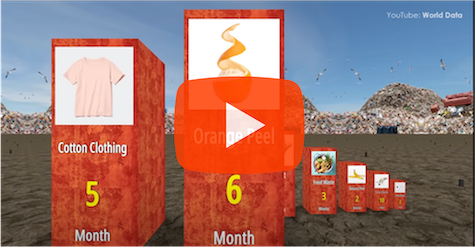
Comparison: How Long It Takes To Decompose?
Check out how long everyday items take to decompose.
Using your business money and assets for private purposes
You may need to report money and assets taken from your company or trust as income in your tax return.

.
Who needs to know?
This information will help you understand how money taken out of your business, or using business assets for private purposes, must be recorded and reported for tax purposes.
It applies if you are an individual who:
- is a director or shareholder of a company that operates a small business (your business)
- is a trustee or beneficiary of a trust that operates a small business (your business)
- is a director of a corporate trustee for a trust that operates a small business (your business)
- is or has been an associate of the shareholder (individual or entity). An associate can include a relative, partner, spouse, or another entity controlled by a shareholder.
How do you use money or assets from a company or trust
The most common ways you may take or use money or assets from a company or trust are as:
- salary and wages – see employment income
- fringe benefits, such as an employee using the business's car
- director fees
- dividends paid by the company to you as a shareholder (a distribution of the company’s profits) – see paying dividends and other distributions
- trust distributions by the trust to you as a beneficiary – see trustees and beneficiaries
- loans from the trust or company – see loans by private companies
- allowances or reimbursements of expenses you receive from the trust or company.
There are reporting and record-keeping requirements for each of these types of transactions.
How to record and report the use of your business money or assets
You may need to report and must maintain appropriate records that explain transactions of which you have:
- taken money or assets from your business
- used the business's assets for private purposes.
The ATO view on minimum record-keeping standards is provided in Taxation Ruling TR 96/7.
In this section
- Salary, wages or directors’ fees
- Fringe benefits and allowances
Salary, wages or directors’ fees
You can be an employee and a shareholder or director of the company that operates your business. You can also be an employee and a beneficiary of the trust that operates your business.
You must include any salary, wages or directors' fees you receive from your business as assessable income in your individual tax return.
The company or trust that operates your business can generally claim a deduction for any salaries, wages or director's fees paid.
Your business must:
- register for pay as you go (PAYG) withholding and withhold an amount from salary, wages and directors’ fees
- report the payment information to the ATO using Single Touch Payroll (STP)
- pay the amount withheld to the ATO and compulsory employee superannuation contributions to a complying super fund by the relevant cut-off dates.
Fringe benefits and allowances
Fringe benefits tax (FBT) applies when employees or directors of a company or their associates receive certain benefits from the company or trust. This could be a payment or reimbursement of private expenses or being allowed to use the business assets for private purposes such as the business's car.
Your business:
- may be entitled to claim a deduction for the cost of providing fringe benefits
- must lodge an FBT return and pay any FBT that applies to the fringe benefits provided to the employees or their associates
- must keep all records relating to the fringe benefits it provides, including how the taxable value of benefits was calculated.
There are various exemptions from FBT that may apply, for example, the small business car parking exemption.
The FBT liability for your business may be reduced if you (as an employee) make a contribution towards the cost of the fringe benefit.
You don’t need to report the value of fringe benefits that you (or your associate) receive, in your tax return, unless they are included as reportable fringe benefits on your payment summary or income statement.
Distribution of income and profits
In this section
- Dividends
- Trust distributions
Dividends
If your business is run through a company, the company can distribute its profits to its shareholders, which can include you.
This distribution of profits is known as a dividend.
If the company has franking credits, it may be allowed to frank the dividend by allocating a franking credit to the distribution. A franking credit represents income tax paid by the company on its profit and can be used by the shareholder to offset their income tax liability.
A company must issue a distribution statement at the end of each income year to each shareholder who receives a dividend. It must show the amount of the franking credit on the dividends paid and the extent to which they were franked. The company may also need to lodge a franking account tax return in certain circumstances.
Any dividends that you receive and franking credits on them must be reported in your tax return as assessable income.
The company cannot claim a deduction for dividends paid as these are not a business expense, but rather a distribution of company profit.
Trust distributions
If your business is operated through a trust, the trustee may make the beneficiaries presently entitled to a share of trust income by the end of the financial year according to the terms of the trust deed.
By the end of a financial year, the trustee should advise and document in the trustee resolution:
- details of the beneficiaries
- their share of the net income of the trust.
If the trustee resolution is not made according to the terms of the trust deed, it may be ineffective and, instead, other beneficiaries (called default beneficiaries) or the trustee may be assessed on the relevant share of the trust's net (taxable) income. Where a trustee is assessed, it may be at the highest marginal tax rate.
Details of the trust distribution should be included in the statement of distribution which is part of the trust return lodged for each financial year.
The trust cannot claim a deduction for distributions paid as it is not a business expense, but rather a distribution of trust income.
If the beneficiary of a trust is a company, and the trust does not pay the amount the company is presently entitled to, Division 7A of the Income Tax Assessment Act 1936 can apply.
Closely held trusts
If you have a trust within your family group, in some circumstances you may need to include a trustee beneficiary statement as part of the trust return lodged.
For further guidance, see closely held trusts.
Lending money or assets
In this section
- Companies lend money or assets to shareholders and their associates
- Trustees lend money or assets to beneficiaries and their associates
Companies lend money or assets to shareholders and their associates
A company can make a loan to its shareholders and associates.
When a company lends money or assets to a shareholder, the shareholder may be taken to have received a Division 7A deemed dividend if certain conditions are not met. If this happens, the shareholder will need to report an unfranked dividend in their individual tax return and the company will have to adjust their balance sheet to reduce their retained profits.
To avoid a Division 7A deemed dividend, before the company tax return is due or lodged (whichever comes first), the loan must either:
- be repaid in full
- put on complying terms.
To put a loan on complying terms, the loan must:
- be in a written agreement and signed and dated by the lender
- have an interest rate for each year of the loan that at least equals the benchmark interest rate
- not exceed the maximum term of 7 years, or 25 years in certain circumstances when the loan is secured by a registered mortgage over real property.
The company must include any interest earned from the loan in its tax return.
You (the shareholder):
- must make the minimum yearly repayment each year (use the Division 7A calculator to work this out)
- cannot borrow money from the company to make the minimum yearly repayment
- can make payments on the loan using a dividend declared by the company. This dividend must still be reported in your individual tax return as assessable income.
Trustees lend money or assets to beneficiaries and their associates
If you borrow money from the trust, you will need to keep a record of it. If the loan is on commercial terms, you will need to repay the principal and interest as per the loan agreement. The trust will need to report the interest as assessable income in its tax return.
There may be a situation where someone receives an amount of trust income instead of the beneficiary who is presently entitled to that amount in an arrangement to reduce tax. This can happen where the trustee, instead of paying the trust income to the presently entitled beneficiary, lends that money on interest-free terms to another person.
This is called a reimbursement agreement and section 100A of the Income Tax Assessment Act 1936 may apply. This means that the net income of the trust that would otherwise have been assessed to the beneficiary (or trustee on their behalf) is instead assessed to the trustee at the top marginal tax rate.
Repayments of loans made to companies and trusts
If you have lent money to your business, your business will make repayments to you.
Your business cannot claim a deduction for any repayments of principal it makes to you but may be able to claim a deduction for interest it pays to you on the loan. The company or trust should keep records of any loan agreements and documents explaining these payments being made to you.
You do not have to declare the principal repayments, but any interest you receive from your business is assessable income to you and must be included in your individual tax return.
When you take your business's money or assets in another way
If you take money out of your business or use its assets for private purposes in a way not described above, you or your business may have unintended tax consequences. This may include triggering Division 7A.
To ensure your business transactions are transparent:
- You should consider setting up a separate bank account for your business to pay business expenses and avoid using it to pay for your private expenses.
- If you take money out of the business or use its assets, make sure you keep proper records that explain all your business transactions, including all income, payments and loans to you and your associates from the business and loans from you to the business.
- If your company lends money to you or your associates, make sure it's based on a written agreement with terms that ensure it's treated as a complying loan – so the loan amount isn't treated as a Division 7A dividend.
- Ensure the transactions are correctly reported for tax purposes.
If you make an honest mistake when trying to comply with these obligations, you should tell us or your registered tax agent as soon as possible.
ATO
ato.gov.au
Capital gains tax
How to calculate capital gains tax (CGT) on your assets, assets that are affected, and the CGT discount.

.
What is capital gains tax?
Capital gains tax (CGT) is the tax you pay on profits from selling assets, such as property.
You report capital gains and capital losses in your income tax return and pay tax on your capital gains. Although it is referred to as 'capital gains tax,' it is part of your income tax. It is not a separate tax.
If you have a capital gain, it will increase the tax you need to pay. You may want to work out how much tax you will owe and set aside funds to cover it.
List of CGT assets and exemptions
Check if your assets are subject to CGT, exempt, or pre-date CGT.
Acquiring CGT assets
Establish the date you buy or acquire an asset, your share of ownership and records to keep.
CGT events
How and when CGT is triggered, such as when an asset is sold, lost or destroyed.
CGT discount
Find out if your asset is eligible for the 50% CGT discount.
Calculating your CGT
Use the calculator or steps to work out your CGT, including your capital proceeds and cost base.
Property and capital gains tax
How CGT affects real estate, including rental properties, land, improvements and your home.
Shares and similar investments
Check if you are an investor or trader, and how it affects tax on your shares or units in a fund.
Inherited assets and capital gains tax
How and when CGT applies if you sell assets you inherited, including properties and shares.
Foreign residents and capital gains tax
How CGT affects your assets if you are a foreign or temporary resident, or change your residency.
Relationship breakdown and capital gains tax
Find out if you can defer, or 'roll over', CGT on assets that transfer to you in a divorce.
Market valuation of assets
When and how to get your assets valued for CGT purposes.
How to complete the capital gains section in your tax return
Instructions for completing the CGT section of the individual income tax return.
Small business CGT concessions
Find out if your small business can reduce, disregard or defer CGT on an active asset.
Depreciating assets
How CGT affects depreciating assets like business equipment.
ATO
ato.gov.au
Client Alert – March 2023

Working from home expenses: new fixed rate
A new revised fixed-rate method for calculating working from home expenses will soon apply.
From 1 July 2022, employees who work from home can no longer use the 80 cents per hour “shortcut” method for claiming their related expenses. The revised fixed-rate method allows claiming 67 cents per hour, to cover energy expenses; internet, mobile and home phone usage, and stationery and computer consumables costs.
If you don’t wish to use the revised fixed-rate method for calculating your working from home claims, you can still use the actual costs method instead – this involves calculating and documenting in detail the actual expenses you incur.
To use the new revised fixed-rate method and claim a tax deduction of 67 cents for each hour of working from home, you must work from home while carrying out your employment duties or carrying on a business. Minimal tasks such as occasionally checking emails or taking phone calls while at home will not qualify as working from home.
Doing this work must involve incurring additional running expenses that your employer does not reimburse you for. And you must keep relevant records in respect of the whole time spent working from home and for the additional running expenses incurred – an estimate for the entire income year or an estimate based on the number of hours worked from home during a particular period and applied to the rest of the income year will not be accepted.
While the new revised fixed rate of 67c per hour is lower than the previously available shortcut method, the new rate does not include the work-related decline in value of any depreciating assets used during the income year or any other running expenses not specifically covered.
Upcoming FBT-related changes
Employers that have provided FBT car parking benefits for the 2022–2023 FBT year should be aware that the ATO has finalised the changes to its ruling on car fringe benefits – specifically on the concept of “primary place of employment”. A broad test of primary place of employment now applies. Considerations of whether a place is an employee’s primary place of employment may include where their duties are performed, the place at which is primary to the employee’s conditions of employment.
Determining the primary place of employment for FBT car parking purposes is important because, among other things, benefits are only fringe benefits taxable where a car is used by an employee to travel between home and their primary place of employment and is then parked at or in the vicinity of that primary place of employment.
The ATO is also working on a new area: a guideline for calculating electricity costs for FBT purposes when charging an employer-provided electric vehicle (EV) at an employee’s home. This is expected to be released sometime in March.
For an eligible EV that is exempt from FBT, car expenses such as registration, insurance, repairs/maintenance and fuel (including electricity to charge and run electric cars) are also exempt. However, providing a home charging station is not a car expense associated with providing a car fringe benefit, and may be a property or an expense payment fringe benefit.
Tip: With the end of the FBT year approaching fast, now is the time to get your documents and declarations in order to ensure smooth FBT return preparation and lodgment. Contact us today to get the ball rolling.
ATO targeting private not-for-profit schemes
As a part of its ever-tightening compliance net, the ATO has recently announced it is targeting specific tax avoidance behaviour in the not-for-profits sector.
The first area of focus is private foundations used to operate businesses or income-producing activities on which no tax is paid. This type of tax-avoidance scheme using not-for-profit foundations first surfaced in the 2015–2016 income year. The basic premise is that an adviser or promoter helps individuals to set up a “private foundation” which is claimed to be exempt from all taxes. The “private foundation” is then used by individuals to operate businesses or for income-producing activities. Unlike genuine not-for-profit foundations, individuals stream their untaxed employment, contractor or business income through their sham foundations, pay no tax on the income and use the funds for their own benefit. In some cases, a small portion of the income made may be paid to humanitarian or social causes, such as through charities, which is used as justification for the foundation’s purported tax-free status. The ATO is taking this matter seriously and has already commenced investigations of potential promoters.
The second area of focus is registered public benevolent institutions (PBIs) using schemes to avoid or reduce FBT. The ATO is concerned with arrangements where employees of PBIs are used to undertake charitable or commercial work activities of other entities that are not themselves benevolent in nature. The ATO will be reviewing these arrangements to determine if any have the sole and dominant purpose of avoiding or reducing FBT.
Outcomes of quality of financial advice review
In a bid to increase the accessibility and affordability of quality financial advice, the government had previously commissioned a report into possible changes in the regulatory framework. The final report has now been released, containing 22 recommendations. According to the author of the report, Ms Michelle Levy, the current regulation of financial product advice focuses on providers and not consumers, and is itself an impediment to consumers getting useful guidance and good financial advice.
The recommendations are therefore more consumer-focused, and are wide-ranging. The following offers just a snippet of the relevant recommendations in relation to financial services:
- Broaden the definition of personal advice: The definition of personal advice in the Corporations Act 2001 should be broadened so that all financial product advice will be personal advice if it is given to a client in a personal interaction or personalised communication by a provider who has information about the client’s financial situation or their objectives and needs.
- Personal advice must be provided by a relevant provider: The Corporations Act should be amended to indicate that personal advice must be provided by a relevant provider where the provider is an individual and either the client pays a fee for the advice, or the issuer of the product pays a commission for the sale of the product to which the personal advice relates.
- Introduce a good advice duty: An individual who provides personal advice to retail clients must provide good advice. “Good advice” means personal advice that is, at the time it is provided, fit for purpose and, in all circumstances, good.
- Introduce a new statutory best interests duty: The new best interest duty would be a true fiduciary duty that reflects the general law and does not include a safe harbour. This duty would apply only to financial advisers.
- Implement new ongoing fee and consent arrangements: Providers would still need to obtain their clients’ consent on an annual basis to renew an ongoing fee arrangement, but they should be able to do so using a single “consent form”. The consent form should explain the services that will be provided and the fee the adviser proposes to charge over the following 12 months.
- Change the requirement to provide a statement of advice: The existing requirement to provide a statement of advice should be replaced with the requirement for a provider to maintain complete records of the advice provided and to give written advice on request by their client. Clients should be asked whether they would like written advice, before or at the time the advice is provided.
Superannuation tax break changes
In an attempt to repair the Federal Budget and lower the overall national debt, the government is seeking to introduce changes to the way superannuation in accumulation phase is taxed over the threshold of $3 million.
Currently, earnings from super in the accumulation phase are taxed at a concessional rate of 15% regardless of the super account balance. It is now proposed that from the 2025–2026 income year, the concessional tax rate applied to future earnings for those with super account balances above $3 million will be 30%. This change would not apply retrospectively to earnings in previous years, and would not impose a limit on the size of super account balances in the accumulation phase.
This measure would affect an estimated 0.5% of people who have money in Australian super accounts, or around 80,000 individuals, so the government considers it a “modest” adjustment which is in line with its proposed objective of superannuation – to deliver income for a dignified retirement in an equitable and sustainable way.
To illustrate just how little the change would affect ordinary Australians: in the latest ATO taxation statistics (relating to the 2019–2020 income year), the average super account balance for Australian individuals is around $145,388, with a median balance of only $49,374. In addition, according to ASFA (Association of Superannuation Funds of Australia) estimates, for a comfortable retirement, a single homeowner individual aged 67 at retirement will need $65,445 per year. If that individual lives to the ripe old age of 100, their required balance would only equate to an amount of $1.5 million in super – well below the $3 million threshold proposed.
With younger Australians increasingly facing cost of living pressures, astronomical house prices, slow wages growth and uncertain international headwinds, most have no hope of contributing up to the maximum concessional cap every year and attaining a super balance even close to $3 million, short of winning the
lotto or receiving a lucky inheritance. This effect is amplified for women, who are usually more likely to take time away from work, or move to part-time opportunities, in order to raise children and take on caring responsibilities.
According to the latest Expenditure and Insights Statement released by the Treasury, government revenue foregone from super tax concessions amount to $50 billion per year, and the cost of these concessions is projected to exceed the cost of the Age Pension by 2050. With this single proposed change, the government estimates that around $2 billion in revenue will be generated in its first full year of implementation, which can be used to reduce government debt and ease spending pressures in health, aged care and the National Disability Insurance Scheme (NDIS).
According to Treasurer Jim Chalmers, the government will seek to introduce enabling legislation to implement this change as soon as practicable. Consultation will still be undertaken with the super industry and other relevant stakeholders to settle the implementation of the measure.
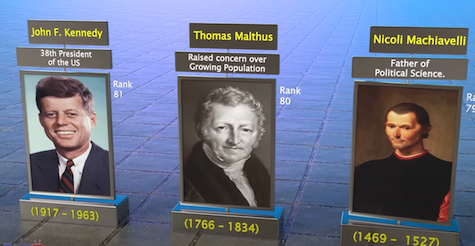
100 Most Influential people in the world.
Check out the people that changed the world
Changes to Australian Business Number (ABN) registration compliance
As part of the government’s intention to “strengthen” the ABN system, Treasury has released
draft legislation to imposing new compliance obligations for ABN holders to retain their
ABN.

.
The proposes two new grounds under which the Registrar of the Australian Business
Register may cancel an Australian Business Number.
The first proposed changes would allow the Australian Business Register to cancel a person’s
ABN if they haven’t lodged their required income tax returns for two or more income years
where the period for lodgement has ended. The un-lodged returns do not need to be
consecutive income years.
This ground for cancellation would apply for failures to lodge tax returns beginning with
income years commencing on 1 July 2022, so the earliest the Registrar could cancel an ABN
would be in the second half of 2024, if the ABN-holder failed to lodge tax returns for the
income years beginning on 1 July 2022 and 1 July 2023.
The other proposed changes would also allow the Registrar to cancel an ABN if the holder
hadn’t given a notification within the past 12 months that they still require the ABN and that
the information on the Register is current and correct. This power would be available to the
Registrar after 1 July 2024.
In effect, this would likely require ABN holders to check their ABN details and notify the
Registrar at least once in the period between the commencement of these provisions and
1 July 2024, and then at least once annually.
Acctweb
Looming changes for the “buy now, pay later” market
The Federal Government has released a consultation paper seeking views on options to
regulate the “buy now, pay later” (BNPL) market.

.
Currently the BNPL space is unregulated in Australia because it falls under the exemptions
available to certain types of credit under the National Consumer Credit Protection Act 2009.
This means BNPL products aren’t subject to responsible lending standards or the other
requirements of the Credit Act, and BNPL providers don’t need to hold an Australian credit
licence. This is despite involving financial products that offer credit.
Consumer advocates argue that this regulatory gap has the potential to create harm – “instant”
access to BNPL credit, without the lack of requirements and financial checks and potential
uncertainty on terms and fees which could end up in unsustainable debt.
The Reserve Bank of Australia estimates that approximately seven million active BNPL
accounts made a total of $16 billion in transactions in the 2021–2022 financial year – around
a 37% increase on the previous year. The majority of these are low value BNPL products
with spending limit of $2,000, although some include limits of up to $30,000 for large ticket
items.
The consultation paper proposes three broad options for regulatory intervention. Option 1
would impose a bespoke affordability assessment for BNPL providers under the Credit Act
and address any other regulatory gaps in a strengthened industry code to make it fit-for-
purpose. Option 2 would require BNPL providers to hold a credit licence and comply with
modified responsible lending obligations and a strengthened industry code. Option 3 would
impose the strictest regulation, with BNPL providers needing to hold a credit licence and
comply with all its regulations and the responsible lending obligations, including taking
reasonable steps to check that their BNPL products are suitable for each person who accesses
them.
Acctweb
Latest Industry News

How Do I Write Legally Compliant Terms and Conditions for My Business?
Terms and conditions bind your customers only where they actively accept them, so a tick box at checkout holds...

Paid parental leave super contributions have started
From July 2026, the new Paid Parental Leave Superannuation Contribution (PPLSC) has started. From...

If the business is no longer profitable, and is unlikely to be profitable in the future, your best option may...
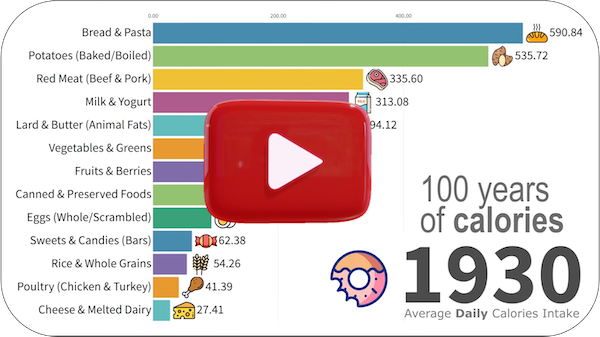
Check out the this visualization, which tracks the evolution of dietary calorie intake from 1930 to...

Taxpayer given 35% penalty for BAS recklessness
Following an application for a refund of nearly $94,000, the Administrative Review Tribunal has set aside an...

SMEs warned as ATO ramps up tax debt collection
One insolvency specialist has emphasised the importance of small businesses engaging their accountants to stay...
Does Your Small Business Need to Follow AML Privacy Rules?
Compliance with new anti-money laundering (AML) laws may subject your small business to additional privacy...

Don’t get caught out at tax time with your multiples jobs
Picking up a second job, holding multiple part-time roles, or doing gig work is now part of everyday life. But...
Global companies turn to cost-cutting amid ongoing inflation
Rising operating costs and persistent inflation are placing renewed pressure on businesses worldwide, despite...

Warning for early lodger this tax time!
The ATO has a clear message this year: slow down and get it right. Early lodgers are far more likely to make...

ATO no longer treating debt the same as during COVID
One expert has stressed the importance of tax agents reminding their clients that the ATO is no longer as...

The evolution of the world’s languages
Check out the evolution of the world's most spoken languages from 2500 BC to...
Latest Guests News
Newsletter Newslettter We are pleased to supply you with the latest edition of Client Alert, which...