Revised rules require fresh advice but clients often blame their tax professional, says Tim Munro.

- 234 Balaclava Road, Caulfield North VIC 3161
- contactus@guests.com.au
- (03) 9509 7033
Client Alert – May 2023
Is your content making you income?
The ATO has warned content creators that they need to be aware of their income tax and GST obligations.
Tip: Examples of content creators are individuals who write a blog, post make-up tutorials to social media or stream gaming or other activities for others to watch.
If you start making money from your online content, you will have income to declare. You will also need to consider whether you are in business. If you are, or you want to start your own business, it’s important you know what income you need to report, the deductions you can claim and what registrations you may need.
The income you receive could be cash, money for advertising or appearance fees, or goods like a gaming console, clothes or make-up.
It doesn’t matter whether the income comes from Australia or overseas. It is all taxable in Australia, as long as you are considered to be a tax resident of Australia.
Some of your supporters may purchase your merchandise or pay a subscription fee to access your content. They may send tips or gratuities (often called gifts). All of these are likely to be income and should be declared.
There are some important things to think about if you’re a content creator. Can you afford to accept the gifts? A new handbag or a free holiday may be enticing, but because it’s regarded as income, you’ll need to pay tax on it.
Consider how the income you earn will affect your other amounts payable. Sole trader income counts towards your total assessable income, so it could impact your study loans or Medicare calculation.
If you’re in business, and you have a GST turnover of $75,000 or more, you’ll need to register for GST. You will be liable to pay GST on your taxable supplies, even if you don’t pass it on to your supporters. However, you can claim input tax credits on what are called “creditable acquisitions”.
You will be able to claim deductions for business-related expenses. You may also be eligible for various small business concessions.
Home charging rate guideline for EVs released
With the increasing popularity and uptake of electric vehicles (EVs), the ATO has now released a draft compliance guideline which contains the methodology for calculating the cost of electricity when an eligible electric vehicle is charged at an employee’s or an individual’s home. The methodology can be applied for FBT from 1 April 2022 and for income tax purposes from 1 July 2022.
According to the ATO, the EV home charging rate will be 4.20 cents per kilometre. If charging costs are incurred at a commercial charging station, a choice must be made: if the EV home charging rate is used, the commercial charging station cost will be disregarded, and vice versa. However, records such as receipts must still be kept to substantiate any claims, and the choice to rely on the guideline applies for the entire FBT or income year.
For the 2023 FBT and income tax year, the ATO will accept a reasonable estimate based on service records, logbooks, or other available information where odometer records have not been maintained as a transitional measure. This approach is only available for the opening odometer reading at 1 April or 1 July 2022.
Businesses that can rely on this guideline include those that provide electric vehicles to their employees (or associates) for private use, where that results in the provision of a car fringe benefit, residual benefit or car expense payment fringe benefit and the business is required to calculate the value of benefit as a part of FBT obligations. For example, the EV home charging rate can be used to determine the recipient contribution component for the statutory formula method for car fringe benefits. Similarly, it can be used to determine both the operating cost and recipient contribution if the operating cost method is used.
For individuals, the guideline can only be relied on to calculate the cost of charging an electric vehicle if a zero emissions electric vehicle was used in carrying out income-earning activities and relevant records have been kept during the year.
Tip: Plug-in hybrids (vehicles powered by a combination of liquid fuel and electricity) aren’t considered zero emission vehicles, so if you use one you can’t rely on the guideline even if the vehicle is used in income-earning activities.
The guideline is currently in draft form but is expected to apply to the 2023 FBT and income tax year.
Property investors beware: new data matching program
Individual property investors should be aware that the ATO has announced a new data matching program that will obtain data from various financial institutions for the 2021–2022 to 2025–2026 income years. Records relating to approximately 1.7 million individuals will be obtained each financial year and used to identify relevant cases for administrative action, including compliance activities and education strategies.
Recent results of sample audits across individuals conducted under the ATO’s random enquiry program appeared to show a net tax gap of $9 billion for the 2020 income year, with the incorrect reporting of rental property income and expenses being a significant driver of the gap. Specifically, the estimated net tax gap for rental property expenses contributed around $1 billion or 14% of the total individuals gap, with a common driver being the incorrect apportioning of loan interest costs where the loan was refinanced or redrawn for private purposes.
The data providers for the new program include the big four banks (ANZ, Commonwealth, Westpac and NAB), as well as other providers and their subsidiaries, including Adelaide Bank, Bank of Queensland, Bendigo Bank, Bankwest, ING, Macquarie Bank, Suncorp, RAMS, Ubank, St George, Bank of South Australia, Bank of Melbourne and ME Bank. The ATO will be the matching agency and the sole user of the data.
According to the ATO, after a return is lodged, it will use the data collected to identify relevant cases for administrative action including compliance activities and education strategies. If a discrepancy is identified, taxpayers will be contacted by phone, letter or email, and will then have 28 days to respond.
The ATO will also use the data to gain insights to help develop and implement treatment strategies to improve voluntary compliance. The data may also be made available to individual self-preparers through myTax, specifically the rental property schedule interest on loans and/or borrowing expense labels and rental income tax return labels.
Super tax concession changes: consultation
As flagged earlier in the year when the announcement was made, the Federal Government recently released a consultation paper on its proposal to reduce super tax concessions for individuals with super balances over $3 million, including those with self managed super funds (SMSFs). Some important questions the paper asked included whether the proposal would create any unintended consequences and whether the current proposed proportioning methods are appropriate. The new measure is not yet law.
To recap, the government proposed in late February that individuals with a total super balance (TSB) of more than $3 million combined in all the super accounts will have their super concessional tax rate changed to 30% from the 2025–2026 financial year onwards. This means from 30 June 2026, the earnings of those individuals on the part of their TSB over $3 million will attract an additional 15% tax. The additional tax will be applied directly to the individual and there will be no change to the tax arrangements within super funds.
The ATO will continue to calculate the TSB of all individuals annually using existing information provided by super funds and SMSFs. Individuals will be able to quickly identify whether they will be subject to the new tax by reference to their TSB at the end of each financial year through myGov. As it is proposed, the threshold will not be indexed and is not shared between spouses, family members or between other individuals who have interests in the same fund such as an SMSF.
The additional 15% tax will be determined by the ATO and levied directly on individuals. This will also be imposed separately to personal income tax, and it is intended that the amount of tax payable would not be reduceable by deductions, offsets or losses available under the personal income tax system (ie only prior year negative earnings could be applied).
Superannuation and independent contractors: fresh Full Federal Court guidance
In February 2022, the High Court handed down a landmark decision in ZG Operations v Jamsek, which clarified the test for determining whether a worker is an employee or an independent contractor.
The High Court remitted the question of whether the workers were “employees” under the extended definition of that term in s 12(3) of the Superannuation Guarantee (Administration) Act 1992 (the SGA Act) back to the Full Federal Court.
In deciding that the relevant workers were not “employees” under the extended definition in s 12(3), the Full Federal Court determined that s 12(3) does not apply to an independent contractor relationship where the worker uses a company, trust or other service vehicle to contract with the putative employer instead of doing so in their personal capacity. This confirms the ATO’s guidance in Superannuation Guarantee Ruling SGR 2005/1.
Additionally, in determining whether a worker is an “employee” under the extended definition in s 12(3), the Full Federal Court has confirmed that a worker will not be taken to work under a contract that is “wholly or principally for [their] labour” in the following circumstances.
| Finding | Comment |
| The contract is for labour and non-labour (eg the provision of substantial capital assets or the assumption of risk) components, and based on a quantitative valuation, the non-labour components predominate. | In many independent contractor relationships, the contractor may be required to provide their own tools and equipment. Whether the contract is principally for labour or alternatively the provision of capital assets and the assumption of material risks is likely to turn on a valuation of the labour and non-labour components respectively. |
| The worker has the ability to delegate the performance of work under the contract to other persons. | The party that bears the onus of proof will need to substantiate the value of the labour and non-labour components through evidence. |
| The worker is engaged under a contract for a “result”. | This finding is consistent with previous case law and ATO guidance. The workers had a contractual right of delegation in this case. |
Employers are required to provide their employees with a minimum level of superannuation support (currently 10.5%) each quarter, otherwise the employer will become liable to pay the superannuation guarantee charge. An “employee” for these purposes includes an employee at common law.
The SGA Act also includes a number of provisions which extend the meaning of “employee”. Relevantly, s 12(3) of the SGA extends the meaning of “employee”, so that: “If a person works under a contract that is wholly or principally for the labour of the person, the person is an employee of the other party to the contract.”
This provision is broad and captures many independent contractor relationships. An entity that engages an independent contractor under a contract of this nature is required to provide the contractor with superannuation support (otherwise they will become liable to pay the superannuation guarantee charge).
How Long Could You Survive Drinking Only …….
Here's how long you'd live consuming only this liquid, and nothing else.
.
.
.
..
.
.
.
.
.

Early intervention ‘critical’ as insolvencies surge
Tough conversations and engaging clients proactively will be key to minimising fallout, say insolvency specialists.
.
Interest rate rises, inflation and cost of living pressures are starting to have an impact on the Australian economy, leading many businesses to cut back or close entirely, a specialist law firm warns.
Taylor David Lawyers partner Scott Taylor cautioned that business conditions will likely deteriorate further throughout 2023, with 50 per cent of fixed rate mortgages expected to expire this year.
“These increased mortgage repayments will have a significant impact on households and the wider economy” he said.
In addition, Mr Taylor said the ATO is now back in enforcement mode after showing leniency during the Covid period.
The ATO has been chasing businesses that have not paid tax in the past two years, he said.
“It’s inevitable that many of these businesses will be turning off the lights for good. In a practical sense, there are consequences for business owners who have swept their financial turmoil under the rug,” he stated.
Insolvency Australia director Gareth Gammon explained that insolvency rates that were artificially supressed during the Covid period with Jobkeeper payments and the insolvency trading memorandum, are now bouncing back again.
“There was always going to be an increase in the number of insolvencies as things returned to normal,” he noted.
While insolvency rates haven’t yet reached pre-Covid levels, Mr Gammon said increased pressure from rising interest rates and the ATO now taking a more pro-active stance on chasing tax debts, there will be more company directors assessing where their business is at and what they should be doing.
“As a result of that, there is now greater pressure on accountants to assist those directors, reach out to insolvency practitioners and come up with a plan to deal with these challenges,” Mr Gammon stated.
The first half of 2022-23 had already seen a 62 per cent increase in the rate of insolvencies compared with the previous year.
The increase in NSW has been particularly dramatic with the state recording 2153 administration in the first half of the year compared to 2402 in the previous year.
ASIC’s company statistics reveal that this trend has continued into the first quarter of this year.
All appointments over a company including the first, subsequent and transitional appointments have already climbed to 1,575 for the March quarter as at 20 March 2023.
This brings the total number for 2022-23 to 6,415, almost as high as the 6,477 insolvencies recorded over the entire 2021-22 financial year.
The worst hit sector is by far construction, with a total of 1,741 insolvencies.
While the impact of insolvencies this year will be felt across most economic sectors, Mr Taylor said construction, manufacturing and logistics are typically the most prone to insolvency.
Data from the Australian Financial Security Authority (AFSA) has shown that personal insolvencies are also on the rise.
During January 2023, there were 772 new formal personal insolvencies, rising from 612 in December 2022, noted Mr Taylor.
Given the current economic conditions, Mr Gammon said accountants need to reviewing client files on a more regular basis and having tough conversations with their business clients.
“We would like to see accountants being more engaged in reviewing client files not just annually for their tax returns, but maybe once every six months or once a quarter,” he recommended.
“There is a perennial issue where directors either aren't aware [of the issues] or put their head in the sand when things get tight and accountants are very well advised to help them review their liabilities and to look at their cash flow forecasting.
“We are encouraging accountants to reach out proactively to their clients with a view to establishing some dialogue and having these tough conversations.”
Where issues are identified in the business, the accountant can then work with the business to develop potential solutions, he said.
Mr Gammon also advised accountants to reach out to an insolvency practitioner earlier on for technical advice and options in terms of how things could play out further down the track.
“The earlier that engagement is, the more options that will be available for restructure and a better likelihood of a positive result,” he said.
The Australian Restructuring Insolvency & Turnaround Association has also stressed that having frank discussions early on in the distress cycle is vital for accountants and their clients.
“If you want to keep that client as a long-term client, you need to help them confront the reality of what they're dealing with as soon as possible,” ARITA chief executive John Winter.
“If you suspect that a client is in trouble, try and organise a meeting to sit down with them and talk about what's happening in their business, make sure that they're doing things like keeping their books and records absolutely up to date, so that they know their trading position, make sure that they're not too far behind on their loan and other debt obligations.
“If they are, get them into see a registered liquidator as quickly as possible.”
Mr Winter said by addressing it earlier on, this can potentially provide businesses with more options such as small business restructuring.
“While the small business restructuring regime is not perfect, it is a tool that’s available,” he said.
“For larger clients, there's always the tools like voluntary administration. There are ways through this and the absolute experts in this area are registered liquidators. They turn around businesses all the time.
“So, if you're able to get a registered liquidator in there early enough, you will keep that client as a long-term client and you will have been a critical part of saving them. That's a relationship that will endure,” he stated.
Mr Gammon said it is also important that accountants handle these conversations with clients with sensitivity and empathy.
“Whilst we're encouraging accountants to reach out and have those tough conversations, accountants should also be aware that it can take a personal toll on the director dealing with some of these difficult issues,” he explained.
“These can be very difficult times so having that degree of empathy and sympathy is very important.”
Miranda Brownlee
23 March 2023
accountingtimes.com.au
ATO warns businesses to check FBT claims as deadline nears
Electric vehicles become exempt from the levy for the first time and Mazars expects an influx of salary packaging requests.
.
The ATO has advised businesses and their tax practitioners that as the FBT year draws to a close they should already be working on what items they can claim in their lodgement.
The tax office said for businesses not lodging through a tax practitioner the lodgement date would be 22 May, while for those lodging electronically via a tax practitioner the due date would be 26 June.
The ATO also warned businesses that if it was the first time they would be lodging with a tax practitioner to contact them before 21 May as they would need to add them to their FBT client list by then to ensure they were eligible for the later June lodgement and payment date.
The biggest change to FBT within the 2023 FBT year – which spans from 1 April 2022 to 31 March 2023 – was the introduction of the electric car exemption.
The Treasury Laws Amendment (Electric Car Discount) Act 2022 received royal assent on 12 December 2022 which meant EVs provided to employees for private use are now exempt from FBT.
Mazars said it expected many employers to receive an influx in requests for EVs to be a part of their salary packaging and cautioned businesses to understand the added impact it could have.
“Given the potential savings available and the popularity of EVs, we expect many employers will receive requests for EV salary packaging arrangements and business owners may also consider their own arrangements,” said Mazars.
“While purchasing a car predominantly for private use through a trading entity may not have been an attractive option in the past, this tax-saving opportunity will cause some to reassess.”
Even though the legislation had gone through, EVs must still meet a strict criteria to be eligible for the ATO’s FBT exemption.
The criteria included that the EV must have been first held and used after 1 July 2022 and satisfy zero or low emissions vehicle conditions by being a battery electric vehicle, a hydrogen fuel cell electric vehicle, or a plug-in hybrid electric vehicle.
The selected vehicle must also be used by a current employee or their associates and it cannot be used by past or future employees.
The EV must also never have had luxury car tax paid on the supply or importation of it. For the 2022-23 financial year, the luxury car tax threshold for fuel-efficient vehicles was $84,916 meaning any new EVs purchased must be cheaper than this amount.
If the EV was a secondhand vehicle then the onus was on the employer to research prior sales to determine whether the luxury car tax was ever applicable to it.
The ATO also clarified that home charging stations would not be an exempt expense, with employers who were planning to provide an employee with one at their home the fringe benefit must be handled separately, even if packaged in the leasing arrangement.
However, charging stations provided on the business premise would be FBT exempt along with the electricity provided to charge the vehicle there.
The ATO also reminded those that previously registered for FBT but do not need to lodge this year, they must send the tax office a notice of non-lodgment by the time the return would normally be due to prevent it from seeking a return at a later date.
Josh Needs
22 March 2023
22 March 2023
accountantsdaily.com.au
Fuel Tax Claim Potential Errors in prior period BAS returns
From 30 March 2022 to 28 September 2022, businesses that acquired fuel for use in heavy
vehicles for travelling on public roads couldn’t claim fuel tax credits.

.
This is because the road user charge was more than the excise duty paid, which reduced the fuel tax credit rate
to nil.
Without realising this change, many businesses claimed the normal (old) fuel tax credit during this period in June 2022 Business Activity Statement (BAS).
To correct the overclaim, a correction can be made on the next quarterly BAS to decrease fuel tax credit amount, by including at label 7C (Fuel tax credit over claim).
If your GST turnover is less than $20m, this error must be corrected within 18 months.
Acctweb
ATO small business ideas or other business support
Tax and small business

.
Measuring small business tax performance
By measuring the income tax performance of small business taxpayers in Australia, we see that this population contributes over $89 billion in income tax – this is around 87% of the revenue we expect from them.
We have a program that measures:
- tax performance across all taxpayer populations
- the effectiveness of the tax and superannuation systems.
As part of this, we measure tax gaps (estimates of the difference between the tax collected and the amount that would have been collected if everyone was fully compliant with tax law).
The latest estimate of the net small business income tax gap for 2019–20 is $11.9 billion or 11.6%. This is a preliminary estimate and will be revised in future years using updated data.
We work out our estimate by reviewing the tax returns of a random sample of small business taxpayers – we call this the random enquiry program.
The random enquiry program helps us to:
- understand the taxpayer behaviours contributing to the tax gap
- identify the support businesses need to get their tax right
- devise strategies to increase willing participation in the tax system
- target our resources to combat shadow economy behaviour most effectively.
Recent events have impacted our random enquiry program. This has reduced the size of the sample used in the 2019–20 preliminary estimate. For this reason, the reliability rating of our estimate has also been reduced.
Tips for small business owners
We see common behaviours among small businesses that get their tax right. These tips will help you to pay the right tax.
Seek advice and support
A tax professional can help keep you on track and avoid costly mistakes.
Make sure you:
- choose a tax agent or BAS agent who is registered with the Tax Practitioners BoardExternal Link or a reputable bookkeeper
- keep your tax professional in the loop – regular contact will help them understand your business and give you the right advice
- talk to your tax professional or come to us if you're unsure of something or considering making changes to your business.
Check your business structure
Unnecessarily complex business structures can overcomplicate tax obligations. Talk to your tax agent to ensure your business structure suits the needs of your business.
Keep good records
Keeping good records is essential and will make it easier to report to us:
- Talk to your software provider or tax professional to check that your record keeping processes meet current requirements.
- Make sure you conduct regular reconciliation processes by cross-checking figures with your bank statements and source documents (for example, till tapes, tax invoices and receipts).
- Use suitable digital systems to run your business, such as point of sale software, accounting systems and mobile apps. These products can save you time and help you report accurately.
Get your income and expenses right
Ensure what you report is accurate:
- Report all your business income, even if it has been paid in cash, or into a private account. We use data matching and benchmarking to help us identify hidden activities.
- The figures you report need to be exact – so keep up to date records from the start and don't try and 'guestimate' after the event.
- Make sure your deductions relate to your business, and that you have the required evidence to support your claims.
Tips for tax professionals
Most small businesses have some form of tax professional representation. We see many examples of the support and assistance tax professionals provide to small businesses.
Here's how you can help your small business clients report correctly:
- Understand their business, not just their tax. Where possible, get to know your clients and their business so you're better positioned to help them report correctly.
- Check that they have chosen a business structure that best suits their needs.
- Talk to them about good record keeping practices and digital solutions (like accounting and point of sale software) to suit their business.
- Make sure you get all the information you need to report correctly. Your clients aren't tax experts and they don't know what they don't know. Ask them some questions to ensure you have the full picture. This is particularly important for the clients you don't have regular contact with.
- Where possible, work with the other tax professionals they use. Then you can ensure you are all on the same page and your figures match up.
What we're doing to reduce the gap
To reduce the tax gap, we identify and help businesses that are not paying the right tax.
Improving small business tax performance
We are exploring ways to deliver quality services and provide ongoing help to improve the tax performance of small businesses, taking into account that the environment they are operating in is rapidly evolving.
Balanced compliance approaches are in place to support those in need and ensure fairness in the tax and superannuation systems.
It is important to recognise the role Australia's tax system plays in supporting the community. Protecting the integrity of the tax system and maintaining its effectiveness is critical.
Given the impact the shadow economy has on the tax gap and on honest small business owners, we will continue to focus on businesses that actively avoid paying the right tax.
We're enhancing our enforcement strategy to better target people doing the wrong thing. With increasingly sophisticated technology and data capabilities, it's getting easier to identify businesses that avoid paying their fair share. We have a range of approaches to address this behaviour, from applying penalties and interest, right through to prosecution.
Getting the right amount of tax paid in the first place is the most efficient way to administer the tax system. We foster willing participation by considering how we can make it easier for businesses to comply.
We provide a suite of support tools and services to help small businesses meet their tax obligations. We look into what drives the kinds of mistakes businesses make so we can better target our products and make it easier for them to work with us.
Newly registered businesses are subscribed to the New to Business EssentialsExternal Link email service. This delivers timely and helpful government information to them over the first 12 months of operation. Through this service, new business owners are introduced to a range of government services and support.
Working with tax professionals and our other partners
We understand the value our partners provide to the small business community. We work closely with them to help small businesses understand their obligations.
Key partners we work with include:
- tax professionals (Tax agents, BAS agents, bookkeepers and business advisors)
- other business advisory groups (such as Financial Councillors Australia)
- industry associations
- financial institutions and legal advisors
- education providers
other departments across all levels of government, including the Australian Securities and Investments CommissionFair Work OmbudsmanDepartment of Prime Minister and Cabinetstewardship forums and other key stakeholders such as the Small Business Family Enterprise OmbudsmanSmall Business CommissionersSmall Business Champions.Helping business owners who have made mistakes
Tax can be complicated, and we know that business owners can make honest mistakes.
If you make a mistake, we'll explain where you've gone wrong and how to get it right next time. As part of our audit process we consider the nature of the error and whether the taxpayer is a candidate for penalty relief.
If you’ve done the wrong thing but you want to turn things around, come to us. We can help business owners who voluntarily disclose to get back on track.
Looking to the future
Helping business owners under difficult circumstances
It has never been a more challenging time to be a small business owner. If you're going through a difficult time, whatever the reason, we have options available to help you.
We can arrange payment plans, lodgment and payment deferrals if you are struggling to meet your tax or superannuation commitments. You can speak with us directly or ask someone to do this on your behalf.
We want to work with you before your situation gets more difficult. But it’s never too late to ask for help.
Improving small business tax performance is a key focus area in our Corporate plan.
We will achieve this by collaborating with partners to build a digital first tax ecosystem, enabling seamless tax reporting from business source systems.
By enhancing our use of data and introducing new tools and systems we will help small business owners by:
reducing their compliance costs ensuring they have timely information available to help with decision making
Products like Single Touch Payroll and eInvoicing, pave the way for a future with increased automation and a more seamless experience for small business taxpayers.
- reducing complexity and minimising the likelihood of mistakes.
- creating a level playing field and reducing opportunities for tax avoidance.
ato.gov.au
Protect your business from cyber threats
Computer hacking has been around for as long as there have been computers. Once it used to be computer geeks showing the world how smart they were. Now it's become very serious with almost any person, company or Government at risk from these criminal activities.

.
Recent hacks into large corporations have highlighted the need for these organisations to become more secure. Even more so now there are possible fines of up to $50 million for a financial firm that was recently hacked. This is serious money and the cost of stopping such attacks is also very high.
Where does this leave small businesses? A good question, as the level of expertise in most small businesses, is very low and the ability to pay high cyber security costs is low also. On the other hand, cybercriminals are looking for 'big treasure' for reasons such as identity theft, and it seems obvious that some are also supported by rogue states that want far more than some 'mum and dad' details.
What can a small business do.? Thankfully, State and Federal governments have made a start but they tend to focus on doing a very thorough job rather than what can be paid for by small businesses.
The following are some actions a small business can take to start moving down the road of improving its cyber security. Of course, there are many options if funds are available but just helping staff be more aware of what is dangerous is the place to start.
Set out below are actions you can take to help.
1. Review the information at these web addresses:
- https://business.gov.au/online/cyber-security/protect-your-business-from-cyber-threats#train-your-staff-to-be-safe-online
- https://www.cyber.gov.au/learn
- https://www.cyber.gov.au/acsc/view-all-content/ism/cyber-security-guidelines
2. For most small businesses the above is too much to digest but a review is recommended. Perhaps give a member of staff the responsibility to read this information and then discuss it with staff.
3. For many small businesses it seems that the best place to start is with how staff manage their online activities because it is here where small businesses are most vulnerable. A web address to help train staff is https://business.gov.au/online/cyber-security/protect-your-business-from-cyber-threats#train-your-staff-to-be-safe-online
Cybercriminals rely on the belief that they are better prepared to attack than businesses and governments are prepared to defend. But they are also timid. If you take some steps then a bit of pushback will help as, in most cases, the cyber-criminal will go looking for easier targets, and there will be many for them to choose from.
Peter Graham
Client Alert – April 2023
Cheaper child care on the horizon
Families struggling with the current cost of living crisis could soon have some relief with cheaper child care coming mid-year. The recently passed child care subsidy reforms were a component of Labor’s election platform, with a promise to make early childhood education and child care more affordable. According to the government, with the passing of the legislation, 96% of families with children in early childhood education and care will benefit, with no family being worse off.
From 1 July 2023, the rate of child care subsidy (CCS) that Australian families are entitled to receive will increase. Currently, the highest CCS percentage families can receive for their first child in care is 85%. With the passing of the legislation, families that earn up to $80,000 will receive a CCS rate of 90%, which will taper down until it reaches 0% for families earning $530,000.
The existing measure that provides a higher CCS rate for families with multiple children under five years old in child care will continue to apply, so that for second and younger children five years and under in care, families will receive an additional 30% up to a maximum of 95%.
The new rates will apply from the first CCS fortnight starting on 1 July 2023 and the base rate threshold of $80,000 will be indexed annually with CPI increases, although the amount will not be indexed in 2023.
FBT reminder: electric cars exemption
It’s FBT time again, and for the 2022–2023 FBT year it’s important to remember that your business may be able to get an exemption for certain eligible electric vehicles made available for the private use of your employees.
To meet the conditions for exemption, the car must be either a battery electric vehicle, a hydrogen fuel cell electric vehicle or a plug-in hybrid electric vehicle used for the first time on or after 1 July 2022, even if it was held (owned or leased) before that date, and must be valued under the luxury car tax (LCT) threshold for fuel efficient cars.
For FBT purposes, motorcycles and scooters are not considered to be cars and therefore would not be eligible for the exemption even if they happened to be electric.
If an electric vehicle meets all of the conditions, car expenses such as registration, insurance, repairs and maintenance, and the fuel/electricity to charge cars, will also be exempt. However, a home charging station is not considered a car expense associated with providing a car fringe benefit, so those costs will not be exempt. Businesses will also need to include the value of any eligible electric cars benefits provided when working out whether an employee has a reportable fringe benefits amount.
Tax-records education direction measure now in place
Late in 2022, amendments to the tax law passed Parliament that, among other things, included a measure to allow the ATO to issue a “tax-records education direction” where the Commissioner of Taxation reasonably believes that an entity has failed to comply with one or more specified record-keeping obligations. As an alternative to imposing a financial penalty, such an education direction will require the entity to complete an approved record-keeping course. Successful completion of the course will mean the relevant entity will no longer be liable for a penalty.
According to the ATO, the purpose of the tax-records education direction is to help educate businesses about their tax-related record-keeping obligations. This type of direction will only be issued to entities that are carrying on a business, and will be best suited to small business entities. A direction will most likely be issued where the ATO believes an entity has made a reasonable and genuine attempt to comply with, or had mistakenly believed they were complying with, their tax record-keeping obligations.
Entities that have been or are disengaged from the tax system or deliberately avoiding obligations to keep records will not be eligible for this alternative to penalties. Factors that point to disengagement or deliberate avoidance include poor compliance history, poor engagement with the ATO regarding information requests, deliberate loss or destruction of documents, or fabrication of documents.
To comply with the education direction, a relevant individual to the entity (a director, public officer, partner, etc), must be able to show evidence that they have completed the ATO-approved online record-keeping course by the end of the specified period. Successful completion of the course by the due date means the entity will no longer be liable to a penalty. If the course is not completed by the due date, the entity will be liable to a penalty of up to 20 penalty units (currently $5,500).
Have you checked for lost and unclaimed superannuation?
The ATO has recently reported there is now $16 billion in lost and unclaimed super across Australia, and is urging Australians to check their MyGov account to see if some of the money is theirs.
Super becomes “lost super” when it’s still held by the fund but the member is uncontactable or the account is inactive. All lost member accounts with balances of $6,000 or less are transferred to the ATO, which means the ATO is holding large sums of money waiting for people to claim it.
Super providers are also required to report and pay unclaimed super to be held by the ATO once the money meets certain criteria.
Deputy Commissioner Emma Rosenzweig said finding your lost or unclaimed super is easy and can be done in a matter of minutes.
“People often lose contact with their super funds when they change jobs, move house, or simply forget to update their details. This doesn’t mean your super is lost forever – far from it. By accessing ATO online services through myGov, you can easily find your lost or unclaimed super.”
While the ATO says it’s doing all it can to get this money back where it belongs, this relies on people keeping their contact information up to date. The best thing you can do to ensure you’re getting what you’re entitled to is check that your super fund and MyGov account have your current contact information and correct bank account details.
Almost one in four Australians also hold two or more super accounts, which can contribute to forgetting about or losing super. If you’ve unknowingly got multiple accounts, you could be losing hundreds of dollars a year to fees and duplicated insurance costs. If you’re unsure whether to consolidate your accounts, check with your super funds, which can advise if there are any exit fees and whether you’ll lose any valuable insurance.
Tip: For information on how to manage super and view super accounts, including lost and unclaimed super, visit www.ato.gov.au/checkyoursuper.
ASIC: insurance in super improvements
The Australian Securities and Investments Commission (ASIC) has released results of its recent review on improving arrangements for life insurance in super funds. The review was conducted as a follow-up to issues first identified in 2019, when ASIC found that some super trustees offered insurance that unnecessarily erodes a member’s retirement balance, inappropriate coverage of insurance due to restrictive definitions and exclusions, and unreasonably onerous or lengthy claims handling processes.
To find out whether improvements had been made in the industry, ASIC used its compulsory information-gathering powers to examine the actions of 15 selected trustees. In total, approximately three million super accounts in these trustees’ funds had death and/or total and permanent disability (TPD) cover, and approximately 800,000 accounts had income protection (IP) cover at 30 June 2022. This information was further supplemented with industry-level data from the Australian Prudential Regulation Authority (APRA) and the Australian Financial Complaints Authority (AFCA) to gauge the overall level of improvement.
Overall, the report concluded that while the changes observed are a positive step towards reducing risks of members receiving insurance that does not meet their needs or paying for cover they cannot claim on, trustees need to continue improving how they monitor and respond to those risks. ASIC says it will continue to work closely with APRA to drive better practices in the super industry, and will use its regulatory powers where trustees and insurers are not complying with their obligations.
Tip: If you’re not sure what insurance policies you have in super or whether there are any restrictive obstacles to potential claims, we can help you work it out – contact us today.
Accountants face client backlash over blizzard of tax changes

.
Accountants have emerged from the pandemic into a blizzard of changes and keeping clients up to date risks a backlash over tighter compliance rules and increased fees says Tim Munro, CEO of Change Accountants and Change GPS.
Speaking on the latest Accountants Daily podcast, he said accountants worked hard to keep small businesses alive during COVID-19 only to be “suddenly bombarded from all different angles”.
“It is just insane what accountants are facing right now,” he said. “We’ve got professional firm profits, we’ve got section 100A, we’ve got payroll tax changes, we’ve got things like working from home deductions and changes, we’ve got things like [the] Owies case which affect family trusts.
“…These are monumental changes some of them, affecting a lot of our clients all at the same time and I fear that accountants – unless they put enough time and maybe technology into their businesses to help them to do these things – they won’t be able to give clients the advice that the clients need, and they will end up down the track having problems with clients if the ATO doesn’t like the approach that’s been taken.”
He said some accountants were “scared” of telling their clients that things had changed and they would need to charge them for new advice.
“Because they say, ‘Oh, but my client will tell me, you set it up for me like this in the past, you’re telling me that advice was wrong?’
“They don’t know how to explain that life has changed and circumstances have changed to their clients.
“It’s like a mobile phone – no matter what brand of phone you have, once a month there’s a software update. There’s little tweaks, things change all the time, maybe fix something that was broken, not quite right. That’s a normal part of life.
“Accountants need to get into the habit of explaining to their clients, ‘Look, I don’t make the tax laws. I don’t interpret things like the ATO does. But when they do, I’m here to explain to you what has changed and your options for what you need to consider. And that way, you’ll keep on the good side of the ATO.’ The podcast was recorded prior to PCG 2023/1 on work-from-home deductions and the revised 1 March start date stricter record-keeping requirements. However, Mr Munro said it was one example of how accountants faced a dilemma when draft regulations specified changes that might be amended later.
“We’re in this limbo-land between draft ruling and final ruling where things might change – that makes it incredibly difficult to advise clients.”
“Sometimes, you might need to tell your clients to keep invoices for everything and we’ll work out at the end of the year if we’re going do an actual claim, or the claim that the ATO will allow you per hour. You don’t know until we get to the end of the year.”
“The accountant can only go so far. We can tell our clients, you need to do this. But if they don’t keep those invoices, if they don’t keep those records, then there’s nothing that we can do, we mightn’t be able to claim certain things.
“And that’s when the clients will blame the accountant – I’ve seen happen so many times.”
Philip King
20 February 2023
accountantsdaily.com.au/
Changes to working from home deduction – started 1 Jul 2022
ATO brings in changes for calculating working from home deductions.

.
These changes will require more paperwork and time, and they come into effect for the 2022-2023 tax year.
How it works
You can claim 67 cents for each hour you work from home during the relevant income year. The rate includes the additional running expenses you incur for:
- home and mobile internet or data expenses
- mobile and home phone usage expenses
- electricity and gas (energy expenses) for heating, cooling and lighting
- stationery and computer consumables, such as printer ink and paper.
- The rate per work hour (67 cents) includes the total deductible expenses for the above additional running expenses. If you're using this method, you can't claim an additional separate deduction for these expenses.
A fixed rate of 67 cents per hour can be claimed.
Broadly put, the ATO will require a timesheet / diary / log book or similar evidence to be kept with the dates / exact numbers of hours worked (from home) on each date.
You must however still keep a record / invoice for at least one of these expenses, so we recommend you retain with your tax records an annual internet, phone and electricity invoice.
A transitional period will apply from July 2022 to February 2023 for the 2023 income tax return only.
Additional information is available here: https://www.ato.gov.au/individuals/income-and-deductions/deductions-you-can-claim/working-from-home-expenses/fixed-rate-method—67-cents/
Acctweb
Latest Industry News

How Do I Write Legally Compliant Terms and Conditions for My Business?
Terms and conditions bind your customers only where they actively accept them, so a tick box at checkout holds...

Paid parental leave super contributions have started
From July 2026, the new Paid Parental Leave Superannuation Contribution (PPLSC) has started. From...

If the business is no longer profitable, and is unlikely to be profitable in the future, your best option may...
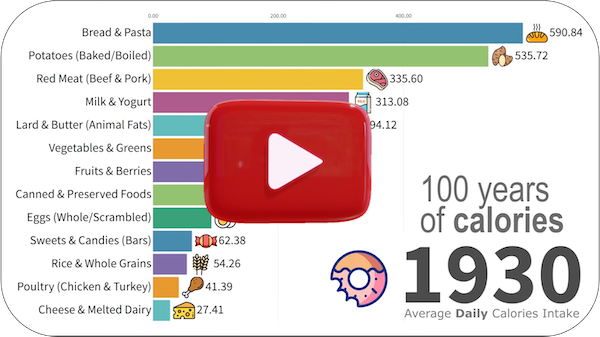
Check out the this visualization, which tracks the evolution of dietary calorie intake from 1930 to...

Taxpayer given 35% penalty for BAS recklessness
Following an application for a refund of nearly $94,000, the Administrative Review Tribunal has set aside an...

SMEs warned as ATO ramps up tax debt collection
One insolvency specialist has emphasised the importance of small businesses engaging their accountants to stay...
Does Your Small Business Need to Follow AML Privacy Rules?
Compliance with new anti-money laundering (AML) laws may subject your small business to additional privacy...

Don’t get caught out at tax time with your multiples jobs
Picking up a second job, holding multiple part-time roles, or doing gig work is now part of everyday life. But...

Global companies turn to cost-cutting amid ongoing inflation
Rising operating costs and persistent inflation are placing renewed pressure on businesses worldwide, despite...

Warning for early lodger this tax time!
The ATO has a clear message this year: slow down and get it right. Early lodgers are far more likely to make...

ATO no longer treating debt the same as during COVID
One expert has stressed the importance of tax agents reminding their clients that the ATO is no longer as...

The evolution of the world’s languages
Check out the evolution of the world's most spoken languages from 2500 BC to...
Latest Guests News
Newsletter Newslettter We are pleased to supply you with the latest edition of Client Alert, which...