- 234 Balaclava Road, Caulfield North VIC 3161
- contactus@guests.com.au
- (03) 9509 7033
2023 Year End Tax Planning Guide
Key Tax Time Strategies

.
1. Delay deriving assessable income
One effective strategy is to delay deriving your income until after June 30, 2023 by:
a. Delaying the timing of the derivation of Income until after June 30.
b. Timing of raising invoices for incomplete work (Businesses)
This can only be done when this strategy will not adversely affect your cash flow. Please note, not banking amounts received before June 30 until after June 30 does NOT qualify because the income is deemed to have been earned when the money is received, or the goods or services are provided (depending on whether you are on a cash or accruals basis of accounting).
- Cash Basis Income – Some income is taxable on a cash receipts basis rather than on an accrual basis (e.g. rental income or interest income in certain cases).
- Consider delaying your invoices to customers until after July 1, which will push the derivation of the income into the next financial year and defer the tax payable on that income. If you operate on the cash basis of accounting, you simply need to delay receiving the money from your customers until after June 30.
- Lump Sum Amounts – Where a lump sum is likely to be received close to the end of a financial year, you should consider whether this amount (or part thereof) can be delayed or spread over future periods.
2. Bringing forward deductible expenses or losses
Prepayment of Expenses – In some circumstances, Small Businesses (SBE) and individuals who derive passive type income (such as rental income and dividends) should consider pre-paying expenses prior to 30 June 2023. A tax deduction can be brought forward into this financial year for expenses like:
- Employee Superannuation Payments including the 10.5% Superannuation Guarantee Contributions for the June 2023 quarter (any such payment has to be received by the Superannuation Fund by June 30).
- Superannuation for Business Owners, Directors and Associated Persons.
- Wages, bonuses, commissions, and allowances
- Contractor Payments
- Travel and accommodation expenses
- Trade creditors
- Rent for July 2023 (and possibly future additional months)
- Insurances including Income Protection Insurance
- Printing, Stationery and Office Supplies
- Advertising including Directory Listings
- Utility Expenses – Telephone, Electricity & Gas
- Motor Vehicle Expenses – Registration and Insurance
- Accounting Fees
- Subscriptions and Memberships to Professional Associations and Trade Journals
- Repairs and Maintenance to Investment Properties
- Self Education Costs
- Home Office Expenses – deductible gift recipient.
- Donations to Deductible Gift Recipient organizations
- If appropriate, consider prepaying any deductible investment loan interest. This could include interest payments on an investment loan for either an investment or commercial property or an investment portfolio you hold.
A deduction for prepaid expenses will generally be allowed where the payment is made before 30 June 2023 for services to be rendered within a 12-month period.
Capital Gains/Losses
– Note that the contract date (not the settlement date) is often the key sale date for capital gains tax purposes, and when it comes to the sale of an asset that triggers a capital gain or capital loss, you need to consider your overall investment strategy when making the decision to sell. Here are some important points regarding the management of capital gains and capital losses on sale of your assets from a tax planning perspective:
1. If appropriate, consider deferring the sale of an asset with an expected capital gain (and applicable capital gains tax liability) until it has been held for 12 months or longer. By doing so, you could reduce your personal income tax. For example, if you hold an asset for under 12 months, any capital gain you make may be assessed in its entirety upon the sale of that asset.
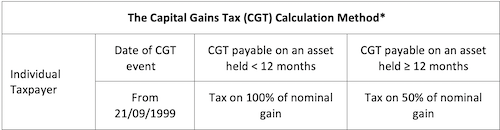
2. * A capital gain will be assessable in the financial year it is crystallised.
3. If appropriate, consider deferring the sale of an asset with an expected capital gain (and applicable capital gains tax liability) to a future financial year. By doing this, you could help reduce your personal income tax for the current financial year. This could also be of benefit if, for example, you expect that your income will be lower in future financial years compared to the current financial year.
4. If appropriate, consider offsetting a crystallised capital gain with an existing capital loss (carried forward or otherwise) or bringing forward the sale of an asset currently sitting at a loss. By doing this, you could reduce your personal income tax for the current financial year. Note that a capital loss can only be used to offset a capital gain.
Accounts Payable (Creditors)
– If you operate on an accruals basis and services have been provided to your business, ensure that you have an invoice dated June 30, 2023 or before, so you can take up the expense in your accounts for the year ended 30th June 2023.
Obligations that need to be considered in relation to the end of financial year.
If you use a Motor Vehicle in producing your income you may need to:
- Record Motor Vehicle Odometer readings at 30 June 2023
- Prepare a log book for 12 continuous weeks if your existing one is more than 5 years old.
If you are in business or earn your income through a Company or Trust:
Employer Compulsory Superannuation Obligations:
The deadline for employers to pay Superannuation Guarantee Contributions for the 2022/23 financial year is the 28 July 2023. However, if you want to claim a tax deduction in the 2022/23 tax year the super fund (or Small Business Superannuation Clearing House) must receive the contributions by 30 June 2023. Avoid making contributions at the last minute because processing delays could deny you a significant tax deduction in this financial year.
- For Private Company – Div 7A Loans – Business owners who have borrowed funds from their company in prior years must ensure that the appropriate principal and interest loan repayments are made by 30 June 2023.
- Trustee Resolutions – ensure that the Trustee Resolutions on how the income from the trust is distributed to the beneficiaries are prepared and signed before June 30, 2023 for all Discretionary (“Family”) Trusts.
- Preparation of Stock Count Working Papers at June 30, 2023.
- Preparation and reconciliation of Employee PAYG Payment Summaries (formerly known as Group Certificates). Note you are not required to supply your employees with payment summaries for amounts you have reported and finalised through Single Touch Payroll.
From 1 July 2023:
The compulsory Super Guarantee Contribution rate increases from 10.5 % to 11% from July 1, 2023.
Company Tax Rates For Small Business
- The company tax rate for base rate entities with less than $50 million turnover was 25% for the 2021/22 year. This rate will remain at 25% for 2022/23 income year. A base rate entity is a company that both has an aggregated turnover less than the aggregated turnover threshold and 80% or less of their assessable income is base rate entity passive income.
Other Tax effective Strategies For Businesses
THE FOLLOWING SHOULD ALSO BE CONSIDERED
- Stock Valuation Options – Review your Stock on Hand and Work in Progress listings before June 30 to ensure that it is valued at the lower of Cost or Net Realisable Value. Any stock that is carried at a value higher than you could realise on sale (after all costs associated with the sale) should be written down to that Net Realisable Value in your stock records.
- Write-Off Bad Debts – If you operate on an accruals basis of accounting (as distinct from a cash basis) you should write-off bad debts from your debtors listing before June 30. A bad debt is an amount that is owed to you that you consider is uncollectable or not economically feasible to pursue collection. Unless these debts are physically recorded as a ‘bad debt’ in your system before 30th June 2023, a deduction will not be allowable in the current financial year.
- Repairs and Maintenance Costs – Where possible and cash flow allows, consider bringing these repairs forward to before June 30. If you don’t understand the distinction between a repair and a capital improvement please consult with us because some capital improvements may not be tax-deductible in the current year and could be claimable over a number of years as depreciation.
- Obsolete Plant and Equipment – should be scrapped or decommissioned prior to June 30, 2023 to enable the book value to be claimed as a tax deduction.
- Use of a Bucket Company to receive distributions from your Discretionary Trust
Superannuation Tax Planning Opportunities
INCREASE IN SUPER GUARANTEE CONTRIBUTION RATE. From July 1, 2023 the compulsory Super Guarantee Contribution rate increases from 10.5 % to 11%.
The maximum super contribution base used to determine the maximum limit on any individual employee's earnings base for each quarter of 2022/22 is $58,920 and for 2022/23 is $60,220 per quarter. You do not have to provide the minimum support for the part of earnings above this limit.
CONCESSIONAL CONTRIBUTION CAP OF $27,500 FOR EVERYONE
The tax-deductible superannuation contribution limit or cap is $27,500 for all individuals regardless of their age for the 2022/23 financial year.
- If eligible and appropriate, consider making the most of your 2022/23 financial year annual concessional contributions cap with a concessional contribution. Note that other contributions such as employer Superannuation Guarantee Contributions (SGC) and salary sacrifice contributions will have already used up part of your concessional contributions cap. If your total superannuation balance as at June 30, 2022 was less than $500,000 you may be in a position to carry-forward unused concessional caps starting from the 2018/19 financial year. Members can access their unused concessional contributions caps on a rolling basis for five years and amounts carried forward that have not been used after five years will expire. The 2019/20 financial year was the first year in which you could access unused concessional contribution and by making a concessional contribution to your super, you could reduce your personal income tax for this financial year and provide for your future retirement.

Non-Concessional Contributions Cap
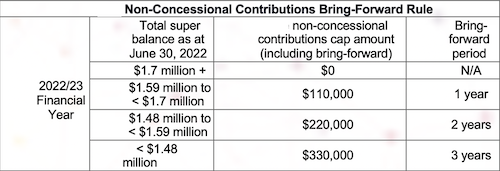
- If eligible and appropriate, consider utilizing all or part of your 2022/23 financial year annual non-concessional contributions cap by making a non-concessional contribution. If you are not currently in a non-concessional contributions bring forward period, consider whether you may be in a position to ‘bring-forward’ your non-concessional contributions caps for the 2023/24 and 2024/25 financial years, and contribute up to $330,000 for the 2022/23 financial year.
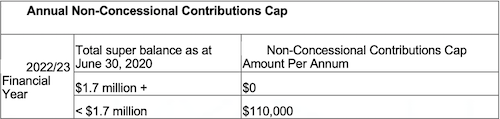
- A non-concessional contribution generally refers to an after-tax contribution that isn’t (or can’t be) claimed as a tax deduction by the contributor, e.g. personal contributions not claimed as a tax deduction and spouse contributions (for the recipient).
- The advantage of making the maximum tax-deductible superannuation contribution before June 30, 2023 is that superannuation contributions are taxed at between 15% and 30%, compared to personal tax rates of between 32.5% and 45% (plus 2% Medicare levy) for an individual taxpayer earning over $45,000. Typically, self-employed individuals and those who earn their income primarily from passive sources like investments make their super contributions close to the end of the financial year to claim a tax deduction. However, individuals who are employees may also use this strategy and those who might want to take advantage of this opportunity would typically include individuals:
- who work for an employer that does not permit salary sacrifice,
- who work for an employer that does enable salary sacrifice (but it is not disadvantageous due to a reduction in entitlements), and
- who are salary sacrificing but want to make a top-up contribution to utilise their full concessional contributions cap.
GOVERNMENT CO-CONTRIBUTION TO YOUR SUPERANNUATION
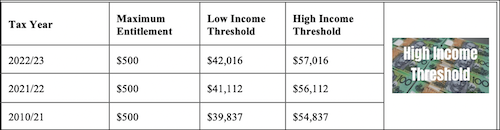
The Government co-contribution is designed to boost the superannuation savings of low and middle-income earners who earn at least 10% of their income from employment or running a business. If your income is within the thresholds listed in the table below and you make a ‘non-concessional contribution’ to your superannuation, you may be eligible for a Government co-contribution of up to $500. To be eligible you must be under 71 years of age as at June 30, 2022. In 2022/23, the maximum co-contribution is available if you contribute $1,000 and earn $42,016 or less. A lower amount may be received if you contribute less than $1,000 and/or earn between $42,016 and $57,016.
SALARY SACRIFICE TO SUPERANNUATION
If your marginal tax rate is 19% or more, salary sacrificing can be an effective way to boost your superannuation and also reduce your tax. By putting pre-tax salary into superannuation instead of having it taxed at your marginal tax rate you may save tax. This can be particularly beneficial for employees approaching retirement age.
Immediate Write-Off for Individuals Small Business Assets
Temporary Full Expensing allows businesses to claim an immediate deduction for the business portion of the cost of an asset being eligible plant, equipment and motor vehicles in the year it is first used or installed ready for use for a taxable purpose. For the 2022-23 income year, a business can claim an immediate deduction for the business portion of the cost of:
- Eligible new assets first held, first used or installed and ready for use for a taxable purpose between 7.30pm AEDT on 6 October 2020 and 30 June 2023.
- Eligible second-hand assets for businesses with aggregated turnover under $50 million – eligible depreciating assets using the simplified depreciation rules (only for small businesses with aggregated turnover of less than $10 million and less than $2 million for previous income years) and the balance of their small business pool.
If you are a small business entity that chooses to use the simplified depreciation rules, temporary full expensing rules apply with some modifications.
You cannot opt out of temporary full expensing for assets that the simplified depreciation rules apply to. You must immediately deduct the business portion of the asset’s cost for assets you start to hold, and first use (or have installed ready for use) for a taxable purpose from 7.30pm (AEDT) on 6 October 2020 to 30 June 2023. You don’t add these assets to your small business pool.
You may also deduct the balance of the small business pool at the end of an income year ending between 6 October 2020 and 30 June 2023.
Here are some key points to consider:
- For the instant asset write-off the asset can be new or second-hand.
- To be eligible, the asset must be purchased by a business turning over less than $50m or $500 million after 12th March 2020.
- The amount must be under $150,000 (depending on date of purchase – it could be $30K or $25K or $20K) exclusive of GST (i.e. $165,000, $33K, $27.5K or $22K including GST)
- If you borrow to purchase the asset, the asset is still eligible.
- The asset must be installed and ready to use by the deadline.
- To claim the write off on a motor vehicle you will need to have a valid log book and claim only that percentage of the cost as an immediate write off.
- If you purchase a car for your business, the instant asset write-off is limited to the business portion of the car limit of $64,741 for the 2022/23 income tax year.
- Any attempt to manipulate invoices etc. will attract the ATO's use of the anti-avoidance rules, thereby eliminating the write off.
- If your business has a small profit or even a loss, the write off will be of little or no benefit in the current year (losses are not refundable but can be carried forward to the next year).
- Building structural improvements are not eligible for the instant write-off.
- If your business is not a ‘Small Business Entity’ you will need to depreciate all assets purchased over $1,000. Any assets purchased for $1,000 or less can be written off immediately.
Accelerated Depreciation Deductions
Newly-acquired depreciating assets valued at more than $30,000 (or $150,000 post 12th March 2020) and not applied to the instant asset write-off deduction can be added to the general business pool. As part of the backing business incentive, an accelerated depreciation deduction of 57.5 percent for the business portion of the new depreciating asset applies for the cost of an asset on installation from 12th March 2020 to 30th June 2023 and existing depreciation rules apply (15 per cent for the first year and 30 per cent for subsequent years) to the balance of the asset’s cost and for subsequent years. There is no limit to the cost of a qualifying depreciating asset eligible for this concession, but the asset must be new and not second-hand.
Client Alert – June 2023

Federal Budget update
Personal tax rates and offsets for 2023–2024 and beyond
With no announced changes in the Federal Budget to personal tax rates and offsets for the 2023–2024 income year and beyond, now is the time to do some tax planning for the current and future years. For the 2022–2023 and 2023–2024 income years, the rates and income thresholds that have applied since the 2021–2022 income year will continue to apply.
The already legislated Stage 3 tax cuts will reduce the 32.5% marginal tax rate to 30%, leading to one big tax bracket between $45,000 and $200,000, along with the abolishment of the 37% tax bracket from the 2024–2025 income year. The original aim of these changes (under the previous government) was to align the middle tax bracket of the personal income tax system with corporate tax rates.
However, some individuals may find themselves paying more tax for the 2022–2023 income year due to the end of the low and middle income tax offset (LMITO). The LMITO applied to individuals with taxable income of less than $126,000.
For the 2022–2023 income year and onwards, only the low income tax offset (LITO) will apply. The maximum amount of the offset is $700 and will apply to individuals with taxable incomes of less than $37,500. Taxpayers earning more than $66,667 are not eligible for the LITO.
It should also be noted that the Stage 3 tax cuts not only apply to Australian residents, but also to foreign residents and working holiday makers from the 2024–2025 income year.
What’s in the Budget for small businesses
For small businesses, the government has proposed to temporarily increase the instant asset write-off threshold from 1 July 2023 to 30 June 2024. In previous years, the temporary full expensing effectively replaced the instant asset write-off regime. This allowed eligible businesses to immediately deduct the business portion of an asset’s cost with no general limit, although specific cost limits on certain assets, such as cars, applied.
With the end of temporary full expensing, eligible small businesses with an aggregated annual turnover of less than $10 million will be able to immediately deduct the full cost of eligible assets costing less than $20,000 that are first used or installed ready for use between 1 July 2023 and 30 June 2024. The $20,000 limit will apply on a per asset basis, so small businesses can instantly write off multiple assets.
Assets valued at $20,000 or more (which cannot be immediately deducted) can continue to be placed into the small business simplified depreciation pool and depreciated at 15% in the first income year and 30% each income year thereafter. In addition, the “lock-out” rule that prevents small businesses from re-entering the simplified depreciation regime for five years if they opt-out will continue to be suspended until 30 June 2024.
The government has also announced a lodgment penalty amnesty program for small businesses (with an aggregate turnover of less than $10 million). The amnesty will remit failure-to-lodge (FTL) penalties for outstanding tax statements lodged in the period from 1 June 2023 to 31 December 2023 that had original due dates between 1 December 2019 to 29 February 2022.
ATO target areas for tax time 2023
Tax time 2023 is fast approaching and as with previous years, the ATO has provided some insights to the areas it will be focusing on consisting of rental property deductions, work-related expenses, and capital gains tax. Specifically, the ATO will be targeting loan interest expenses, working from home deductions, and possible capital gains tax where a main residence is also used for income producing purposes. Overall this tax time, the ATO expects fewer individuals to receive refunds or to receive smaller refunds, and more individuals perhaps with tax debts.
A recent ATO review indicated that nine out of 10 rental property owners are getting their returns wrong, so it is no surprise that this area remains as one of the main tax time targets. Common mistakes of taxpayers include rental income not being reported, overclaiming expenses, or claiming improvements to private properties. However, this tax time, the ATO is particularly focused on interest expenses.
Further, the ATO reminds taxpayers of the recent commencement of the residential investment property loan data matching program that spans the income years of 2021–2022 to 2025–2026. Data such as amounts of interest charged and loan repayments from various financial institutions will be used to identify discrepancies in returns lodged.
The other focus area the ATO will be enforcing is work-related expenses. There have been changes to the methods to work out working from home deductions from 1 July 2022. From that date, you can either choose the actual cost method or the fixed rate method, with the 80 cents per hour “shortcut” method no longer available. To use either of the available methods, you’ll need to keep appropriate records, including the total number of hours worked from home.
The ATO’s last area of focus for tax time 2023 is CGT. In addition to the usual disposal of assets such as shares, crypto-assets, managed investments and properties, the ATO will be looking at situations where a main residence or part of a main residence is used to produce income and is then subsequently sold. This applies where you have rented out all or part of your main residence through traditional means or through the sharing economy (using Airbnb, Stayz, etc), or where a business is run from home.
ATO ride-sourcing data-matching program extended
Continuing its theme of closing the tax gap of individuals for budget repair, the ATO has notified the public of the extension of an existing data-matching program on ride-sourcing. The program was previously designed to run from the 2015–2016 to the 2021–2022 financial years, capturing information from individuals engaged in providing ride-sourcing services (through platforms such as Uber); this has now been extended to apply to the 2022–2023 financial year.
It is estimated that records relating to approximately 200,000 individuals will be obtained.
The data obtained will be used to identify and address incorrect reporting of income in terms of income tax returns and activity statements. It will also be used to identify instances where individuals fail to meet registration or lodgment obligations (eg GST).
In addition to potential compliance activities, the ATO will use the program to promote voluntary compliance, understand behaviours and compliance profiles of individuals and businesses providing ride sourcing services and obtain a holistic view of taxpayers’ income.
This particular data-matching program will not be extended beyond the 2022–2023 financial year, given the introduction of the Sharing Economy Reporting Regime, which will require operators of various electronic distribution platforms to indefinitely report identification and payment information to the ATO for data-matching purposes from 1 July 2023 for ride-sourcing and short-term accommodation, and from 1 July 2024 for all other reportable transactions.
Single Touch Payroll Phase 2: avoid common mistakes
Single Touch Payroll (STP) was introduced as a way for employers to send super and tax information directly to the ATO through the use of STP-enabled software solutions. STP Phase 2 is now in full swing, having commenced on 1 January 2022. It requires more detail on the amounts reported through STP; for example, salary sacrificed amounts must be reported separately. Under STP Phase 2, the ATO also receives information directly from super funds. When employers make a super payment to their employees’ chosen or default funds, the funds will send this information to the ATO so it can be matched with the STP information from the employers to ensure that the correct entitlements are being paid.
The ATO has now identified common STP Phase 2 mistakes to avoid for employers currently entering into the system.
In relation to pay codes, the ATO has noticed that some employers have failed to set up the codes correctly and to ensure that payments including allowances, paid leave and overtime are itemised separately. Another issue the ATO has noticed is employers selecting “not reportable” or “do not report to the ATO” incorrectly. Generally, all amounts paid to employees should be reported, and the “not reportable” or “do not report to the ATO” options should only be selected for travel allowances below the ATO’s reasonable amount thresholds, overtime meal allowances below the ATO’s reasonable amount reimbursements, and post-tax deductions (except for those separately identified).
Employers that transitioned to STP Phase 2 part-way through the financial year need to ensure that continuity of YTD reporting is maintained unless the replacing payroll IDs method is used. This varies with the different software solutions used; some will transition to the amounts automatically, while others may require manual input of YTD amounts. The ATO suggests comparing the first STP Phase 2 report with the last STP Phase 1 report to assist in maintaining the correct figures.
As tax time approaches, the ATO also emphasises the importance of having the correct employee information such as names, tax file numbers and dates of birth transitioned into STP Phase 2. Employers also need to report accurate information about their employees’ employment basis (eg full-time, part-time or casual) each time the payroll is run.
Specifically, the ATO has identified a common issue where the employer omits the cessation date and reason for leaving when an employee’s employment ends. In general, employers should be reporting a cessation date and reason for an employee when there are also payments that are connected to termination (eg employment termination payments, unused leave termination, lump sums). This information will flow through to Services Australia and help streamline interactions with the employee.
Under STP Phase 2, employers are also required to report a country code when payments are made to employees who derive foreign employment income, are inbound assignees to Australia or are working holiday makers. The country refers to the home country of the individual, and differs depending on the type of income. The ATO has noticed employers using the code “na” to denote “not applicable” in these instances; however, “na” has been assigned as the country code for Namibia and should not be used unless the employee is either working overseas in Namibia or is from Namibia.
Victoria to phase out duty on commercial and industrial property
The Victorian Government has announced that transfer duty (formerly “stamp duty”) will be phased out for commercial and industrial properties from 1 July 2024. Instead, an annual 1% tax on the unimproved value of such property (the annual property tax) will be introduced. This was announced as part of the State Budget handed down on 23 May 2023.
In short, under the Victorian measures the first time a parcel of commercial or industrial land is transferred after 1 July 2024, the transferee will still have to pay transfer duty, either:
- as a lump sum; or
- over 10 years, in annual instalments and at interest.
Ten years after the transfer of that property, the annual property tax will apply, locking that property into the new system (apparently, regardless of whether the transfer duty was paid as a lump sum or in annual instalments). This means subsequent transfers of that property will not trigger a transfer duty liability, but will instead be subject to the annual property tax.
The annual property tax will not impact industrial and commercial property acquired before 1 July 2024, but only once such property is transferred (and therefore permanently entered into the new regime).
Employers to pay super at same time as wages
The government has announced that from 1 July 2026, employers will be required to pay their employees’ super at the same time as their salary and wages (ie payday super). The three-year lead time is to give businesses, super funds, payroll providers and other parts of the superannuation system sufficient time to prepare for the change.
According to ATO estimates, in 2019–2020, around $3.4 billion worth of super went unpaid. While the onus to chase up unpaid super currently lies with the employee, this is made all the more difficult by the employer only having to show the amount of super they are liable to pay, not the actual amount paid. Currently, employers are only required to pay super for eligible employees on a quarterly basis, meaning that many employees realise far too late that they have not been paid the correct amount of super.
The government hopes that the simple payday super change will make it easier for employees to keep track of their super payments, making it harder for disreputable employers to exploit this loophole.
Treasurer Jim Chalmers MP has noted that more frequent super payments will make employers’ payroll management smoother with fewer liabilities building up on their books, while also benefitting employees. It is projected that a 25-year-old median income earner currently receiving their super quarterly and wages fortnightly could be around $6,000 or 1.5% better off at retirement just with this small change.
It should be noted that legislation related to these measures has not yet been released, let alone passed Parliament. Therefore, these measures are not yet law, but given the broad political support in wake of the announcements, it is likely that these proposals will be introduced as soon as various consultation concludes.
Overview of the Federal Budget 2023 – 24
The following are all the links to the federal government's description of its 2023 Budget. At the bottom are the Budget Documents for those that love to get into the fine detail of a Budget.

Delivering cost-of-living relief
- Energy price relief
- Reducing bills by saving energy
- Reducing out‑of‑pocket health costs
- Reducing the cost of medicines
- Support for those who need it most
- Responsible, sustainable income support
- More affordable housing
- Helping more Australians into home ownership
- Keeping wages moving
- Cheaper Child Care and enhanced Paid Parental Leave
Strengthening Medicare
Growing the economy
- Becoming a renewable energy superpower
- A sustainable future
- Modernising our industrial base
- Building up our defence industry
- Supporting small business
- Data and the digital industry
- A better trained workforce
- A better targeted migration system
- Supporting teachers and students
- Investing in infrastructure
Women’s Budget Statement
Broadening opportunity
- Advancing gender equality
- Closing the gender pay gap
- Supporting women's health
- Ending violence against women and children
- Addressing entrenched disadvantage in communities
- Investing in Aboriginal and Torres Strait Islander communities
- Advancing gender equality
- Closing the gender pay gap
- Supporting women's health
- Ending violence against women and children
- Addressing entrenched disadvantage in communities
- Investing in Aboriginal and Torres Strait Islander communities
Strengthening the Budget
- A stronger Budget
- Managing the Budget responsibly
- Building a sustainable aged care system
- Improving Disability Support
- Looking after our veterans
- Strengthening Australia's engagement with our region
- Ensuring Australians are paid the super they earn
- Making our tax and superannuation system fairer
For those who really like to get into the fine detail, knock yourself out here.
Budget Paper No. 1
Budget Strategy and Outlook
Budget Paper No. 2
Budget Measures
Budget Paper No. 3
Federal Financial Relations
Budget Paper No. 4
Agency Resourcing
budget.gov.au
Key points from the 2023-24 Federal Budget
Federal Budgets can involve a lot of content. The following are a quick summary of the main issues. The other related article has more detail.

Budget surplus expected
The first surplus in a number of years. A $4.2 billion surplus is predicted for the 2022-2023 financial year.
Small business asset write-off
Current rules apply until the 30th June 2023 so action before then may be prudent for your business. One-year small business instant asset write-off for assets up to $20k.
Small Business Energy Incentive
One-year Small Business Energy Incentive to switch to efficient energy sources such as electricity.
Household Energy Upgrade Fund
The move to solar and other energy saving systems is given a shove orward. $1.3 billion Household Energy Upgrade Fund for home upgrades that save energy.
Boost to cyber skills
This should be a program that all small businesses get involved in. Cyber security is one of the most misunderstood issues within this business group. $23.4 million “Cyber Wardens” program to boost cyber skills in small businesses.
Minimum tax for multinationals
15 per cent global minimum tax and a domestic minimum tax from 1 January 2024 for multinational groups with global turnover of $1.2 billion or more.
Superannuation tax
Future earnings on super balances over $3 million will be taxed at an additional 15 per cent from 1 July 2025. From 15% to 30%.
Change to super guarantee contributions
This change is expected to make a big difference to the efficiency of many small businesses. Employers will be required to pay compulsory super guarantee contributions on payday rather than quarterly (from 1 July 2026).
Push towards net zero
Another authority! Establishment of a national Net Zero Authority.
Increased bulk-billing incentive
Perhaps giving medical practitioners more would be better but $3.5 billion over five years to increase the bulk-billing incentive for general practitioners.
Aged care workers wage increase
$11.3 billion wage increase for aged care workers.
More welfare support
Targeted relief for vulnerable members of the community – including JobSeeker recipients and Commonwealth Rent Assistance.
AcctWeb
Holiday Home Tax
Many Australians own a holiday home, but according to the Australian Taxation Office, there
are a small number of holiday home owners who, on average claim deductions that are six
times higher than income earned from the property.

.
You can only claim deductions to the extent their holiday home expenses are incurred for the purpose of producing rental income.
Is there a commercial-like purpose to the availability for rental? An apportionment of expenses may be appropriate.
Some questions to answer can help ensure the claims are a valid rental deduction:-
- How many days was it rented out and was the rent in line with market values?
- Where do you advertise for rent and were any restrictions placed on tenants?
- Have you, your family or friends used the property?
A reasonable level of experience and judgement (from your tax professional) can assist
satisfying these subjective issues.
Acctweb
Single Touch Payroll Reporting
The fine tuning of Single Touch Payroll is now endeavouring to disguise family violence
leave.

.
If an employee has taken a period of paid Family and Domestic Violence Leave (FDVL), employers should record this on their pay slip in a way that makes the pay slip look as close as possible to how it would have looked if the employee had not taken the leave.
FDVL must be reported in STP to align with how you would ordinarily show these amounts on the employee's payslip if they had worked, as:
- part of gross as an employee’s ordinary hours of work or;
- a payment made in relation to the performance of the employee’s work, including (but not limited to) an allowance, bonus or a payment of overtime or;
- upon request by the employee, as an amount paid for taking a period of some type of leave (other than a period of paid family and domestic violence leave).
Super guarantee obligations still applies as ordinary times earnings.
Small business must race to beat instant asset write-off deadline
Small business will need to race to beat the cut-off date for the instant asset write-off scheme, says a tax principal at RSM Australia, or become ensnared in “significant red tape” once more onerous rules came back into force.

.
Brisbane-based Belinda Crowley said the deadline would catch many SMEs unawares and after 30 June they would need to depreciate any asset over $1,000.
For businesses with a turnover above $10 million, the threshold is $100.
“This is a significant burden of time and money, especially for small businesses,” Ms Crowley said. “Even if their accountants handle it for them, it’s still an additional expense.”
The instant asset write-off (IAW) for small business has been part of the landscape since 2015.
During the pandemic, the government introduced temporary full expensing as part of its support package for all businesses regardless of size.
Now both these popular initiatives, which encouraged owners to invest in their businesses, are coming to an end.
“Historically, business tax depreciation was cumbersome for smaller enterprises to administer,” she said.
“As a compliance initiative IAW has saved business owners significant dollars because depreciation became less complex to administer.
“Many business owners hoped these initiatives would be rolled forward but the new federal government has different priorities.”
One of the biggest issues was the massive difference between accounting for the occasional big-ticket item of say, $30,000, and doing the same for any asset over $1,000 (or $100 for larger businesses).
Ms Crowley said SMEs which did not need to write off assets this financial year should save the depreciation for when it was essential.
“It all depends on business results. If you’re going through a tough period right now and don’t need the deduction to reduce your tax bill, think really hard and seek professional advice on whether you should be taking it now,” she said.
“It’s also important to note that supply chain issues mean even if you wanted to access the instant asset write-off, you must ensure the asset is installed and ready for use by 30 June 2023 or you can’t claim it.
“This is certainly an issue in an environment in which some cars, and large farm machinery, are taking six months to arrive.
“You need to be confident the asset will definitely be on farm or on site and in use by June 30.”
Sectors that relied on physical assets, such as the agricultural, mining and construction industries, would be most heavily impacted.
Ms Crowley said initiatives such as the skills and training boost and technology investment boost had been announced, but these were unlikely to have the cut-through as the instant asset write-off.
“The federal budget highlighted environment, digitisation and training as priorities, so SMEs should be aware of the new 20 per cent uplift deduction and take advantage of it if they can.
“This means businesses spending, for example, $100 to train an employee, or on digitisation, will get a $120 deduction, with this incentive backdated to March 29, 2022.
“The problem is this is very specific and only for training conducted with registered training organisations, so it is a much harder benefit for small to medium businesses to access.
She said access to the write-offs would be limited to businesses with aggregated turnover below $50 million and the training boost expires on 30 June 2024 while the technology scheme lasts only until the end of this financial year.
“It will also be inconsistently beneficial across sectors – for example, a lot of learning in the ag sector is on the job rather than sending employees on courses for a formal accredited structure.”
Philip King
09 March 2023
accountantsdaily.com.au
Small businesses need hands-on help with cyber security
Firms confront too much information but insufficient practical guidance when it comes to digital lockdown, says COSBOA.

.
Vulnerable small businesses need help with cyber security as part of the government’s push to make Australia the most digitally locked down nation by 2030, according to the sector’s representative body.
COSBOA chair Matthew Addison said the missing ingredient in the 2023–30 Australian Cyber Security Strategy was how small firms could implement appropriate systems.
“Small businesses tell us that they hear about cyber security risks but don’t know what to do or if they can do anything,” said Mr Addison.
“They also tell us there is so much information they don’t understand.”
He said COSBOA supported “action-based behaviour change information for small businesses” and that the development of its Cyber Wardens model was to “enable education and enhanced security for the people in small business.”
The council said the goal of its submission was to advocate greater education services, investment in cyber security infrastructure, and a balanced approach to its regulatory requirements for small businesses.
One of its recommendations was that any legislative changes or reforms regarding cyber security that the government enacted should be accompanied and supported by government-endorsed best practice guidelines to help small businesses understand how to follow the change.
COSBOA also recommended government support for educational programs such as Cyber Wardens — which it launched in association with CBA and Telstra — which would supply practical advice on how small businesses could ensure they were compliant with introduced regulations.
The organisation said an expansive roll-out of its Cyber Warden program as a designated cyber essentials certification scheme would strengthen and support the uptake of cyber security services and technologies in Australia.
“Subscription to the scheme would enable small businesses the capacity to protect the confidentiality, integrity, and availability of data stored on devices that connect to the internet,” said the submission.
“The Cyber Warden scheme would form a cornerstone of the strategy and would establish a set of baseline technical controls to help SMEs improve their cyber defences and publicly demonstrate their commitment to cyber security.”
COSBOA also advocated against the penalisation of firms for non-compliance, as the council sought to protect small businesses from further penalties as they recover from the pandemic and several economic challenges.
Family Business Australia’s acting chief executive Andrea Moody said the organisation supported an expanded role out of COSBOA’s Cyber Wardens program.
“Family Business Australia is proud to support the Cyber Wardens program, we believe this initiative will provide valuable training and resources to help individuals and organisations protect themselves against cyber threats,” said Ms Moody.
“As family-owned businesses are often targets of these threats, it is crucial to educate our members and the broader community about cyber security best practices.”
Josh Needs
19 April 2023
accountantsdaily.com.au
Changes to parental and workplace sexual harassment laws
New workplace changes to paid parental leave, and workplace sexual harassment laws.

.
Paid Parental Leave (PPL): What's changed?
CURRENT PROVISIONS
Under the current PLP scheme, eligible individuals who are the primary carer for a child who is born or adopted get up to 18 weeks’ pay at the National Minimum Wage (‘NMW’). This is fully funded by the Australian Government, though employers must process the payments through their payroll.
The first 12 weeks of PLP instalments must be received in one continuous period within 12 months of the birth or adoption of a child. The remaining 30 payable days can be taken flexibly within 24 months of the birth or adoption of a child. This coincides with an employee’s rights under the Fair Work Act 2009 (Cth) (‘FW Act’) to return to work after parental leave and the ability to take a maximum of 30 days’ parental leave flexibly within 24 months of the child’s birth or adoption date.
Eligible fathers and other partners can get up to two weeks’ payment (one-off) at the NMW under the Dad and Partner Pay (DAPP) scheme.
Individuals must claim PLP or DAPP through Centrelink and eligibility for the schemes is assessed by Services Australia (formerly the Department of Human Services) in which relevant work, income and other eligibility tests under the Paid Parental Leave Act 2010 (Cth) (‘PPL Act’) must be met.
New changes
From 1 July 2023, PLP and DAPP will be combined into one scheme which will provide eligible parent couples or single parents up to 20 weeks of PLP at the NMW. DAPP will no longer exist as a separate scheme. Eligible parents must not be working during this time or must be on leave (paid or unpaid).
Additionally,
- the whole 20 weeks of PLP instalments can be received flexibly in multiple blocks within 24 months of the child’s birth or adoption date (removing the requirement of the 12 weeks of PLP instalments being received in one continuous period and the 30 days’ cap previously mentioned);
- parents will be able to access PLP even when on paid leave (e.g. employer-funded parental leave, annual leave or long service leave), and in between periods of paid work;
- birth mothers or first adoptive parents will have to give approval to share any PLP days, and if shared with a partner, parents will be able to access PLP at the same time;
- for PLP that is shared between a couple, at least two weeks will be reserved for each partner to use with any unused amount of PLP days lost if not used within 24 months of the child’s birth or adoption date;
- if a person does not meet the individual income limit of $156,647 (i.e earns more than this amount), there will be a combined family income limit of $350,000 which will be applied instead (this limit will be used whether a person is single or partnered); and
- there will be special circumstance exceptions to the work test for individuals whose ability to work during the ‘work test period’ are impacted by family and domestic violence, a serious medical condition (for either you or an immediate family member you care for), or a natural disaster declared by the Commonwealth or a state or territory.
New workplace sexual harassment laws
Prohibiting workplace sexual harassment
The Fair Work Act has been amended to prohibit (or ban) sexual harassment in connection with work, including in the workplace. These changes apply from 6 March 2023 and expand the previous protections around sexual harassment in the workplace.
The protection applies to:
- workers including employees, contractors, work experience students and volunteers
- future workers
- people conducting a business or undertaking.
The protection won’t apply to sexual harassment that starts before 6 March 2023.
New Fair Work Commission powers
The Commission now has greater powers to deal with workplace sexual harassment.
In addition to its existing ‘stop sexual harassment order’ powers, the Commission can deal with disputes about sexual harassment by:
- conciliation
- mediation, or
- making a recommendation or expressing an opinion.
Preparing for EOFY tax scams with business and cyber resilience
Every end of financial year (EOFY) season involves a rush by Australians wanting to get their tax returns completed. Increasingly, though, this period is seen as an opportunity for bad people to take advantage of us.
.
Too often the EOFY rush involves hastily clicking on links, giving personal information to the wrong person, or submitting documents to insecure portals or sites. One in four Australians experience a scam related to EOFY or tax matters, and these scams are not just limited to the June 30 date. In the months leading up to and following, scammers are leveraging a broad range of tactics from texting links to fake ads offering the recipient a tax refund.
For businesses, the threats are just as severe. Yet, half of organisations lack a comprehensive approach to assessing cyber resilience. In response to the growing threats and need for businesses to take preventative measures, the recent federal budget included a $23.4 million investment into a Cyber Wardens program, which aims to train up to 60,000 wardens in SMBs within the next three years.
While this is a progressive step, more needs to be done to ensure every business across Australia is equipped to mitigate the impact of cyber threats, particularly organisations managing Australians’ finances ahead of the EOFY period.
While the government initiative is welcome the best steps for any business, as a starting point, are:
- Ensure two factor authentication is turned on wherever it is available. This should apply to platforms such as cloud-based e-mail systems, client portals, and payments systems.
- Change your passwords. It is a fact that many of us use the same password for a lot of logins. The reason for this is simply, so many passwords!! However, the best answer is to use an identity & password manager solution such as Dashlane, LastPass, NordPass, or 1Password. This way you only need to remember one password to gain access to all the others.
- Your Internet connection (router) is a point of significant threat. Few routers are actively managed which leaves many opportunities or hackers. The best solution is to ask your existing IT supplier, if they have the expertise, to ensure your router’s firewall(s) are shutting out the outside world.
- A person within the business does need to be able to provide oversight that proper strategies are actually implemented and who can understand what their IT people are saying about their routers and firewall(s). The government initiative noted above may help small businesses train such a person. This is not saying a staff member needs to be an IT expert, but they do need to be able to understand what they are told and/or read. Basic education and training can be enough but extra and ongoing training is increasingly important.
Be on your toes. While cyber threats are often assumed to come externally from an aggressive attack by someone in a hoodie in a bunker overseas, the reality is many risks come from employees skipping over seemingly complicated approval processes, subscribing to popular apps or products that may not meet compliance requirements, or not checking whether they actually need to use a third party tool or if the same outcomes could be reached with an approved tool already used within the organisation. Make sure your own people aren’t opening the gates to the enemy.
Finally, don’t stop with the above. Cyber criminals around the world are savvy, persistent, and increasingly well-resourced. While they may be targeting consumers and accountants at tax time today, they will quickly find another way to get Australians’ attention tomorrow. Keep your plans, cyber champions, and staff – all the way to the Board level – updated regularly to ensure everyone is ready for the next threat.
05 June 2023
Latest Industry News

How Do I Write Legally Compliant Terms and Conditions for My Business?
Terms and conditions bind your customers only where they actively accept them, so a tick box at checkout holds...

Paid parental leave super contributions have started
From July 2026, the new Paid Parental Leave Superannuation Contribution (PPLSC) has started. From...

If the business is no longer profitable, and is unlikely to be profitable in the future, your best option may...
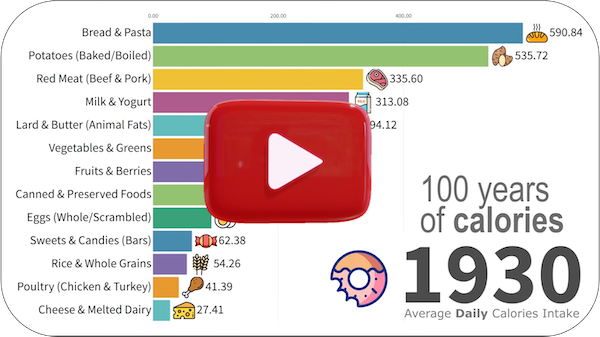
Check out the this visualization, which tracks the evolution of dietary calorie intake from 1930 to...

Taxpayer given 35% penalty for BAS recklessness
Following an application for a refund of nearly $94,000, the Administrative Review Tribunal has set aside an...

SMEs warned as ATO ramps up tax debt collection
One insolvency specialist has emphasised the importance of small businesses engaging their accountants to stay...

Does Your Small Business Need to Follow AML Privacy Rules?
Compliance with new anti-money laundering (AML) laws may subject your small business to additional privacy...

Don’t get caught out at tax time with your multiples jobs
Picking up a second job, holding multiple part-time roles, or doing gig work is now part of everyday life. But...

Global companies turn to cost-cutting amid ongoing inflation
Rising operating costs and persistent inflation are placing renewed pressure on businesses worldwide, despite...

Warning for early lodger this tax time!
The ATO has a clear message this year: slow down and get it right. Early lodgers are far more likely to make...

ATO no longer treating debt the same as during COVID
One expert has stressed the importance of tax agents reminding their clients that the ATO is no longer as...

The evolution of the world’s languages
Check out the evolution of the world's most spoken languages from 2500 BC to...
Latest Guests News
Newsletter Newslettter We are pleased to supply you with the latest edition of Client Alert, which...