- 234 Balaclava Road, Caulfield North VIC 3161
- contactus@guests.com.au
- (03) 9509 7033
Is your content making you income?
The Australian Taxation Office has warned content creators that they need to be aware of their income tax and GST obligations.

.
Examples of content creators are individuals who write a blog, post make-up tutorials to social media or stream gaming or other activities for others to watch.
If you start making money from your online content, you will have income to declare. You will also need to consider whether you are in business. You should consider carefully the subjective questions underlying the registration for an Australian Business Number. Are you enjoying some reward from a hobby, in the lead-up to a business? If you are, or you want to start your own business, it’s important you know what income you need to report, the deductions you can claim and what registrations you may need.
The income you receive could be cash, money for advertising or appearance fees, or goods like a gaming console, clothes or make-up.
It doesn’t matter whether the income comes from Australia or overseas. It is all taxable in Australia, as long as you are considered to be a tax resident of Australia.
Some of your supporters may purchase your merchandise or pay a subscription fee to access your content. They may send tips or gratuities (often called gifts). All of these are likely to be income and should be declared.
There are some important things to think about if you’re a content creator. Can you afford to accept the gifts? A new handbag or a free holiday may be enticing, but because it’s regarded as income, you’ll need to pay tax on it.
Consider how the income you earn will affect your other amounts payable. Sole trader income counts towards your total assessable income, so it could impact your study loans or Medicare calculation.
If you’re in business, and you have a GST turnover of $75,000 or more, you’ll need to register for GST. You will be liable to pay GST on your taxable supplies, even if you don’t pass it on to your supporters. However, you can claim input tax credits on what are called “creditable acquisitions”.
You will be able to claim deductions for business-related expenses. You may also be eligible for various small business concessions.
Taxing unrealised capital gains a grave concern: Burgess
The SMSFA has renewed its call for a more equitable and less costly approach to the federal government’s proposed new tax on superannuation balances exceeding $3 million.

.
In his speech on the first day of the SMSFA’s annual Technical Summit on the Gold Coast, CEO Peter Burgess said the proposed approach of including unrealised capital gains in the calculation of earnings has been widely criticised.
“But it’s not only the inclusion of unrealised gains that has us concerned; there are many other items that will need to be excluded to ensure the ‘earnings’ that will be subject to this new tax are not unfairly overstated,” Mr Burgess said.
“This is what will make this whole new regime so complex and costly to implement and run.”
Mr Burgess acknowledged the measures outlined in the consultation paper which aim to reduce the impact of this new tax in certain scenarios but criticised the complexities of this approach and said a far simpler approach would be to exclude members who don’t start and finish the income year with a balance in excess of $3 million from this new tax.
He outlined an alternative approach that would not involve taxing unrealised capital gains or the need for the ATO to adjust reported data to avoid inappropriate outcomes.
“It is not difficult for the SMSFs and some APRA funds to identify and report actual taxable earnings at the member level. This is the most appropriate measure of earnings for the purposes of this new tax,” he said.
“While appreciating not all APRA funds can report this data, their default position should be using a deemed earning rate. It’s not a new concept and is used extensively to assess entitlements to social security pensions and is also used in the super industry – for example, to calculate earnings on excess pension balances and to determine amounts that can be withdrawn under the First Home Super Scheme.
“It’s important to remember that the majority of people impacted by these new tax thresholds are not members of APRA funds, so the model should be designed with SMSFs front and centre.”
Mr Burgess said the SMSFA is not hopeful the government will change its mind about the $3 million threshold but remains hopeful it will change the proposed calculation of earnings for the purposes of this new tax.
Keeli Cambourne
27 July 2023
www.smsfadviser.com
27 July 2023
www.smsfadviser.com
Australian Taxation Office (ATO) target areas for tax time 2023
The ATO has provided some insights to the areas it will be focusing on consisting of rental property deductions, work-related expenses, and capital gains tax.

.
Specifically, the ATO will be targeting loan interest expenses, working from home deductions, and possible capital gains tax where a main residence is also used for income producing purposes. Overall this tax time, the ATO expects fewer individuals to receive refunds or to receive smaller refunds, and more individuals perhaps with tax debts.
A recent ATO review indicated that nine out of 10 rental property owners are getting their returns wrong, so it is no surprise that this area remains as one of the main tax time targets. Common mistakes of taxpayers include rental income not being reported, overclaiming expenses, or claiming improvements to private properties. However, this tax time, the ATO is particularly focused on interest expenses.
Further, the ATO reminds taxpayers of the recent commencement of the residential investment property loan data matching program that spans the income years of 2021–2022 to 2025–2026. Data such as amounts of interest charged and loan repayments from various financial institutions will be used to identify discrepancies in returns lodged.
The other focus area the ATO will be enforcing is work-related expenses. There have been changes to the methods to work out working from home deductions from 1 July 2022. From that date, you can either choose the actual cost method or the fixed rate method, with the 80 cents per hour “shortcut” method no longer available. To use either of the available methods, you’ll need to keep appropriate records, including the total number of hours worked from home.
The ATO’s last area of focus for tax time 2023 is CGT. In addition to the usual disposal of assets such as shares, crypto-assets, managed investments and properties, the ATO will be looking at situations where a main residence or part of a main residence is used to produce income and is then subsequently sold. This applies where you have rented out all or part of your main residence through traditional means or through the sharing economy (using Airbnb, Stayz, etc), or where a business is run from home.
Average ATO refund tumbles $430 compared to last July
Fewer taxpayers have raced to file an early return and the total paid out in refunds is already down by $1.7 billion.

The average refund for early tax return lodgers has dropped by more than $430 compared with last year and the total amount issued has fallen by $1.7 billion, according to ATO statistics for the first month of FY23-24.
Following changes to the work-from-home fixed rate deductions method and the end of the low to middle income tax offset (the so-called LMITO) taxpayers have been slower to file returns this year than last.
The ATO said it had received over 3.6 million individual tax return lodgments for 2023 by 27 July, down 5 per cent – or about 170,000 – on the same time last year.
It said of those lodgments:
- Over 2.3 million were lodged by self-preparers.
- Over 1.2 million were lodged by tax agents.
- Over 51,000 were push returns.
“We have issued more than 2.1 million individuals tax return refunds, with a combined total over $5.0 billion and an average refund amount of $2,331,” the ATO said.
That added up to 300,000 fewer tax refunds to individuals by the same time last year, when 2.4 million had been dispatched.
At the same time, the average refund amount fell by $438 from $2,769 last year,
when the pandemic special provisions allowed those working from home to claim deductions using a simple cents-per-hour shortcut method, or a fixed rate method worth 52c an hour.
Since March, work-from-home claims using the revised fixed rate method (now worth 67c and hour) have to be substantiated by daily timesheets.
Taxpayers using an agent to file their return got an average of $2,669, substantially better than self-preparers who averaged $2,228.
The ATO put the total amount refunded to date at $5 billion, down from $6.7 billion last year.
It had yet to compile data on the number of returns needing adjustment before assessment, following 140,000 amendments last year by those jumping the gun and a similar warning this year to wait for prefill information to be compiled.
According to the most recent update on the ATO website, prefill data was still to come from dozens of companies and financial institutions including Appen, Australian Pipeline Trust, Auswide Bank, Cimic Group, Citigroup, Interactive Brokers Australia, Nabtrade, Orora, Praemium, Suncorp and Transurban.
By Philip King
03 August 2023
accountantsdaily.com.au
Client Alert – August 2023

ATO motor vehicle data matching program extended
The ATO has extended its motor vehicles data matching program once again to encompass the 2022–2023 to 2024–2025 financial years. For each financial year, the ATO will acquire information from all eight of the state and territory motor registries regarding where a vehicle has been transferred or newly registered during the applicable period, and where the purchase price or market value is $10,000 or more. Records relating to approximately 1.5 million individuals will be obtained each financial year.
While the program is being used to obtain intelligence about taxpayers that buy and sell motor vehicles so the ATO can identify risks and trends of non-compliance with various tax and super obligations, the ATO will also be using the data obtained as an indicator of risk. For example, the motor vehicle data (along with other data) will be used to identify taxpayers who have purchased vehicles with values that don’t align with the income they have reported.
Other uses of the data will include identifying taxpayers who may have not met their obligations in terms of GST, FBT, luxury car tax, fuel schemes and income tax.
Using the cents per kilometre method for claiming car expenses
The cents per kilometre method is a simple way to work out how much you can deduct for car-related work or business expenses. Only individuals, including sole traders, or partnerships (where at least one partner is an individual) can use the cents per kilometre method. So if you operate your business through a company or trust, the business will have to use the actual costs method to claim car and vehicle running expenses.
The cents per kilometre rate takes into account all your car running expenses (including registration, fuel, servicing and insurance) and depreciation.
To work out how much you can claim, you simply multiply the total work/business kilometres you travelled by the appropriate rate. The rate for the 2022–2023 tax year is 78 c/km, and the rate for the 2023–2024 tax year is 85 c/km.
Importantly, you can’t claim more than 5,000 work/business kilometres per car, per year using this method – if you use your car for more than 5,000 kilometres a year for work or business, you need to use the logbook method to calculate your deductible car expenses.
You don’t need formal written evidence to show exactly how many kilometres you travelled, but if you use the same vehicle for both work/business and private use, you must be able to correctly identify and justify the percentage that you claim for work/business. You can’t claim a deduction for the private use. You can use a logbook or diary to record private versus work/business travel.
Tip: Travelling between your home and your place of work/business is considered private use, unless your home is considered your place of work, or you operate a home-based business and your trip was for work/business purposes.
Paying contractors? Get ready for your TPAR
Businesses that make payments to contractors may need to report these payments and lodge a taxable payments annual report (TPAR).
You will need to lodge a TPAR if your business made payments in the last financial year (ending 30 June 2023) to contractors providing the following services:
- building and construction;
- cleaning;
- courier and road freight;
- information technology (IT); or
- security, investigation or surveillance.
Contractors can include subcontractors, consultants and independent contractors. They can operate as sole traders (individuals), companies, partnerships or trusts.
If reportable services are only part of the services your business provides, you need to work out what percentage of the payments you receive are for taxable payment reporting (TPR) services each financial year. You do this to determine if you need to lodge a TPAR.
This doesn’t apply to building and construction services you provide.
If the total payments you receive for TPR services are 10% or more of your business income, you must lodge a TPAR. If they are less than 10% of your business income, you don’t need to lodge a TPAR.
TPARs are due on 28 August each year. If you don’t lodge on time, you may have to pay a penalty. You can help prepare for your TPAR by keeping records of all contractor payments.
If you’ve previously lodged a TPAR but you don’t need to lodge one this year, you can submit a TPAR Non-lodgment advice to let the ATO know.
Instant asset write-off: is your business eligible?
Remember temporary expensing, which allowed just about every business (unless annual turnover was at least $5 billion) to immediately write off the cost of an eligible depreciating asset? Well, that is no longer available. To use temporary full expensing, you had to acquire and use, or install ready for use, an eligible depreciating business asset by 30 June 2023.
The good news for small businesses is that the instant asset write-off is still available.
What is the instant asset write-off?
Eligible businesses can claim an immediate deduction for the business portion of the cost of a depreciating asset in the year the asset is first used or installed ready for use.
Any small business that uses the simplified depreciation rules can claim the instant asset write-off. A small business is a business with an aggregated annual turnover of less than $10 million.
The instant asset write-off applies to eligible depreciating assets costing less than the specified threshold (these are called low-cost assets).
For 2023–2024, the low-cost asset threshold will be $20,000. To take advantage of the $20,000 threshold, you will need to acquire the asset and first use it, or install it ready for use, between 1 July 2023 and 30 June 2024.
The $20,000 threshold applies on a per-asset basis, so small businesses can instantly write off multiple assets. In certain circumstances, the instant asset write-off also applies to additional expenditure incurred on a low-cost asset.
Developments in GST guidance for crypto assets
The ATO has recently issued new GST guidance specifically relevant to crypto assets.
For GST purposes, the ATO considers that digital currency is a crypto asset utilising cryptography and distributed ledger technology to make secure transactions. The ATO has excluded loyalty points, in-game tokens, non-fungible tokens (NFTs), stablecoins, and initial coin offerings (ICOs) (if they fall under securities or derivatives) from this definition.
Digital currency as payment
If receiving digital currency as payment for a taxable supply, the GST amount must be reported in Australian dollars on the business activity statement. Don’t forget: the tax invoice should include the GST payable in Australian dollars or provide sufficient information to calculate it accurately.
When using digital currency for purchases and claiming GST credits, be sure to report the GST amount in Australian dollars on your business activity statement. Remember, your tax invoice is key and must providing the necessary information.
Buying or selling digital currency
Identifying the location of your trading partners can be difficult. Thankfully, the ATO accepts using the location of the digital currency exchange as a reliable indicator.
When you trade with Australian residents, it falls under the category of input-taxed financial supply. You don’t need to pay GST on these supplies.
When your trades extend beyond Australian borders or involve foreign digital currency exchanges, GST takes a back seat. Trading with non-residents qualifies as a GST-free supply, freeing you from GST obligations.
Be warned! While GST-free supplies spare you from paying GST, there’s a vital checkpoint to remember. If you supply digital currency, carry on an enterprise and exceed the GST annual turnover threshold (generally $75,000), you must register for GST.
Beware SMSF schemes: residential property purchase
The ATO has warned taxpayers against entering into a scheme through their self managed superannuation fund (SMSF) which claims to allow individuals to purchase property using money from their super.
This sort of scheme typically involves the rollover of a member’s super benefits from an existing fund into a new or existing SMSF, which then invests in a property trust for a fixed period and rate of return, being a contributory fund with other investors. However, the money from the property trust is then on-lent to individuals from a third-party in the form of a loan to assist in the purchase of real property secured by mortgages over the property.
Depending on the type of scheme, the money on-lent to the individual may be used for all or part of the deposit, the balance of the purchase price, costs relating to the purchase, or even to help consolidate a member’s personal debts to enable them to secure a home loan. The scheme promoter will usually charge a high fee to the fund and establish both the SMSF and the property investment, as well as organising the purchase of the property (in some cases house and land packages).
The ATO notes that these arrangements are established and promoted under the guise of a genuine SMSF investment with the added benefit of
helping individuals purchase a home, but they are not in fact legitimate investments. They often contravene one or more of the super laws by providing members with a current day benefit while also being set up in ways that don’t comply with the sole purpose test.
Tip: The “sole purpose test” means that the SMSF needs to be maintained for the sole purpose of providing retirement benefits to members, or to their dependants if a member dies before retirement.
The ATO will apply a “look through” approach when considering this type of scheme. That means if an SMSF’s fund money is used to help purchase a property for a member, whether it be indirectly through the SMSF’s investment in other entities, it will be treated as an illegal early access of super benefits by the member. The amount used to help purchase a property will be included in the member’s assessable income and taxed at their marginal rate, and tax shortfall penalties may apply.
People who may have been persuaded by slick marketing or promoters and inadvertently entered into these schemes are urged to contact the ATO to make a voluntary disclosure, which will be taken into account.
Penalty amnesty tempts 7,000 small businesses back into tax system
UPDATED: This budget measure waives fines for late lodgment of income, BAS and FBT returns due during the pandemic.

An amnesty on failure-to-lodge penalties for small business has tempted more than 7,000 small businesses to file almost 20,000 returns in the first two months of the scheme, the ATO says.
The amnesty, a feature of the May budget, waives fines for income, BAS and FBT returns due between 1 December 2019 and 28 February 2022. To be eligible, a small business must have an annual turnover of less than $10 million at the time the original lodgment was due.
An ATO spokesperson said in the two months since the amnesty began, 7,200 small businesses had filed 19,500 returns and it expected a flood of lodgements before the end-of-December deadline.
“All eligible overdue forms lodged during the amnesty will have any failure-to-lodge penalty applying to the late lodgment remitted,” the spokesperson said.
“We estimate half a million lodgments will be obtained during the amnesty period.”
The ATO said the amnesty was a response to the cumulative impact on small businesses of bushfires, pandemic and other natural disasters, but warned that it was not “a deferral of lodgment obligations”.
“Lodging these forms is not optional and we urge small businesses to take advantage of this unique opportunity as soon as possible. A small business with up-to-date lodgments will have a much better understanding of their financial position, including any amounts they owe to the ATO.
“Small businesses who can pay should ensure this is done on time and in full to prevent the accrual of additional interest charges.”
The ATO declined to estimate how much money was involved but the budget papers said the measure would increase receipts by $718 million over five years.
The ATO is currently owed $30 billion in tax debt, including $1.6 billion in superannuation payments owed to employees.
CPA head of policy and advocacy Elinor Kasapidis said the amnesty appeared to be successful in getting some businesses to re-engage with their tax responsibilities.
“The speed and high take up of the amnesty reflects how tough some businesses have been doing it in recent years,” she said. “This is certainly a good opportunity for businesses to catch up on lodgments that are overdue from the Covid years.
“If lodging results in a tax debt, they may need to discuss payment options with the ATO.”
The CEO of financing company OptiPay, Angus Sedgwick, said it was a great opportunity to “proactively engage with the ATO”.
“Now would be a good time to remind company directors that in some circumstances they can be personally liable for unpaid GST, PAYG and unpaid employee superannuation guarantee payments,” he said.
However, one bookkeeper who blogged on the initiative, Marianne Davies of Ideal Calculations in Victoria, said none of her recidivist clients had reappeared and most were beyond the point of re-engaging with the ATO.
“They get to a point where they just put their head in the sand,” she said. “I don’t think it’s working – people in that situation unless someone gets onto them, they’re just not interested.”
“They know they owe money!”
By Philip King
11 August 2023
accountantsdaily.com.au
Top 50 Greatest Cuisines
check out the top 50 most Delicious Cuisines in the World

Scammers continue to fleece unsuspecting victims
The scamming industry is creative – different opening lines via telephone and emails appear daily.

.
Every scammer needs to deceive the unsuspecting person by appearing genuine.
One of the simplest is to use a genuine email address to request a routine payment to a different bank account. Once payment is made, the funds disappear.
The best defence to intercept scammers is to educate yourself:-
- Know who you’re paying, contact the payee directly using a trusted contact number and ask the payee to provide the invoice amount, their BSB and account numbers to verify the payment details, especially for first time payments
- Check if anything in the email looks unusual, like the tone of the email, grammar, or spelling
- Consider if the request for payment makes sense. Email addresses can look authentic, so its important to check carefully for anything unusual such as extra characters or strange domain names
- If there’s any reference to urgency of payment in the email, be extra careful.
- Exercise great caution when opening any links. If you’re not certain, don’t click on it. Take the time to type an address from your own address book.
- If in any doubt, don’t act.
Any tax debts in arrears?
Small Business tax debt is estimated at $29m plus at 30 June 2022

.
Whilst Australian Taxation Office (ATO) debt recovery action has been lowkey, this debt is considered recoverable. Staff numbers have been reduced in ATO, potentially meaning less patience in negotiation repayment plans. But that is changing, and it is not a time to relax.
By issuing Director Penalty Notices, individual directors can quickly become personally liable for companies unpaid GST, income tax withholding and superannuation guarantee charges.
A proactive communication has greater prospect of satisfactory conclusions than the ‘ostrich’ approach.
In more difficult circumstances, Voluntary Administration or Small Business Register program managed by an external specialist can save what seems a hopeless financial and emotionally draining situation.
New laws come into effect from July 1
These changes will affect almost everyone, including families, workers, business owners and retirees.
.
|
From July 1 to October 31, individuals and businesses submit their tax return to the Australian Taxation Office (ATO). |
|---|
The national minimum wage has increased
As of July 1, Australia's minimum wage will officially be $23.23 per hour.
This follows a decision by the Fair Work Commission to raise award wages by 5.75 per cent and the minimum wage by 8.6 per cent.
No more LMITO (known as lamington)
The low and middle-income tax offset (LMITO) will not be available for the 2022-23 income year.
The LMITO was a temporary tax cut for anyone earning up to $126,000, with the greatest benefit of $1,500 going to those taking home between $48,000 and $90,000 in 2021-22.
Your superannuation has increased
The super guarantee (SG) is the proportion of wages that employers must contribute to their workers' retirement savings.
And it's gone up again this year.
From 1st July 2023, the superannuation guarantee will increase from 10.5 per cent to 11 per cent.
It will continue to rise by 0.5 per cent on July 1 each year until it reaches 12 per cent in 2025.
For retirees, the temporary reduction on minimum super drawdown rates will end.
This measure was first introduced in 2019-20 as part of the previous government's response to COVID-19.
It meant retirees only needed to withdraw 50 per cent of age-based minimums, should they choose, to help them through the pandemic.
Working from home
The fixed rate method for calculating your deduction for working from home expenses has been increased.
From July 1, 2022, the fixed rate method is 67 cents per work hour.
Previously, the fixed rate method was 52 cents per hour.
Almost 5 million Australians claimed work from home expenses last financial year, but the ATO has changed the methods you can use to claim tax deductions this tax time.
“We've got two methods now in which you can claim your working from home expenses,” says ATO Assistant Commissioner Tim Loh.
“We've got the actual cost method — you need to be able to portion out the private expense versus the work-related expense [and] that method requires really significant records — and the fixed-rate method.”
First home owner schemes eligibility expanded
The eligibility criteria for the federal government’s Home Guarantee Scheme has been expanded.
This includes the First Home Guarantee, Regional First Home Guarantee and Family Home Guarantee.
From 1st July, friends, siblings and other family members will be able to jointly apply for the First Home Guarantee and Regional First Home Guarantee.
Both schemes were initially restricted to married and single people, and those in defacto relationships.
These schemes will also be available to non-first home buyers who have not owned a property in the past 10 years.
Previously, the First Home Guarantee and Regional First Home Guarantee schemes were restricted to married and single people, as well as those in defacto relationships. (ABC)
Cheaper child care
From July 10, families earning less than $530,000 will be eligible for increased childcare subsidy.
Rates would be lifted for every family with one child in care earning less than $530,000 in household income, and higher subsidy rates for second and additional children in care would be kept.
Labor's website outlines the plan which would “lift the maximum childcare subsidy rate to 90 per cent for families for the first child in care”.
The subsidy increases would also be extended to outside school hours care, according to the same policy document.
Extra parental leave
New parents will be able to claim up to 20 weeks of paid parental leave, with partnered couples able to split the leave between them.
Parents who are single at the time of their claim can access the full 20 weeks.
Families and new parents will be eligible for new benefits this July. (ABC News: Brendan Esposito)
Currently, parents are eligible for 18 weeks of paid parental leave and two weeks of secondary carer leave, both paid at the minimum wage.
Age pension is changing
From July 1, Australia will have to wait until they turn 67 to be eligible for the age pension.
This is an increase from the current 66 years and six months.
However, you can submit your claim in the 13 weeks before you reach Age Pension age.
TSMIT increasing
From 1st July 2023, the Temporary Skilled Migration Income Threshold (TSMIT) will increase from $53,900 to $70,000.
The TSMIT is the minimum salary that must be paid to a sponsored employee to obtain a temporary skilled visa in Australia.
Latest Industry News

How Do I Write Legally Compliant Terms and Conditions for My Business?
Terms and conditions bind your customers only where they actively accept them, so a tick box at checkout holds...

Paid parental leave super contributions have started
From July 2026, the new Paid Parental Leave Superannuation Contribution (PPLSC) has started. From...

If the business is no longer profitable, and is unlikely to be profitable in the future, your best option may...
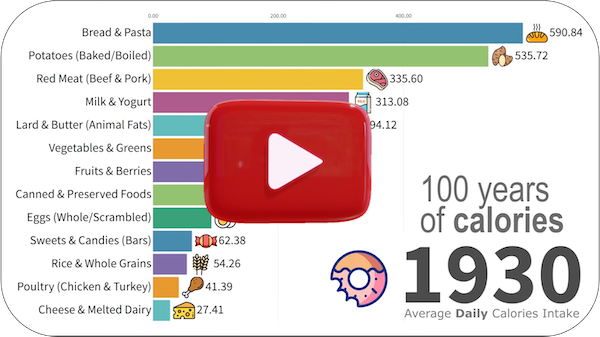
Check out the this visualization, which tracks the evolution of dietary calorie intake from 1930 to...

Taxpayer given 35% penalty for BAS recklessness
Following an application for a refund of nearly $94,000, the Administrative Review Tribunal has set aside an...

SMEs warned as ATO ramps up tax debt collection
One insolvency specialist has emphasised the importance of small businesses engaging their accountants to stay...

Does Your Small Business Need to Follow AML Privacy Rules?
Compliance with new anti-money laundering (AML) laws may subject your small business to additional privacy...

Don’t get caught out at tax time with your multiples jobs
Picking up a second job, holding multiple part-time roles, or doing gig work is now part of everyday life. But...

Global companies turn to cost-cutting amid ongoing inflation
Rising operating costs and persistent inflation are placing renewed pressure on businesses worldwide, despite...

Warning for early lodger this tax time!
The ATO has a clear message this year: slow down and get it right. Early lodgers are far more likely to make...

ATO no longer treating debt the same as during COVID
One expert has stressed the importance of tax agents reminding their clients that the ATO is no longer as...

The evolution of the world’s languages
Check out the evolution of the world's most spoken languages from 2500 BC to...
Latest Guests News
Newsletter Newslettter We are pleased to supply you with the latest edition of Client Alert, which...