- 234 Balaclava Road, Caulfield North VIC 3161
- contactus@guests.com.au
- (03) 9509 7033
6 tips to help businesses avoid financial difficulties
Small business owners can face many challenges that impact their finances. It could be something small, like an unpaid invoice every now and then, or something bigger, like a natural disaster or an out-of-control business debt.

.
Big or small, these financial pressures can build up and become something you can’t control. Financial Counselling Victoria outlines 6 tips to help businesses avoid financial difficulties.
It’s always a good idea to review your finances, even if your business is doing well.
1. Make time to check your finances
Many small business owners are financially savvy, but sometimes it’s difficult to know what to do or how to understand your finances, particularly when you’re under stress.
Prioritising time to review your business’s finances (and knowing how to do this) is a key first step for any business owner aiming to gain control of their financial wellbeing.
As well as reviewing your business’s balance sheets, if you have any loans, guarantees or other financial arrangements in place for your business, it’s important to review them.
You should also consider what payments your business is required to make, for example, payments to employees, tax, compliance payments, rent, invoices, and utilities.
Seeking financial support and advice can help you take control of your financial situation.
Joe's story
Joe (name changed) hadn’t done his tax returns and had fallen behind in his business payments when a natural disaster hit. Feeling overwhelmed, he worked with a financial counsellor to check his finances and to identify and prioritise his next steps. By working through his debts and obtaining hardship relief, he could take control of his finances and return his focus to operating his business.
2. Check your business structure
It’s always important to know how your business is structured. Are you a sole trader, a partnership, a company, or a trust? This information will help you understand your responsibilities and the options available to you.
In particular, if your business is a company and you are a director of that company, you will have significant legal responsibilities. You need to act in the company’s best interests, and your company must not trade while it’s insolvent.
For more information on business structures, visit the Australian Securities & Investments Commission’s website.
3. Act early
The most important thing you can do when dealing with a financial problem is to address it as early as possible.
While financial problems are stressful, being proactive will give you more options about what to do next.
The options available to you will depend on your situation.
4. Seek business advice from experts
Professional advice can be very useful in sorting out what to do next.
If your business has financial problems (or if you think it might), you should consider seeking professional advice from a trusted, qualified adviser, such as an accountant. You might also need to seek legal advice, depending on your situation.
Insolvency and restructuring a business are options you can take to address serious financial trouble. They are complex processes, and if you are contemplating one of these solutions, you will need help from a qualified professional.
For more information, visit the Australian Securities & Investments Commission (ASIC) and see: Protecting your small business.
5. Seek financial counselling
You don’t have to go it alone. Financial counsellors are professionals who can help you work through your financial problems. They provide you with practical advice and support and will refer you to other supports where they can.
The Small Business Debt Helpline is a free, confidential and independent service and is available for small business owners. It has a team of qualified financial counsellors available who can help you work through your financial situation.
Contact a financial counsellor by visiting the Small Business Debt Helpline.
If you have been impacted by a natural disaster, you may also be eligible for help through the Partners in Wellbeing Helpline until Monday 30 June 2025.
For more information, visit the Partners in Wellbeing website.
Olive’s story
Olive’s (name changed) business was impacted by flooding and despite thinking she was comprehensively covered her insurance claim was denied. Olive sought help from a financial counsellor, who was able to identify the issue. Olive’s insurance broker had mistakenly told her that the policy covered floods when they were actually excluded.
The financial counsellor advocated for Olive in a claim against the insurance broker. Olive received the payout she would have been entitled to had the policy covered flooding. This allowed her to quickly reinstate her premises and open for trade.
6. Take care of yourself as well as your business
Sometimes, it’s helpful to reflect on your small business goals along with your personal aims and consider whether your business is manageable as it currently operates or whether it is right for you. Running your business in a different way or winding it up might be the best solution for your financial situation.
It can be emotionally difficult to contemplate these options if your business has been a big part of your life and identity.Advice and information are available to help you look after your mental health while you are considering your options.
Studies show that mental health and financial problems are linked. Having financial problems can impact your mental health, which in turn can impact your financial decision-making. As well as seeking help for financial problems from a financial counsellor, it’s often a good idea to get support with your mental health.
You can find more information on support available on the Business Victoria website.
business.vic.gov.au
SMEs to be hit hardest by new trust tax reforms
Australia’s proposed discretionary trust tax reforms could put a significant financial burden on small and family-run businesses, an advisory firm has warned.

.
According to Greg Bartels, director of Halo Advisory, sweeping reforms to capital gains and discretionary trusts in the budget could have the greatest impact on mum-and-dad businesses in the SME sector.
In a recent opinion piece, Bartels said that under the current system, trust income is generally distributed to beneficiaries and taxed at their individual marginal tax rates. Yet, under the proposed framework, trustees would effectively pay a flat 30 per cent tax upfront, with beneficiaries receiving non-refundable tax credits.
Discretionary trusts are widely used across Australia because they offer flexibility and asset protection for business owners operating in inherently risky environments.
So, why would small businesses be impacted the most?
At the moment, small businesses are often seen as the greatest beneficiaries of discretionary trusts, as they offer flexibility in distributing profits to family members in lower tax brackets, help shield business assets from personal liabilities, and allow for a 50 per cent discount on CGT.
But under the proposed reforms, many of these businesses may face a higher effective tax burden purely because of the structure they use to operate safely and efficiently.
Trustees will effectively pay a flat 30 per cent tax upfront on distributions. While beneficiaries receive corresponding tax credits, those credits are non-refundable.
For high-income earners already paying tax above 30 per cent, the practical impact may be limited.
However, Bartels said that for everyday SMEs that rely on discretionary trusts for flexibility, succession planning, and asset protection, the reforms could materially increase the overall tax burden and affect cash flow, despite no change in underlying business profitability.
“For many small business families, the concern is not just about tax – it’s about cash flow,” he said.
“Businesses could end up paying materially more tax despite earning the same income.”
Analysis from Halo Advisory suggested the reforms have the potential to force many SMEs to reconsider long-standing business structures designed around asset protection and succession planning.
“Operating through a trust structure has often been about protecting the family home or separating business risk from personal assets,” Bartels said.
“The challenge now is that maintaining those protections may come with a significantly higher ongoing tax cost.”
If a husband-and-wife business operating through a discretionary family trust generated $200,000 in annual profit, under the current regulations, distributing profits evenly may result in an effective family tax rate of approximately 22 per cent.
However, under the proposed changes, the situation is seemingly more unfortunate as the family’s tax burden may increase substantially because excess tax credits cannot be refunded, resulting in a direct reduction in household cash flow.
For many SMEs already managing rising wages, Bartel said that supply chain costs, insurance increases, interest rate pressure, and losing an additional $10,000–$20,000 in annual liquidity could materially affect hiring decisions, reinvestment plans, and long-term business stability.
Accordingly, many business owners are depicting the reforms not as a tax impartiality measure, but moreso as a structural reset for the SME sector.
As such, for many SMEs, restructuring will be more than just a basic practice; it could fundamentally change how their businesses operate in the long term.
These concerns are leading to many critiques and particular business owners questioning, what does the future look like for small businesses?
Many small business owners are not large-scale tax minimisers and are simply trying to build sustainable businesses that employ staff.
Such reforms not only impose an additional burden on these SMEs in terms of cash flow, but also, when small businesses lose liquidity, reduce investment, hiring, and overall business growth.
Regardless of whether these reforms proceed in their current form or evolve through consultation, Bartels said, business owners should begin assessing their structures now.
27 May 2026
Miranda Brownlee
accountantsdaily.com.au
Payday Super: 6 Things Small Businesses Need to Know
From 1 July 2026, a major change is coming for employers: Payday Super

.
Instead of paying super quarterly, you’ll need to pay it with each payroll, and contributions have to reach employees’ funds within 7 business days.
The amount doesn’t change — but timing, systems, and risk do.
1. Cash Flow Will Tighten
Quarterly buffers disappear. Instead of holding super for months, you’ll pay it every pay cycle. This could significantly reduce working capital, so determine the impact now.
2. Payroll Systems Must Be Ready
Moving from 4 to as many as 52 payments per year means automation is essential. Manual processes won’t cope — check your system is compliant and test it early.
3. The ATO Clearing House Is Closing
The Small Business Super Clearing House ends 30 June 2026. Businesses need a new solution that can handle frequent, real-time payments. Also, after 11:59 pm AEST on 30 June 2026, users of the ATO’s Small Business Superannuation Clearing House (SBSCH) will no longer be able to log in, submit instructions or view any records. Businesses need to download their records now as they may need them in future to respond to audits or employee queries.
4. Penalties Increase
Late payments are assessed per payday, not quarterly. Even small delays (including bank processing times) can trigger penalties.
5. Super Calculation Is Changing
Super will be based on qualifying earnings (QE), a broader measure than current rules. Some businesses may end up paying slightly more. For most employees on simple pay arrangements, there will be no difference. But if you have staff on salary sacrifice, variable pay, or earnings near the maximum contribution base, it’s worth reviewing.
6. Directors Face Greater Risk
Missed payments can affect Safe Harbour protection and trigger faster ATO action, increasing personal risk for directors.
———————-
What to Do Now
Prepare early to avoid disruption:
- Model your cash flow under the new system
- Confirm your payroll software is ready
- If necessary, transition off the ATO clearing house
- Review employee pay structures
Businesses that act now will transition smoothly. Those that don’t risk cash flow pressure, system issues, and penalties.
PAYDAY SUPER STARTS 1 JULY 2026 – Planning guides
From 1 July 2026, super contributions will need to be paid at the same time as wages.

.
The current quarterly super payment system will be removed. In practical terms, this means:
- Super will no longer be something you can pay later in the quarter
- Each pay run will need to include a super payment
- Late payments can trigger penalties much sooner than under the current rules
For many businesses, this isn’t just a technical change — it’s a cash flow and payroll process change. Businesses are most likely to be impacted if they:
- Currently pay super quarterly
- Run weekly or fortnightly payroll
- Rely on manual payroll or manual super payments
- Operate with tight or seasonal cash flow
- The good news is there’s still time to prepare, but it’s something that should be reviewed well before July 2026, rather than rushed at the last minute.
Payday Super checklist for employers – ATO
Use this checklist to get ready for Payday Super, which starts 1 July 2026.
- February to March 2026: Plan and prepare
- April to June 2026: Lock in your plans
- July 2026: Payday Super starts
- Tips and resources
If you need help reviewing your payroll and cash flow arrangements, please contact our office.
2026 Year-End Tax Planning Guide – Part 2
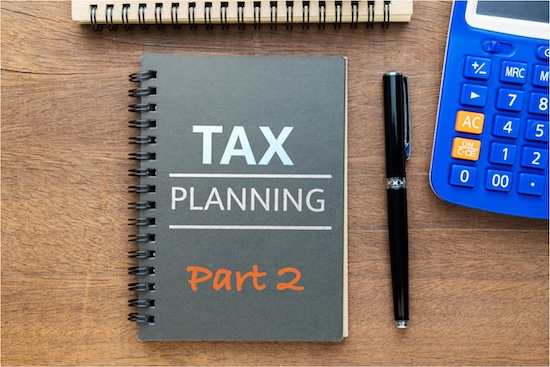
Following on from Tax Planning Part 1. As the end of the financial year approaches, now is the ideal time to review your financial position.
.
Superannuation Tax Planning Opportunities
Superannuation remains one of the most tax-effective ways to build long-term wealth and reduce taxable income. As 30 June approaches, it’s worth reviewing the strategies available to maximize your super benefits.
Concessional Contributions Cap – $30,000
For the 2025/26 financial year, the concessional (tax-deductible) contribution cap is $30,000 per person, regardless of age.
Concessional contributions include:
- Employer Super Guarantee contributions
- Salary sacrifice amounts
- Personal deductible super contributions
If you have not fully used your annual cap, you may wish to consider making additional deductible contributions before 30 June 2026, subject to eligibility.
One of the key benefits is the lower tax rate applying to super contributions — generally 15% (or up to 30% for high-income earners) compared with marginal personal tax rates that can exceed 45% plus Medicare levy.
This strategy is commonly used by:
- self-employed individuals;
- investors earning passive income; and
- employees looking to increase retirement savings tax-effectively.
Carry-Forward Concessional Contributions
If your total super balance was below $500,000 at 30 June 2025, you may be eligible to carry forward unused concessional contribution caps from the previous five financial years.
Unused cap amounts can accumulate for up to five years before expiring.
This strategy can be particularly useful for individuals with:
- fluctuating income;
- one-off capital gains; or
- higher-than-usual taxable income in a particular year.
Non-Concessional Contributions
Eligible individuals may also consider making non-concessional (after-tax) contributions.
Contribution limits for 2025/26 are:
- up to $120,000 annually; or
- up to $360,000 under the bring-forward rule over three years.
Eligibility rules apply, so professional advice is recommended before making large contributions.
Government Super Co-Contribution
Low and middle-income earners may qualify for a Government co-contribution when making personal after-tax super contributions.
For the 2025/26 financial year:
- maximum co-contribution available is $500;
- full entitlement generally applies where income is $44,500 or less; and
- partial entitlements may apply for incomes up to $60,400.
To receive the maximum benefit:
- at least $1,000 of non-concessional contributions must be made;
- at least 10% of income must come from employment or business activities; and
- total super balance must remain below the applicable threshold.
You must also be under age 71 at 30 June 2026.
Transition to Retirement (TTR) Strategies
If you have reached your preservation age but are not ready to fully retire, a Transition to Retirement (TTR) strategy may allow you to reduce working hours while supplementing your income from super.
Preservation Ages
|
Date of Birth |
Preservation Age
|
|
Before 1 July 1960 |
55 |
|
1 July 1960 – 30 June 1961 |
56 |
|
1 July 1961 – 30 June 1962 |
57 |
|
1 July 1962 – 30 June 1963 |
58 |
|
1 July 1963 – 30 June 1964 |
59 |
|
From 1 July 1964 |
60 |
Under a TTR strategy:
- you can continue working;
- continue making concessional contributions; and
- draw an income stream from super.
Minimum pension withdrawals generally start at 4% of the account balance, with a maximum annual withdrawal limit of 10%.
Tax Treatment
- Under age 60: withdrawals are taxed at marginal rates, with a 15% tax offset generally available.
- Age 60 and over: pension withdrawals are generally tax-free.
TTR strategies are commonly used to:
- reduce working hours gradually; or
- salary sacrifice into super while maintaining cash flow.
Account-Based Pensions
Individuals aged:
- 60 or over and retired; or
- 65 and over (whether working or not),
may benefit from commencing an account-based pension.
Key advantages include:
- tax-free pension withdrawals; and
- tax-free investment earnings within the pension phase (subject to transfer balance cap limits currently around $1.9 million).
Minimum annual pension payments apply based on age:
|
Age |
Minimum Withdrawal |
|
Under 65 |
4% |
|
65–74 |
5% |
|
75–79 |
6% |
|
80–84 |
7% |
There is generally no maximum withdrawal limit for standard account-based pensions.
If you are considering starting a pension, contact your super fund or adviser for guidance.
Self-Managed Super Funds (SMSFs)
A Self-Managed Super Fund (SMSF) can offer greater control and flexibility over retirement savings and investment decisions, along with potential tax advantages.
However, SMSFs also involve:
- strict compliance obligations;
- ongoing administration responsibilities; and
- trustee duties under superannuation law.
An SMSF may suit individuals seeking greater investment control or more tailored retirement planning strategies, but they are not appropriate for everyone.
With year-end approaching, now is a good opportunity to review whether an SMSF could form part of your broader financial and tax planning strategy.
If you would like to explore SMSFs further, professional advice is strongly recommended.
Checklist: Other Year-End Tax Matters to Consider
Alongside tax planning opportunities, there are several important year-end obligations that should be reviewed before 30 June 2026.
Motor Vehicle Records
If you use a vehicle for work or business purposes, remember to:
- Record your odometer reading at 30 June 2026.
- Update or prepare a new logbook if your current one is more than five years old.
A valid logbook must cover a continuous 12-week period. If you begin keeping one before 30 June 2026, it can still be used to support your business-use percentage for the entire 2025/26 financial year.
Account-Based Pensions
If you are drawing an account-based pension, ensure the minimum annual pension payment has been withdrawn before 30 June 2026.
Current minimum withdrawal rates are:
- Under 65: 4%
- Age 65–74: 5%
- Age 75–79: 6%
- Age 80–84: 7%
Business Owners, Companies & Trusts
Superannuation Guarantee Contributions
Employer super contributions for the 2025/26 year are due by 28 July 2026. However, to claim a tax deduction in the 2025/26 financial year, contributions must be received by the super fund (or clearing house) by 30 June 2026.
Avoid leaving payments until the final days of June, as processing delays may impact your deduction.
Division 7A Loans
Business owners who have borrowed money from a private company should ensure minimum principal and interest repayments are made by 30 June 2026.
Loans made during the current year must either:
- be fully repaid; or
- be placed under a compliant loan agreement before the company tax return due date.
Failure to comply may result in the loan being treated as an unfranked dividend.
Trust Distribution Resolutions
Trustees of discretionary (family) trusts should ensure distribution resolutions are prepared and signed before 30 June 2026.
Without a valid resolution:
- default beneficiaries may become entitled to trust income; or
- undistributed income may be taxed at the highest marginal tax rate.
Stocktake Requirements
Businesses holding trading stock should prepare stocktake working papers as at 30 June 2026.
Payroll & STP Finalization
Review and reconcile payroll records for the year, including PAYG withholding obligations
Employers using Single Touch Payroll (STP) are generally no longer required to issue annual payment summaries once payroll information has been finalised through STP.
Key Changes From 1 July 2025
Super Guarantee Increase
The compulsory Superannuation Guarantee rate increased from 11.5% to 12% from 1 July 2025. This rate remains the same, 12%, for 2026-27.
Small Business Company Tax Rate
Base rate entities with aggregated turnover below $50 million continue to qualify for the 25% company tax rate for the 2026 financial year, provided:
- aggregated turnover is below $50 million; and
- no more than 80% of assessable income is passive income.
——————–
Planning ahead before year-end can help avoid unnecessary tax issues and ensure you maximise available opportunities.
2026 Year-End Tax Planning Guide – Part 1
As the end of the financial year approaches, now is the ideal time to review your tax position and consider strategies that may help minimise tax and improve cash flow.
.
We recommend preparing an estimate of your taxable income for the year ending 30 June 2026. This can help identify any expected tax liabilities and highlight opportunities to legitimately reduce or defer tax.
It’s also worth reviewing your current income and deductible expenses to determine whether it may be beneficial to:
- bring forward deductible expenses before 30 June; or
- defer income until after 1 July 2026 where practical.
The strategies below are general in nature and may not suit every taxpayer. Their effectiveness will depend on your personal circumstances, business structure, turnover, and accounting method (cash or accruals). Importantly, some strategies require time to implement, so early planning is essential.
Tax Planning Opportunities to Consider
1. Deferring Assessable Income
In some situations, delaying income recognition until after 30 June 2026 may reduce your current year tax liability.
Possible strategies include:
- Delaying invoicing for incomplete work until after 1 July
- Deferring receipt of income where operating on a cash basis
- Postponing receipt of lump sum payments where possible
- Reviewing whether certain passive income streams (such as rent or interest) can be delayed
Where cash flow permits, this approach may help move taxable income into the next financial year.
2. Bringing Forward Deductible Expenses
Depending on your circumstances, it may be worthwhile prepaying certain expenses before 30 June 2026 to bring forward tax deductions into the current year.
Potential deductible prepayments include:
- Superannuation contributions
- Wages, bonuses, and contractor payments
- Rent and lease costs
- Insurance premiums
- Accounting fees
- Advertising and subscriptions
- Utilities and office expenses
- Motor vehicle costs
- Repairs and maintenance
- Self-education expenses
- Home office equipment
- Donations to deductible gift recipients
Superannuation Contributions
To claim a deduction for super contributions in the 2025/26 financial year, contributions must be received by the super fund before 30 June 2026.
Some low and middle-income earners may also qualify for a government super co-contribution when making personal after-tax contributions.
Prepaying deductible investment loan interest may also be worth considering in some circumstances.
As always, tax planning should align with genuine business or investment.
3. Capital Gains Tax Planning
When selling assets, remember that the contract date — not settlement date — generally determines when a capital gain or loss arises for tax purposes.
Key CGT Considerations
- Assets held for more than 12 months may qualify for the 50% CGT discount for individuals.
- Deferring the sale of an asset with an expected gain until a later financial year may reduce current year tax.
- Capital losses can be used to offset capital gains and reduce tax payable.
- Bringing forward the sale of loss-making assets may assist where gains have already been realised.
CGT Discount Rules for Individuals
For assets acquired after 21 September 1999:
- Held less than 12 months → tax applies to 100% of the gain
- Held 12 months or more → generally only 50% of the gain is taxable
Any capital gain is assessable in the financial year the CGT event occurs. Remember also that the 2026-27 Federal Budget outlined how the Federal Government is looking to change the way CGT is assessed in future years. Make sure you are aware of these changes.
4. Accounts Payable and Accrued Expenses
Businesses operating on an accruals basis should ensure all deductible expenses incurred before 30 June 2026 are properly recorded.
This may include ensuring supplier invoices are dated on or before 30 June so the deduction can be claimed in the current financial year.
Final Reminder
Effective tax planning takes time and should be tailored to your individual circumstances. Acting early provides greater flexibility and helps avoid rushed decisions at year-end.
If you are unsure which strategies may apply to you or your business, seeking professional advice before 30 June is strongly recommended.
Instant Asset Write-Off & Temporary Full Expensing
The instant asset write-off threshold for eligible small businesses remains at $20,000 for the 2026 financial year.
To qualify for the write-off, the following conditions generally apply:
- The deduction applies to eligible plant, equipment, and motor vehicles only — it does not extend to capital improvements on buildings.
- Both new and second-hand assets may qualify.
- Assets can be purchased outright or financed.
- The business must be actively operating during the 2026 financial year.
- Aggregated annual turnover must be below $10 million.
- The business must apply the simplified depreciation rules.
- Each individual asset must cost less than $20,000.
- The asset must be installed and ready for use between 1 July 2025 and 30 June 2026.
Importantly, businesses that opt out of the simplified depreciation regime will not be eligible for the instant asset write-off, even if they meet the other requirements.
The $20,000 threshold applies on a per asset basis, meaning multiple eligible assets may be immediately deducted provided each one falls below the threshold.
Assets costing $20,000 or more can still be added to the small business depreciation pool and depreciated over time — generally at:
- 15% in the first year; and
- 30% in later years.
Additional Tax Planning Opportunities for Businesses
Stock Valuation
Before 30 June, businesses should review stock on hand and work in progress to ensure inventory is valued correctly.
Stock should generally be recorded at the lower of:
- cost; or
- net realisable value.
Where stock cannot realistically be sold for its recorded value, it may need to be written down.
Superannuation Contributions
To claim a tax deduction for super contributions in the 2025/26 year, the funds must reach the super fund before 30 June 2026.
Electronic transfers made on 30 June may not clear in time, so contributions should ideally be processed several days earlier to avoid missing the deduction.
Writing Off Bad Debts
Businesses using the accrual accounting method should review outstanding debtors before year-end.
Amounts considered genuinely unrecoverable should be formally written off in the accounting records before 30 June 2026 to claim a deduction in the current financial year.
Repairs and Maintenance
Where practical and cash flow permits, consider completing deductible repairs before year-end.
It is important to distinguish between:
- repairs and maintenance (generally immediately deductible); and
- capital improvements (typically claimed over time through depreciation).
Professional advice may be required where the distinction is unclear.
Obsolete Equipment
Old or unused plant and equipment should be scrapped, disposed of, or decommissioned before 30 June 2026 where appropriate.
This may allow the remaining book value to be claimed as a deduction.
Trust Distribution Strategies
Businesses operating through discretionary trusts may wish to consider the use of a “bucket company” to receive trust distributions as part of broader tax planning strategies.
Careful planning before year-end can create valuable tax opportunities while ensuring compliance obligations are met.
From Bricks to iPhones: The Evolution of the Telephone
Check out the history of communication, eventually leading to the modern phones we use today.
.
.
.
.
.
.
.
.
.
.
.
.
.

Key tax changes and measures from the 2026 Federal Budget
The major announcements from this year's Federal Budget and what they mean for accountants and their clients.

.
The government has handed down one of the most significant budgets for tax in recent years, with the budget containing fundamental changes to the taxation of capital gains and trusts, incentives for small businesses and an overhaul of the R&D tax incentive.
Chartered Accountants ANZ (CA ANZ) chief executive Ainslie van Onselen said the budget contained ‘genuine positives’ and acknowledged the government's willingness to address “long-standing balances”.
Colonial First State head of technical services Craig Day said the Federal Budget was significant from a tax perspective, and in many ways went “further than expected”.
“This budget is particularly significant for individual investors who hold assets that are subject to capital gains tax or who are using negative gearing. For those individuals, there are transitional provisions in place which will help those investors manage the impact,” said Day.
Treasurer Jim Chalmers said the government was hopeful that the tax reforms and productivity measures announced in the 2026-27 budget would back business innovation and investment.
“New tax incentives will encourage more entrepreneurship and back hundreds of millions of dollars in new research and development for young firms and start‑ups,” said Chalmers.
“The government’s productivity package will reduce regulatory costs by $10.2 billion a year, boost long‑run GDP by around $13 billion a year through work underway with states and territories, and promote $400 million in additional R&D among young firms.”
The Treasurer also said the government would consult with stakeholders on key details of the Government’s capital gains tax reforms, including the treatment of early‑stage and start‑up businesses given the unique features of the tech and start‑up sector.
Measures to boost small business
The budget contained a number of measures designed to support business investment including a permanent instant asset write-off and the return of the two‑year loss carry back
The accounting industry and business advocacy groups have welcomed the extension of the $20,000 instant asset write-off for business with turnover under $10 million and the re-introduction of carry loss provisions which allow companies to offset current-year losses against tax paid in the prior two years.
H&R Block Australia’s director of tax communications Mark Chapman said for small businesses navigating today's difficult trading environment, “the ability to recover previously paid tax “provides genuine breathing room”.
Business Council Chief Executive Bran Black also welcomed the changes, stating that they would “help businesses invest, grow and create jobs”.
CA ANZ tax and superannuation lead Susan Franks said that for years the short-term, year-to-year thresholds for these incentives had created confusion for businesses and advisers, undermining investment planning and adding unnecessary complexity.
“Locking in a stable, long-term setting is exactly the kind of practical reform we’ve been advocating for, as it cuts red tape, supports confidence and lets businesses focus on running and growing their operations, not second-guessing the next Budget,” said Franks.
CA ANZ said the reform demonstrates the “value of stable, durable tax settings that provide clarity rather than uncertainty, and noted that it aligns with the organisation’s long-standing call for predictable frameworks that support productivity and long-term economic resilience”.
A ‘fundamental rewrite’ of the capital gains rules
Franks said this year's budget “fundamentally rewrites the rules on capital gains”.
“For the first time in 40 years, pre-1985 assets are being brought into the tax net. The 50 per cent discount is replaced by indexation, and a new 30 per cent minimum tax applies to all capital gains,” Franks explained.
“Bringing pre-1985 assets into the tax net for the first time in 40 years is a significant step. Australians who have held assets their entire investment life need clarity and urgent advice on what this means for them.”
Franks warned that the transitional arrangements will be costly as taxpayers will need to document the market value.
“Existing investors made long-term decisions based on the old rules and deserve stronger protection,” she said.
“These changes reshape the incentives for every investor in Australia. Property, shares, crypto, collectibles – if you have an investment portfolio, this budget matters to you.”
CFS head of technical services Craig Day explained that under the proposed measures, for assets purchased before 1 July 2027 and then sold after that date, both the current 50 per cent discount method and the new CPI-based method will apply.
“The existing rules will apply to June 30, and then the CPI indexation method will apply to gains after 1 July,” said Day. “That means asset values are going to need to be determined as at 1 July 2027, which will involve some additional work, including seeking a valuation as at 1 July.
Day also noted that the government has indicated that the ATO will be releasing tools to support the changes.
BDO chief economist Anders Magnusson said that with most of the current CGT discount flowing to owners of existing residential property, reducing it may shift incentives toward other assets.
“[This] should, over time, support more business investment and innovation,” said Magnusson.
The government also confirmed that it would limit negative gearing to new builds from 1 July 2027.
H&R Block Australia’s director of tax communications Mark Chapman said this was structural change that would require careful planning from property investors.
“Those holding established properties as of Tuesday night retain full existing entitlements, but anyone looking to purchase in future will need professional advice to understand their options,” said Chapman.
“The ability to carry forward losses — even if they can no longer be offset against wages — preserves some flexibility.”
Trust distribution tax
The budget also confirmed that the government plans to introduce a 30 per cent minimum tax on discretionary trust distributions.
Treasury outlined that the minimum tax would not apply to other types of trusts such as fixed and widely held trusts, including fixed testamentary trusts, complying superannuation funds, special disability trusts, deceased estates and charitable trusts. Some types of income such as primary production income, certain income relating to vulnerable minors, amounts to which non-resident withholding tax applies, and income from assets of discretionary testamentary trusts existing at announcement would also be excluded.
Under the changes, the government said it will also provide expanded rollover relief for three years from 1 July 2027 to support small businesses and others that wish to restructure out of discretionary trusts into another entity type, such as a company or a fixed trust.
The Council of Small Business Organisations Australia (COSBOA) warned that the proposed changes to the taxation of trusts, along with changes to capital gains tax have the potential to “significantly disrupt the retirement plans of many small businesses”.
“For many Australians, their business is their retirement asset. Changes that reduce the value of business sale proceeds or associated property holdings could have major long-term consequences for owners who have spent decades building their businesses,” said COSBOA chief executive Skye Cappuccio.
Cappuccio said the government must undertake extensive consultation with the small business sector before implementing the proposed reforms.
“Small business needs fairness in the tax system, but it also needs stability, certainty and simplicity,” she said.
BDO tax partner Mark Molesworth said this year's budget fundamentally shifts how income from investment assets is taxed, with 30 per cent “emerging as the new floor”.
“Over time, that will reshape investment structures with more new investments and businesses likely to be held through companies rather than trusts or personal structures. As always, the devil will be in the detail particularly around transitional measures,” said Molesworth.
Reforms to the R&D tax incentive and venture capital tax incentives
The government also provided details on its plans to reform the research and development tax incentive which include increasing the offset for core R&D expenditure by around 25 to 50 per cent through a 4.5 percentage point increase in core R&D offset rates.
It also intends to reduce the intensity threshold from 2 per cent to 1.5 per cent, which it said wold enable more firms that engage in substantial core R&D to qualify for higher offset rates.
Other proposed changes include removing eligibility of supporting R&D expenditure for the R&DTI and enabling growing firms to retain access to the refundable tax offset for longer by increasing the turnover threshold for the highest offset rate from $20 million to $50 million.
For firms below the $50 million turnover threshold, Treasury said the government would maintain older firms’ eligibility for the higher offset rate while limiting refundability to firms under 10 years of age.
The government will also lift the maximum R&DTI expenditure threshold from $150 million to $200 million; and lift the minimum expenditure threshold from $20,000 to $50,000, with research activities valued below this amount required to be undertaken with a registered Research Service Provider or Cooperative Research Centre to be eligible for the R&DTI.
BDO tax partner Mark Molesworth warned that changes to the R&D tax incentive make it less supportive of early‑stage innovation.
“By narrowing eligibility and time-limiting refundable offsets, the Budget shifts the benefit toward mature, profitable firms,” said Molesworth.
“Even though the headline benefit has been increased, the changes risk reducing Australia’s already low R&D investment over time.”
The government also plans to expand venture capital tax incentives in order to better facilitate venture capital investment and support early stage and growth businesses.
Treasury said that from 1 July 2027 the venture capital limited partnership (VCLP) cap on the asset size of the investee business at the time of investment will be increased to $480 million, from $250 million.
The early stage venture capital limited partnership (ESVCLP) cap on the asset size of the investee business at the time of investment will be increased to $80 million, from $50 million, it added.
The ESVCLP tax incentive cap on the asset size of the investee business, at which investment returns can be fully tax exempt, will also be increased to $420 million, from $250 million and the maximum fund size of ESVCLPs will be increased to $270 million, from $200 million.
The government said the increases will apply to new and existing funds and to new investments they make, including where funds make further investments in businesses already held.
“ESVCLPs must remain in compliance with their existing investment plans or seek approval for a replacement plan. The eligible venture capital investor program will be closed to new applications from 7.30PM (AEST) 12 May 2026,” the budget papers said.
Working Australians tax offset
The budget also contained a measure which introduces a $250 Working Australians Tax Offset from the 2027–28 income tax year.
Treasury outlined that the Working Australians Tax Offset will provide a permanent annual tax offset for Australians for their income derived from work, such as wages and salaries and the business income of sole traders, from 1 July 2027.
“The Working Australians Tax Offset gives workers some immediate relief, but it doesn't fix the underlying problem,” said Franks.
“With inflation still elevated, bracket creep continues to push Australians into higher tax bands without any increase in real income.
“Indexing personal tax thresholds is the only lasting fix. It restores fairness and stops quiet tax increases from eating into people's pay.”
12 May 2026
By Miranda Brownlee
accountantsdaily.com.au
Federal budget 2026: Winners and losers
The Federal Government is selling the 2026-27 budget as a big reform budget. One that will tip the scales to make the tax system fairer for young Australians.

.
This article will help you understand how major changes will impact your day-to-day life.
Click here to Read the article in Full
Holly Tregenza and Samantha Dick
abc.net.au
A breakdown of 2026-27 Federal Budget Themes and Papers.

.
Global conflict has severely disrupted global oil supplies and is contributing to higher inflation, slower growth, and extreme economic uncertainty at home and abroad. At the same time, there are big structural changes unfolding in areas like energy and technology, and longstanding challenges when it comes to productivity, intergenerational equity and access to home ownership that demand our attention. The 2026-27 Federal Budget seeks to help get us through global and local pressures.
Budget themes
- New tax cuts to help with the cost of living
- Helping with the cost of fuel
- More homes and a fair go for first home buyers
- More affordable and accessible healthcare
- Growing wages
- A better tax system for workers, first home buyers and future generations
- A better tax system for businesses
- A simpler and more sustainable tax system
- Securing the NDIS for future generations
- Better care for older Australians
- Strengthening Medicare
- Broadening opportunity and increasing equality
- Future Made in Australia
- A record funding boost for defence
- Building infrastructure for the future
- Responding to the Bondi attack
Budget papers
Budget 2026
Latest Industry News

How Do I Write Legally Compliant Terms and Conditions for My Business?
Terms and conditions bind your customers only where they actively accept them, so a tick box at checkout holds...

Paid parental leave super contributions have started
From July 2026, the new Paid Parental Leave Superannuation Contribution (PPLSC) has started. From...

If the business is no longer profitable, and is unlikely to be profitable in the future, your best option may...

Check out the this visualization, which tracks the evolution of dietary calorie intake from 1930 to...

Taxpayer given 35% penalty for BAS recklessness
Following an application for a refund of nearly $94,000, the Administrative Review Tribunal has set aside an...

SMEs warned as ATO ramps up tax debt collection
One insolvency specialist has emphasised the importance of small businesses engaging their accountants to stay...

Does Your Small Business Need to Follow AML Privacy Rules?
Compliance with new anti-money laundering (AML) laws may subject your small business to additional privacy...

Don’t get caught out at tax time with your multiples jobs
Picking up a second job, holding multiple part-time roles, or doing gig work is now part of everyday life. But...

Global companies turn to cost-cutting amid ongoing inflation
Rising operating costs and persistent inflation are placing renewed pressure on businesses worldwide, despite...

Warning for early lodger this tax time!
The ATO has a clear message this year: slow down and get it right. Early lodgers are far more likely to make...

ATO no longer treating debt the same as during COVID
One expert has stressed the importance of tax agents reminding their clients that the ATO is no longer as...

The evolution of the world’s languages
Check out the evolution of the world's most spoken languages from 2500 BC to...
Latest Guests News

Newsletter Newslettter We are pleased to supply you with the latest edition of Client Alert, which...