- 234 Balaclava Road, Caulfield North VIC 3161
- contactus@guests.com.au
- (03) 9509 7033
2024 Year End Tax Planning Guide (Part 2)
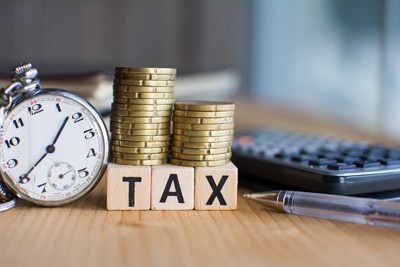
Over May and June we will add two articles to our website to help you plan and take actions before the end of the 2023-24 financial year.
.
This is Part 2 and focuses on key strategies to manage your tax bill. Both Part 1 and 2 will cover the following and all are worth spending some time to review and think about how your business can organise your affairs in these areas.
Areas of tax planning to be considered:
- Key Tax Minimisation Strategies. (added to website last month)
- Round Up of Other Year End Tax Issues.
- Other Tax Effective Strategies for Businesses to Consider.
- Superannuation Tax Planning Opportunities.
- Immediate Write Off & Temporary Full Expensing for Individual Small Business Assets.
Immediate Write-Off For Individual Small Business Assets & Temporary Full Expensing
This bit could be wrong. Bill is before Parliament that will temporarilty increase limit to $20,000 but Opposition amended to $30,000 but either yet to pass into law and this has to be spent before 30-6-2024. ‘As it stands, businesses with a turnover of less than $10 million can claim the instant asset write-off for assets valued less than $1,000 and that are first used or installed between July 1, 2023 and June 30, 2024.’
From July 1, 2023, the instant asset write-off threshold is now a maximum of $20,000. revert to $1,000 from July 1, 2023.. Conditions for accessing the $20,000 instant asset write-off threshold for small business entities in the 2024 income year include:
- It only relates to Plant, Equipment and Vehicles. It does NOT relate to Capital improvements to buildings.
- The items can be new or second hand. You can have paid cash or they can be financed.
- The entity must operate a business during the 2024 income year.
- Its aggregated annual turnover must be under $10 million, based on either the current or previous year's figures.
- Choosing to apply the simplified depreciation rules for the 2024 income year is necessary.
- The asset's cost must be less than $20,000.
- The asset must be first used, or installed and ready for use, for a taxable purpose between July 1, 2023, and June 30, 2024.
It's crucial to understand that if a small business entity opts out of applying the simplified depreciation rules for the 2024 income year, they won't have access to the instant asset write-off rules, regardless of meeting other basic conditions.
The instant asset write-off threshold applies per asset, allowing small business entities to potentially deduct the full cost of multiple assets throughout the 2024 year, provided each asset's cost is less than $20,000. Additionally, the $20,000 threshold applies to determining whether the full pool balance is written off in the 2024 income year.
Eligible assets for the instant asset write-off rules are those falling within the depreciation provisions. Capital improvements to buildings under the capital works rules are excluded. Assets costing $20,000 or more, which cannot be immediately deducted, can still be included in the small business general pool and depreciated at 15% in the first income year and 30% in subsequent income years.
Checklist of Other Year End Tax Issues
In addition to the tax planning opportunities, there are a number of obligations in relation to the end of the financial year which should be considered:
If you use a Motor Vehicle in producing your income you may need to:
- Record Motor Vehicle Odometer readings at 30 June 2024
- Prepare a log book for 12 continuous weeks if your existing one is more than 5 years old. Please note, if you commence the logbook prior to June 30, 2024, the usage determined will still be appropriate for the whole of 2024/25. As such, it is not too late to start preparing one for the current financial year. (Tip – the ATO has an App that can assist with keeping records such as business use logbooks – https://www.ato.gov.au/General/Online-services/ATO-app/myDeductions/?=Redirected_URL
If you have started an account-based pension:
Ensure that you have withdrawn the annual minimum required.
If you are in business or earn your income through a Company or Trust:
- Employer Compulsory Superannuation Obligations:
The deadline for employers to pay Superannuation Guarantee Contributions for the 2023/24 financial year is the 28 July 2024. However, if you want to claim a tax deduction in the 2023/24 tax year the super fund (or Small Business Superannuation Clearing House) must receive the contributions by 30 June 2024. You should therefore avoid making contributions at the last minute because processing delays could deny you a significant tax deduction in this financial year.
- For Private Company – Div 7A Loans – Business owners who have borrowed funds from their company in prior years must ensure that the appropriate principal and interest loan repayments are made by 30 June 2024. Current year loans must be either paid back in full or have a loan agreement entered into before the due date of lodgement of the company return. Failure to comply risks having it counted as an unfranked dividend in the individual’s tax return
- Trustee Resolutions – ensure that the Trustee Resolutions on how the income from the trust is distributed to the beneficiaries are prepared and signed before June 30, 2024 for all Discretionary (“Family”) Trusts. If a valid resolution hasn’t been executed by this date, the default beneficiaries become entitled to the trust’s income and are then subject to tax. Income derived but not distributed by the trust will mean the trust will be assessed at the highest marginal rate on this income.
- Preparation of Stock Count Working Papers at June 30, 2024.
- Preparation and reconciliation of Employee PAYG Payment Summaries (formerly known as Group Certificates). Note you are not required to supply your employees with payment summaries for amounts you have reported and finalised through Single Touch Payroll.
From 1 July 2024:
The compulsory Super Guarantee Contribution rate increases from 11 % to 11.5% from July 1, 2024.
Company Tax Rates For Small Businesses
The company tax rate for base rate entities with less than $50 million turnover was 25% for the 2024 financial year where it as:
- An aggregated turnover less than the aggregated turnover threshold ($50 million)
- 80% or less of their assessable income is base rate entity passive income – this replaces the requirement to be carrying on a business.
Other Tax Effective Strategies For Businesses
BUSINESSES SHOULD ALSO CONSIDER THE FOLLOWING ITEMS
- Stock Valuation Options – Review your Stock on Hand and Work in Progress listings before June 30 to ensure that it is valued at the lower of Cost or Net Realisable Value. Any stock that is carried at a value higher than you could realise on sale (after all costs associated with the sale) should be written down to that Net Realisable Value in your stock records.
- Write-Off Bad Debts – if you operate on an accruals basis of accounting (as distinct from a cash basis) you should write off bad debts from your debtors listing before June 30. A bad debt is an amount that is owed to you that you consider is uncollectable or not economically feasible to pursue collection. Unless these debts are physically recorded as a ‘bad debt’ in your system before 30th June 2024, a deduction will not be allowable in the current financial year.
- Repairs and Maintenance Costs – Where possible, and cash flow allows, consider bringing these repairs forward to before June 30. If you don’t understand the distinction between a repair and a capital improvement please consult with us because some capital improvements may not be tax deductible in the current year and could be claimable over a number of years as depreciation.
- Obsolete Plant and Equipment – should be scrapped or decommissioned prior to June 30, 2024 to enable the book value to be claimed as a tax deduction.
Superannuation Tax Planning Opportunities
CONCESSIONAL CONTRIBUTION CAP OF $27,500 FOR EVERYONE
The tax-deductible superannuation contribution limit or cap is $27,500 for all individuals regardless of their age for the 2023/24 financial year. This will be increased to $30,000 from the 1st July 2024.
If eligible and appropriate, consider making the most of your 2023/24 financial year annual concessional contributions cap with a concessional contribution. Note that other contributions such as employer Superannuation Guarantee Contributions (SGC) and salary sacrifice contributions will have already used up part of your concessional contributions cap.
CARRY FORWARD CONCESSIONAL CONTRIBUTIONS
If your total superannuation balance as at June 30, 2023 was less than $500,000 you may be in a position to carry-forward unused concessional caps for up to 5 years.
Members can access their unused concessional contributions caps on a rolling basis for five years and amounts carried forward that have not been used after five years will expire.
The advantage of making the maximum tax-deductible superannuation contribution before June 30, 2024 is that superannuation contributions are taxed at between 15% and 30%, compared to personal tax rates of between 32.5% and 45% (plus 2% Medicare levy) for an individual taxpayer earning over $45,000.
Typically, self-employed individuals and those who earn their income primarily from passive sources like investments make their super contributions close to the end of the financial year to claim a tax deduction. However, individuals who are employees may also use this strategy and those who might want to take advantage of this opportunity.
NON -CONCESSIONAL SUPER CONTRIBUTIONS
If eligible and appropriate, consider utilising all or part of your 2023/24 financial year annual non-concessional contributions cap by making a non-concessional contribution for up to $110,000 for the 2024 financial year. This will be increased to $120,000 from 1 July 2024.
If you are not currently in a non-concessional contributions bring forward period, consider whether you may be in a position to ‘bring-forward’ your non-concessional contributions caps for the 2024/25 and 2025/26 financial years.
GOVERNMENT CO-CONTRIBUTION TO YOUR SUPERANNUATION
The Government co-contribution is designed to boost the superannuation savings of low and middle-income earners who earn at least 10% of their income from employment or running a business. If your income is within the thresholds listed in the table below and you make a ‘non-concessional contribution’ to your superannuation, you may be eligible for a Government co-contribution of up to $500.
To be eligible you must be under 71 years of age as at June 30, 2024. In 2023/24, the maximum co-contribution is available if you contribute $1,000 and earn $43,445 or less. A lower amount may be received if you contribute less than $1,000 and/or earn between $42,016 and $57,016.
The matching rate is 50% of your contribution and additional eligibility include: having a total superannuation balance of less than $1.9 million on 30 June of the year before the year the contributions are being made having not exceeded your non-concessional contributions cap in the relevant financial year.
TRANSITION TO RETIREMENT
If you don’t want to fully retire and would like to reduce your working hours you can take advantage of what is known as “Transition to Retirement” TTR. This means that providing you have reached your preservation age you can elect to keep working full time or part- time and take money out of your super to supplement your income. This is popular for those who want to scale down their working hours rather than retiring.
Date of Birth Preservation Age
Before 1 July 1960 55
1 July1960 – 30 June 1961 56
1 July 1961 – 30 June 1962 57
1 July 1962 – 30 June 1963 58
1 July 1963 – 30 June 1964 59
1 July 1964 – 30 June 1965 60
When you are receiving a TRT pension you can still work and claim a tax deduction for concessional contributions into super currently $27,500 for the 2024 financial year, and then increasing to $30,000 from the 1st July 2024..
If you decide to implement a TTR strategy, you must withdraw a minimum amount currently 4% for someone aged 60 (based on age) from your superannuation account balance up to a maximum of 10%. .
If you are under 60 any amount you withdraw will be subject to tax at your marginal rate of tax. You will also be entitled to receive a tax rebate of 15%. After the age of 60, the good news is that any amount you withdraw is TAX FREE!
Case Study 1 : Bill reduces his work hours
Bill just turned 60 and earns $50,000 a year before tax. He decides to ease into retirement by reducing his work to three days a week. This means his income will decrease to $30,000. Bill transfers $155,000, of his super to a transition to retirement pension and withdraws $9,000 each year, tax-free. This replaces some of his lost pay.
Case Study 2: Sue reduces her tax
Sue is 60 and earns $100,000 a year. She intends to keep working full-time for at least another five years. Sue transfers $200,000 from her super to an account-based pension so she can start a TTR strategy,
She salary sacrifices into his super. This will reduce her income tax, but also hers take-home pay. She tops up her income by withdrawing up to 10% of her TTR pension balance each year.
As you can see the TRT strategy is very useful for people wanting to work less and supplement their income by drawing from superannuation.
ACCOUNTS BASED PENSIONS
If you are aged 60 + and retired or 65+ and still working, There are significant tax advantages in taking an Accountants Based Pension from your super. Not only are the withdrawals you make tax-free, but also the earnings within your superannuation fund are tax-free to 1.9 million dollars.
Although you must withdraw, the minimum amount must be paid each year for pensions as per the table below, there are no limits on the amount you can withdraw.
The minimum amount for ages:
Under 65 is 4%
65 to 74 is 5%
75 to 79 is 6%
80 to 84 is 7%
To put in place an accounts-based pension, you will need to speak to your superannuation fund provider.
SELF-MANAGED SUPERANNUATION
A Self-Managed Superannuation Fund (SMSF) can provide significant tax savings, but they don’t suit everyone. There are significant regulations surrounding the management and administration of SMSF’s. With the end of the financial year approaching, now is a good time to discuss the pros and cons of establishing your own SMSF. It might be appropriate to establish a SMSF in conjunction with other tax planning opportunities.
Compare your business
All too often a small business operates as an ‘island’, not knowing how they are really doing. These benchmarks allow meaningful comparisons.

.
Compare your business now
You can compare your business's performance against others in your industry by using our small business benchmarks.
Print or Download
ATO
The Shortest-reigning Monarchs in History
Check out the Shortest-reigning Monarchs in History
.
.
.
.
.
.
.
.
.
.
.
.
.

How much does negative gearing really cost – an overview and an opinion?
Since the government’s announced changes to the Stage 3 tax cuts to give lower income earners more benefits, the chorus of voices advocating for changes to other aspects of the tax system, such as negative gearing, has grown steadily stronger.

.
So how much does negative gearing actually cost the nation each year? The answer to this can be gleaned from the 2023–24 Tax Expenditures and Insights Statement (TEIS) which, somewhat confusingly, contains figures relating to the 2020–2021 financial year.
Put simply, a tax expenditure arises where the tax treatment of a class of taxpayer or an activity differs from the standard tax treatment or the tax benchmark. These expenditures include tax exemptions, some deductions, rebates and offsets, concessional or higher tax rates applying to a specific class of taxpayers, and deferrals of tax liability.
The TEIS contains detailed breakdown of various categories, including rental property deductions. The ATO estimates that some 2.4 million rental property investors claimed deductions for expenses associated with maintaining and financing property interests, including interest, capital works and other deductions. Collectively for the 2020–2021 financial year, $48.1 billion worth of rental deductions were claimed, resulting in a total tax reduction of $17.1 billion.
Only around half, or 1.1 million, of these rental property investors had a rental loss (negative gearing), which added up to total rental losses of $7.8 billion and provided a tax benefit of around $2.7 billion for the 2020–2021 income year. The other rental deductions category (e.g. property maintenance, council rates etc) accounted for more than 50% of the amount claimed, with the next largest deduction being interest expenses, coming in at 39%.
Further analysis of the $2.7 billion negative gearing tax benefit (or tax reduction) reveals that 80% went to individuals with above median income (those earning above $41,500) and 37% went to individuals in the top income decile (those earning over $128,000).
Although the TEIS doesn’t provide data on the status of those claiming rental deductions, this can be somewhat inferred by the ages of those claiming the deduction. According to the ATO, more than half of the total negative gearing tax reduction went to individuals between the ages of 40 and 59 years old. Presumably a majority of these individuals have families, and a good proportion may be either the sole income earner or the primary income earner. This means the bulk of the commentary regarding negative gearing benefiting the rich may be on shaky ground.
However, these contentions aside, with the tax reduction on rental deductions expected to blow out to $28.2 billion by the 2026–2027 income year (from $17.1 billion in the 2020–2021 income year) and it being the second largest tax expenditure (second only to concessional taxation of employer super contributions), it’s likely the calls for changes to negative gearing will only grow stronger in time.
And further, why are these deductions expected to increase? The significant future increases will be from state governments imposing huge increases in land tax and covid recovery tax resulting in much lower net returns for landlords! Whilst interest costs have increased over recent years, that is likely to stabilise for a while. So the increased tax saving is a small offset to the lower rental return.
Foreign residents selling property in Australia
Foreign resident capital gains withholding (FRCGW) of 12.5% applies for all property sales of $750,000 or more.

.
Foreign resident capital gains withholding (FRCGW) of 12.5% applies for all property sales of $750,000 or more. At a minimum, that is $93,750 being withheld from the sale and paid to the ATO, unless there is an approved variation.
The most common reasons why a seller may apply for a variation include:
- making a capital loss
- not having an income tax liability
- foreclosure.
In 2023 over 60% of applications for variations were lodged late, affecting settlement. When your clients are too late applying, the conveyancer or solicitor has no choice but to withhold 12.5%.
Tips
- Include the sales contracts with the variation application.
- Variations must be lodged online at least 28 days before property settlement to ensure processing time.
- The main residence exemption doesn't apply to foreign residents.
- Australian residents for tax purposes must have a clearance certificate before settlement to prove their residency for tax purposes, so no withholding occurs.
Find out more about FRCGW variations and clearance certificates needed for Australian residents.
ATO
7 March 2024
ato.gov.au
Employees taking more sick days – and it’s getting worse
Recent data shows an increase in the average sick leave days to 13.8 per employee per year.

.
Traditionally, absence has been viewed solely as sick leave, but now it manifests in many ways. Absenteeism can take forms such as presenteeism, high rates of employee turnover, and extended periods of unpaid leave.
A growing number of organisations, from 36% in 2019 to 55% in 2023, believe that employee absence is underreported. This trend has been accompanied by a 2.6-day increase in the average number of absence days lost per employee per year since 2019.
Employee absenteeism continues to be a costly challenge for organisations. Survey data indicates that the average direct cost of absence per employee has increased from $3,395 to $4,025. Furthermore, 80% of companies surveyed attribute the rise in absences to COVID-related restrictions.
More than half a million Australians sustain a work-related injury or illness each year at an estimated cost of $61.8 billion, according to Safe Work Australia. With the added consideration of depression, presenteeism, and other factors contributing to absence, these costs could rise by a further $6.3 billion.
Managing absenteeism presents challenges for managers, particularly during periods like the COVID-19 pandemic. The situation is compounded by Australia's unprecedented labour shortages, escalating wages, shifting work practices, and increased workplace compliance.
The financial impact on Australian businesses is significant, prompting employers to adopt a more holistic approach, considering employees' wellbeing beyond physical presence or absence at work.
EMPLOYEE ENGAGEMENT IN ABSENCE AND WELLBEING PROGRAMS
Research indicates that employers often face low employee uptake despite offering various wellbeing services, with only around 20% participating. This phenomenon, termed “worried well” by Dane Carroll, reflects the tendency for individuals who are generally well but concerned about potential health issues to engage more in wellbeing programs than those who may have more significant needs.
Concerns about privacy and perceptions of chronic health conditions influence employees' engagement in such programs. To address this, employers must consider wellbeing as a holistic element accessible to employees.
ANALYSE ABSENCE DATA FOR EFFECTIVE WELLBEING INTERVENTIONS
Understanding the factors driving absence in a business is crucial. Employers should analyse workforce demographics, considering aspects such as age distribution. For instance, the needs of a 25-year-old employee will differ significantly from those of a 55-year-old. However, age alone does not determine retirement plans, as many employees continue working beyond the traditional retirement age.
A deep dive into data, including sick leave and turnover, can provide insights into absence patterns. Identifying trends and patterns helps determine if poor wellbeing is rooted in cultural issues or other factors such as ageing-related shift patterns. For instance, high rates of single-day absences in an aging workforce may indicate the need for time off for recovery, enabling employees to return and continue working for the rest of the week.
Tailoring wellbeing solutions to address specific needs can increase employee engagement and enable employers to monitor the effectiveness of their interventions. Wellbeing initiatives have evolved beyond traditional offerings like massages and physiotherapy, encompassing workforce planning and flexible shift patterns to reduce absenteeism.
MANAGING EMPLOYEE LEAVE THROUGH OPEN DIALOGUE
Dealing with excessive employee leave can be challenging for employers. Beyond tracking absenteeism, it's crucial to understand the underlying reasons for absences. Is it because of a medical condition or injury? Or the need to care for a family member? Is it the lack of flexible working hours? Engaging in conversations with employees before the situation escalates into long-term absence is essential.
Implementing return-to-work interviews is a beneficial practice for several reasons. They can be informal conversations facilitating a smooth transition for employees returning to their roles, demonstrating the employer's care and concern for its workforce, and reducing the likelihood of recurring absences.
Additionally, flexible working hours and remote work options can enhance employee wellbeing, increase organisational loyalty, and mitigate absenteeism. Offering flexible schedules that accommodate individual preferences and circumstances can serve as a measure to improve overall employee satisfaction and productivity.
The employment relations landscape has recently seen reforms to leave entitlements, including the introduction of paid family and domestic violence leave. This paid leave entitlement, akin to annual or paid sick and carer's leave, is now part of the National Employment Standards (NES). Traditionally, employees used paid entitlements and unpaid leave to address such events.
OVER TO YOU
Managing leave and absence is crucial for fostering a healthy and productive work environment. It allows organisations to optimise workforce planning, reduce associated costs, and ensure the wellbeing of their employees. By analysing absence data, employers can gain insights into the underlying factors driving absenteeism and implement targeted interventions. Open dialogue with employees, flexible working arrangements, and a holistic approach to employee wellbeing can significantly reduce absenteeism and enhance workplace productivity.
Catherine Ngo
27 March 2024
mybusiness.com.au
ACCC scam report
Australians made more than 600,000 reports about scams in 2023 — about 18 per cent more than in 2022.(ABC News: Evan Young/Canva)

.
- In short: Australians made more than 600,000 scam reports last year, losing $2.7 billion overall.
- Older people suffered the greatest losses and there was a notable increase in scams originating on social media, the ACCC's new report says.
- What's next? The government wants to introduce mandatory scam codes for banks, telcos and digital platforms.
Australians reported a record number of scams last year, with losses totalling $2.7 billion, a new report from the consumer watchdog has revealed.
More than 601,000 reports about scams were made in 2023, up from the 507,000 reported in 2022, the latest Australian Competition and Consumer Commission's (ACCC) Targeting Scams report found.
Investment scams stole more than any other type of scam, accounting for more than $1.3 billion in losses, the report said.
People over 65 were more likely to lose money than any other age group and were the only age group that lost more money in 2023 than in 2022.
What types of scams stole the most?
- Investment scams: $1.3b
- Remote access: $256m
- Romance: $201.1m
- Phishing: $137.4m
- Payment redirection: $91.6m
Source: ACCC Targeting Scams report
ACCC deputy chair Catriona Lowe said the figures indicated scammers were targeting older Australians with retirement savings who might be looking for investment opportunities.
“We know of a recent case where an elderly woman lost her life savings after seeing a deepfake Elon Musk video on social media, clicking the link and registering her details online,” Ms Lowe said.
“She was assigned a 'financial adviser' and could see on an online dashboard. She was apparently making returns but she couldn't withdraw her money.”
Victims losing their 'life savings' to scams
Despite the number of reported scams increasing, the amount lost is down compared to 2022, when Australians lost a record $3.1 billion.
The federal government said this was the first time in six years that scam losses decreased year-on-year.
The ACCC said the decline in losses was thanks to an increased effort from banks and government in 2023.
Last July, following pressure from victims and consumer groups, the federal government launched a national anti-scams centre, while the banking sector also promised to invest in increased security.
“While we are cautiously optimistic that our combined efforts will see this downward trend in scam losses continue, we know that behind the losses remain real people who have lost money, often their life savings, to scams,” the ACCC report said.
The ACCC's report is based on data from multiple agencies including Scamwatch, ReportCyber, the Australian Financial Crimes Exchange, IDCARE and the Australian Securities and Investments Commission.
Top tips to avoid scams
STOP: Don't rush to act. Scammers will create a sense of urgency.
THINK: Ask yourself if you really know who you are communicating with? Scammers can impersonate others and lie about who they are – especially online.
PROTECT: Act quickly if something feels wrong. If you have shared financial information or transferred money, contact your bank immediately. Help others by reporting to Scamwatch.
Source: ACCC
Scamwatch's data shows that while losses to scams conducted via text message or over the phone decreased, the amount of money lost to scams over email and social media grew.
Losses to job scams rose by 151 per cent to $24.3 million, with people from culturally and linguistically diverse (CALD) communities disproportionately impacted.
The true losses are likely to be higher because an estimated one in three scam victims do not report the crime to authorities.
Research commissioned by Treasury last year indicated those from First Nations and CALD communities might be less likely to report scams.
Government says scam losses still 'far too high'
Ms Lowe said the reduced losses were “encouraging” but there was “much more work to do”.
“Over the next two years we will continue to invest in technology-based solutions that will centralise intelligence and distribute information to those who can act on it – such as banks to freeze accounts, telcos to block calls or SMSs and digital platforms to take down websites or accounts,” Ms Lowe said.
Financial Services Minister Stephen Jones said the government would soon introduce new mandatory scam codes for banks, telcos and digital platforms, backed up by strong penalties for non-compliance.
“We want Australia to be a world leader in combating scammers and our mandatory codes will put us well ahead,” he said.
“While the report shows positive early signs, scam losses remain far too high and we urge Australians to remain alert to the threat of scammers and report any suspicious activity.”
By the Specialist Reporting Team's Evan Young and Leonie Thorne
ATO warns of ‘serious penalties’ for unlawful tax scheme promoters
The ATO is targeting unlawful tax and super scheme promoters, citing “serious” penalties and reputational risk.

.
The ATO has released an update on its website, claiming it will continue to target those who promote unlawful tax schemes.
“Anyone who promotes unlawful tax schemes is taking big risks. They risk our attention, serious penalties, as well as their reputation,” it said, adding, “They’re also risking their client’s money for their own financial gain.”
The Tax Avoidance Taskforce is responsible for targeting the promotion of unlawful tax schemes among practitioners “regardless of the firm size, occupation, position in their organisation, or standing in the tax community.”
The promoter penalty laws prevent the promotion of unlawful tax and super schemes or schemes that differ materially from their described operation in a product ruling.
By way of penalty, the courts can impose the greater of 5,000 penalty units for an individual, 25,000 penalty units for a body corporate, or twice the consideration received or receivable by the entity or its associates by operation of the scheme whether directly or indirectly.
In 2021, the Federal Court handed down the largest penalty issued under the promoter laws, totalling $22.68 million.
Paul Enzo Boggiato and entities within his control were penalised for “systemic abuse” of the research and development tax incentive scheme.
“The size of the penalty is the highest ever seen in Australia and reflects the scale and abusive nature of these schemes,” said ATO assistant commissioner Ash Khera.
“Those who encourage others to do the wrong thing and claim the incentive to which they are not entitled will be caught and held to account for their actions.”
That case built on a series of ATO victories which involved applying the promoter penalty laws, such as the Federal Court decision of the Commissioner of Taxation v Rowntree and others in which three advisers were ordered to pay a total of $9.4 million.
“We have the tax technical and investigative skills to deal with those who promote non-compliance with the tax and superannuation system,” said Khera.
Last year, the ATO announced it had filed an application to the Federal Court against a former EY partner who had allegedly promoted a tax exploitation scheme.
According to the ATO, the former partner promoted three tax loss access schemes to seven clients between November 2016 and April 2021.
The news of the Tax Commissioner’s case against the former partner was first reported by The Australian Financial Review and became a major issue in the Senate consulting inquiry.
“If proven, these allegations will provide stark evidence of the failure of regulation in the sector. Once again, we ask the question, ‘Is this just the tip of the iceberg?’” Pocock said to the AFR.
“The ATO alleges that the illegal activity was conducted for seven clients and the partner in question is reported to be claiming that others at the firm were involved,” she said.
While the former partner’s identity has yet to be revealed, EY successfully applied to vary a suppression order that had prevented it from being named as the former employer of the scheme promoter.
In a statement, EY revealed the partner had been terminated for cause in August 2022 after disclosing they had received more than $700,000 in unauthorised financial benefits connected to the schemes.
While EY stated the Commissioner had made no allegations of wrongdoing against the firm itself, it did enter into an enforceable voluntary undertaking to improve its internal processes, training, and notification activities.
David Larocca, chief executive at EY Oceania, said the allegations related to the “isolated actions of a rogue operator and are in no way reflective of the way we do business.”
“We fell short in this instance, and I regret that we didn’t identify and stop this behaviour earlier.”
The ATO said tax advisers should be aware of the warning signs of unlawful tax schemes, report suspected unlawful schemes, advise clients against involving themselves in unlawful schemes, and encourage implicated clients to work with the ATO.
Nick Wilson
17 April 2024
accountingtimes.com.au
Winners & Losers
Jim Chalmers has handed down the government's third budget, with a $300 power bill boon for every Australian household, but the purse strings kept tight on other measures.
Click on the image to read about the 33 different Winners and Losers.

Budget breakdown – Federal Government Analysis
The 2024 Federal Budget is broken down into these five PDFs. Click on each to read more.

.
Easing cost-of-living pressures
Building more homes for Australians
Investing in a Future Made in Australia
Strengthening Medicare and the care economy
Broadening opportunity and advancing equality
Latest Industry News

How Do I Write Legally Compliant Terms and Conditions for My Business?
Terms and conditions bind your customers only where they actively accept them, so a tick box at checkout holds...

Paid parental leave super contributions have started
From July 2026, the new Paid Parental Leave Superannuation Contribution (PPLSC) has started. From...

If the business is no longer profitable, and is unlikely to be profitable in the future, your best option may...

Check out the this visualization, which tracks the evolution of dietary calorie intake from 1930 to...

Taxpayer given 35% penalty for BAS recklessness
Following an application for a refund of nearly $94,000, the Administrative Review Tribunal has set aside an...

SMEs warned as ATO ramps up tax debt collection
One insolvency specialist has emphasised the importance of small businesses engaging their accountants to stay...

Does Your Small Business Need to Follow AML Privacy Rules?
Compliance with new anti-money laundering (AML) laws may subject your small business to additional privacy...

Don’t get caught out at tax time with your multiples jobs
Picking up a second job, holding multiple part-time roles, or doing gig work is now part of everyday life. But...

Global companies turn to cost-cutting amid ongoing inflation
Rising operating costs and persistent inflation are placing renewed pressure on businesses worldwide, despite...

Warning for early lodger this tax time!
The ATO has a clear message this year: slow down and get it right. Early lodgers are far more likely to make...

ATO no longer treating debt the same as during COVID
One expert has stressed the importance of tax agents reminding their clients that the ATO is no longer as...

The evolution of the world’s languages
Check out the evolution of the world's most spoken languages from 2500 BC to...
Latest Guests News

Newsletter Newslettter We are pleased to supply you with the latest edition of Client Alert, which...