An industry body warns strong take-up will only continue if the generous tax break remains.

- 234 Balaclava Road, Caulfield North VIC 3161
- contactus@guests.com.au
- (03) 9509 7033
COVID early super release did little for financial, emotional wellbeing.
The Early Release of Super scheme implemented during the COVID-19 pandemic had little impact on financial resilience or wellbeing, new research has shown.
The e61 Institute analysis was submitted to the Commonwealth government COVID-19 response inquiry and analysed the Household, Income and Labour Dynamics in Australia (HILDA) Survey to assess the wellbeing impact of the financial support measures the government implemented during that period.
It found that overall, boosting income support during the pandemic was highly effective at stimulating spending, reducing financial stress, and improving wellbeing, but the early release of super was not as effective in achieving all three goals.
The analysis of bank transaction data shows people who received the one-off $750 Economic Support Payment (ESP) and the $550 per fortnight JobSeeker Payment Coronavirus Supplement (JSP) spent their relief payments quickly and mostly on essentials such as groceries.
ESP recipients spent 70 per cent of the payment, and JSP recipients spent 58 per cent of the extra support over their first fortnight.
Meanwhile, people who participated in the Early Release of Super (ERS) scheme spent 31 per cent of the money they withdrew over the first two weeks.
Wellbeing temporarily improved for JSP recipients while the supplement was in place, but the ERS scheme – despite being intended to target those in ”financial stress” – did not lead to improvements in financial resilience or wellbeing.
“Our research suggests that in terms of stimulating spending and improving wellbeing, the JobSeeker supplement was the most effective economic support payment deployed during the COVID-19 pandemic,” said e61 research director Dr Gianni La Cava.
“Recipients spent the JSP Supplement and ESP quickly, with 20–25 per cent of each payment spent on the day it was received, while the ERS was spent more gradually over the first fortnight.”
La Cava added that, notably, ERS had the biggest impact on aggregate spending because it was of larger value, on average.
“The fact the JSP was the only payment to significantly improve recipients’ wellbeing may be because it made up 25 per cent of income for its recipients, compared with 19 per cent for the early super release – suggesting it was better targeted at people on lower incomes,” he said.
“The limited impact of the early super release scheme on financial resilience or wellbeing suggests it was too broad. If policymakers want to stimulate spending, reduce financial stress and improve wellbeing during future economic downturns, targeted boosts to income support programs should be part of their toolkit.”
Between April and June 2020, e61 estimates that about 4.9 million people received the $750 ESP, while 2.5 million received the $550 per fortnight JobSeeker supplement and 2.4 million applied for early super release with an average of $8,223 withdrawn.
The super release scheme – which allowed withdrawals up to $10,000 – created an estimated $6.3 billion of extra spending between April and June 2020, compared with $2.7 billion for the economic support payment and $4.2 billion for the JobSeeker coronavirus supplement.
By Keeli Cambourne
August 27 2024
smsfadviser.com
The five reasons why the $A is likely to rise further – if recession is avoided
After a soft patch since 2021, there is good reason to expect the $A to rise into next year

.
Key points
– After a soft patch since 2021, there is good reason to expect the $A to rise into next year: it’s undervalued; interest rate differentials look likely to shift in favour of Australia; sentiment towards the $A is negative; commodities still look to have entered a new super cycle; and Australia is a long way from the current account deficits of the past.
– There is a case for Australian-based investors to remain tilted a bit to hedged global investments but while maintaining a still decent exposure to foreign currency.
– The main downside risks for the $A would be if there is a recession or a new Trump trade war.
Introduction
Changes in the value of the Australian dollar are important as they impact Australia’s international export competitiveness and the cost of imports, including that of going on an overseas holiday. They are also important for investors as they directly impact the value of international investments and indirectly impact the performance of domestic assets like shares via the impact on Australia’s competitiveness. But currency movements are also notoriously hard to forecast. Late last year it seemed the $A was at last on a recovery path but it topped out in December and slid back to $US0.64. Lately it’s been looking stronger again getting above $US0.67. So maybe the five reasons we thought would drive the $A higher in a note last November (see here) are at last starting to work?
The $A has been weak since the mining boom ended
But first some history. Way back in 1901 one $A bought $US2.40 (after converting from pounds to $A pre 1966), but it was a long downhill ride to a low around $US0.48 a century later. See the blue line in next chart.
The $A is below fair value baed on relative prices

Source: RBA, ABS, AMP
Thanks to the mining boom of the 2000s, the $A clawed back to $US1.1 by 2011, its highest since the 1981. But since 2011, the $A has been mostly in a downtrend again briefly hitting a low around $US0.57 in the pandemic after which there was a nice rebound into 2021 up to near $US0.80 but with weakness quickly resuming. The key drivers of the weakness since 2011 have been: the end of the commodity boom; increasing worries about the outlook for China which takes around 35% of Australia’s goods exports; a narrowing gap between Australian and US interest rates (which makes it less attractive for investors to park their cash in Australian dollars); and a long term upswing in the value of the $US generally. See the next chart.
The $US v major currencies & the $A

Source: Bloomberg, AMP
But there remain five reasons to expect the $A to rise
Back in November we saw five reasons to expect a higher $A. These largely remain valid and the $A seems to be perking up again.
-
Firstly, from a long-term perspective the $A remains somewhat cheap. The best guide to this is what is called purchasing power parity (PPP) according to which exchange rates should equalise the price of a basket of goods and services across countries – see the red line in the first chart. If over time Australian prices and costs rise relative to the US, then the value of the $A should fall to maintain its real purchasing power. And vice versa if Australian inflation falls relative to the US. Consistent with this the $A tends to move in line with relative price differentials – or its purchasing power parity implied level – over the long-term. This concept has been popularised over many years by the Big Mac Index in The Economist magazine. Over the last 25 years the $A has swung from being very cheap (with Australia being seen as an old economy in the tech boom) to being very expensive into the early 2010s with the commodity boom. Right now, it’s modestly cheap again at just above $US0.67 compared to fair value around $US0.72 on a purchasing power parity basis.
-
Second, after much angst not helped by another US inflation scare, relative interest rates might be starting to swing in Australia’s favour with increasing signs that the Fed is set to start cutting rates from September whereas there is still a high risk that the RBA will hike rates further. Central banks in Switzerland, Sweden, Canada and the ECB have already started to cut rates. Money market expectations show a narrowing of the negative gap between the RBA’s cash rate and the Fed Funds rate as the Fed is expected to cut by more than the RBA. As can be seen in the next chart, periods when the gap between the RBA cash rate and the Fed Funds rate falls have seen a fall in the value of the $A (see arrows – and this been the case more recently) whereas periods where the gap is widening have tended to be associated with a rising $A. More broadly the $US is expected to fall further against major currencies as US interest rates top out.
The interest rate gap between Aust & the US versus the $A

The dashed part of the rate gap line reflects money mkt expectations. Source: Bloomberg, AMP
-
Third, global sentiment towards the $A remains somewhat negative, and this is reflected in short or underweight positions. In other words, many of those who want to sell the $A may have already done so, and this leaves it susceptible to a further rally if there is any good news.
$A positioning remains short

Source: Bloomberg, AMP
-
Fourth, commodity prices look to be embarking on a new super cycle. The key drivers are the trend to onshoring reflecting a desire to avoid a rerun of pandemic supply disruptions and increased nationalism, the demand for clean energy and vehicles and increasing global defence spending all of which require new metal intensive investment compounded by global underinvestment in new commodity supply. This is positive for Australia’s industrial commodity exports.
Long term bull and bear markets in commodity prices

Source: Bloomberg, AMP
-
Finally, Australia’ current account surplus has slipped back into a small deficit as commodity prices have cooled and services imports have risen (particularly, Australian’s travelling overseas) but it remains much better than it used to be over the decades prior to the pandemic. A current account around balance means roughly balanced natural transactional demand for and supply of the $A. This is a far stronger position than pre-COVID when there was an excess of supply over demand for the $A which periodically pushed the $A down.
Aust current account surplus remains in better shape

Source: ABS, AMP
Where to from here?
We expect the combination of the Fed cutting earlier and more aggressively than the RBA, a falling $US at a time when the $A is undervalued and positioning towards it is still short, to push the $A up to around or slightly above $US0.70 into next year.
Recession & a new Trump trade war are the main risks
There are two main downside risks for the $A. The first is if the global and/or Australian economies slide into recession – this is not our base case but it’s a very high risk. The second big risk would be if Trump is elected and sets off a new global trade war with his campaign plans for 10% tariffs on all imports and a 60% tariff on imports from China. If either or both of these occur it could result in a new leg down in the $A, as it is a growth sensitive currency, and a rebound in the relatively defensive $US.
What would a rise in the $A mean for investors?
For Australian-based investors, a rise in the $A will reduce the value of international assets (and hence their return), and vice versa for a fall in the $A. The decline in the $A over the last three years has enhanced the returns from global shares in Australian dollar terms. When investing in international assets, an Australian investor has the choice of being hedged (which removes this currency impact) or unhedged (which leaves the investor exposed to $A changes). Given our expectation for the $A to rise further into next year there is a case for investors to stay tilted towards a more hedged exposure of their international investments.
However, this should not be taken to an extreme. First, currency forecasting is hard to get right. And with recession and geopolitical risk remaining high the rebound in the $A could turn out to be short lived. Second, having foreign currency in an investor’s portfolio via unhedged foreign investments is a good diversifier if the economic and commodity outlook turns sour as over the last few decades major falls in global shares have tended to see sharp falls in the $A which offsets the fall in global share values for Australian investors. So having an exposure to foreign exchange provides good protection against threats to the global outlook.
Dr Shane Oliver – Head of Investment Strategy and Chief Economist, AMP
Important note: While every care has been taken in the preparation of this document, AMP Capital Investors Limited (ABN 59 001 777 591, AFSL 232497) and AMP Capital Funds Management Limited (ABN 15 159 557 721, AFSL 426455) make no representations or warranties as to the accuracy or completeness of any statement in it including, without limitation, any forecasts. Past performance is not a reliable indicator of future performance. This document has been prepared for the purpose of providing general information, without taking account of any particular investor’s objectives, financial situation or needs. An investor should, before making any investment decisions, consider the appropriateness of the information in this document, and seek professional advice, having regard to the investor’s objectives, financial situation and needs. This document is solely for the use of the party to whom it is provided.
Temporary FBT break lifts plug-in hybrid sales 130%

.
Generous FBT exemptions on low-emission vehicles are working as intended, an industry body says, with the latest figures showing sales of plug-in hybrids (PHEVs) up 130 per cent in the first half of the year.
Novated leases peak body National Automotive Leasing and Salary Packaging Association (NALSPA) said the tax break was “opening the door” for Australians to choose more eco-friendly vehicles.
“The overwhelming feedback we are getting from our members and their customers is that the FBT exemption is undoubtedly driving Australians across metropolitan and regional locations to get behind the wheel of PHEVs,” chief executive Rohan Martin said.
PHEVs accounted for 17 per cent of all electrified passenger and SUV sales last month, up from 6.6 per cent in June 2023, and made up around 22 per cent of electrified SUV sales for the year to date, up from 10.6 per cent in the first half of 2023.
Regular hybrid vehicle sales were also up 113 per cent, according to data from the Federal Chamber of Automotive Industries.
FBT exemptions were introduced in 2022 for novated car leases of EVs or PHEVs worth below $89,332. It allows taxpayers to deduct the cost of finance and maintenance of an EV from their pre-tax salary.
The exemption on an eligible vehicle valued at $50,000 can save employees up to $9,000 annually.
While the tax break is permanent for EVs, it will no longer apply for PHEVs starting 1 April next year.
Martin said PHEVs were an important low-emissions option for many drivers who were not prepared to make the switch to a fully electric vehicle. “Australians want to reduce their carbon footprint and their vehicle running costs, but for many making the transition to a full EV is not an option that suits their transport, lifestyle or work needs, especially for those living in regional Australia.”
He said PHEV sales would continue surging as long as the FBT exemption remained.
“For many, the FBT exemption makes PHEVs more attractive than their traditional combustion engine equivalent models, especially when reducing emissions is a key consideration.”
“Every PHEV purchased drives down Australia’s total transport emissions and that’s critical for our journey to net zero.”
Christine Chen
05 July 2024
accountantsdaily.com.au
Changes to Casual Employment in August 2024
Casual employment is set to change again after Amendments to the Amendments to the Fair Work Act 2009 (Cth).

.
On the 26th August the following changes will come into effect:
· There is a new definition of casual employment
· The pathway for casuals to move to permanent employment has changed
· Issuing the casual employment information statement has a new arrangement
This information is applicable to national employers only and does not apply to employers in the state system.
New definition of casual employment
A new definition of ‘casual employee’ will be introduced. Under this definition, an employee is only casual if:
· There is no firm advance commitment to continuing and indefinite work; and
· They are entitled to receive a casual loading or specific casual pay rate
It is important to note that this definition will focus on the true nature of the employment rather than just the written terms of the employment contract. It’s important to be aware that even if there is an absence of a firm advance commitment to continuing and indefinite work the employment will be assessed on the basis of the ‘true nature’ of the employment relationship.
New pathway for converting from casual to permanent
The current rules for casual conversion are being abolished. An offer of permanent employment is no longer required for employers to offer casual employees.
Instead, it will be up to the employee to notify you of their intention to change to permanent employment if:
· They’ve been employed for at least 6 months (for employers with 15 or more employees) or 12 months (for employers with less than 15 employees); and
· They believe they no longer fit the definition of a casual employee.
Casual employment information statement (CEIS)
A new obligation will exist for providing the Casual Employment Information Statement (CEIS) to casual employees. In addition to providing the CEIS to casual employees on commencement, employers will now be required to provide the CEIS:


What you need to do?
· Review your casual workforce and assess these employees against the new definition
It is very important that employers ensure they meet their ongoing obligations under these new arrangements. Employers need to put a mechanism in place to remind them to meet the new obligation, see Table ablve, for issuing the Casual Employment Information Statement at the required times.
How Do I Resolve a Dispute With My Supplier?
Having good working relationships with your suppliers is vital to ensure your business runs smoothly.

.
Although you have likely taken the time to find the right suppliers for your business and build good relationships with them, it is important to know what to do if any issues arise. This article will outline how you can handle a dispute with your supplier and offer tips on how to avoid conflict.
Dealing With a Dispute
Most of the time, your business can resolve disputes quickly and efficiently without the need for legal assistance. Before communicating your concern with your supplier and considering taking legal action, you should always read through the terms and conditions of any agreement you have with them, such as a supply agreement. Reading these terms is important because you do not want to escalate your dispute unnecessarily. You should ensure you are clear about the terms your supplier has breached and what remedy you may have. Importantly, contracts such as supply agreements often outline a dispute resolution process which is a process that parties must follow if a dispute occurs before moving to formal legal action. In this case, you must ensure that you comply with each step in that process. Otherwise, you may lose your right to pursue the matter further.
This article will outline what you can do if you do not have a supply agreement or other contract in place.
1. Contact Your Supplier
After reviewing your contract and understanding your position, you should try to resolve the matter directly with your supplier. More often than not, the supplier may not be aware of the issue. When contacting your supplier, you should ensure you communicate effectively by:
- explaining the issue;
- listening to your supplier’s response; and
- trying to understand their position.
The goal of this initial call is to negotiate an agreement that works for both you and your supplier.
You should always keep records of communication you have with your supplier. This is because if the matter escalates, it will be useful to demonstrate what matters were raised or agreed upon between the parties. For example, if you discuss issues over the phone, you may want to follow up with an email confirming what was discussed and identify any action items. You should ask the recipient to reply by email to either agree or correct the record of that conversation.
2. Issue a Formal Letter of Demand
If the matter continues or you have been unable to get in contact with your supplier, the next step may be to issue a letter of demand. A letter of demand is usually a necessary step before you can escalate the matter further.
A letter of demand should set out your:
- legal claim;
- rights; and
- demand for compensation, refund or performance of the other party’s obligation.
You can also include a time limit that your supplier must comply with before you consider alternative legal avenues. While a letter of demand can be an informal document, it is important to ensure that you present your argument effectively. It should include a clear structure, all relevant details and a concise legal argument. It is crucial your letter at least includes:
- a summary of your contract with the supplier;
- details of the breach of contract;
- damages you suffered;
- a demand for remedies such as compensation; and
- your intention to consider taking the matter to court if the supplier does not comply.
There is no requirement for a lawyer to issue the letter of demand on your behalf. However, there are some benefits to having a lawyer issue it as they may be able to:
- advise on your legal position under the supply agreement and provide possible options available to the supplier;
- identify additional ways to take action against the supplier;
- recommend a strategy; and
- add authority to your letter and provide extra ‘motivation’ for the supplier to comply or reach an agreement with you.
3. Contact a Resolution Authority
If the letter of demand does not work, you can seek the assistance of agencies or industry associations that offer help for free or for a cost-effective fee.
Some useful contacts and places to contact for help include the following:
- Australian Small Business and Family Enterprise Ombudsman
- Consumer Protection Agencies of your local state or territory
- Industry Ombudsman and Dispute Resolution Schemes
- Australian Competition and Consumer Commission
- Small Business Commissioner in your State or Territory
- Fair Trading
These organisations can assist by facilitating mediation between parties or reaching out to the supplier to prompt them to resolve the dispute directly with you.
4. Take Legal Action
If the previous steps fail, you should seek independent legal advice. A lawyer will review the situation as a whole and advise you on the most appropriate next steps. It may be that you are entitled to start a claim in a small claims court or tribunal in your state or territory. There may be a case where your lawyer exhausts all dispute resolution options, and the dispute is still unresolved. If the dispute also involves a substantial amount of money, a potential next step is to commence formal court proceedings.
Litigation is costly, and there is no guarantee that you will be successful. If you are unsuccessful, the court may require you to pay part of your supplier’s legal costs. Likewise, if you are successful, there is a possibility that you may recover some of your legal costs from your supplier.
Litigation can also be very time-consuming and stressful. It can divert resources and attention away from your business. As a result of these risks, it is essential that you consider all alternative options and the pros and cons of taking legal action before you do so.
Avoiding the Dispute
While it is important to know how to handle disputes as they arise, preventing them from happening in the first place is essential. Below are two key tips to help you do so.
1. Negotiate a Good Contract
A good supply agreement will protect your business if your supplier fails to meet their obligations. At a minimum, your supply agreement should include clauses relating to:
- pricing;
- volume;
- payment;
- exclusivity;
- duration;
- product quality, recalls and unusable products;
- labelling requirements; and
- the dispute resolution process.
2. Do Your Due Diligence
You should make sure you have a solid foundational understanding of the supplier you are interacting with. Therefore, you should do background checks on your suppliers before you sign with them. You can also look up their ABN to identify the person operating the business and search for them through the ASIC Business Checks app.
Key Takeaways
Having a well-drafted supplier agreement may prevent a supply issue from arising or set a clear process to resolve any issues efficiently. However, if a dispute does arise, you should:
- understand your position under the supply agreement;
- talk to your supplier; and
- ask for help from a third-party dispute resolution provider.
If these steps fail, you should contact a lawyer to advise you on your position and recommend a strategy or commence a claim on your behalf. However, litigation is expensive and time-consuming and should be considered carefully.
Amelia Bowring Stone – Senior Lawyer
March 20, 2024
legalvision.com.au
Taxing unrealised gains in superannuation under Division 296
Australia’s superannuation system has seen a number of significant changes in recent years.

One of the most noteworthy is the proposed additional 15 per cent tax on earnings on superannuation balances above $3 million (Division 296 tax), due to commence on 1 July 2025.
The Division 296 tax was originally announced in the lead-up to, and as part of, the Government’s Federal Budget 2023–24. The details of the Division 296 tax are contained in the exposure draft Treasury Laws Amendment (Better Targeted Superannuation Concessions) Bill 2023 (draft Bill) and accompanying explanatory memorandum (draft EM) which was released for consultation on 3 October 2023.
The draft Bill and draft EM follow the release of an earlier consultation paper on 31 March 2023 and propose to insert new Division 296 into the Income Tax Assessment Act 1997 (Cth) (ITAA 1997) to give effect to the announced measure.
Below, we examine how Division 296 will operate if implemented in its current form, some tips and traps that may catch out taxpayers and tax professionals, and some concerns with the design of the draft Bill.
How Division 296 tax is proposed to operate
Determining the amount of Division 296 tax that superannuants with a total superannuation balance (TSB) of more than $3 million may be liable to pay will require them to undertake several calculations.
Broadly, impacted superannuants will be required to use the relevant formulas in the draft Bill to:
- calculate the percentage of the earnings that are attributable to the proportion of the individual’s TSB above $3 million — this is based on the difference between the TSB at the end of the income year (year end) and the proposed $3 million threshold (Division 296 tax will apply only to earnings on balances above the proposed $3 million threshold);
- calculate the individual’s adjusted TSB by adding certain withdrawals, and subtracting certain contributions, for the year from the TSB at year end;
- calculate the amount of the basic superannuation earnings (BSE) used to determine the Division 296 tax liability — by subtracting the TSB at the end of the previous income year from the adjusted TSB calculated in Step 2 above;
- calculate the taxable superannuation earnings (TSE), which is the proportion of the BSE that will be subject to Division 296 tax, by multiplying the BSE (less any unapplied transferrable negative earnings), as calculated in Step 3, by the percentage calculated in Step 1 above; and
- calculate the amount of Division 296 tax — by multiplying the amount in Step 4 by the proposed tax rate of 15 per cent.
Tips and tricks
As is the case with most legislative provisions, in understanding the operation of Division 296 tax, regard must be had to important notes, numerous exceptions and common misunderstandings.
Some key points are discussed below.
Withdrawals and contributions
The purpose of adding back withdrawals, and subtracting contributions, from the TSB at year end in step 2 above is to ensure that the TSB used in the calculation of Division 296 tax reflects only the change in the value of the member’s balance from the start to the end of an income year.
In effect, this is a ‘balance sheet’ proxy for calculating the actual earnings of the superannuation account, instead of basing this on the member’s share of the ‘profit or loss’ made by the fund. Withdrawals are added back to prevent taxpayers from taking money out of their superannuation account(s) to avoid being liable for Division 296 tax.
Conversely, contributions are excluded from the calculation as they do not represent the fund’s earnings but rather an injection of capital. However, various exclusions to the withdrawals and contributions components are proposed in the draft Bill. These exclusions are broadly intended to ensure more equitable outcomes result when calculating the TSB at year end.
Negative earnings Individuals may find themselves in a position where their earnings on a TSB above $3 million are negative. This occurs when the BSE amount, as calculated in step 3 above, is less than nil. In these instances, the individual can ‘carry forward’ the losses to reduce the BSE in a later income year.
Shortcuts to calculating the Division 296 tax
Some common misconceptions are that Division 296 tax will, in effect, either tax all withdrawals at 15 per cent or tax all the earnings of the fund at 30 per cent. Neither of these statements are accurate.
When calculating the amount of Division 296 tax, it is important to correctly follow the steps outlined above in order. The correct amount of Division 296 tax can be accurately worked out only by following all the applicable steps and formulas.
Further, the steps ensure that only the proportion of the earnings on balances above the $3 million threshold is subject to Division 296 tax. There are no shortcuts or quick methods to work out the correct amount of tax payable.
Liability to pay
Akin to the current operation of Division 293 of the ITAA 1997 (where a member’s concessional contributions are subject to an additional 15 per cent tax where their income exceeds $260,000, it is proposed the Division 296 tax liability will be assessed to the superannuant and not the fund, and will be calculated by the Australian Taxation Office (ATO) based on available information.
Individuals subject to Division 296 tax will be able to choose to pay it using funds outside superannuation or request the funds be released from their superannuation account (via a request to the trustee of the fund). The individual will have 60 days to request a release of the amount from their fund (if they choose to) and 84 days to pay the tax.
Impact on franking credits
Proposed Division 296 will impose a new tax on the superannuant, and does not affect or modify the taxable income or income tax position of superannuation funds in any way. This includes the extent to which funds can claim a refund of excess franking credits.
Exceptions to Division 296 tax Several exceptions to Division 296 tax include:
- individuals who are child recipients of a superannuation income stream at the end of an income year;
- amounts relating to structured settlements in any income year; and
- individuals who die before the last day of the income year. Interestingly, this means that an individual who dies on any day from 1 July to 29 June of an income year is not subject to Division 296 tax for that income year, irrespective of their fund balanc.. However, an individual who dies on 30 June of an income year is liable to Division 296 tax for that year if their TSB is above $3 million. Further modifications Some types of superannuation accounts may not readily lend themselves to the steps above. This is primarily due to the nature of, or legislative restrictions around, that type of superannuation account. For these reasons, special rules are proposed to work out the amount of Division 296 tax for:
- individuals with defined benefit interests (including Commonwealth and Territory judges); and
- superannuation contributions to constitutionally protected funds.
Valuation of superannuation assets on 30 June 2025
The TSB at the end of the previous income year directly affects the calculation of an individual’s BSE. Accordingly, particular care should be taken to ensure the value of superannuation assets on 30 June 2025 is accurate and not inflated to try to minimise the individual’s TSE for 2025–26.
Issues of concern
The draft Bill raises important issues that are of concern to many practitioners and their clients. Several aspects of the measure could be improved which would ensure the operation of proposed Division 296 is more equitable.
The Tax Institute’s submission to the Government considers in detail these concerns and potential solutions, the most significant of which are summarised below. Taxation of unrealised gains Division 296 proposes to tax the ‘earnings’ on superannuation balances that exceed $3 million, based on the movement in the member’s TSB during an income year.
Accordingly, Division 296 ‘earnings’ will include the unrealised gains of the fund. As a fundamental principle, taxing unrealised gains is inconsistent with the general approach to taxing capital gains in our current system.
Taxing unrealised gains is likely to place superannuation funds under financial stress, or their members in inequitable positions, if they are forced to sell large, illiquid assets to fund a Division 296 liability because the member has insufficient funds outside superannuation to pay the tax.
The measure should be redesigned to exclude the taxation of unrealised gains. However, if the measure proceeds as drafted, the proposed approach of taxing unrealised gains should not serve as a precedent in the design of future tax and superannuation policy.
A further key issue caused by taxing unrealised gains is the misalignment between the taxing point and the available cash flow. The Government should consider ways to minimise the impacts of this mismatch.
This could be achieved by, for example, including an optional deferral mechanism that would allow taxpayers to defer, with interest, the payment of their Division 296 tax liability until the relevant asset is realised and the funds become available.
Threshold not indexed
The $3 million threshold is not currently proposed to be indexed. This means that, over time, more people are likely to be subject to Division 296 tax. It is important that all thresholds across our tax and superannuation systems are indexed or regularly reviewed.
Indexing the $3 million threshold would ensure that the threshold reflects true market conditions and does not inappropriately expose more than 0.5 per cent of all Australians to Division 296 tax (the Government’s announcement on 28 February 2023 indicates that around 80,000 people will be affected by the measure in 2025– 26).
Utilising losses
The draft Bill proposes to allow superannuants with negative earnings to carry forward their losses to be applied against future gains. However, in some circumstances, a carried forward loss will not be permitted to be recognised or may result in inequitable outcomes.
These include, but are not limited to:
- superannuation funds incurring large and unforeseen losses (for example, losses resulting from a severe recession or market crash) that exceed cumulative future gains; and
- individuals who die after incurring a loss and are unable to recoup the loss or transfer it to their estate. As an alternative, the draft Bill could be revised to allow members to carry back losses and seek a refund of previously paid amounts of Division 296 tax.
Such an approach would resolve the inequitable scenarios noted above.
Making information available
Currently, it is proposed that the ATO will calculate an individual’s Division 296 liability and notify impacted taxpayers each year. Assuming the ATO will have the relevant information available to undertake these calculations, it is reasonable to ask whether, and if so, how, this information should also be made available to taxpayers and their advisers.
Without this information, a significant cost and time burden will be imposed on taxpayers who want to verify or estimate a Division 296 liability. Making the information available will also be of use to advisers who are engaged to provide taxpayers with accurate and timely investment and planning advice.
It may also be possible to utilise existing digital systems, such as MyGov or online services for tax agents through which the information can be provided.
Final comments
The consultation for the draft Bill and draft EM concluded on 18 October 2023. We await further progress of the measure and hope that the key issues and concerns raised by the professional associations and industry are addressed before the enabling bill is introduced into Parliament.
By Robyn Jacobson
April 05 2024
smsfadviser.com
smsfadviser.com
7 Steps to Dealing With a Legal Issue or Dispute
If you run a business for any length of time, you will likely get involved with disagreements and disputes with your associates, whether they be customers, employees, suppliers or competitors.

.
Some legal issues or disputes are more serious than others. Nevertheless, all legal issues and disputes need to be dealt with efficiently and quickly in order to prevent them from escalating. This article will delve into seven ways you can deal with a legal issue or dispute.
1. Have a Plan
You never know when a legal issue or dispute may arise during the course of your business, so it is always a good idea to be prepared. The key to ensuring that legal issues and disputes are dealt with efficiently is ensuring that you have an effective dispute resolution system set up.
The result of having such a system in place is that it can spring into action when needed, thus saving you from making hasty decisions when an issue arises. This can be as simple as having a dispute resolution clause in your contracts or the terms and conditions of your services.
2. Review the Contract
If your legal issue or dispute relates to a particular contract, you should review the contract in question. The important clauses to look for are:
- the clause that relates to the particular dispute;
- a dispute resolution clause, which sets out the procedures should any dispute arise; and
- the termination clause, which sets out how the parties to a legal agreement can end their contractual relationship.
Usually, these clauses will outline the steps that must be taken to resolve the dispute before escalating any further. Often they will have a mandatory Alternative Dispute Resolution (ADR) clause in an attempt to resolve the dispute in the most efficient, timely and cost-friendly manner, without the need for court proceedings. It is important to note that ADR is not always appropriate for certain disputes. For example, if you need an urgent court order or injunction to stop the other party from taking certain action, ADR may be unsuitable.
3. Speak to a Lawyer
You will likely need to speak with a lawyer if you are involved in a legal issue or dispute. This will apply even if it is minor issue.
A lawyer will give advice on your legal position and can guide you in your approach and discuss your options moving forward. This guidance is best sought at the beginning of the dispute when your strategy can still be mapped and changed easily. Ideally, you want to avoid beginning legal action and then consulting a lawyer, only to learn the lawyer advises a different course.
4. Attempt to Reconcile
It is sensible to attempt to reconcile with the other party to your legal issue or dispute if at all possible. Taking a legal issue or dispute into the legal arena is usually very time-consuming and can be expensive. You should carefully consider, along with your legal adviser, whether the severity of the dispute warrants legal action. The first step to resolving the dispute is to communicate with the other side. Put your concerns in writing or arrange a call or meeting to explore possible solutions.
5. Arbitration
Arbitration is a form of alternative dispute resolution. In many ways, it is similar to court proceedings but much more flexible and sometimes less costly. Some contracts will include requirements for arbitration in a dispute resolution clause. Generally, the parties to the issue can choose an arbitrator and agree on the procedures and processes to be followed. This ensures you can resolve the dispute in a manner suitable to the party’s needs and the industry standards involved. You can, however, agree to binding arbitration when a dispute arises. Whether arbitration is a good option will depend on the circumstances of your legal issue or dispute. This is why you should work with a lawyer who can advise you on these matters.
6. Mediation
Mediation is a less formal type of ADR that involves parties meeting with an experienced mediator to attempt to resolve the dispute. It has a high success rate and is less structured and, therefore, quicker and cheaper than arbitration or going to court. The mediator does not make a binding determination about the dispute but guides the parties through all options to resolve it.
7. Litigation
If you cannot resolve your legal issue or dispute through communication, discussion, compromise and possibly ADR, you may need to move to litigation. Obviously, this means getting the courts involved.
Litigation is generally expensive. The court will usually order that the losing party pays the successful party’s costs, but this is only about 60% -80% of the total out-of-pocket costs, depending on the type of cost order made. Litigation is also very time-consuming, with some matters taking several years to resolve in the courts. For all these reasons, we always recommend litigation as a last resort and attempt to resolve matters outside the courts wherever possible.
Key Takeaways
The key to resolving a legal issue dispute as effectively and cheaply as possible is to work with the right legal professional at the right time.
Meryem Aydogan
Law Graduate
legalvision.com.au
May 29, 2024
Most Spoken Languages in the World
Check out the Most Spoken Languages in the World
.
.
.
.
.
.
.
.
.
.
.
.
.
.
.

Landlords who ‘double dip’, fudge deductions in ATO crosshairs
The Tax Office has warned taxpayers to revise deduction rules and maintain proper records.

.
Landlords who make false deductions by “double dipping” and incorrectly claiming capital expenses and interest on loans will face increased scrutiny this tax time, the ATO has warned.
Assistant commissioner Rob Thomson said most landlords were also guilty of keeping insufficient records that failed to substantiate the expenses they claimed.
“Rental property investments and taxation can get tricky … if you use a tax agent, make sure you let them know all about your rental property, including full records of your expenses,” he said.
The ATO’s warning comes after it found nine out of 10 landlords were making mistakes on their returns, announcing that rental income would be one of three key focus areas for tax time.
The other focus would be incorrectly claimed WFH deductions incomplete tax returns, the ATO said last month.
The most common mistake among landlords was misunderstanding what expenses could be claimed and when, especially for claims for repairs and maintenance compared to capital expenses.
Landlords should only claim deductions for costs incurred in generating rental income and it was a “myth” that all expenses could be immediately claimed, the ATO said.
“It’s normal for landlords to have to fix or replace damaged items in a rental property. But there is a bit of a myth that all expenses can be claimed immediately,” Thomson said.
“A repair can usually be claimed straight away but capital items, think dishwashers, curtains or heaters, can only be claimed immediately if they cost $300 or less, otherwise they need to be claimed over time.”
Landlords were often guilty of making “careless” capital expense claims which had to be claimed over time at a rate of 2.5 per cent over 40 years, with any unclaimed expenses added to the property’s cost base for CGT purposes.
Thomson also warned against landlords “double dipping” on expenses that property managers have already deducted from their total rental income, as landlords could only claim expenses they incurred themselves.
Another common deduction mistake was overclaiming interest in mortgages, the ATO said, estimating over one in four landlords reported incorrect interest expenses last year.
The ATO gave an example of a situation where taxpayers redrew or refinanced a loan for their rental property, used the money to pay for private expenses like a new car, school fees or a holiday, and then claimed the whole amount of interest charged on the investment loan for the year as a deduction.
“For example, if you have an $800,000 mortgage for a rental property and then add $50,000 to the loan to upgrade your family car, you can only claim the interest on the initial $800,000, not the interest on $850,000,” Thomson said.
“It’s also not a matter of simply paying back the private part of the loan and then claiming all interest as deductible,” he said.
“Payments must be apportioned between the private and investment components for the life of the loan.”
Christine Chen
12 June 2024
accountantsdaily.com.au
Hasty lodgers twice as likely to make mistakes, ATO warns
The Tax Office is warning taxpayers against rushing to lodge their tax returns on 1 July.


.
The ATO says it is cracking down on incorrect returns this tax time, with taxpayers who rush to lodge their returns on 1 July twice as likely to make mistakes.
Assistant commissioner Rob Thomson said the ATO saw “lots of mistakes” from early lodgers, particularly those with multiple income sources.
Forgetting to include interest from banks, dividend income, payments from government agencies and private health insurance details were among the most common issues.
“Tax time is not a race, and there is a much higher chance that your return will be missing important information if you lodge in early July.”
The ATO identified taxpayers’ failure to include all income when lodging as one of three focus areas for tax time.
Earlier this month, it warned against landlords inflating claims for rental deductions and individuals incorrectly claiming work-from-home expenses.
Rental deductions would be under the microscope after the ATO found that nine out of 10 rental property owners got their tax returns wrong, with the most common issue being incorrect repairs and maintenance claims.
Another target for the ATO will be work-related expenses in light of recent changes to WFH deduction rules.
The ATO said taxpayers could avoid making mistakes in their tax returns by waiting until late July onwards to lodge, when most information from employers, banks, government agencies and health funds would be automatically loaded into tax returns.
“We know some prefer to tick their tax return off the to-do list early and not think about it for another 12 months, but the best way to get it right is to wait just a few weeks to lodge,” Thomson said.
In the meantime, the ATO said taxpayers could spend time gathering all necessary records, ensuring details were up to date and reviewing the occupation guides on the ATO website to check their claims were accurate.
“Take some time to make sure all your details are correct. This includes your contact details, address, and bank details. Updating these after you lodge may cause delays,” Thomson said.
Once information was pre-filled and finalised by employers, income statements would be marked as “tax ready”.
“You can check if your employer has marked your income statement as ‘tax ready’ as well as if your pre-fill is available in myTax before you lodge. Once the information we collect is available, all you need to do is check it and add anything that’s missing,” Thomson said.
Errors made in returns could be rectified via myGov or by speaking to a registered tax agent.
“People sometimes make mistakes,” the ATO said.
“Taxpayers that realise they have made a mistake can fix errors or omissions in their tax return once their initial lodgment has been processed through the ATO online amendment process.”
Christine Chen
25 June 2024
accountantsdaily.com.au
Latest Industry News

How Do I Write Legally Compliant Terms and Conditions for My Business?
Terms and conditions bind your customers only where they actively accept them, so a tick box at checkout holds...

Paid parental leave super contributions have started
From July 2026, the new Paid Parental Leave Superannuation Contribution (PPLSC) has started. From...

If the business is no longer profitable, and is unlikely to be profitable in the future, your best option may...
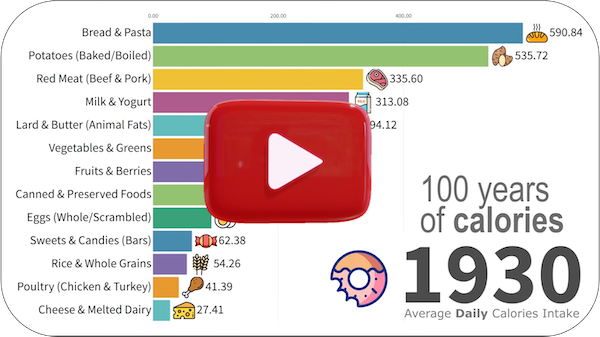
Check out the this visualization, which tracks the evolution of dietary calorie intake from 1930 to...

Taxpayer given 35% penalty for BAS recklessness
Following an application for a refund of nearly $94,000, the Administrative Review Tribunal has set aside an...

SMEs warned as ATO ramps up tax debt collection
One insolvency specialist has emphasised the importance of small businesses engaging their accountants to stay...

Does Your Small Business Need to Follow AML Privacy Rules?
Compliance with new anti-money laundering (AML) laws may subject your small business to additional privacy...

Don’t get caught out at tax time with your multiples jobs
Picking up a second job, holding multiple part-time roles, or doing gig work is now part of everyday life. But...

Global companies turn to cost-cutting amid ongoing inflation
Rising operating costs and persistent inflation are placing renewed pressure on businesses worldwide, despite...

Warning for early lodger this tax time!
The ATO has a clear message this year: slow down and get it right. Early lodgers are far more likely to make...

ATO no longer treating debt the same as during COVID
One expert has stressed the importance of tax agents reminding their clients that the ATO is no longer as...

The evolution of the world’s languages
Check out the evolution of the world's most spoken languages from 2500 BC to...
Latest Guests News

Newsletter Newslettter We are pleased to supply you with the latest edition of Client Alert, which...