- 234 Balaclava Road, Caulfield North VIC 3161
- contactus@guests.com.au
- (03) 9509 7033
GST fraudsters to face ‘full force of the law’: ATO
The Tax Office has the tools and resources to uncover even the most elaborate schemes, a deputy commissioner has warned.

The ATO has declared a crackdown on GST cheats, warning businesses against becoming involved with illegal invoicing or financial schemes at the risk of facing “the full force of the law”.
The warning comes amid an increase in fraudulent claims for large GST funds across a number of industries, according to the Serious Financial Crimes Taskforce.
Deputy commissioner and SFCT Chief John Ford encouraged business owners to take the ATO’s warning seriously and make a voluntary disclosure if they were involved in the illegal schemes.
“Those who seek to defraud the tax and super systems will get caught and face the full force of the law.”
“We are equipped with the resources, sophisticated data matching, analytics capability, and intelligence sharing relationships to uncover even the most elaborate financial crime.”
“If you are involved in an illegal invoicing or financial arrangements, we strongly encourage you to come forward and make a voluntary disclosure rather than wait for us to contact you.”
According to the Australian National Audit Office, over 57,000 taxpayers have participated in GST rorts that proliferated in late 2021 due to their promotion on social media platforms like TikTok.
They claimed $2 billion in bogus refunds and the ATO stopped a further $2.7 billion from being paid out.
The audit office also found the ATO investigated 150 of its workers as part of the multi-agency response to the rorts, known as Operation Protego.
The ATO said it observed more “sophisticated” structuring arrangements between inter-related parties undertaken to obscure transactions and disguise artificial or fraudulent arrangements, resulting in high-value GST refunds.
“Through intelligence and information sharing with partner agencies, the SFCT have identified multiple specific groups who are involved in commercial arrangements which seek to exploit the GST rules,” the ATO said.
The ATO said the arrangements exhibited some or all of the following features:
- False invoicing between related entities.
- Deliberately misaligning GST accounting methods across the group.
- Duplicating GST credit claims in related entities for a single high-value transaction.
- Claiming GST credits for purported purchases, development or construction by related entities that never occurred.
- The use of straw directors in an attempt to hide the true relationship between entities.
The ATO said enablers and recipients of the schemes used the fraudulent refunds to fund business ventures or personal purchases, disadvantaging taxpayers who did the right thing.
“We are targeting businesses who are participating in these schemes to ensure a level playing field for those who follow the rules,” Ford said.
“Not only is this behaviour putting honest businesses at risk, but it also takes funding away from vital community services such as hospitals, schools and transport.”
By Christine Chen
06 December 2024
accountantsdaily.com.au
Top 20 Most Watched Christmas Movies ever – pre covid
Check out the top 20 Most Watched Christmas Movies ever – pre covid
.
.
.
.
.
.
.
.
.
.
.
.
.

Our SG compliance results are here
Learn how we've responded to the non-payment of super guarantee (SG) in 2023–24.

.
If you're an employer, you must pay your super guarantee (SG) contributions in full, on time, and to your eligible employees’ correct super fund.
If you don’t pay your employees’ super, you’ll need to pay the super guarantee charge (SGC). This will cost you more than the super you would've paid and is not tax deductible.
We're committed to taking a firm approach on the non-payment of SG and have published our snapshot of 2023–24 SG compliance actions and results.
This snapshot provides a transparent view on the compliance actions we’ve taken so that employees receive the super payments they're entitled to.
You can read the full results at Super guarantee annual employer compliance results.
Key results include:
- Employers are paying 92.4% of the SG obligations they are required to – without intervention from us.
- We've collected and paid $932 million of SG entitlements into the super funds of 797,000 employees.
- Over $1.91 billion in SGC liabilities was raised from employers through ATO compliance actions and SG voluntary disclosures.
- We've proactively contacted more than 167,000 employers, resulting in $240 million in SGC liabilities raised.
- We've issued 8,710 director penalty notices relating to 6,500 companies as part of our firmer action response.
As an employer you need to keep good records, report accurately and pay on time.
We have a range of support resources to help you, including our simple checks for super success checklist and superannuation guarantee eligibility decision tool.
ATO
ato.gov.au
ATO to target growing businesses in latest compliance blitz
The Tax Office will be contacting medium-sized and emerging businesses over the next month to review trusts, Division 7A and CGT concessions.

.
Small businesses that are quickly growing may find themselves included in the ATO's medium and emerging private groups tax performance program this year, which may affect how they manage their tax and other obligations, the ATO has said.
In a recent update, the ATO said over the next month it would contact selected businesses and entities that now meet its criteria for medium and emerging private groups.
This would include private groups linked to Australian resident individuals who, together with their associates, control wealth between $5 million and $50 million.
It also included businesses with an annual turnover of more than $10 million that are not public or foreign-owned and are not linked to a high-wealth private group.
The ATO has also flagged the four key areas it would be looking to review, including trusts, business loans, Division 7A, CGT concessions and incorrect income reporting.
In relation to trusts, the ATO said that businesses with trusts in their business structure should revisit their governance and learn which trust activities would attract the ATO's attention.
Where businesses have Division 7A arrangements in place, the Tax Office said businesses should complete annual checks to ensure they're compliant.
“Look out for incorrect reporting, loans that don't comply with Division 7A agreements, incorrect benchmark interest rates and reborrowing from a private company to make repayments on Division 7A loans,” the Tax Office said.
If businesses are restructuring and looking to access CGT concessions, the ATO said they should check their eligibility each year before they apply for those concessions.
The ATO warned businesses that haven't reported all of their income or have made a mistake to correct the mistakes or amend their return.
“If we contact your business, you can contact your registered tax professional to discuss your obligations and check that you’re not making these errors in your records,” the ATO said.
The ATO's medium and emerging private groups tax performance program is designed to improve the ATO's knowledge of business operating environments and the tax risks and issues that are present or that may be emerging.
“To support our understanding, we use sophisticated data and analytics techniques. We use intelligence and insights gathered through our engagements to identify trends, priority and emerging risks specific to medium and emerging private groups,” the ATO said.
“We have learned from our work across the different industries and risks over the past few years. We are well-positioned and capable to respond to existing and emerging risks and issues with effective strategies and tailored activity.”
Miranda Brownlee
12 November 2024
accountantsdaily.com.au
Practitioners cautioned on ATO’s top target areas for GST
A tax specialist has outlined three of the major GST areas on the ATO’s radar based on recent discussions.

.
GST registrations, unpaid GST debt and property transactions are three of the major areas the ATO is currently monitoring in relation to GST, Accurium head of education Lee-Ann Hayes has warned.
Speaking at the Tax Practitioners Day 2024, Hayes warned the ATO has intensified its compliance regarding unpaid GST in recent months as it looks to reduce its large debt book.
For unpaid GST, Hayes warned that the ATO is now moving more quickly to issuing DPNs and garnishees and is issuing DPNs capturing the total value across all related entities where applicable.
The ATO has been able to issue director penalty notices for unpaid GST for almost five years now, she noted.
Hayes said property continues to be a “hot area” for the ATO's GST compliance activities given the complexity and high dollar value involved with property transactions.
“That will always be an area attracting the attention of the ATO, particularly if we get it wrong,” she said.
“We can have a property transaction classified in one of three ways with respect to GST. It could be a taxable supply, it could be GST free or it could be an input tax supply or possibly a fourth one where its completely outside scope. So it's a complex area,” she said.
In terms of GST registration, Hayes said the main issues relate to when a business or enterprise is required to be registered and where it needs to go back and retrospectively register.
As tax practitioners would be aware, Hayes said an enterprise or business can be registered for GST even if they're not required to be as long as they're carrying on an enterprise.
“An enterprise is not as big as a business and can just include a simple leasing activity.”
“When the enterprise is commenced, we might not even think about being registered for GST at that particular point in time because there's simply not enough turnover,” she said.
However, a few years later the enterprise may decide that it does want to be registered for GST, she explained.
“They may think it's beneficial to backdate our registration for whatever reason. The earliest that you can backdate a registration is four years.
“Even if the commissioner wants to register you retrospectively, particularly because you were required to be registered, the Commissioner can't go back further than that four year period unless of course there's fraud or evasion.
This is slightly different from the amendment period, she said, adding that there is a four-year amendment period for amending a GST return.
“That four-year period commences from when we lodge our business activity statement and the GST return.”
“So if you're already registered for GST but you don't lodge your GST return for a particular period, then you haven't started the clock.”
“[This means] that if don't lodge that GST return, we can get five or six years down the track and the Tax Office can come back and say 'hey we want the GST from that earlier period'.”
Hayes said this issue emerged in a court case which involved a mechanic business that was registered for GST but had not lodged business activity statements.
“The ATO made contact with them and they explained that they were getting everything in order and working out what the GST liability was as they got all the paperwork in place.”
“Now of course when they did that, they also sought to claim input tax credits for that period and when they netted the two off they were obviously exposed, but thought that exposure was nowhere near where it could have been.
However, the four-year time limit for claiming input tax credits commences regardless of whether the GST return has been lodged.
“It is quite different from the amendment period which only starts once you lodge your GST return.”
“So you've got quite a different outcome depending on whether you're already registered for GST or not.”
Miranda Brownlee
21 November 2024
accountantsdaily.com.au
Christmas Parties and Taxi Fare/Rideshare – FBT implications.
Some employers, who are commendably anxious to protect their employees and clients from the drink/driving laws, often pay for taxis/rideshare to and from the place of entertainment.

.
For FBT purposes there may be different consequences for payment of the taxis/rideshare fare. For clients, the taxis/rideshare fare is considered to be part of the entertainment expense and no deduction is allowable. For employees, if the fare is for travel from home to the place of entertainment (not being their place of employment) and return home again, the benefit is considered to be for the facilitation of entertainment and is not a separate benefit from the entertainment itself.
The result is that the employer would then have to rely on the total entertainment package being under $300 for the minor benefit rule to apply.
However, if the Christmas function is held on the employer’s premises, the taxi trip is FBT exempt if it is a single trip beginning or ending at the employer’s premises. For example, the exemption would apply if the employee went from the workplace to home, or any other place.
However, the exemption would not apply if the trip was broken and continued at some other time. For example, the employee gets a taxis/rideshare from the workplace and goes out to a nightclub; that trip is deductible and exempt from FBT. If the employee later gets another taxis/rideshare to home, that leg of the trip would be deductible to the employer but FBT would be payable.
Note however, that if the employer is using the 50/50 split method of calculating FBT and deductions, the taxi travel would always be included in the cost of entertainment, and there would be no exempt journey for travel from the workplace to home.
Uber and other ride sharing services are now also included for FBT exemption as taxi services, after changes to the FBT Act, from 1st April 2019.
Assess a business before you buy it
Ensure the business you buy is a worthwhile investment

.
There are pros and cons to buying an existing business.
When you buy an existing business, you're buying the owner's assets, stock and customer loyalty. This trading record can help you get financing. But the departure of the previous owner can also have a negative effect, so previous takings aren't guaranteed.
The business might also:
owe staff entitlements such as long service leave
have a bad image that's difficult to change
be overpriced or not easy to transfer
have inadequate or old premises, plant or equipment
be leased from a landlord who isn't willing to reassign the existing lease with its current entitlements
The best way to avoid being caught out by these is to do proper research.
Research your industry
Research your industry to identify your customers and competitors. You want to know how the business is performing compared to others in the industry and its potential for growth in the future.
How to
Do market research
Use our 5-step market research process to learn about your customer base and industry so you can target the right market and increase your chance of success.
Before you invest, use the small business benchmarks tool on the Australian Taxation Office (ATO) website to work out how your potential business is performing compared to others in the industry.
Get an independent valuation
Next you need to verify the the business's finances and potential value by looking at its:
assets
liabilities
profits
work in progress (existing contracts)
This is called 'financial due diligence' and it's best to get an accountant to do it. A CPA survey found that 80% of buyers who did financial due diligence with an accountant avoided paying too much.
The owner might have based their sale price on projections of future earnings or by benchmarking against other similar businesses. By having the business independently valued, you can be sure that you're buying at the right price.
Assets
A business's assets can be tangible and intangible.
Tangible assets include:
buildings
land
equipment
stock
fixtures
fittings
They're usually valued with an estimation of how they've depreciated or their resale value.
Intangible assets includes things like intellectual property and goodwill.
What is goodwill?
Goodwill describes an existing business's reputation, viability and potential. For example, a strong client list or effective business processes can contribute to goodwill.
It's important to assess goodwill as part of the overall investment in a business. This will help to make sure the business will be profitable enough to:
cover your capital repayments after tax
provide you with a fair income
Liabilities of the seller
A liability is money the business owes that decrease the value of the business.
Liabilties can include:
debts owed to creditors, or
employee entitlements such as annual leave and long service leave
When you buy a business, you might have to take on responsibility for employee entitlements, so make sure all entitlements have been assessed and deducted from the purchase price. You wouldn't normally take over liability for debts, creditors or for future orders, so these shouldn't be calculated in the sale price at all.
For businesses that cost under $450,000, the seller must also provide the prospective buyer with a vendor's statement (or Section 52 statement).
Business profits
You need to make sure the business you buy will continue to make a profit. Consider the business's commercial life and if there are other opportunities that might be a better investment.
Commercial life of the business
The value of a business fluctuates throughout its commercial life and it can't always be resold later for the same amount of money.
For example, a business's ability to remain profitable will be affected by:
changes in the economy
the arrival of competitor businesses
the need to replace failing equipment
cancelled contracts
Opportunity costs
Opportunity costs describe the cost of passing up the next best choice when making a decision to invest. In other words, what are you missing out on?
Opportunity costs might be other sources of income or the chance to put the money into a term deposit.
Work in progress
Work in progress are the existing contracts a purchaser will receive from buying the business.
Work out your finances
So you've assessed the business and decided to buy. Now settle on how much it costs to take over and how much you'll need to source from elsewhere.
Look for possible sources of financing and speak to your financiers about loan or investment options.
Business Victoia
What are the FBT implications of Employee Christmas Parties and Gifts?
The Christmas break-up party and/or gifts to employees can be exempt from Fringe Benefits if a few rules are followed.

.
The cost can be exempt as either an exempt property benefit or an exempt minor benefit.
Exempt Property Benefits
- Costs like food and drinks provided for employees as part of a Christmas party, on a working day on business premises and consumed by current employees of that business.
Exempt Minor Benefits
This is applicable when the property benefits exemption doesn’t apply (i.e. because the party is held at a restaurant or separate venue).
- The cost per employee must be less than $300 (GST inclusive)
- Associates of employees such as spouses and children are regarded as employees (hence the limit for an employee and partner would be $300 each)
- Going over the $300 limit can be expensive. The difference between spending $290 per head and $310 per head isn't just $20. The employer is looking at quite a substantial tax bill if that's the case.
- The $300 limit was set in 2007 and was seen as quite generous. Now, though, due to years of inflation, $300 is quite easily reached, so an employee needs to be careful.
- It seems the only surefire way to avoid FBT was to spend less than $300 per head or hold the event on a working day and on the business premises.
- FBT is not payable on the party costs for invited clients, but the $300 threshold applied to “associates of employees (such as their partners)” and to gifts.
- Another factor to be considered is the potential for income tax deductions for the cost of the party, which were claimable only if FBT applied.
- The ATO advised celebrating businesses – regardless of guests, venue or cost per head – to keep records of all spending for the post-Christmas tax hangover.
The minor benefits threshold of less than $300 applies to each benefit provided, not to the total value of all associated benefits.
Gifts are also considered separately from the Christmas party, so provided the cost of a gift and the party are each less than $300, then both would be exempt from FBT.
ATO reveals small business hit list to combat tax debt
The Tax Office hopes shedding light on its enforcement priorities will improve taxpayer compliance.

.
The ATO has laid out its latest enforcement priorities for small businesses in an attempt to close the tax gap and claw back growing levels of collectable debt.
Taxpayers who diverted business income for personal use, gamed deductions and concessions, and operated outside of the system would be under the microscope this quarter, deputy commissioner Will Day told attendees of the IPA’s National Congress on Thursday.
The ATO's small business focus comes after data released in August showed their unpaid tax debts grew to $35.6 billion in 2024, or around two-thirds of the total $54 billion debt book.
The small business tax gap also sits at 12.6 per cent, which Day said was caused by mistakes, opportunistic behaviours and deliberate tax evasion. The tax gap for larger companies is 4.2 per cent.
“If you look at both the tax gap and the debt book, they are both symptoms of a system operating less than optimally,” Day said.
“We need to reduce this revenue gap, and in doing so, we need to address the drivers that contribute to some small businesses not paying the right amount of tax, so that the system is fairer for all.”
Crackdown on Div 7A, deductions, shadow economy
To zero in on drivers of non-compliance, Day said the ATO would be embarking on an ongoing quarterly campaign to increase transparency and help businesses “get it right from the start”.
“We will be sharing our areas of focus areas where we are concerned small businesses are getting it wrong, being opportunistic or deliberately operating outside the system on an ongoing basis,” he said.
“We are being transparent and sharing with you early what these concerns are, to give you a runway to address any issues and help your clients get their affairs in order.”
Day said the ATO’s campaign for this quarter would focus on Division 7A issues involving business versus personal income, inappropriate claims of deductions and concessions and shadow economy behaviours.
He said the most common Division 7A mistakes were caused by shareholders or associates failing to understand that a company was a separate legal entity and that owners were not entitled to company money and assets.
“We know many Division 7A dividends arise due to failing to keep private expenses separate from company expenses and failing to keep proper records of these private transactions,” he said.
Another issue that would attract the ATO’s attention was small businesses claiming non-commercial losses due to misunderstanding tax rules, or deliberately making claims for “contrived” losses.
In 2022–23, around 232,000 taxpayers claimed a total of $4.5 billion in non-commercial losses on their tax returns.
Day also singled out shadow economy operators, accounting for 60 per cent of the small business tax gap, with ride-share operators failing to register for GST set to be the “immediate” focus.
He said the ATO would be contacting drivers from February next year where its records indicated tax non-compliance.
“We know too many ride-sourcing drivers are not GST-registered and therefore not paying GST – essentially, they are operating totally outside the tax system.”
Christine Chen
29 November 2024
accountantsdaily.com.au
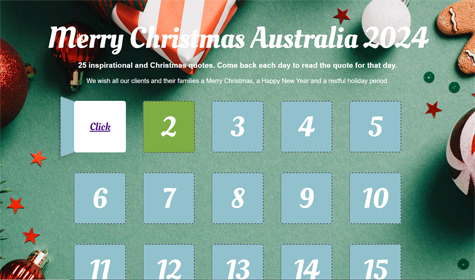
A Unique Advent Calendar
Once again we are pleased to release an advent calendar. One developed especially for you, our clients, your family and your friends. Come back each day and click on the next date for more inspirational and Christmas quotes.
We can't be sure but it seems this year has gone faster than any year previously, we hope not. We are, though, sure a break will do us all a world of good, so enjoy your time, rest up (as we will be doing), and make obtainable new year's resolutions.
On behalf of all our staff we wish you and your family a great holiday and a prosperous 2025.
(Please click on the image to open the Advent Calendar and then click on a date)
Latest Industry News

How Do I Write Legally Compliant Terms and Conditions for My Business?
Terms and conditions bind your customers only where they actively accept them, so a tick box at checkout holds...

Paid parental leave super contributions have started
From July 2026, the new Paid Parental Leave Superannuation Contribution (PPLSC) has started. From...

If the business is no longer profitable, and is unlikely to be profitable in the future, your best option may...
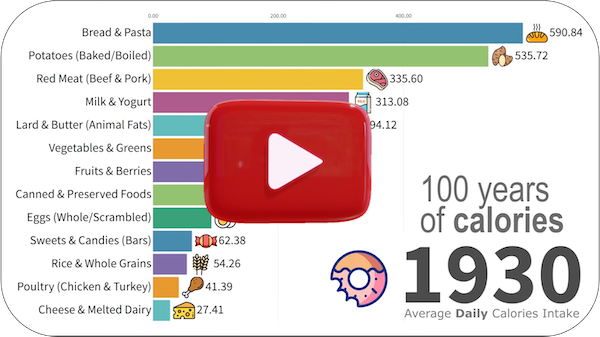
Check out the this visualization, which tracks the evolution of dietary calorie intake from 1930 to...

Taxpayer given 35% penalty for BAS recklessness
Following an application for a refund of nearly $94,000, the Administrative Review Tribunal has set aside an...

SMEs warned as ATO ramps up tax debt collection
One insolvency specialist has emphasised the importance of small businesses engaging their accountants to stay...

Does Your Small Business Need to Follow AML Privacy Rules?
Compliance with new anti-money laundering (AML) laws may subject your small business to additional privacy...

Don’t get caught out at tax time with your multiples jobs
Picking up a second job, holding multiple part-time roles, or doing gig work is now part of everyday life. But...

Global companies turn to cost-cutting amid ongoing inflation
Rising operating costs and persistent inflation are placing renewed pressure on businesses worldwide, despite...

Warning for early lodger this tax time!
The ATO has a clear message this year: slow down and get it right. Early lodgers are far more likely to make...

ATO no longer treating debt the same as during COVID
One expert has stressed the importance of tax agents reminding their clients that the ATO is no longer as...
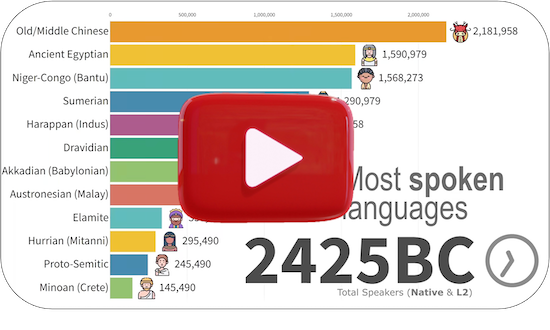
The evolution of the world’s languages
Check out the evolution of the world's most spoken languages from 2500 BC to...
Latest Guests News

Newsletter Newslettter We are pleased to supply you with the latest edition of Client Alert, which...